
You notice the leaves on your dahlia plants are turning brown, and you're not sure why. It's a common frustration, and the good news is that most causes are fixable once you know what you're looking at. The trick is to diagnose the problem step by step rather than guessing.
According to the American Dahlia Society, overwatering is the single most common cause of browning leaves in home gardens. As of 2026, the recommended approach is still simple: check the soil before you water. Let's walk through exactly how to figure out what's going wrong with your plants.
Quick Answer
Dahlia leaves turn brown from overwatering, underwatering, fungal disease, or pest damage. Check the soil moisture first. If the soil is wet, you're likely overwatering.
If it's dry, underwatering is the cause. If moisture is fine, look at the browning pattern. Brown edges often mean heat stress.
Brown spots in the middle suggest fungus or bacteria.

Your First Diagnostic Gate: Check the Soil Moisture
This is where you always start. The soil moisture level tells you more than any other single clue.
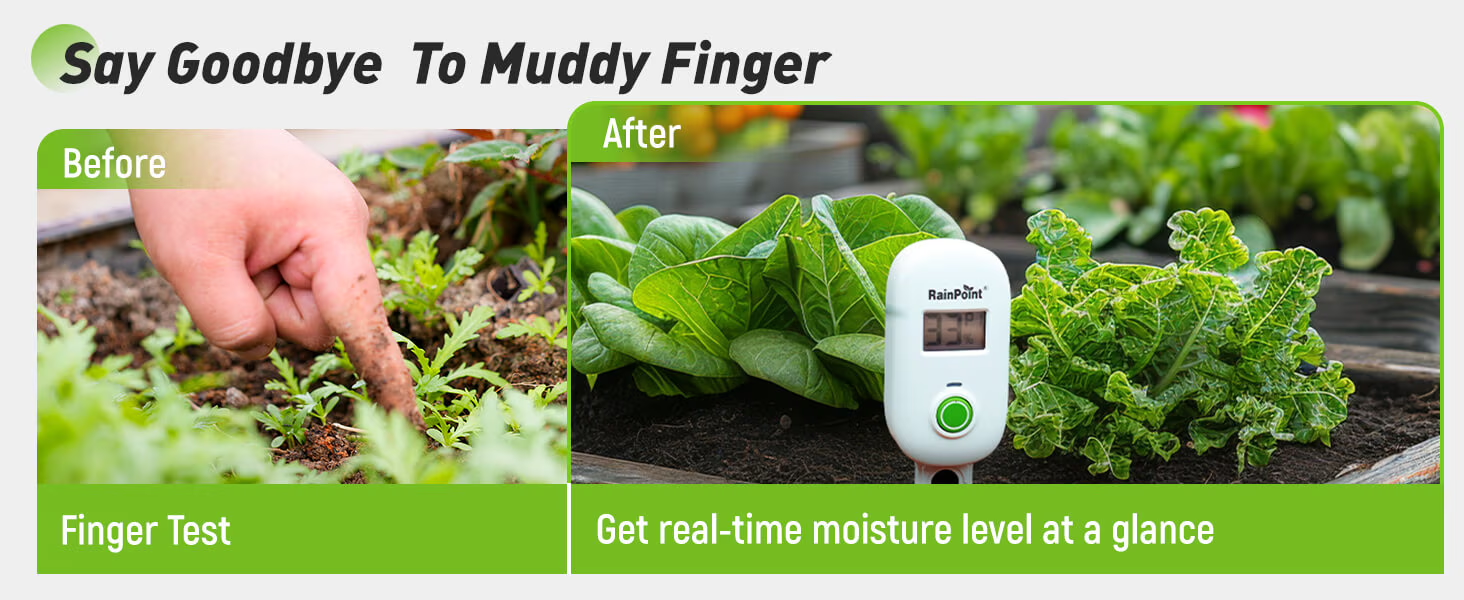
Stick your finger about two inches into the soil near the base of the plant. If it feels soggy or wet, you have an overwatering problem. If it feels bone dry, underwatering is your culprit.
If it feels cool and slightly damp, moisture is fine and you need to look at other causes.
What if the soil is too wet?
Overwatering is the most common mistake with dahlias. Their tubers rot quickly in soggy soil. When the roots can't get oxygen, the leaves turn yellow first, then brown, and eventually drop off.
The fix is simple: stop watering until the top two inches of soil dry out completely. If you're growing in a container, make sure the pot has drainage holes. If the soil stays wet for days, you might need to repot with fresh, well-draining mix.
What if the soil is too dry?
Underwatered dahlias show crispy brown edges on the leaves. The plant is basically conserving water by letting the outer leaf tissue die. Give it a deep soak, not a light sprinkle.
Water until it runs out the bottom of the pot or, for in-ground plants, water slowly for several minutes. Check the soil again the next day. If it's still dry, water again.
Most dahlias need about one to two inches of water per week, including rainfall.
Gate 2: Look at the Browning Pattern
Once you've ruled out soil moisture issues, the pattern of browning on the leaves is your next big clue. Different causes leave different marks.
Brown edges only
If the edges of the leaves are turning brown but the center stays green, you're likely dealing with heat stress or windburn. This happens when the plant loses water through its leaves faster than the roots can pull it up. It's common during heat waves or in very dry, windy conditions.
The fix is providing shade during the hottest part of the day and keeping the soil consistently moist.
Brown spots in the middle
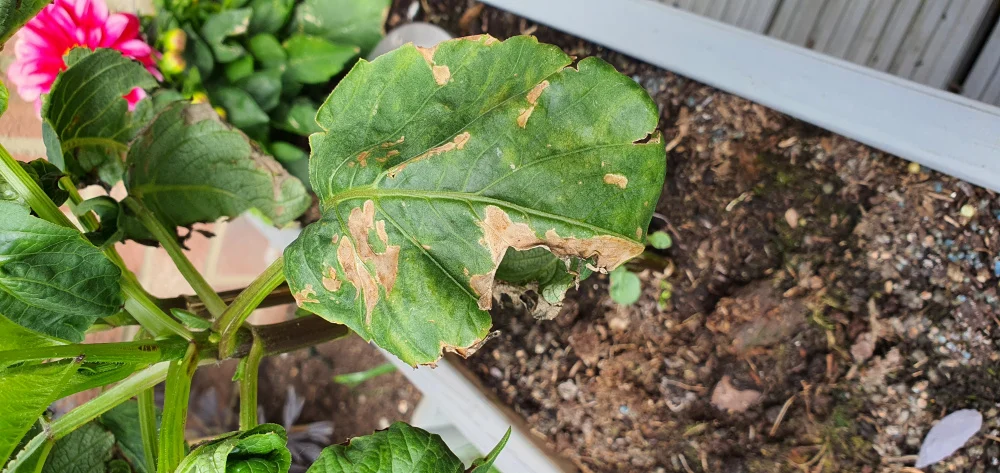
Circular brown spots with yellow halos are a classic sign of fungal disease. The spots usually start small and grow larger over time. If the spots look angular and water-soaked, it could be bacterial leaf spot instead.
Both need treatment, but the approach differs slightly.
Whole leaf turning brown
When an entire leaf goes brown at once, it's usually a sign of root rot or a serious vascular disease like Verticillium wilt. The plant can't transport water to the leaf, so the whole thing dies. This is more serious and often means the plant is beyond saving, especially if multiple leaves are affected.
Brown streaks along the veins
This is a less common pattern, but it points to a nutrient deficiency or a vascular disease. If the veins themselves are browning while the rest of the leaf is still green, you're likely looking at a potassium or magnesium deficiency.
Gate 3: Recent Weather & Environment
Your dahlia's environment in the past week or two holds important clues. Think back to what the weather has been like.
After a heat wave
If temperatures spiked above 90°F (32°C), especially with no rain, heat stress is the likely cause. The leaves may look scorched, with brown patches on the parts that get the most sun. This isn't a disease, so no fungicide is needed.
Just provide shade and water more frequently. The plant will recover once temperatures drop.
After heavy rain
A long rainy period can splash fungal spores from the soil onto the lower leaves. This is why you often see brown spots starting on the bottom leaves first. The spores need moisture to germinate, so wet leaves are a perfect environment.
If you've had several days of rain followed by brown spots, you're almost certainly looking at a fungal issue.
After a dry wind
Hot, dry winds can cause the leaves to lose water faster than the roots can supply it. The result is crispy brown edges, especially on the windward side of the plant. The fix is the same as for heat stress: water deeply and consider a windbreak if the problem keeps happening.
Treatment Branch A: Fungal or Bacterial Leaf Spot
If you've confirmed that the browning isn't from watering or weather, and you see spots on the leaves, you're likely dealing with a pathogen. Let's break this down.
How to tell the difference
Fungal spots are usually circular with a dark border and a lighter center. They may have a fuzzy appearance on the underside of the leaf. Bacterial spots look more angular because they're confined by the leaf veins.
They often look water-soaked and may ooze in wet conditions.
Immediate action steps
Remove all affected leaves with clean pruners. This is the single most important step. The spores spread easily, so don't leave fallen leaves on the ground.
Bag them and throw them away, don't compost them. Clean your pruners with rubbing alcohol between cuts to avoid spreading the disease to healthy parts of the plant.
When to use fungicide
Use a fungicide only if the spots keep appearing after you've removed the affected leaves. A copper-based fungicide works well for both fungal and bacterial issues. Apply it according to the label instructions, usually every seven to ten days.
Don't use fungicide as a preventative, especially if you don't know what you're dealing with. It's wasteful and can harm beneficial soil organisms.

Treatment Branch B: Pest Damage (Spider Mites, Thrips, Earwigs)
Pests can cause browning too, but the damage looks different from disease. The key is checking the underside of the leaves.
What to look for on the underside
Spider mites are tiny, but you can see their webbing. Look for fine silk strands between the leaf veins. Thrips leave silvery streaks and tiny black specks of frass.
Earwigs chew irregular holes in the leaves, not just browning, but they can also cause leaf edges to turn brown from feeding damage.
The water blast test
Before you reach for any spray, try a strong blast of water from your garden hose. Aim it at the underside of the affected leaves. This knocks off most pests, especially spider mites and thrips.
Do this in the morning so the leaves dry out during the day. Wet leaves at night can cause fungal problems, so time it right.
Spray options that actually work
If water doesn't solve the problem, insecticidal soap or neem oil are good next steps. Spray the undersides of the leaves thoroughly. Repeat every five to seven days until you see no more signs of pests.
For earwigs, try trapping them. Roll up a damp newspaper and place it near the plants overnight. Earwigs will hide in it, and you can toss them out in the morning.

Treatment Branch C: Nutrient or pH Problem
Sometimes the browning isn't from water, weather, disease, or pests. It's a nutrition issue. This is less common, but it happens.
Signs of potassium or magnesium deficiency
Potassium deficiency shows up as browning on the leaf edges and tips, starting with the older leaves at the bottom of the plant. Magnesium deficiency causes yellowing between the leaf veins, and the edges may turn brown later. Both are easy to fix.
When over-fertilizing is the real culprit
Ironically, too much fertilizer can also cause browning. This is called fertilizer burn. The salts in the fertilizer draw water out of the roots, and the leaf edges turn brown and crispy.
If you've been fertilizing heavily, especially with a high-nitrogen mix, try flushing the soil with plain water and cutting back on feedings.
Soil test or foliar feed?
The best approach is a soil test. You can buy a simple test kit or send a sample to your local extension office. If you want a quick fix, use a balanced fertilizer like 5-10-10 or a liquid seaweed supplement.
A foliar feed of liquid kelp can correct a magnesium deficiency within a week. As always, follow the label instructions. More isn't better.
When you're thinking about nutrients, it helps to understand the difference between organic options and synthetic ones. We've covered that in detail in our comparison of compost versus fertilizer. For dahlias, a slow-release organic option is usually safer because it's harder to overdo it.
Mistakes That Keep the Problem Coming Back
Even after you fix the current issue, the same problems can return if you don't break certain habits. Here are the most common ones.
Watering at night
Wet leaves overnight are a perfect breeding ground for fungus. Always water in the morning so the sun dries the leaves during the day. If you use overhead watering, switch to drip irrigation or a soaker hose.
This keeps the water off the leaves entirely.
Leaving dead leaves on the ground
Fungal spores and bacteria can live in dead plant material for months. When it rains or when you water, the spores splash back up onto the healthy leaves. Always clean up fallen leaves and dead plant matter around your dahlias.
Bag it and throw it away. Don't put it in your compost pile unless you're sure it's disease-free.
Ignoring the underside
Most pests and many fungal diseases start on the underside of the leaves. If you only check the top, you'll miss the early signs. Make it a habit to look at the undersides of the leaves every time you water.
Catch a problem early, and it's much easier to fix.
Overcrowding your plants
Dahlias need good air circulation. If you plant them too close together, the leaves stay damp longer, and diseases spread faster. Space them according to the variety's recommendations.
For most dahlias, that's about 12 to 18 inches apart. If you're growing in a confined space, consider using a fan to improve air movement.
Quick-Reference Decision Table
| Symptom | Most Likely Cause | First Action |
|---|---|---|
| Soil wet, leaves yellow-brown | Overwatering | Stop watering until soil dries out |
| Soil dry, leaves crispy edges | Underwatering | Deep soak, then water regularly |
| Brown spots with yellow halos | Fungal leaf spot | Remove affected leaves, apply fungicide if needed |
| Angular water-soaked spots | Bacterial leaf spot | Remove affected leaves, copper fungicide |
| Brown edges, recent heat wave | Heat stress | Provide shade, water more often |
| Silvery streaks, fine webbing | Spider mites | Blast with water, use insecticidal soap |
| Brown edges, older leaves only | Potassium deficiency | Apply balanced fertilizer or kelp supplement |
| Whole leaf brown, plant wilting | Root rot or wilt disease | Remove plant, improve drainage for future |
Frequently Asked Questions
Should I cut off brown dahlia leaves?
Yes, remove them with clean pruners. Brown leaves won't recover, and they can drain energy from the plant. Removing them also prevents diseases from spreading to healthy leaves.
Dispose of them in the trash, not the compost pile.
Can dahlia leaves recover from browning?
No, once a leaf turns brown, that tissue is dead. The leaf won't turn green again. But the plant can grow new healthy leaves once you fix the underlying problem.
Focus on preventing further browning rather than trying to save damaged leaves.
Is it normal for lower dahlia leaves to turn brown?
Some browning on the oldest lower leaves is normal as the plant matures. But if it happens rapidly or spreads to the upper leaves, something is wrong. Normal aging is slow and affects only the bottom one or two leaves at a time.
How often should I water dahlias?
Most dahlias need about one to two inches of water per week, including rainfall. In hot weather, they may need more. The best rule is to check the soil.
If the top two inches are dry, it's time to water. If they're still moist, wait another day.
What is the best fertilizer for dahlias?
A balanced fertilizer with lower nitrogen, like 5-10-10 or 10-20-20, works best. Too much nitrogen produces lush leaves but fewer flowers and can make the plant more susceptible to disease. If you're unsure, a slow-release organic option is a safe choice.
Our guide on what fertilizer to use in spring provides a good starting point for timing and application.
Can I use neem oil on dahlias?
Yes, neem oil is safe for dahlias when used correctly. It works well against spider mites, thrips, and some fungal diseases. Apply it in the evening or on a cloudy day to avoid leaf burn.
Always test a small area first and follow the label instructions.
Final Verdict: Which Branch Are You On?
By now, you should have a clear idea of what's causing your dahlia leaves to turn brown. Let's recap the decision tree one more time.
Start with soil moisture. Wet means overwatering. Dry means underwatering.
If moisture is fine, move to the leaf pattern. Edges mean heat or wind. Spots mean fungus or bacteria.
Whole leaf means root rot or wilt. If the pattern doesn't match, check the underside for pests.
Once you know the cause, take the right action. Most problems are fixable if you catch them early. The key is to act quickly and not guess.
If you're growing dahlias in a controlled environment like a greenhouse or grow tent, you have even more control over the conditions. A proper setup with good ventilation and consistent watering can prevent most of these issues before they start. Our grow tent setup guide covers the basics of creating an optimal growing environment.
The most important takeaway is this: healthy dahlias start with healthy roots. Water correctly, space your plants properly, and keep the area clean. Do those three things, and you'll see far fewer brown leaves.