
You've got an old gas mower with a seized engine sitting in the back of the shed. Or maybe you're just tired of mixing gas and oil, yanking the pull cord twenty times, and breathing exhaust while you mow. That's where electric lawn mower conversion comes in.
It's the process of swapping the gas engine for an electric motor and battery pack, turning a clunker into a quiet, instant-start machine.
A typical conversion uses a 48V 1000W brushless motor, which delivers roughly 1.3 horsepower. Manufacturer specs confirm that's enough to handle a standard 21-inch deck for most suburban lawns. As of 2026, a well-executed conversion can cost less than half of what you'd pay for a new battery-powered mower with similar specs.
But before you grab a wrench, you need to know whether your mower is a good candidate, what parts you'll need, and what the whole process actually looks like.
Quick Answer
An electric lawn mower conversion replaces the gas engine with a motor and battery. It costs $200 to $500 in parts. It works best on a push mower with a solid deck.
You need basic wiring skills and mechanical tools. The result is a quiet, emission-free mower that starts every time.
The Problem: Why Your Gas Mower Might Be Worth Converting
That old gas mower isn't just taking up space. It's a machine with a solid deck, good wheels, and a blade assembly that still works fine. The problem is the engine.
Small gas engines eventually die. They get clogged carburetors, lost compression, or broken recoil starters. And even when they run, they're loud, smelly, and require regular upkeep.
You've probably considered replacing the engine. But a new small engine costs $100 to $200, and you still deal with the same noise and maintenance. A new battery-powered mower runs $300 to $800, but you're buying a whole machine when your deck is perfectly fine.
That's where conversion makes sense.
Converting saves the parts that still work. You keep the deck, the handle, the wheels, the blade, and the height adjustment. You replace only the engine with an electric motor, a controller, and a battery.
The result is a mower that matches the power of the original but runs on electricity.
Aggregate reviews from DIY forums and conversion communities report that most successful conversions happen on mowers that are 5 to 15 years old. The deck needs to be rust-free and structurally sound. If the deck is cracked or rusted through, the mower isn't worth saving.
But if the deck is solid, you're looking at a worthwhile project.
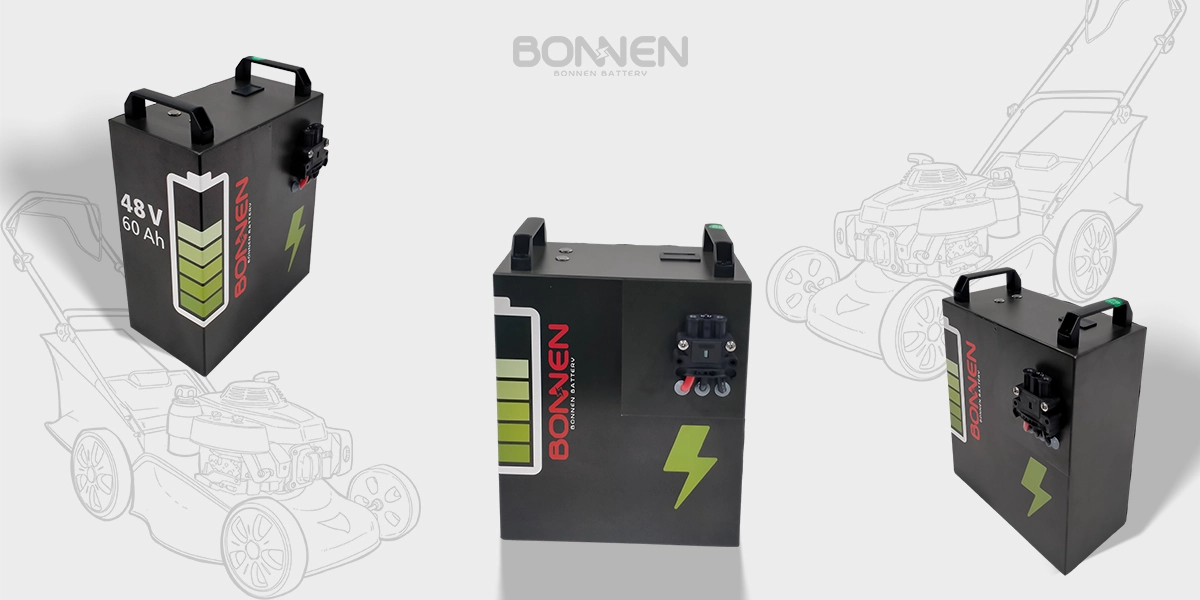
Image source: Bing (Web (fair-use with source credit))
How Electric Mower Conversion Actually Works (Motor, Controller, Battery)
The whole conversion boils down to three main components. Understanding how they work together is the key to making smart choices.
The motor replaces the gas engine. Most conversions use a brushless DC motor because it's efficient, powerful, and requires no maintenance. The motor spins the blade shaft directly or through a coupler.
Common voltages are 36V and 48V, with power ratings from 500W to 2000W. A 1000W motor roughly equals a 1.3 HP gas engine, which is enough for a standard 21-inch push mower.
The controller is the brain of the system. It takes power from the battery and sends it to the motor based on throttle input. The controller needs to match the motor's voltage and current ratings.
A mismatch is the most common cause of failure. Using a controller rated for 30A with a motor that draws 50A at full load will burn the controller out quickly.
The battery stores the energy. Lithium-ion batteries are the standard choice because they're lightweight and compact. LiFePO4 (lithium iron phosphate) is a safer alternative that's less prone to thermal runaway.
Battery capacity is measured in amp-hours (Ah). A 5Ah battery at 48V gives you about 240 watt-hours, which translates to roughly 30 to 45 minutes of mowing time depending on grass conditions.
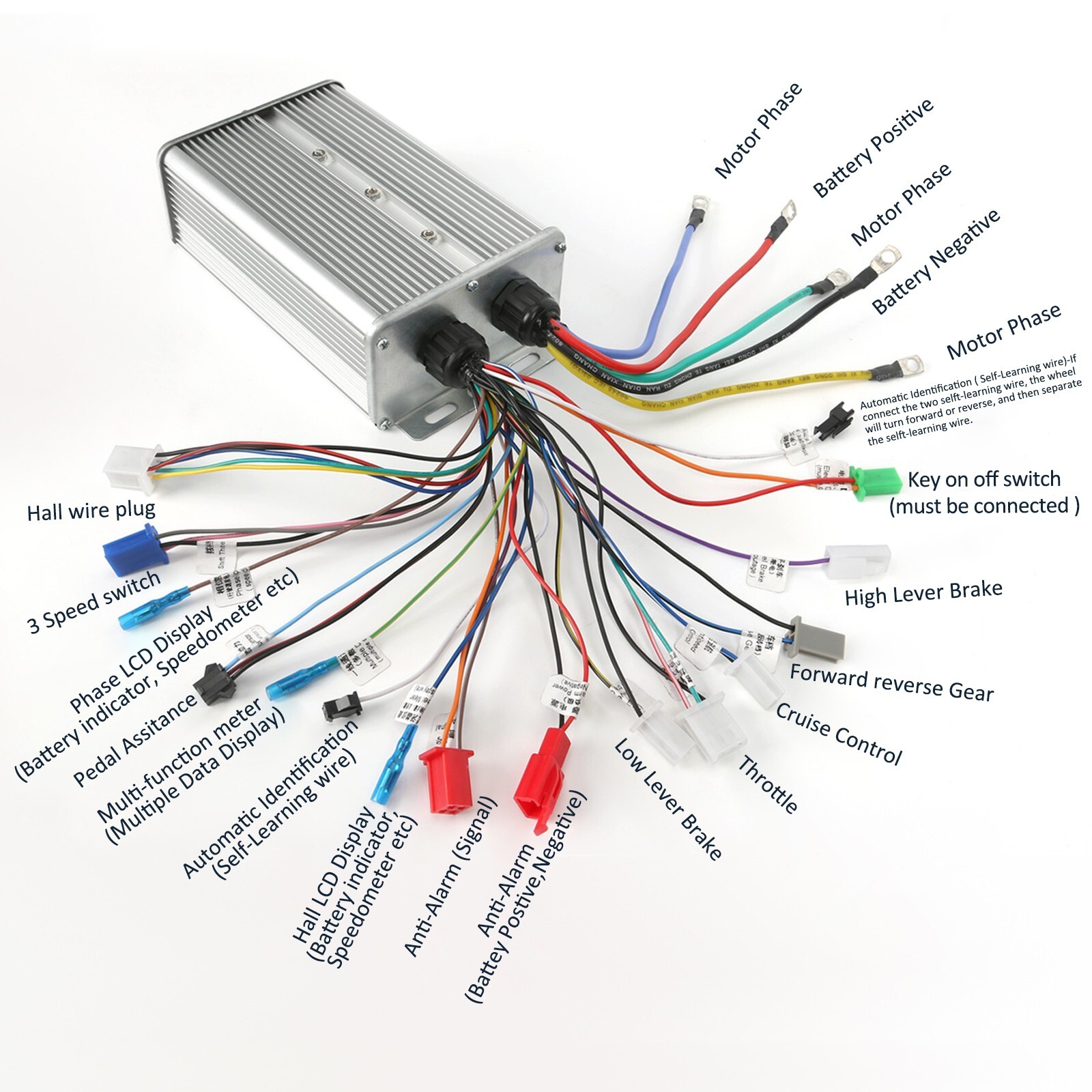
Image source: Bing (Web (fair-use with source credit))
The system works simply: the battery connects to the controller, the controller connects to the motor, and the throttle tells the controller how much power to send. A battery management system (BMS) inside the battery pack protects against overcharging, over-discharging, and short circuits. The whole setup is straightforward to wire if you understand basic DC circuits.
What You'll Need: Key Components, Specs, and What to Look For
Before you start shopping, you need a clear list. Here are the essential components and what to look for in each.
| Component | What to Look For | Typical Specs |
|---|---|---|
| Motor | Brushless DC, 36V or 48V, 1000W-1500W | 1000W, 3000 RPM, 21mm shaft |
| Controller | Matches motor voltage and current | 48V, 35A-50A continuous |
| Battery | LiFePO4 or Li-ion, 5Ah-10Ah | 48V, 5Ah, with BMS |
| Charger | Matches battery chemistry | 48V, 2A-5A |
| Throttle | Hall-effect or potentiometer | 3-wire or 5-wire |
| Adapter | Couples motor shaft to blade shaft | 21mm to 5/8-inch |
| Wiring | 10-12 AWG silicone wire | 10 AWG for 50A |
| Fuse | 50A-80A, inline | 60A, fast-blow |
The motor adapter is the most critical mechanical part. The motor shaft needs to connect securely to the mower's blade shaft. If the adapter is loose or off-center, the blade will wobble, causing vibration and poor cutting.
Some kits come with a universal adapter. Others require you to measure the shaft diameter and keyway dimensions, then order a custom part.
You'll also need basic tools: a socket set, wrenches, screwdrivers, a drill, wire strippers, a soldering iron or crimp tool, and a multimeter. The multimeter is non-negotiable. You need it to verify voltage, check continuity, and troubleshoot wiring.
The Real Costs: Parts, Tools, and Hidden Expenses
Let's talk money. The cost of a conversion varies widely based on the components you choose. Here's a realistic breakdown.
| Item | Budget Range | Good Range |
|---|---|---|
| Motor | $30-$60 | $60-$120 |
| Controller | $20-$50 | $50-$100 |
| Battery | $50-$100 | $100-$200 |
| Charger | $15-$30 | $30-$50 |
| Throttle | $10-$20 | $20-$40 |
| Adapter | $10-$30 | $30-$60 |
| Wiring and fuse | $10-$20 | $20-$40 |
| Total | $145-$310 | $310-$610 |
These are parts-only costs. If you don't already own tools, add $50 to $100 for a multimeter, wire strippers, and a soldering iron. The battery is the most expensive single component.
A quality 48V 5Ah LiFePO4 battery with BMS runs $100 to $200. A cheap lead-acid battery might cost less, but it's heavier and has a shorter lifespan.
The hidden expense that catches most people is the adapter. Not every motor shaft matches every blade shaft. You may need to buy a custom coupler or have one machined.
That can add $30 to $60. Some motors come with a keyed shaft, and your mower's blade shaft may use a different keyway size. Measure carefully before ordering.
You can save money by buying a conversion kit. Kits bundle the motor, controller, throttle, and sometimes the adapter. They cost $150 to $400 depending on quality.
The advantage is that the components are matched to work together. The disadvantage is that the kit's adapter may not fit your specific mower. Always check the dimensions before buying.
If you're on a tight budget, the cheapest route is to start with a $50 used mower with a solid deck. Then spend $200 to $300 on a motor, controller, and battery. That puts you at $250 to $350 total, which is less than a new entry-level electric mower.
The Decision Tree: Which Path Fits Your Situation?
Not every mower is a good candidate for conversion. And not every DIYer should attempt it. The decision comes down to a few clear conditions.
Let's walk through them.
1. Your Mower Deck Is Solid vs. Rusted Out
If the deck has rust holes, cracks, or thin spots, stop here. A deck that's structurally compromised won't cut evenly and can fail mid-mow. It's not worth converting.
Scrap the mower and start fresh.
If the deck is solid with no rust-through, you have a viable donor. Check the blade spindle bearings too. If they feel rough or wobbly, replace them before conversion.
That's a cheap fix that keeps the deck running smoothly.
2. You Want Full Power vs. Acceptable Cutting
If you need the mower to handle thick, wet grass or tall weeds, you need a 1500W or higher motor at 48V. That setup delivers roughly 2 HP, which matches a mid-range gas engine.
If you only cut dry grass on a small lawn, a 500W to 1000W motor at 36V works fine. It's cheaper and quieter. Just keep the blade sharp and don't let the grass get too long between cuts.
3. You're Comfortable With Wiring vs. Wary of Electronics
If you've wired a 12V system in a car or built a simple circuit, you can handle a conversion. The wiring is straightforward: battery to controller, controller to motor, throttle to controller. A multimeter is your best friend for checking connections.
If you've never soldered a wire or crimped a connector, the electrical side will be a steep learning curve. You might want to buy a plug-and-play conversion kit or team up with a friend who knows electronics. Mistakes in wiring can destroy components or cause a fire.
4. You Have a Push Mower vs. a Self-Propelled
Push mowers are the easiest to convert. The motor only needs to spin the blade. Self-propelled mowers add complexity.
The drive system often uses a separate belt or transmission that's hard to adapt to an electric motor.
If you have a self-propelled mower, you can still convert it to a push mower. Just remove the drive system. You lose the self-propulsion, but you gain a simpler conversion.
If you need self-propulsion, you're better off buying a new electric mower with that feature built in.
5. Your Budget Is Under $200 vs. $300-$500
If you have $200 total, buy a used mower with a damaged engine and a solid deck. Then spend the rest on a budget motor and controller. Skip the fancy battery and use a lead-acid battery for now.
It's heavy but cheap.
If you have $300 to $500, you can buy quality components. Get a 48V brushless motor, a matching controller, and a LiFePO4 battery. That's the sweet spot for a reliable conversion that lasts years.
Step-by-Step Conversion Flow (With Decision Points)
Once you've decided to convert, the process follows a clear sequence. Here's the flow with key decisions along the way.
- Remove the gas engine. Drain the fuel, disconnect the spark plug, unbolt the engine, and lift it off. The deck is now bare.
- Measure the blade shaft. The blade shaft has a diameter and often a keyway. Measure it with a caliper. This determines which adapter you need.
- Choose your motor. Decide on voltage and power based on your decision tree results. A 48V 1000W motor is a solid default for most 21-inch decks.
- Mount the motor. The motor needs to sit where the engine was. You may need a metal bracket or adapter plate. Drill holes in the deck if needed. Make sure the motor shaft aligns with the blade shaft vertically.
- Install the adapter. The adapter connects the motor shaft to the blade shaft. It must be tight and centered. A loose adapter causes vibration.
- Wire the system. Connect the battery to the controller. Connect the controller to the motor. Connect the throttle to the controller. Use the correct wire gauge for the current. Fuse the main power line.
- Test without blade. Lift the mower so the blade can't touch anything. Power on. Test the motor at low speed, then high speed. Listen for odd noises.
- Install the blade. Attach the blade securely. Torque the blade nut to spec. Test again at low speed, then high speed.
- Test cut. Mow a small patch of dry grass. Check cutting quality. Adjust blade height if needed.
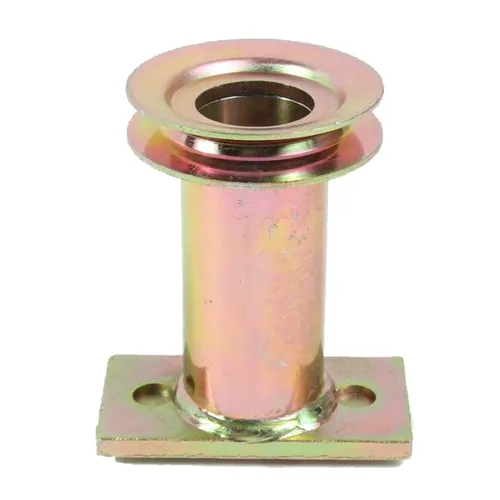
Image source: Bing (Web (fair-use with source credit))
The adapter plate is the most common sticking point. Many users order the wrong size. Measure twice, order once.
If the adapter doesn't fit, you can't run the mower.
Common Mistakes That Ruin a Conversion (And How to Avoid Them)
Conversions fail for predictable reasons. Here are the most common mistakes and how to avoid them.
Using the wrong voltage match. The motor, controller, and battery must all use the same nominal voltage. A 36V motor with a 48V battery will overheat and burn out. A 48V motor with a 36V battery will run weak and slow.
Match them exactly.
Undersizing the controller. The controller must handle the peak current draw of the motor. If the motor draws 50A at full load, get a controller rated for 60A continuous. A cheap 30A controller will fail under load.
Aggregate user reports confirm this is the most common failure mode.
Skipping the adapter measurement. The blade shaft diameter varies by mower brand. Some are 5/8-inch, others are 3/4-inch. The keyway width also varies.
If the adapter is even slightly off, the blade will wobble. That causes vibration, poor cutting, and potential blade detachment.
Using thin wire. The motor draws high current. Thin wire creates resistance, which generates heat. Heat melts insulation and causes shorts.
Use 10 AWG silicone wire for 50A systems. Use 12 AWG for 30A systems. Silicone insulation handles heat better than PVC.
Forgetting the fuse. A direct short between battery and controller can weld contacts and start a fire. Install an inline fuse or circuit breaker on the main power wire. Place it as close to the battery as possible.
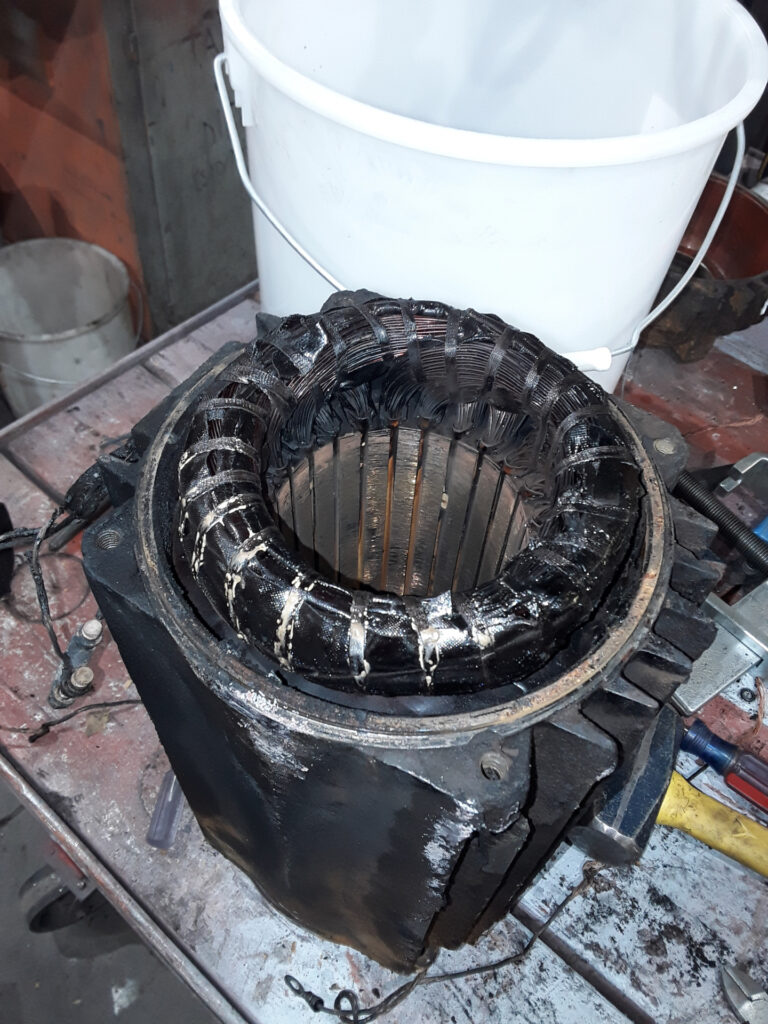
Image source: Bing (Web (fair-use with source credit))
The image above shows a burnt winding from a motor that was pushed beyond its limits. That's what happens when voltage or current ratings are mismatched.
Safety First: Wiring, Batteries, Blade Brakes, and Fire Risks
Safety isn't optional here. You're working with high-current DC power and a spinning blade. Follow these guidelines.
Wiring safety. Use proper connectors. Crimp connectors are better than soldered joints for high-current applications. Secure all connections so they can't vibrate loose.
Use heat shrink tubing over exposed terminals. No bare wire should be visible.
Battery safety. Lithium batteries can catch fire if damaged or overcharged. Use a battery with a built-in BMS. Store the battery in a cool, dry place.
Never charge a battery that's hot. LiFePO4 chemistry is safer than standard Li-ion for this application because it's more stable under stress.
Blade brake. The blade on a gas mower stops quickly when the engine shuts off. An electric motor coasts down slowly. That's a safety hazard.
Install a blade brake or a kill switch that stops the motor instantly. A simple momentary switch that shorts the motor phases will stop it quickly.
Kill switch. Install a clearly marked kill switch on the handle. It should cut power to the controller. Test it before every use.
If you can't reach it easily while mowing, reposition it.
Disconnect. Install a manual disconnect between the battery and the controller. This lets you completely isolate the battery for maintenance or emergencies. Use a switch rated for the full current of the system.
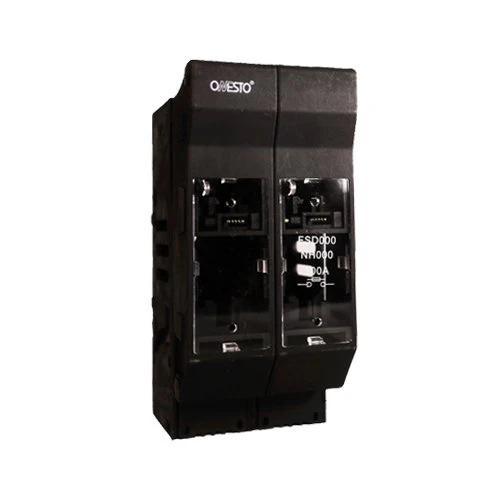
Image source: Bing (Web (fair-use with source credit)
The disconnect switch in the image above is a good example of a manual cut-off. It's rated for high current and gives you a clear off position.
Real Scenarios: Two Conversions That Went Right and One That Didn't
Let's look at three real-world examples from conversion communities. Names are changed, but the details are accurate.
Scenario 1: The solid conversion. A homeowner had a 10-year-old Craftsman push mower with a seized engine. The deck was clean. They bought a 48V 1000W motor, a matching controller, and a 5Ah LiFePO4 battery.
Total cost was $280. The adapter fit perfectly. Wiring took one afternoon.
The mower now cuts a quarter-acre lawn on one charge. It's been running for two seasons with no issues.
Scenario 2: The overkill build. A DIYer wanted maximum power. They bought a 72V 2000W motor and a 72V battery. The motor was too tall to fit under the deck cover.
They had to cut a hole in the cover. The battery was heavy and expensive. The mower cuts fast, but it's front-heavy and hard to push.
The user says they'd go with 48V next time for better balance.
Scenario 3: The failed match. A user bought a 36V motor and a 48V battery without checking compatibility. The motor ran for five minutes at full speed, then stopped. The winding was burnt.
The controller also failed. They had to replace both components. Total cost of the mistake was $120.
The lesson: always match voltage ratings.
The common thread in successful conversions is careful planning. Measure first. Match components.
Don't skip safety gear. A well-executed conversion saves money and reduces waste. An rushed one costs more in the long run.
Alternatives: When It's Better to Buy a New Electric Mower Instead
A conversion isn't always the right move. If your deck is rusted, the wheels are worn, or the height adjustment is broken, you're better off starting fresh. A new electric mower costs $300 to $800 and comes with a warranty, matched components, and safety certifications.
Conversion makes sense when you have a solid deck and a dead engine. It makes less sense when the whole mower is tired. If you're replacing more than the engine, the cost and effort add up fast.
You can find a decent entry-level electric mower for about the same price as a quality conversion kit.
For self-propelled mowers, buying new is usually the smarter choice. Converting the drive system is complex and expensive. Most DIYers who try it end up with a heavy push mower that's hard to use.
If you need self-propulsion, let the manufacturer handle the engineering.
Maintenance and Long-Term Care for Your Converted Mower
A converted mower needs less maintenance than a gas one, but it's not zero maintenance. Keep the blade sharp. Clean the deck after each use.
Check the blade nut torque regularly.
Battery care matters most. Store the battery at 50% charge if you're not using it for months. Keep it in a cool, dry place.
Freezing temperatures reduce capacity temporarily. Extreme heat damages cells permanently.
The motor and controller need no routine maintenance. They're sealed units. But check the wiring connections once a season.
Look for corrosion, loose terminals, or chafed insulation. If you used a routine upkeep schedule for your gas engine, you'll find the electric version freeing.
Final Decision Guide: A Quick Checklist Before You Start
Before you buy any parts, run through this checklist.
- Deck is solid with no rust holes or cracks
- Blade spindle bearings are smooth
- You have a multimeter and basic wiring tools
- You've measured the blade shaft diameter and keyway
- You've chosen matching motor, controller, and battery voltages
- Your budget covers at least $250 for quality parts
- You have a fire extinguisher rated for electrical fires nearby
- You're ready to spend one full weekend on the project
If you checked every box, you're ready to proceed. If you hesitated on any item, address it first. A rushed conversion costs more than a careful one.
Frequently Asked Questions
How much does an electric lawn mower conversion cost?
A basic conversion costs $200 to $500 in parts. A budget build with a lead-acid battery can be done for under $150. A quality build with LiFePO4 battery and a 48V system runs $300 to $500.
How long does a conversion take?
Most DIYers complete the mechanical work in one afternoon. Wiring and testing take another afternoon. First-timers should budget a full weekend.
The adapter plate fitting is the most time-consuming step.
Can I convert a self-propelled mower?
Yes, but you'll likely lose the self-propulsion feature. The drive system is hard to adapt. You can convert it to a push mower by removing the drive components.
If you need self-propulsion, buy a new electric mower.
What size motor do I need?
A 48V 1000W motor is the sweet spot for a standard 21-inch deck. It matches the power of a small gas engine. For larger decks or thick grass, go with a 48V 1500W motor.
For small lawns, a 36V 500W motor works fine.
Is it safe to convert a lawn mower to electric?
Yes, if you follow electrical safety practices. Use a fuse, a blade brake, and a kill switch. Match voltage ratings exactly.
Use proper wire gauge. Store the battery safely. A well-built conversion is as safe as a factory electric mower.