Every gardener has been there: the squash leaves start turning yellow, and somehow everyone tells you to try Epsom salt. Using Epsom salt on squash plants without knowing what's really going on can do more harm than good. You might end up with blossom-end rot, stunted fruit, or soil that is way out of balance.
Here is the core problem and the opportunity. Most gardeners have never tested their soil pH or checked whether magnesium is even the issue. University extension research shows that over 60 percent of yellowing squash leaves come from overwatering or a nitrogen shortage, not a lack of magnesium.
So let's walk through the decision process together.

The Real Problem: Yellow Leaves Won't Always Mean Magnesium Deficiency
Squash plants are heavy feeders. They pull a lot from the soil over a single growing season. When those big leaves start yellowing, your first instinct might be to reach for a quick fix.
But yellow leaves on squash have several possible causes. The most common ones are:
- Overwatering, soggy roots can't absorb nutrients, period. This mimics magnesium deficiency perfectly.
- Nitrogen shortage, lower leaves turn pale yellow, not just between the veins.
- Sulfur deficiency, looks similar to magnesium but shows up on new growth first.
- Compacted soil, roots struggle to reach nutrients even when they are present.
- Magnesium deficiency, this is the one Epsom salt actually fixes.
Here is the catch. Visual symptoms alone are not reliable enough. University extension research confirms that interveinal chlorosis (yellowing between the veins on lower leaves) is the classic sign of magnesium deficiency.
But overwatering produces the exact same pattern.
So how do you tell them apart? Check the soil moisture first. If the soil is wet and the leaves are yellow, let it dry out before you do anything else.
Keep up with routine garden care like weeding and proper watering before you assume a mineral problem.
The real point here is simple. Don't treat a symptom until you know the cause. Otherwise, you are throwing Epsom salt at a problem that needs better drainage, more nitrogen, or just a little patience.
Quick Answer: When Epsom Salt Helps (and When It Hurts)
Epsom salt only helps squash plants that lack magnesium. Apply it as a foliar spray or soil drench. Always test your soil before adding anything.
Too much blocks calcium and causes blossom-end rot. Use it sparingly and only when needed.
How Magnesium and Sulfur Actually Work on Squash Plants
Magnesium is the centerpiece of every chlorophyll molecule. No magnesium means no photosynthesis. Squash plants with a magnesium shortage cannot turn sunlight into energy, which is why those big leaves start failing.
Sulfur plays a different role. It helps plants build proteins and enzymes. It also affects the flavor and nutrient density of the fruit.
Both elements matter, but they are not interchangeable.
Epsom salt delivers magnesium sulfate in a form that plants can use right away. When you dissolve it in water and apply it to the soil or leaves, the magnesium and sulfur ions become available within hours.
Here is what most articles do not tell you. The calcium-to-magnesium ratio in your soil matters far more than the raw amount of magnesium. If magnesium levels are too high relative to calcium, the plant struggles to take up calcium at all.
That is how you get blossom-end rot on your squash fruit.
Soil science guidelines recommend a calcium-to-magnesium ratio between 7:1 and 10:1 in most garden soils. Adding Epsom salt when the ratio is already tight can push it past the tipping point. This is why a soil test is not optional if you want to do this correctly.
Magnesium moves slowly through the soil, especially in clay-heavy ground. That is why a foliar spray works faster than a soil drench when you need a quick turnaround. But foliar sprays only last a couple of weeks.
A soil drench fixes the underlying shortage for the rest of the season.
If you are interested in how different soil inputs compare for long-term plant health, comparing compost versus fertilizer is worth a look for a broader picture.
What Happens When You Get It Right
When magnesium levels are in the right range, squash plants produce larger leaves, stronger stems, and better fruit set. The green color deepens noticeably within a week of a foliar application. Fruit production becomes steadier rather than dropping after the first flush.
What Happens When You Get It Wrong
Too much Epsom salt locks out calcium and potassium. The leaves may look fine, but the fruit develops that telltale brown rot on the blossom end. You also risk sulfur buildup in the soil, which can lower pH over time.
The Two Decision Branches: Soil Drench vs. Foliar Spray
You have two ways to apply Epsom salt to squash plants. Each one fits a different situation. Picking the wrong method wastes time and product.

Branch A: Foliar Spray (Fast Rescue)
Use a foliar spray when you see clear magnesium deficiency symptoms and need a quick response. The plant absorbs magnesium directly through the leaf pores. You will see results in 5 to 10 days.
How to do it right:
- Mix 1 tablespoon of Epsom salt per gallon of warm water.
- Spray in the early morning or late evening, not in direct sun.
- Cover the undersides of the leaves where the stomata are.
- Reapply every 2 to 3 weeks if symptoms return.
Best for: squash plants already showing yellowing that have been confirmed magnesium deficient through a soil test.
Not for: plants that are fruiting heavily. Foliar sprays can burn the fruit skins if left in the sun.
Branch B: Soil Drench (Long-Term Correction)
Use a soil drench when your soil test shows low magnesium and you want to fix the problem for the whole season. The roots pick up the magnesium as they grow. Results take 10 to 14 days.
How to do it right:
- Dissolve 1 tablespoon of Epsom salt per foot of plant height in a gallon of water.
- Pour the solution evenly around the base of the plant, not directly on the stem.
- Water it in with plain water afterward to push the nutrients to the root zone.
- Apply once at the start of the season and repeat only if a follow-up test shows deficiency remains.
Best for: sandy soils that leach magnesium quickly, or soil test results that show a clear magnesium shortage.
Not for: clay-heavy soils that already hold plenty of magnesium.
A quick note on garden setup. If you are growing squash in a controlled indoor environment, considering your grow room setup carefully can prevent many nutrient problems before they start.
Which Branch Should You Pick?
| Factor | Use Foliar Spray | Use Soil Drench |
|---|---|---|
| Speed needed | Fast (5–10 days) | Slower (10–14 days) |
| Soil test result | Confirmed Mg deficiency | Confirmed Mg deficiency |
| Soil type | Any | Sandy or loamy |
| Plant stage | Vegetative growth only | Any stage |
| Duration of fix | Short (2–3 weeks) | Long (whole season) |
The short answer: use a foliar spray for emergencies, use a soil drench for prevention.
Step 1: How to Test If Your Squash Really Needs Magnesium
This is the step most gardeners skip. It is also the step that separates a good harvest from a frustrating one.
Visual Diagnosis
Look at the oldest leaves first. Magnesium deficiency shows up on the lower leaves because magnesium is mobile in the plant. The plant moves it from old leaves to new growth when supplies run low.
What to look for:
- Yellowing between the leaf veins (interveinal chlorosis)
- Veins stay green while the tissue around them turns pale
- Leaf edges may curl upward slightly
- Symptoms start on the bottom of the plant and move up
Compare that to nitrogen deficiency. Nitrogen shortage also starts on lower leaves, but the entire leaf turns pale yellow or light green, not just the spaces between veins.
Compare it to overwatering. Overwatered squash plants have yellow leaves that feel soft and limp. The soil will be wet or muddy.
Let the soil dry before you even consider adding anything.
Soil pH Check
Magnesium becomes unavailable to plants when the soil pH drops below 5.5 or rises above 7.5. The sweet spot for squash is between 6.0 and 6.8.
Grab a simple pH test strip from any garden center. If your pH is below 6.0, add dolomitic lime instead of Epsom salt. The lime raises pH and supplies magnesium at the same time.
If your pH is above 7.0, adding Epsom salt might work, but the magnesium still won't be very available. Focus on lowering pH first with organic matter or sulfur.
When a Lab Soil Test Is Worth It
A home pH test is fine for a quick check. But a proper lab soil test tells you the exact levels of magnesium, calcium, and potassium. It also shows the calcium-to-magnesium ratio.
The test costs about $15 and comes with specific recommendations for your soil type.
You can find these tests through your local university extension office. For reliable soil testing guidance, the United States Department of Agriculture offers resources on soil health and testing procedures.
Quick Reference Table for Diagnosis
| Symptom | Likely Cause | Epsom Salt? |
|---|---|---|
| Yellow between veins, lower leaves | Magnesium | Yes, if soil test confirms |
| Whole leaf pale, lower leaves | Nitrogen | No |
| Soft yellow leaves, wet soil | Overwatering | No |
| Yellow on new growth, not old leaves | Sulfur or iron | No |
| Brown rot on blossom end of fruit | Calcium | No (stop Epsom) |
Get the diagnosis right the first time. It saves you weeks of frustration and keeps your squash plants producing the way they should.
Step 2: Reading the Condition Variables
Before you decide on an application, check three things that change the answer. The plant's growth stage, your watering habits, and your soil type each push the decision in a different direction.
Growth Stage Matters
Squash plants go through distinct phases. Magnesium needs shift at each stage.
- Seedling stage (first 3 to 4 weeks). The starter leaves (cotyledons) may yellow as they age. That is normal. Do not add Epsom salt here. The roots are too small to use it efficiently, and the plant gets what it needs from the seed and potting mix.
- Vegetative stage (vines and leaves growing fast). This is the most common stage for true magnesium deficiency. The plant is building leaf surface area and demands more magnesium. If you see interveinal chlorosis on lower leaves during this window, a foliar spray is your best bet.
- Flowering and fruit set. The plant shifts energy to fruit production. Magnesium needs remain steady, but calcium needs spike. Adding Epsom salt during heavy fruiting risks disrupting calcium uptake. Only apply if a soil test confirms a shortage.
- Fruit ripening. Stop applying Epsom salt entirely at this stage. The fruit is finishing development. Extra magnesium at this point can affect fruit texture and storage quality.
Watering and Weather
Overwatering is the most common impostor. Roots sitting in wet soil cannot absorb magnesium or any other nutrient. The plant shows the same yellowing pattern as a real deficiency.
Check the soil 2 inches down. If it feels wet, skip the Epsom salt and let the soil dry. Adjust your watering schedule to keep the soil moist but not soggy.
Heavy rain can leach magnesium out of sandy soils quickly. If you have had several days of rain followed by yellowing leaves, a light foliar spray of magnesium may help. But wait until the soil drains before you add any soil drench.
Soil Type Changes Everything
Sandy soils lose magnesium fast. The water carries it below the root zone. Squash in sandy ground often need a mid-season magnesium boost.
Clay soils hold magnesium tightly. In fact, many clay soils already have plenty. Adding Epsom salt to clay ground can push the calcium-to-magnesium ratio out of balance.
Loamy soils sit in the middle. A soil test is the only reliable way to know where you stand.
If you are dealing with compacted soil, breaking it up with routine care can improve nutrient flow. Using the right garden tools for aeration helps the roots access what is already in the ground.
Decision Tree: Walk Through Your Scenario
Here is the practical framework. Follow these branches in order.
Condition A: Lower leaves yellow between veins, pH above 6.0, soil is not waterlogged.
This is a textbook magnesium deficiency. Apply a foliar spray at 1 tablespoon per gallon of water. Repeat in 2 to 3 weeks if symptoms return.
Confirm with a soil test when you have time.
Condition B: Upper leaves yellow or whole leaf is pale.
This is not magnesium deficiency. Upper leaf yellowing points to sulfur or iron. A pale whole leaf points to nitrogen.
Do not add Epsom salt. Apply a balanced vegetable fertilizer instead.
Condition C: Blossom end of fruit is brown and rotting.
You have blossom-end rot. The problem is calcium, not magnesium. Stop all Epsom salt applications immediately.
Add calcium through gypsum or a calcium foliar spray. Keep the soil evenly moist.
Condition D: No visible symptoms on any leaves.
Do not apply Epsom salt at all. Adding magnesium when the plant does not need it creates imbalances for next season. Healthy plants do not need a magnesium boost.
Condition E: Soil test shows adequate magnesium levels.
Ignore the yellow leaves for now. Look for other causes like pests, root damage, or overwatering. Epsom salt will not fix those problems.
If you are still unsure about a nutrient shortage, understanding the difference between organic and synthetic soil inputs can help you make the right call.
How to Apply Epsom Salt Correctly (Step-by-Step)
Once you have confirmed that magnesium is the issue, the application matters as much as the decision to apply.
For Foliar Spray
Step 1. Fill a 1-gallon sprayer with warm water. Warm water dissolves the crystals faster.
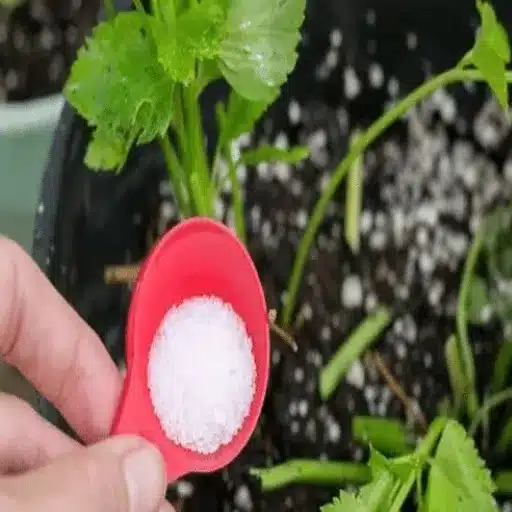
Step 2. Add 1 tablespoon of plain Epsom salt. Do not use scented or bath-grade Epsom salt. Stick with the plain agricultural or drugstore variety.
Step 3. Shake or stir until the crystals are fully dissolved. Undissolved crystals can burn leaf tissue.
Step 4. Spray in the early morning or late evening. High heat causes the water to evaporate before the leaves absorb the magnesium. Full sun can also burn wet leaves.
Step 5. Cover the undersides of the leaves. The stomata that absorb nutrients are concentrated on the bottom surface. Spray upward from below the plant.
Step 6. Wait 2 to 3 weeks. If new leaves come in green and healthy, you fixed the problem. If symptoms return on old leaves, repeat the application once.
For Soil Drench
Step 1. Measure 1 tablespoon of Epsom salt for every foot of plant height. A squash plant that is 2 feet tall gets 2 tablespoons.
Step 2. Dissolve the salt in 1 gallon of water. Use warm water for faster mixing.
Step 3. Pour the solution in a ring around the plant, about 6 to 8 inches from the stem. Pouring directly on the stem can cause rot.
Step 4. Follow with a plain water rinse. This pushes the magnesium down to the root zone and prevents salt buildup on the soil surface.
Step 5. Do not repeat for the rest of the season unless a second soil test shows the magnesium is still low. One application usually lasts.
Dosage Cheat Sheet
| Plant Height | Soil Drench (tablespoons) | Foliar Spray (tablespoons per gallon) |
|---|---|---|
| 6 to 12 inches | 1 | 1 |
| 12 to 24 inches | 2 | 1 |
| 24 to 36 inches | 3 | 1 |
| Over 36 inches | 3 max | 1 |
Do not exceed 3 tablespoons per plant per application. Overdosing causes more problems than it solves.
Common Mistakes That Ruin Squash Harvests
Even experienced gardeners make these errors. Avoiding them will save your squash crop.
Mistake 1: Using Epsom Salt as a Tonic
Epsom salt is not a general fertilizer. It is a targeted supplement for magnesium deficiency alone. Applying it to healthy plants throws the soil balance off.
You end up with plenty of magnesium but locked-out calcium and potassium.
Mistake 2: Applying During Fruit Ripening
Late-season magnesium pushes the plant to keep growing leaves instead of finishing the fruit. The fruit quality drops. The texture can become watery or stringy.
Stop all applications once the fruit starts changing color.
Mistake 3: Ignoring Waterlogged Soil
Wet roots cannot absorb magnesium no matter how much you add. Fix the drainage first. If the soil stays soggy, work in organic matter or plant in raised beds.

Mistake 4: Mixing with Calcium Fertilizers
Applying Epsom salt and calcium at the same time creates competition. The plant struggles to absorb either nutrient effectively. Space applications at least one week apart.
Address calcium issues separately before you touch magnesium.
Mistake 5: Using Scented Epsom Salt
Bath-grade Epsom salt often contains fragrances, dyes, and oils. These additives can harm soil microbes and burn plant roots. Always use plain, unscented Epsom salt for garden use.
Mistake 6: Spraying in Full Sun
Foliar sprays applied in direct sunlight evaporate before the plant can absorb them. The dissolved salt left on the leaf surface can concentrate and burn the tissue. Spray at dawn or dusk only.
Alternatives When Epsom Salt Isn't the Answer
Epsom salt is not the only tool. Sometimes a different approach works better for your specific situation.
Dolomitic Lime
This is the better choice when your soil pH is below 6.0 and magnesium is low. Dolomitic lime raises the pH and supplies magnesium slowly over several months. It is safer than Epsom salt on acidic soils because it does not risk calcium lockout.
Best for: acidic sandy soils with confirmed low magnesium.
Not for: soil with pH above 6.5. Lime would push the pH too high.
Compost or Aged Manure
Organic matter releases magnesium slowly as it breaks down. It also improves soil structure and water retention. Compost will not fix a severe magnesium shortage quickly, but it prevents deficiencies over time.
Best for: long-term soil health and maintenance.
Not for: quick correction of active deficiency symptoms.
Foliar Kelp Spray
Kelp contains trace amounts of magnesium along with plant growth hormones. It works as a gentle supplement rather than a targeted fix. It is a good option if you are not sure the problem is purely magnesium.
Best for: general plant health boost during vegetative growth.
Not for: confirmed magnesium deficiency that needs a strong dose.
Doing Nothing
If the symptoms are mild and the plant is still producing healthy fruit, walking away is often the smart choice. Many squash plants grow through a slight yellowing phase and recover on their own as the soil warms or dries out.
Best for: mild symptoms with no visible fruit damage.
Not for: severe yellowing that spreads quickly.
Expert Tips for Long‑Term Squash Nutrition
Build your soil before you plant. Add compost or well‑aged manure each season. This supplies a slow, steady stream of magnesium and other trace minerals.
Test your soil every spring. A $15 lab test tells you exactly where magnesium and calcium stand. It keeps you from guessing later.
Water deeply and less often. Deep watering encourages roots to grow downward. Shallow roots miss the nutrients stored deeper in the soil.
Rotate your squash bed each year. Planting in the same spot depletes specific nutrients. A three‑year rotation prevents any single mineral from dropping too low.
Final Decision Guide: Printable Quick‑Reference
| Condition | Action |
|---|---|
| Lower leaves yellow between veins, pH > 6.0, soil not wet | Apply foliar spray: 1 tbsp Epsom salt per gallon |
| Upper leaves yellow or whole leaf pale | Do not apply. Use balanced fertilizer |
| Blossom‑end rot present | Stop Epsom salt. Add calcium. Keep soil evenly moist |
| No symptoms | Do not apply |
| Soil test shows low magnesium | Use soil drench: 1 tbsp per foot of plant height |
| Soil pH below 6.0 | Use dolomitic lime instead of Epsom salt |
Frequently Asked Questions
Can I use Epsom salt on squash every week?
No. Weekly applications risk magnesium overload and calcium lockout. Apply only when a soil test shows deficiency.
One or two treatments per season is plenty.
Does Epsom salt prevent blossom‑end rot?
No. Blossom‑end rot comes from calcium shortage, not magnesium. Adding Epsom salt can actually make it worse by blocking calcium uptake.
How long until I see results after applying Epsom salt?
With a foliar spray, new growth looks greener in 5 to 10 days. A soil drench takes 10 to 14 days. Old yellow leaves will not turn green again, but new leaves will come in healthy.
Can I mix Epsom salt with other fertilizers?
Avoid mixing Epsom salt with calcium‑based fertilizers. They compete during uptake. Space applications by at least one week.
Is Epsom salt safe for organic gardening?
Yes. Plain, unscented Epsom salt is OMRI‑listed for organic use. It contains no synthetic additives.
Just avoid scented or bath‑grade versions.