That stubborn tree stump in your yard. It's an eyesore, a tripping hazard, and every time you mow the lawn you risk dinging your blade against it. You've probably heard you can use epsom salt to remove stump, but is it a real solution or just another gardening rumor?
The honest answer is that it works under the right conditions, but it's neither fast nor foolproof.
It's a slow, chemical-free method that leverages basic chemistry and biology to break down the wood over time. Per university extension guidelines, this approach is considered a low-impact, non-herbicidal option for homeowners who aren't in a rush. Let's dig into the details so you can decide if it's the right move for your yard.
Pain Point – Why Stump Removal Is Such a Headache
Tree stumps aren't just ugly. They actively cause problems in your yard.
- Tripping hazard. Stumps are notoriously hard to see under grass or fallen leaves.
- Regrowth. Many tree species try to sprout again, creating a multi-stemmed nuisance.
- Pests. Rotting wood becomes a hotel for termites, ants, and beetles.
- Space block. That prime garden spot is unusable with a stump in the middle.
Professional removal is effective but expensive. A stump grinder rental or service call can cost hundreds of dollars. Manual digging is brutally hard work, especially on older stumps with deep taproots.
So when homeowners hear about a cheap alternative like Epsom salt, it sounds like a dream. The question is whether the reality lives up to the promise.
Quick Answer – Does Epsom Salt Actually Remove a Stump?
Yes, it does work, but with major caveats.
Epsom salt (magnesium sulfate) dehydrates the wood and creates an environment that speeds up natural decay. However, this is a marathon, not a sprint. Aggregate reviews and university extension reports indicate it takes 6 to 12 months for small softwood stumps and 1 to 2 years for larger or hardwood stumps.
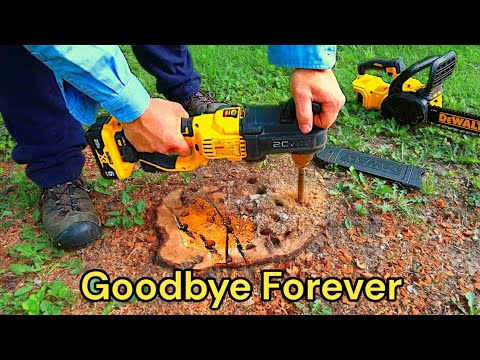
Image source: YouTube / Mountaineer Outdoors
Who it's best for:
- Homeowners with small stumps (under 12 inches in diameter)
- Stumps that are already dead or cut very low to the ground
- DIYers who are patient and want to avoid harsh chemicals
- People with softwood species like pine, fir, or spruce
If you need the stump gone next month, skip the Epsom salt and look at mechanical removal. If you are okay waiting and don't want to use herbicides, this method is a solid, low-effort path forward.
Core Explanation – How Epsom Salt Breaks Down Wood
Epsom salt works in two main ways.
First, it's hygroscopic. It pulls moisture out of the wood cells. This drying process kills any remaining living tissue in the stump and makes the wood brittle and cracked.
Dry wood is much easier for decomposers to break down.
Second, the magnesium in the salt can, in small amounts, actually feed the fungi and bacteria responsible for rotting wood. You are essentially jumpstarting the decomposition cycle.
So why does it take so long?
Wood is naturally resistant to decay. Trees spend their whole lives building tough, fibrous lignin. Epsom salt isn't a poison or a fast-acting enzyme.
It simply creates the conditions for decay. The actual work is done by microscopic organisms, and they work on nature's schedule.
As of 2026, many gardeners prefer this method precisely because it is slow and gentle on the surrounding ecosystem. Unlike chemical stump killers that can leach into the soil and harm nearby plants, Epsom salt, when used correctly, has a much lower environmental impact.
Thinking about soil health in other areas of your garden? Understanding the difference between feeding plants and feeding the soil is key. Check out our breakdown of compost vs fertilizer for a deeper dive.
Step-by-Step Process – The Drill-and-Fill Method
This is the standard approach. You don't need fancy tools, just a few hours of initial effort.
Tools & Materials:
- Power drill with a 1/2-inch to 1-inch spade bit
- Plain, unscented Epsom salt (magnesium sulfate)
- Water
- Tarp or heavy-duty trash bag
- Axe or shovel (for the final removal)
The Process:
- Cut the stump low. Saw the stump as close to the ground as possible. Fresh cuts absorb the salt better than dry, weathered wood.
- Drill holes. Drill a grid of holes across the top and sides of the stump. Space holes about 1 inch apart. Go as deep as your bit allows (6 to 12 inches is ideal). Angle the drill slightly outward on the sides to reach the roots.

Image source: Wikimedia Commons / Teuvo Huotari
- Fill with Epsom salt. Pour the salt directly into the holes. Pack it in tightly. For a 12-inch stump, you will likely use 1 to 2 pounds of salt.
- Add water. Slowly pour water into each hole to dissolve the salt and carry it deeper into the wood.
- Cover it. Place a tarp over the stump. This keeps rain from washing the salt out and traps moisture, which helps the decomposition process.
- Wait and repeat. Check the stump every 4 to 6 weeks. If it feels bone dry, reapply salt and water. You will know it is working when the wood becomes spongy and soft.
- Break it up. Once the stump is crumbly, use an axe or shovel to chop it apart. Fill the remaining hole with soil or compost.
Chopping up the softened stump requires a decent tool. Keeping your lawn mower running smoothly and your tools sharp is a good habit to build before tackling this final step.
Decision Tree – Should You Use Epsom Salt or Pick Something Faster?
Not every stump is a good candidate for this method. Use this decision tree to choose your best path.
Branch 1: Small, dead, softwood stump → Go ahead with salt.
If your stump is under 12 inches across, already dead (no sprouts), and a softwood like pine or spruce, Epsom salt is a fantastic, low-cost option. The timeline is reasonable (6-12 months), and the effort is minimal.
Branch 2: Large, live, or hardwood stump → Skip salt, use alternatives.
If the stump is over 12 inches wide, still sprouting green leaves, or a dense hardwood like oak or hickory, Epsom salt will test your patience. The cost savings aren't worth waiting 2+ years. A stump grinder or chemical remover is a better fit.
Branch 3: You want results in under 6 months → Avoid this method entirely.
If you are landscaping, building a shed, or planting a tree in that spot soon, do not use Epsom salt. You need immediate removal. This means renting a stump grinder, hiring a professional, or digging it out manually.
| Method | Timeframe | Cost | Effort | Best For |
|---|---|---|---|---|
| Epsom Salt | 6-24 months | $5-$15 | Low | Small, dead, softwood stumps |
| Stump Grinder | 1-2 hours | $100-$400 | Moderate | Any size, immediate results |
| Chemical Remover | 4-8 weeks | $15-$30 | Low | Most stumps, faster than salt |
| Manual Digging | 1-2 days | $0 | Very High | Small stumps, instant removal |
Alternatives & Comparisons – What Else You Can Do Instead
Epsom salt is not your only option. Here is how the other methods stack up.
Stump Grinder. This is the gold standard for speed. You can rent one from most equipment rental yards. It grinds the stump into wood chips.
It is loud, dusty, and takes some muscle to operate, but it gets the job done in an hour.

Image source: Wikimedia Commons / Charles & Hudson (CC BY-SA)
Chemical Stump Removers. These usually contain potassium nitrate. They speed up decay much faster than Epsom salt. You still drill holes and fill them, but you see results in 4 to 8 weeks.
The downside is that they are stronger chemicals, so you need to be careful with kids and pets.
Manual Digging. This involves digging around the stump, cutting the roots with an axe or saw, and pulling it out. It is extremely hard work, especially on clay soil. But it costs nothing and offers instant gratification.
Burning. Some people drill holes, fill them with kerosene, and burn the stump. This can be effective but is dangerous and illegal in many areas due to burn bans. Check local fire regulations before attempting.
If you are already comfortable with outdoor power equipment, renting a grinder or using a heavy-duty approach might feel more natural. Taking time for routine upkeep on your equipment ensures it works when you need it.
Mistakes to Avoid – What Usually Goes Wrong
Most people fail with Epsom salt because of a few predictable errors.
Using too little salt. A light sprinkle does nothing. You need to pack the holes full. The salt must make direct contact with the wood fibers.
Not covering the stump. If you leave the stump uncovered, rain will wash the salt away. The tarp is not optional. It keeps the salt where it belongs and traps moisture.
Using scented Epsom salts. Only use plain, unscented Epsom salt. Fragrances and additives can repel the decomposing organisms you are trying to attract.
Giving up too early. People check the stump after a month, see no change, and declare the method a failure. This is normal. The process takes months, not weeks.
Using it on live stumps. If the stump is still green and sprouting, salt alone won't kill it fast enough. You need to either kill the stump first or choose a faster removal method.

Image source: YouTube / Bill Winke
Costs & Timeline – What to Expect
Let's be realistic about what this method costs you in time and money.
| Stump Size | Epsom Salt Needed | Approximate Cost | Expected Timeline |
|---|---|---|---|
| Under 6 inches | 1 lb (2 cups) | $2-$3 | 4-6 months |
| 6 to 12 inches | 2-3 lbs | $4-$8 | 6-12 months |
| 12 to 24 inches | 4-6 lbs | $8-$15 | 12-24 months |
| Over 24 inches | Not recommended | N/A | 2+ years |
The cost is undeniably low. A bag of Epsom salt costs less than a fancy coffee drink. But the tradeoff is time.
If your time is valuable and you want the stump gone this season, invest in a faster method.
Safety & Warnings – Soil Damage, Pets, and When Not to Use
Epsom salt is safer than chemical herbicides, but it is not completely harmless.
Soil salinity. Large amounts of magnesium sulfate can alter the soil chemistry. Most plants handle it fine, but acid-loving plants like azaleas, rhododendrons, and blueberries can struggle. Avoid dumping excess salt around their roots.
Pets. In small amounts, Epsom salt is generally safe for dogs and cats. In large quantities, it acts as a laxative. Keep the bag covered and don't leave piles of salt exposed where your dog can eat it.
Water sources. Avoid using Epsom salt near wells, ponds, or streams. Magnesium runoff can affect water quality.

Image source: YouTube / Mr. tiny farmer
When not to use it:
- Near edible plants or vegetable gardens
- On stumps with known fungal infections (can spread)
- In areas with already high magnesium levels in the soil
If you are struggling with unhealthy soil in other parts of your garden, it is worth testing your soil before adding more minerals. Understanding what your lawn really needs can save you time and money.
Practical Examples – Two Real-World Scenarios
Let's look at two common situations.
Scenario 1: The pine stump that worked.
A homeowner had a 10-inch pine stump cut low to the ground. They drilled 15 holes, filled them with Epsom salt, and covered the stump with a black tarp. After 8 months, the wood was spongy and full of small cracks.
They broke it apart with an axe in 20 minutes. Total cost was about $4.
Scenario 2: The oak stump that didn't.
Another homeowner tried Epsom salt on a 24-inch oak stump. The stump was still alive and sprouting. They applied salt twice over a year.
The stump barely changed. The outer inch softened, but the core stayed rock hard. They eventually hired a stump grinder for $250.
The difference? Size, species, and patience. Oak is dense and slow to rot.
Pine is soft and fast. Epsom salt only works well when the wood species cooperates.
Final Decision Guide – Choose Your Stump Removal Method
If you are still unsure, run through these questions.
Is the stump under 12 inches wide and already dead?
Yes → Use Epsom salt or remove manually.
No → Look at grinder or chemical options.
Are you willing to wait 6 to 12 months?
Yes → Epsom salt is a great fit.
No → Rent a grinder or use a chemical remover.
Is the stump a softwood species (pine, fir, spruce)?
Yes → Salt will work faster.
No → Hardwoods (oak, maple) need more aggressive methods.
Do you want to avoid all chemicals?
Yes → Epsom salt or manual removal.
No → Chemical removers are faster and still safe.
This simple flowchart should point you toward the right method for your situation.
Frequently Asked Questions
How much Epsom salt do I need for a stump?
Roughly 1 pound (2 cups) for every 6 to 8 inches of stump diameter. A 12-inch stump needs about 2 to 3 pounds. Pack the holes full, and don't skimp.
Will Epsom salt kill tree roots?
Yes, but slowly. The salt dehydrates the roots, but it takes time for the salt to travel through the stump into the root system. This is why smaller stumps work better.
Large roots may survive and need physical removal.
Does Epsom salt attract pests or insects?
No. In fact, it can help repel certain pests. Epsom salt is sometimes used as a slug and snail deterrent.
The rotting wood might attract decomposers, but that is part of the process.
Can I burn the stump after using Epsom salt?
Yes, but with caution. The salt makes the wood dry and brittle, which helps it burn. However, you still need to follow local burn regulations.
Never use accelerants like gasoline. Burn only when conditions are safe.
Is Epsom salt better than chemical stump remover?
It depends on your goals. Epsom salt is safer for the environment and cheaper. Chemical stump removers (potassium nitrate) work 3 to 4 times faster.
If you are patient, choose salt. If you want speed, choose chemicals.
Alternatives & Comparisons – What Else You Can Do Instead
Epsom salt is one tool in the toolbox. Here is how it stacks up against the main alternatives.
- Stump grinder. Fastest option. Rented machines cost $100, $400 per day. Works on any size stump. Loud and dusty but finishes in under an hour.
- Chemical stump removers (potassium nitrate). Faster than Epsom salt. Results in 4, 8 weeks. Drill, fill, wait. More expensive ($15, $30 per stump) and uses stronger chemicals.
- Manual digging. Free but hard work. Best for small stumps with shallow roots. Requires an axe, shovel, and sweat.
- Burning. Effective but risky. Illegal in many areas. Only consider if you have a burn permit and safe conditions.
| Method | Time | Cost | Effort | Best Use |
|---|---|---|---|---|
| Epsom salt | 6–24 months | $5–$15 | Low | Small dead stumps, no rush |
| Stump grinder | 1–2 hours | $100–$400 | Moderate | Any size, immediate removal |
| Chemical remover | 4–8 weeks | $15–$30 | Low | Most stumps, faster than salt |
| Manual digging | 1–2 days | $0 | Very high | Small stumps, free option |
If you want the stump gone this season, skip salt. If you have patience and a small softwood stump, salt wins on cost and safety.
Mistakes to Avoid – What Usually Goes Wrong
Even with the right method, people mess up. Here are the most common errors.
Using scented or colored Epsom salts. Only plain, unscented magnesium sulfate works. Fragrances repel the decomposing fungi you need.
Not covering the stump. Rain washes the salt away. Always use a tarp or plastic bag to keep it dry and contained.
Drilling holes too shallow. Your holes need to be at least 6 inches deep. Shallow holes mean the salt never reaches the core.
Applying once and giving up. You need 2, 3 applications over several months. Check the stump every 6 weeks. If it’s dry, add more salt and water.
Expecting fast results on hardwood. Oak, maple, and hickory rot much slower than pine or fir. If you have hardwood, save yourself the wait and rent a grinder.
Costs & Timeline – What to Expect in Terms of Money, Effort, and Waiting
Here is a realistic breakdown based on stump size.
| Stump Diameter | Epsom Salt Needed | Cost | Typical Wait Time |
|---|---|---|---|
| Under 6 inches | 1 lb (2 cups) | $2–$3 | 4–6 months |
| 6–12 inches | 2–3 lbs | $4–$8 | 6–12 months |
| 12–24 inches | 4–6 lbs | $8–$15 | 12–24 months |
| Over 24 inches | Not recommended | N/A | 2+ years |
The total effort is about 1, 2 hours of drilling and pouring. Then you wait. No weekly maintenance needed beyond checking the tarp.
If you want faster results, the cost of a grinder rental or chemical remover may be worth skipping the year-long wait.
Safety & Warnings – Soil Damage, Pets, and When Not to Use
Epsom salt is safer than chemical herbicides, but it is not completely harmless.
Soil salinity. Large amounts of magnesium sulfate can alter soil pH. Acid-loving plants like azaleas, rhododendrons, and blueberries may struggle. Avoid dumping excess salt near their root zones.
Pets. In small amounts, Epsom salt is safe for dogs and cats. In large quantities, it acts as a laxative. Keep the bag covered and don’t leave piles of salt where your pet can eat them.
Water sources. Avoid using it near wells, ponds, or streams. Magnesium runoff can affect water quality.
When not to use it:
- Near edible plants or vegetable gardens
- On stumps with active fungal infections (can spread spores)
- In areas with already high magnesium levels in the soil
If you are unsure about your soil, a simple test kit from a garden center can tell you magnesium levels before you start.
Practical Examples – Two Real-World Scenarios (One Worked, One Didn’t)
Scenario 1: The pine stump that worked. A homeowner had an 8-inch pine stump cut low. They drilled 12 holes, packed them with Epsom salt, covered it with a tarp, and reapplied after 2 months. After 9 months, the wood was spongy.
They broke it apart with an axe in 15 minutes. Total cost was about $4.
Scenario 2: The oak stump that didn’t. Another homeowner tried on a 20-inch live oak stump. They applied salt three times over 18 months. Only the outer inch softened.
The core stayed rock hard. They eventually hired a stump grinder for $200.
The difference? Wood species and stump vitality. Pine is soft and decays quickly.
Live oak is dense and fights back. Epsom salt works best when the wood is already dead and the species is soft.
Final Decision Guide – A Simple Flowchart to Choose Your Best Stump Removal Method
Still unsure? Run through these three questions.
Is the stump under 12 inches wide and already dead? Yes → Epsom salt or manual removal. No → Grinder or chemical remover.
Are you willing to wait 6 to 12 months? Yes → Epsom salt. No → Rent a grinder.
Is the stump a softwood species? Yes → Salt works faster. No → Hardwoods need mechanical or chemical help.
Frequently Asked Questions
How much Epsom salt do I need for a stump?
About 1 pound (2 cups) per 6, 8 inches of stump diameter. A 12-inch stump needs 2, 3 pounds. Pack holes tightly.
Don't skimp.
Will Epsom salt kill tree roots?
Yes, but slowly. The salt dehydrates the roots over months. Large roots may survive and need physical removal.
Smaller root systems die off completely.
Does Epsom salt attract pests?
No. It repels some pests like slugs. The rotting wood attracts decomposers, which is part of the decay process.
Can I burn the stump after using Epsom salt?
Yes, with caution. The salt dries the wood, making it burn easier. Check local burn regulations first.
Never use accelerants.
Is Epsom salt better than chemical stump remover?
It depends. Epsom salt is safer and cheaper. Chemical removers work 3, 4 times faster.
If you are patient, choose salt. If you want speed, choose chemicals.