
Figuring out how much does a wheelbarrow cost can feel like a guessing game, especially with so many options out there. You're not just looking at a price tag; you're investing in a tool that can make your yard work, landscaping, or construction projects significantly easier, or a real pain if you pick the wrong one. Understanding where that money goes is key to finding the right balance of durability, functionality, and price for your specific needs.
Our research shows that a sturdy, reliable wheelbarrow can range anywhere from $50 for a basic model to over $400 for a specialized, heavy-duty unit. The cost is directly tied to materials, capacity, tire type, and intended use, which means there’s no single "best" price, but rather the right price for your job. As of 2026, manufacturers continue to innovate, bringing more durable plastics and specialized tire technologies to the market.
How Much Does a Wheelbarrow Cost? A Practical Guide

Decoding Wheelbarrow Prices: What You're Actually Paying For
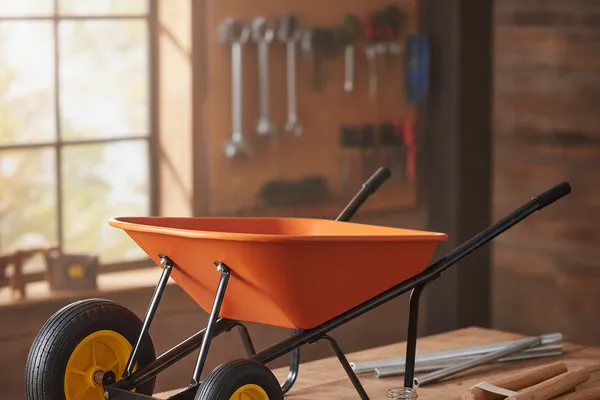
When you look at the price tag on a wheelbarrow, you're seeing the culmination of several factors that determine its performance and lifespan. It’s not just about the metal or plastic; it’s about how it’s engineered to handle tough jobs. Costs typically increase with features that enhance durability, load capacity, and ease of use, especially for professional applications.
Aggregate user reviews and manufacturer data indicate that a well-built wheelbarrow is an investment. An entry-level plastic model for light garden tasks will cost significantly less than a steel contractor-grade wheelbarrow designed for hauling concrete. Understanding these price drivers helps you avoid overpaying for features you don't need or underbuying and ending up with a tool that breaks down quickly.
Essential Wheelbarrow Features That Impact Cost
Capacity: How Much Can It Haul?
The single biggest factor driving wheelbarrow cost is its capacity, measured in cubic feet (cu ft). A small 3, 4 cu ft wheelbarrow is generally the most affordable. These are good for hauling mulch, a few bags of soil, or garden debris.
As capacity increases, so does the price. A common homeowner size is around 6, 8 cu ft, offering a good balance for most garden and landscape tasks. For heavy-duty construction or farm work, wheelbarrows can reach 10 cu ft and upwards. Their larger tubs and often reinforced frames come with a higher price tag.
Material Matters: Plastic vs. Steel Wheelbarrows
- Plastic (Polyethylene): Typically more budget-friendly and lighter. High-density polyethylene (HDPE) is common, offering good impact resistance and resistance to rust and corrosion. However, plastic can become brittle in extreme cold or crack under heavy, sharp loads over time, especially if it’s a lower-quality material.
- Steel: Generally more expensive but also more robust. Steel wheelbarrows, whether painted or galvanized, can handle heavier, sharper materials without cracking. Galvanized steel offers better rust resistance than painted steel. The gauge of the steel also plays a role; thicker steel means more durability and a higher cost.
Our research shows that while plastic models are popular for their lighter weight and lower price point, steel wheelbarrows are often preferred for demanding tasks where durability is paramount.
Tire Talk: Pneumatic vs. Solid vs. Foam-Filled Tires
The type of tire significantly impacts both the price and the user experience.
- Pneumatic (Air-Filled) Tires: These are like most bike tires; they use air to cushion the load and absorb shocks. They provide the smoothest ride over uneven terrain and are generally the most comfortable to maneuver. However, they are prone to flats, and replacing tubes or tires adds to ongoing costs. They typically come on mid-range to higher-end models.
- Solid Tires: Made from solid rubber or a dense composite. They offer excellent puncture resistance, meaning no more flat tires. The trade-off is a much rougher ride, especially on uneven ground, and they can be harder to steer. These are often found on more basic, budget-friendly models or as an upgrade option.
- Foam-Filled Tires: A compromise between pneumatic and solid. These airless tires have foam injected into them, providing some cushioning while eliminating the risk of flats. They offer a better ride than solid tires without the worry of punctures. They tend to be found on mid-to-high-end models and add to the overall cost.
Single-Wheel vs. Two-Wheel: Maneuverability and Price
The number of wheels on a wheelbarrow affects its stability, maneuverability, and cost.
- Single-Wheel: The classic wheelbarrow design. These are highly maneuverable, allowing you to easily steer and turn in tight spaces, like navigating garden paths or around obstacles. The single wheel bears the full load directly, which can make them tip more easily if not balanced correctly, especially on soft ground. They are generally the most affordable wheelbarrow type.
- Two-Wheel (Dual-Wheel): These offer superior stability. With two wheels at the front, the load is distributed, making them much harder to tip over. They are excellent for softer ground or for carrying very heavy, unstable loads like concrete. While usually more stable, they can be less agile in extremely tight spots compared to single-wheel models. Two-wheel designs typically command a higher price than their single-wheel counterparts.
Wheelbarrow Price Ranges: From Budget Buys to Heavy-Duty Workhorses
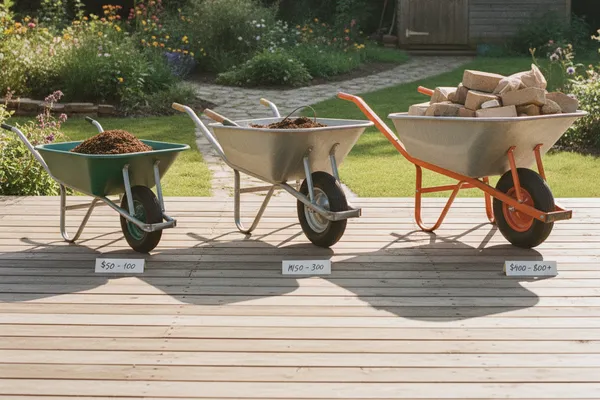
Understanding the typical price brackets can help you set expectations and narrow down your search for the perfect wheelbarrow. These ranges are based on aggregate manufacturer data and buyer feedback as of 2026.
Entry-Level Wheelbarrows ($50 – $100)
At the lower end of the spectrum, you'll find basic, lightweight wheelbarrows primarily made from plastic. These are ideal for light-duty tasks like moving small amounts of mulch, garden clippings, or soil for a few potted plants. They usually feature a single, solid tire for puncture resistance and a loop handle for basic gripping. While affordable, these models may lack the durability for frequent or heavy use.
Their capacity typically tops out around 4, 6 cubic feet.
Mid-Range Wheelbarrows ($100 – $200)
This is where you start to see a significant step up in quality and features. Mid-range wheelbarrows often feature thicker plastic tubs or thinner gauge steel, and you might find models with pneumatic or foam-filled tires for a smoother ride. Two-wheel options become more common in this price range, offering better stability. These are well-suited for most homeowner needs, handling regular gardening, landscaping projects, and moderate amounts of debris.
Capacity usually ranges from 6, 8 cubic feet.
Heavy-Duty & Contractor-Grade Wheelbarrows ($200+)
For professionals or serious DIYers tackling demanding projects, heavy-duty wheelbarrows are the way to go. These are built with thick gauge steel, often galvanized for rust protection, and feature high-capacity tubs (10 cu ft and above). They almost always come with robust pneumatic or advanced foam-filled tires, and reinforced frames for maximum load-bearing. These are designed to withstand daily use and haul heavy materials like concrete, rocks, or large amounts of soil.
Expect features like P-handles for better grip and control.
Common Wheelbarrow Use Cases and Their Cost Implications
The job you need a wheelbarrow for will strongly influence the type of model that makes sense and, consequently, its price. Think about what you'll be hauling, how often, and on what kind of terrain. Choosing a wheelbarrow designed for your specific tasks ensures you get value for your money and avoid frustration.
A heavy-duty contractor-grade wheelbarrow, while pricier, is a sound investment if you're frequently moving large volumes of rough materials like gravel or bricks on a construction site. For lighter, occasional gardening tasks, a less expensive plastic model with a solid tire might be perfectly adequate and save you money. Our research indicates that matching the wheelbarrow’s capabilities to your anticipated workload is the most effective way to determine the right price point.
For the Home Gardener and DIYer
If your primary use involves gardening, composting, or general yard cleanup, you’re likely looking at a lighter-duty wheelbarrow. These typically fall into the $50 to $150 range. You might opt for a 4, 6 cu ft plastic model for hauling mulch, soil, or yard waste. A single pneumatic tire can offer comfort on uneven lawns, but a solid tire is a good, low-maintenance choice if punctures are a concern.
These models are designed for practicality and ease of use for occasional tasks.
Consider a wheelbarrow with good maneuverability if your garden has narrow paths or intricate beds. Many models in this category offer loop handles, which are comfortable for general use. If you're undertaking larger landscaping projects, like moving decorative rocks or substantial amounts of topsoil, you might lean towards the higher end of this price range for a more robust plastic or a lighter steel model with a larger capacity. For instance, a 6 cu ft dual-wheel steel model could be a worthwhile upgrade for general yard work, costing around $120-$180.
For Landscaping and Construction Pro
Professionals and serious DIYers dealing with construction debris, heavy landscaping materials like large rocks, or significant volumes of concrete need robust, high-capacity wheelbarrows. These typically start around $150 and can go well over $400. Heavy-gauge steel tubs, dual wheels for stability, and durable pneumatic or high-performance foam-filled tires are standard.
These workhorses are built for longevity and to handle loads of 300, 500 lbs or more. A common contractor model might offer a 10 cu ft galvanized steel tub with two pneumatic tires and reinforced steel handles. This type of wheelbarrow is an essential piece of equipment for anyone regularly involved in building, renovation, or intensive landscaping. Investing in a quality unit here prevents costly downtime due to tool failure.
Motorized Wheelbarrows: The Power-Up Option
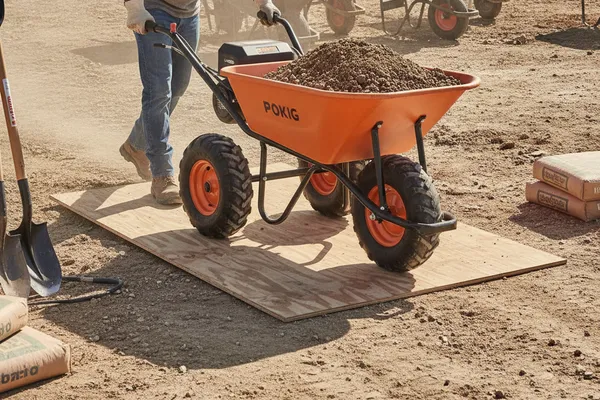
For those tackling exceptionally large or challenging projects, or if physical limitations are a concern, a motorized wheelbarrow, sometimes called a power barrow, enters the picture. These machines drastically reduce the physical effort required to move heavy loads across considerable distances or inclines. They use a gas engine or electric motor to drive the wheels, essentially acting as a powered hauler.
The cost for a motorized wheelbarrow is substantially higher than for a manual one, typically ranging from $800 to $3,000 or more, depending on the motor size, payload capacity, and features like powered dumping. These are specialized tools for serious landscaping companies, construction crews, or large-scale agricultural operations. While they offer immense convenience and efficiency, their price point places them well beyond the needs of the average homeowner.
Costly Mistakes to Avoid When Buying a Wheelbarrow
When shopping for a wheelbarrow, a few common pitfalls can lead to buyer's remorse and wasted money. Overlooking critical features or buying solely on the lowest price can land you with a tool that doesn't quite do the job, or worse, breaks down prematurely. Our research on buyer feedback highlights some recurring issues.
One common mistake is buying a plastic wheelbarrow that's too thin-walled for heavy jobs. While cheaper upfront, it can crack or bend under load, especially if subjected to sharp objects or extreme temperatures. Another error is opting for a small capacity when you regularly haul large loads, leading to more trips and wasted time. Always consider the terrain you'll be working on, a pneumatic tire offers comfort on rough ground, but a solid tire might be better if you face constant thorns or sharp debris.
Here are a few specific mistakes to watch out for:
- Ignoring Tire Type: Choosing a solid tire for very rough, bumpy terrain can lead to a jarring experience, while a pneumatic tire prone to flats isn't ideal for a busy construction site.
- Underestimating Load Capacity: Buying a wheelbarrow rated for 150 lbs when you frequently haul 200-300 lbs of rocks or concrete is a recipe for disaster.
- Skimping on Frame Quality: A thin, weak frame on a steel wheelbarrow can bend or buckle, rendering the entire unit unstable and unusable.
- Lack of Stability Features: For heavy loads, a single-wheel model can be difficult to balance. Opting for a dual-wheel design often provides much-needed stability.
Are Garden Carts a Cheaper Alternative?

Garden carts and wheelbarrows are often used interchangeably in casual conversation, but they differ in design and often in price, catering to slightly different needs. A garden cart typically has four wheels, providing excellent stability, and a larger, flatter bed. They are generally easier to maneuver when fully loaded and don't require balancing like a wheelbarrow.
While some heavy-duty garden carts can be more expensive than basic wheelbarrows, basic to mid-range garden carts often fall into a similar price bracket to mid-range wheelbarrows, roughly $75 to $200. For tasks involving evenly distributing weight or when stability is paramount, such as hauling bags of soil or a large volume of mulch, a garden cart can be a fantastic option. However, their larger turning radius can make them less ideal for very tight spaces where a wheelbarrow’s single wheel agility shines.
Expert Tips for Getting the Best Value Wheelbarrow
To get the most bang for your buck when buying a wheelbarrow, consider these expert-driven insights based on industry standards and aggregated buyer feedback. It’s about finding the right balance of cost, durability, and functionality for your specific needs, rather than just grabbing the cheapest option. As of 2026, the market offers diverse choices, so a little knowledge goes a long way.
Think about the materials: for light yard work, a quality high-density polyethylene (HDPE) wheelbarrow from a reputable brand like Ames or True Temper offers good value. For heavier loads or frequent use, a galvanized steel model from a trusted manufacturer provides superior strength and longevity, even if the upfront cost is higher. Always check the gauge of the steel if available; a lower gauge number means thicker, stronger steel.
Here’s a quick checklist for maximizing value:
- Match Capacity to Your Tasks: Don't buy a 10 cu ft behemoth if you only move a few bags of potting soil. Conversely, don't get a 4 cu ft kiddie-pool-sized tub if you haul gravel daily.
- Consider Tire Longevity: If you dread dealing with flat tires, a foam-filled or solid tire model upfront might save you hassle and replacement costs long-term, even if it has a slightly higher initial price.
- Read Recent Reviews: Look for patterns in user feedback regarding durability, ease of assembly, and how well the wheelbarrow handles specific loads. Many online retailers like Home Depot or Lowe's provide extensive buyer reviews.
- Prioritize Handle Comfort: For extended use, comfortable hand grips and a well-designed handle (like a P-handle) can make a significant difference in reducing fatigue.
- Inspect Frame and Joints: If possible, check the frame construction for sturdy welds and reinforced joints, especially on steel models, as these are common failure points.