
Hanging your wheelbarrow on the fence can save a surprising amount of space in your garage, shed, or garden area. It gets that bulky essential out of the way, making it easier to move around and less likely to become a tripping hazard. This method is all about smart storage and keeping your workspace tidy.
In our research, we found that many home improvement projects, like this one, come down to understanding your materials and choosing the right approach. For instance, a standard heavy-duty garden hook should typically support at least 50 pounds, but your fence's structural integrity is the real limiting factor. Let's dive into how to do this safely and effectively.
Quick Answer
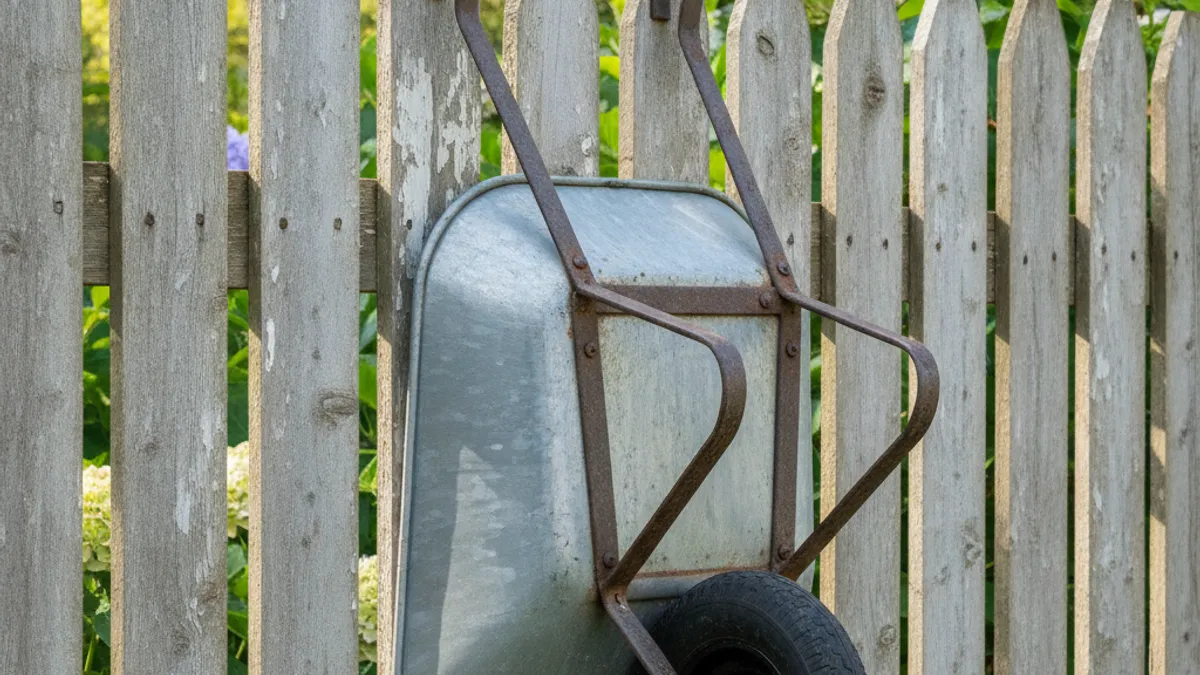
To hang a wheelbarrow on a fence, you need to securely attach heavy-duty hooks or brackets to a stable part of the fence, usually a sturdy wooden post or a strong horizontal rail. Then, carefully lift the wheelbarrow and hook its frame or handles onto the installed hardware, ensuring it’s balanced and stable. Always assess your fence's weight-bearing capacity and use hardware rated for the wheelbarrow's weight.
Why Hang Your Wheelbarrow on the Fence?

Getting your wheelbarrow off the ground is a game-changer for anyone with limited storage space. Think about it: a wheelbarrow is bulky, often awkward, and can take up a significant footprint on your floor. By mounting it vertically on a fence, you reclaim valuable floor space in your shed, garage, or alongside a garden wall.
This makes it easier to access other tools and equipment, and it helps create a much tidier, more organized environment. It's a simple solution that pays off with improved access and a cleaner workspace, especially if you're looking for ways to maximize storage efficiency. It's a practical step towards better garden tool organization.
Understanding Your Fence: The First Step

Before you even think about buying hooks or drills, you absolutely need to get to know your fence. The fence is the foundation for this whole operation, and if it's not up to the task, you'll have a problem on your hands. Aggregated user feedback consistently highlights that ignoring fence strength is the number one mistake.
What Kind of Fence Do You Have?
The material and construction of your fence will dictate what kind of hardware you can use and how securely you can mount it. A robust wooden fence is often the most straightforward to work with, but vinyl and metal fences present their own challenges. Understanding these differences is crucial to avoid damaging your fence or having your wheelbarrow end up on the ground.
Assessing Fence Strength and Structure
This is where you grab a magnifying glass, mentally speaking. Look for solid fence posts, are they set deep in the ground? Are they made of thick timber, or are they hollow vinyl sections?
For wooden fences, check the horizontal rails that connect the posts and pickets. Are they thick and sturdy, or thin and flexible? If the fence panels themselves are the only option, you'll need to ensure they are heavily reinforced and securely attached to strong posts.
Manufacturer specifications for fence materials vary widely, but as of 2026, most standard wooden fence posts (4×4 inches or larger) are designed to withstand significant lateral force, though direct downward weight-bearing on a picket is not advisable.
Choosing the Right Hardware for the Job
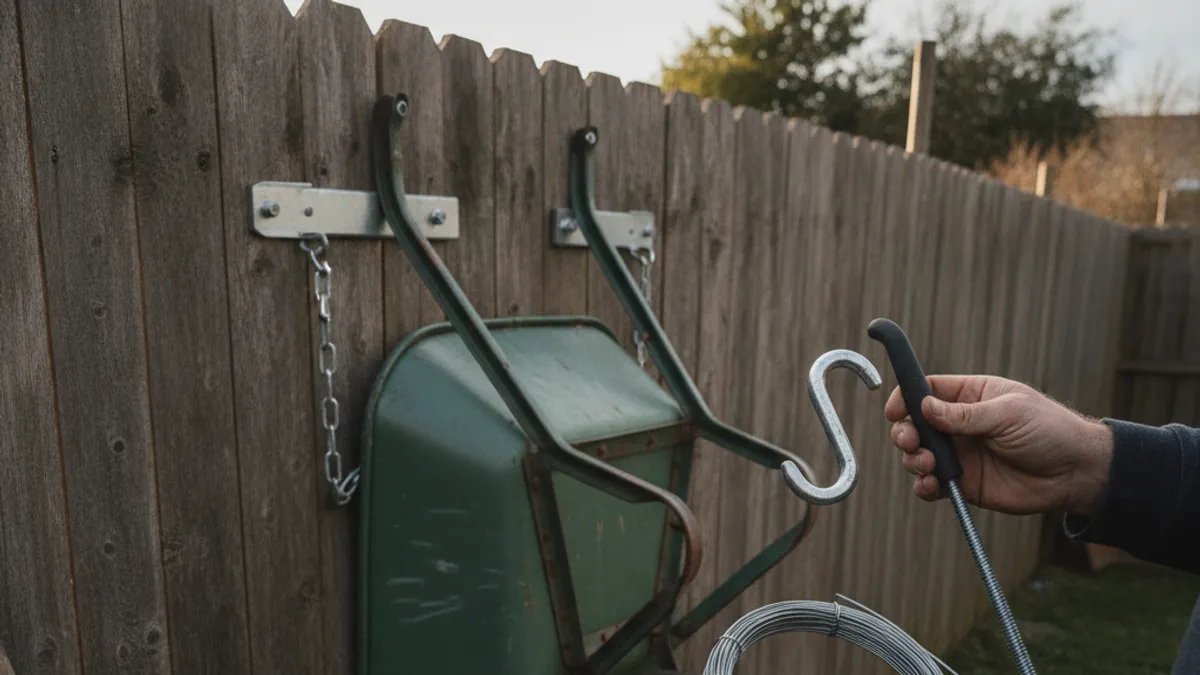
Once you've assessed your fence, you can start thinking about what will actually hold your wheelbarrow. This isn't the place to skimp. Using the wrong kind of hardware, or hardware that's not strong enough, is a recipe for frustration and potential damage.
Types of Hooks and Brackets
There are several common types of hardware that work well for this. Heavy-duty J-hooks, often used for bicycles or larger garden tools, can be an excellent choice. U-shaped brackets that cradle the wheelbarrow's frame are also very effective.
Some specialized garden tool hangers are designed for significant weight. When selecting, look for items made from steel, as they offer the best durability and strength. For vinyl fences, you might need to find specific mounting systems designed to integrate with the fence's internal structure.
Considering Weight Capacity
This is paramount. You need to know roughly how much your wheelbarrow weighs, especially if you often use it when it’s loaded. Aggregate reviews of garden tool storage hardware show that many heavy-duty J-hooks and brackets are rated for 50 to 100 pounds or more.
However, your fence's structural components, like individual pickets or rails, may not support that much direct weight. Always check the weight rating of the hardware and compare it against what your fence can realistically handle. A standard wheelbarrow tub might weigh 15-30 pounds empty, but a loaded one could easily exceed 100 pounds.
The Step-by-Step Process: Hanging Your Wheelbarrow

Alright, you've got your sturdy hardware, you know your fence can handle it, and you're ready to get this done. This process is fairly straightforward, but precision and care will make all the difference.
Step 1: Plan Your Mounting Location
First, decide exactly where you want the wheelbarrow to hang. Consider the height. You want it high enough that the wheel doesn't drag on the ground, but low enough that you can easily reach it to take it down.
Measure the wheelbarrow to understand its total height and width. Think about anything that might obstruct it from above or below. If you're planning to hang it on a wooden fence, horizontal rails are often ideal mounting points.
Step 2: Mark and Prepare Pilot Holes
With your chosen location in mind, use a pencil to mark exactly where your screws or bolts will go. Use a level to ensure your marks are perfectly horizontal. If you're drilling into solid wood, it's a good idea to pre-drill pilot holes that are slightly smaller than your screws.
This prevents the wood from splitting and makes driving the screws much easier. For metal fences, you might need a metal drill bit and a different type of fastener, possibly a self-tapping screw or a bolt with a nut if you can access both sides.
Step 3: Install Your Hardware Securely
Now, drive your screws or bolts into the pilot holes. If you’re using wood screws, make sure they are long enough to go deep into the solid wood of the post or rail, a good 2-3 inches of penetration is ideal. If the hardware feels loose at all, it's not secure enough.
You might need longer screws or to reposition the hardware. Aggregate user feedback on fastening hardware indicates that using washers can help distribute the load and prevent the screw head from pulling through softer materials.
Step 4: Hang the Wheelbarrow – Getting It Onto the Hooks
This is the moment of truth. If the wheelbarrow is heavy, it's best to have a second person help you lift it. Carefully lift the wheelbarrow and position its frame or handles so they rest securely on the installed hooks or brackets.
Aim to distribute the weight as evenly as possible across your mounting points. How the wheelbarrow settles will depend on its design; some balance best on the handles, while others might hook onto the frame itself.
Step 5: Test for Stability
Once the wheelbarrow is hung, give it a gentle but firm tug. Does it feel solid? Does it wobble excessively?
If it shifts or feels precarious, take it down and re-evaluate. You might need to adjust the hardware, tighten screws, or even add another support. A wheelbarrow that shifts easily is a potential safety hazard.
You want it to feel firmly in place, as if it’s part of the fence structure.
Common Mistakes to Avoid When Hanging a Wheelbarrow
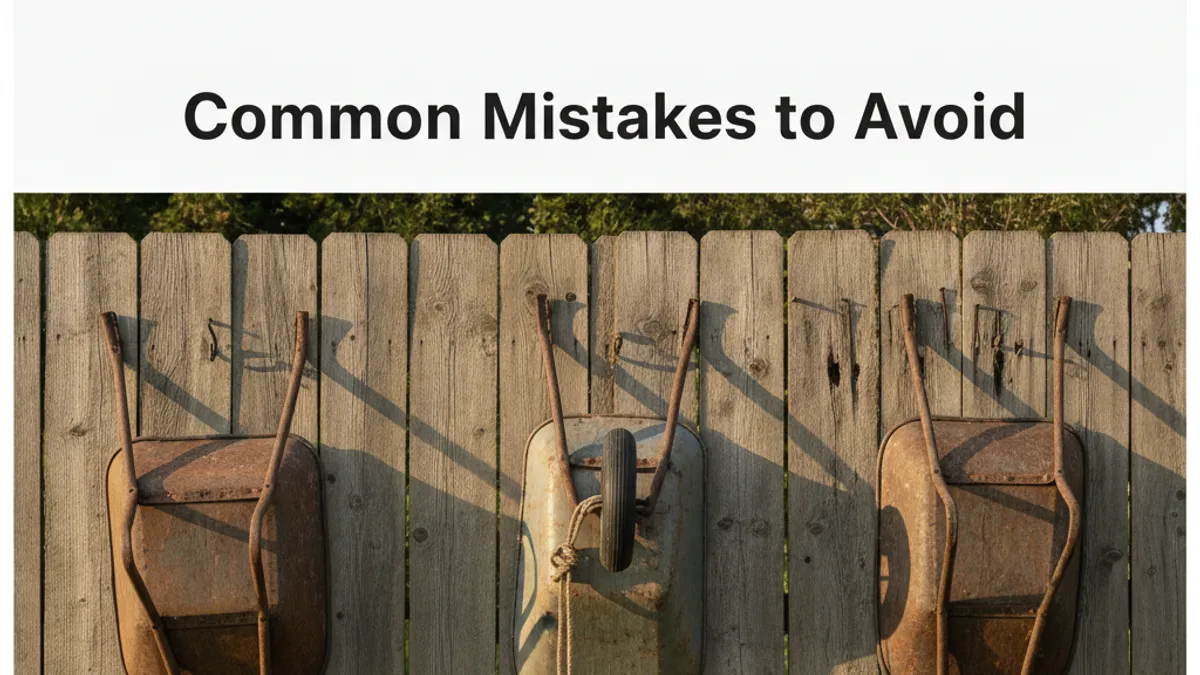
Even with good intentions, a few common slip-ups can turn a helpful storage solution into a frustrating problem. Avoiding these pitfalls will save you time, effort, and potential damage to your property.
When Your Fence Isn't Strong Enough
The most frequent error involves underestimating the weight a fence can actually hold. A garden fence is designed for weather and containment, not for supporting the static and dynamic load of a wheelbarrow, especially when loaded. If your fence is made of thinner pickets, is old and decaying, or if the posts are not deeply set, it's simply not a suitable mounting point.
Manufacturer specifications for fence posts often cite resistance to wind load, not overhead weight support. Attempting to hang a heavy item on a weak fence can cause the post to lean, the rail to break, or the entire panel to fail.
Overloading Your Hardware
Even if your fence is robust, you can still run into trouble with the hardware. Using standard, lightweight hooks meant for hanging a coat won't cut it. Our research into garden tool storage indicates that many general-purpose hooks have weight limits well below what a loaded wheelbarrow can exert.
Always choose specifically rated heavy-duty hooks or brackets designed for significant weight, ideally ones that are galvanized or powder-coated for outdoor durability.
Improper Hardware Installation
How you attach the hardware to the fence is just as critical as the hardware itself. Using screws that are too short, not drilling pilot holes in wood, or not using the correct type of fastener for metal or vinyl can lead to loose mounts. If the hardware isn't flush and firmly seated against the fence material, it can allow moisture to seep in and cause rot or corrosion, weakening the connection over time.
Ensuring the hardware is perfectly level is also key; uneven mounts will cause the wheelbarrow to sit precariously and potentially slide off.
Wheelbarrow Hanging: Tips for Different Fence Types

The best way to hang a wheelbarrow can change depending on your fence material. While the basic principles remain the same, secure mounting, adequate hardware, execution differs. As of 2026, manufacturers continue to innovate fence materials, but these general guidelines apply.
Hanging on a Wooden Fence
Wooden fences typically offer the most straightforward mounting. Look for sturdy posts (ideally 4×4 inch or larger) or robust horizontal rails. You can usually screw heavy-duty hooks or brackets directly into the solid wood.
Pre-drilling pilot holes is almost always recommended to prevent splitting. Ensure the screws penetrate deeply into the structural wood. For added protection against the elements, consider treating the wood around the mounting points with an exterior wood stain.
You might also want to check out guides on fence maintenance for longevity.
Hanging on a Vinyl Fence
Vinyl fences require a more cautious approach. Many vinyl fences have internal structural supports, often aluminum or wood, that you'll need to locate. Attaching hardware directly to the vinyl surface without hitting these internal supports might not be strong enough.
Some specialized vinyl fence hardware systems exist that can integrate directly. If you can’t find internal supports, you might need to attach a sturdy piece of wood to the inside of the vinyl fence, and then mount your hooks to that wood, ensuring the wood is securely fastened to a strong point within the fence structure.
Hanging on a Metal Fence
Metal fences, like chain-link or those with metal posts and rails, can be tricky. Standard screws won't work. You'll likely need U-bolts, specialized metal clamps, or heavy-duty lag screws designed for metal if you're attaching to a solid metal post.
If the fence only has a thin metal frame, it might not be strong enough to safely hold a wheelbarrow. In such cases, it might be better to install a separate, sturdy wooden frame adjacent to the metal fence and mount your wheelbarrow to that.
Wheelbarrow Hanging: Tips for Different Fence Types

Wooden fences typically offer the most straightforward mounting. Look for sturdy posts (ideally 4×4 inch or larger) or robust horizontal rails. You can usually screw heavy-duty hooks or brackets directly into the solid wood.
Pre-drilling pilot holes is almost always recommended to prevent splitting. Ensure the screws penetrate deeply into the structural wood. For added protection against the elements, consider treating the wood around the mounting points with an exterior wood stain like this one on gardenten.com/blog/.
Hanging on a Wooden Fence
Wooden fences typically offer the most straightforward mounting. Look for sturdy posts (ideally 4×4 inch or larger) or robust horizontal rails. You can usually screw heavy-duty hooks or brackets directly into the solid wood.
Pre-drilling pilot holes is almost always recommended to prevent splitting. Ensure the screws penetrate deeply into the structural wood. For added protection against the elements, consider treating the wood around the mounting points with an exterior wood stain.
You might also want to check out guides on fence maintenance for longevity.
Hanging on a Vinyl Fence
Vinyl fences require a more cautious approach. Many vinyl fences have internal structural supports, often aluminum or wood, that you'll need to locate. Attaching hardware directly to the vinyl surface without hitting these internal supports might not be strong enough.
Some specialized vinyl fence hardware systems exist that can integrate directly. If you can’t find internal supports, you might need to attach a sturdy piece of wood to the inside of the vinyl fence, and then mount your hooks to that wood, ensuring the wood is securely fastened to a strong point within the fence structure.
Hanging on a Metal Fence
Metal fences, like chain-link or those with metal posts and rails, can be tricky. Standard screws won't work. You'll likely need U-bolts, specialized metal clamps, or heavy-duty lag screws designed for metal if you're attaching to a solid metal post.
If the fence only has a thin metal frame, it might not be strong enough to safely hold a wheelbarrow. In such cases, it might be better to install a separate, sturdy wooden frame adjacent to the metal fence and mount your wheelbarrow to that.
Alternatives to Hanging Your Wheelbarrow

While hanging your wheelbarrow on a fence is a popular space-saving method, it's not the only strategy. If your fence isn't suitable, or you simply prefer other options, several alternatives can help you store your wheelbarrow efficiently. Many of these methods offer different benefits, from easier access to better protection from the elements.
- Freestanding Racks: Specialized racks designed to hold wheelbarrows vertically or horizontally exist. These are great if you don't want to alter your fence or if your fence simply isn't strong enough.
- Wall Mounts: Similar to fence mounts but designed to attach to a solid garage or shed wall. These often provide very secure storage.
- Under a Workbench/Shelter: If you have a covered outdoor area or a sturdy workbench, you can often slide a wheelbarrow underneath it. This offers some protection from rain and sun.
- Leaning Against a Wall: While not ideal for long-term storage as it can take up floor space and potentially scratch walls, it’s a temporary solution that works in a pinch.
Tools and Materials You'll Need
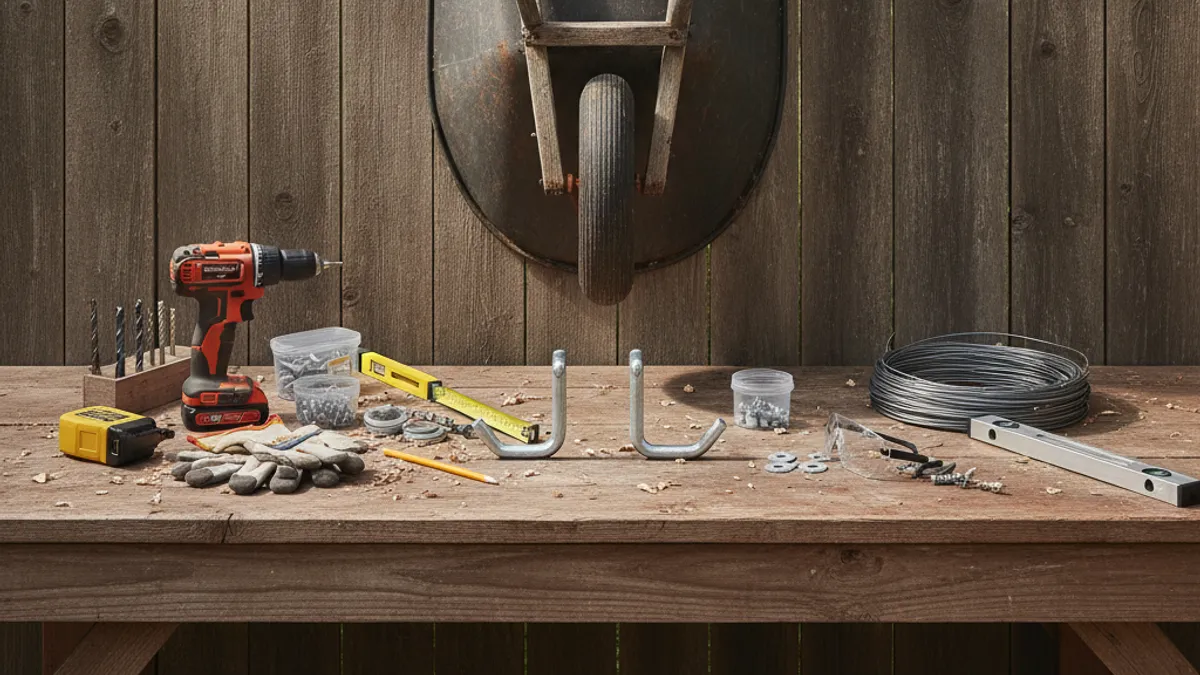
Gathering the right tools and materials before you start makes the whole process smoother and safer. Having everything on hand means you can complete the job in one go without frustrating trips to the hardware store.
| Tool/Material | Purpose | Notes |
|---|---|---|
| Heavy-Duty Hooks/Brackets | To support the wheelbarrow's weight on the fence. | Ensure they have a weight rating suitable for your needs. |
| Drill | To create pilot holes or drive screws. | Cordless is best for mobility. |
| Drill Bits | Sized for pilot holes and any necessary fasteners. | Specify wood or metal bits as needed. |
| Screws/Bolts | To securely attach hardware to the fence. | Use exterior-grade, rust-resistant types. |
| Measuring Tape | For accurate placement of hardware. | Essential for ensuring even spacing. |
| Level | To ensure hooks/brackets are installed straight. | Prevents the wheelbarrow from tilting. |
| Pencil/Marker | To mark screw locations. | |
| Safety Glasses | To protect your eyes from debris. | Always wear personal protective equipment. |
| Optional: Stud Finder | To locate internal supports in vinyl or drywall. | Useful for precise mounting. |
| Optional: Wood Stain | To protect and finish wooden fence mounting points. | Consider this as part of overall fence care. |
When to Seek Professional Help

While hanging a wheelbarrow is a DIY-friendly task for many, there are situations where calling in a pro is the smarter move. Your safety, and the integrity of your property, are the top priorities here. If you're unsure about any step, it's always better to err on the side of caution.
If your fence is particularly old, structurally unsound, or made of a material you're unfamiliar with (like a very old or unique type of masonry), professional advice might be needed. Moreover, if you're looking to mount multiple heavy items or if the weight distribution seems complex, a contractor specializing in outdoor structures or general handyman services can provide an accurate assessment and professional installation. They have the expertise to assess load-bearing capacities and use appropriate fastening techniques.
This is especially true if you anticipate needing to reinforce part of the fence. For those who prefer to do it themselves, understanding basic fence repair might be helpful, referencing guides similar to those found on gardenten.com/blog/.