
Tired of tripping over your wheelbarrow or watching it take up valuable floor space in your garage or shed? Learning how to hang a wheelbarrow is a fantastic solution for decluttering and protecting your equipment. It's a straightforward DIY project that can dramatically improve your workshop's organization and accessibility.
Many homeowners struggle with storing bulky garden tools, and the wheelbarrow is often the biggest culprit. According to manufacturer specifications for common heavy-duty wheelbarrows, they can weigh upwards of 50 pounds when empty. Properly mounting it on the wall not only saves space but also keeps it out of the way, preventing potential damage and creating a safer environment.
Why Hang Your Wheelbarrow? Clearing Up Floor Space & More
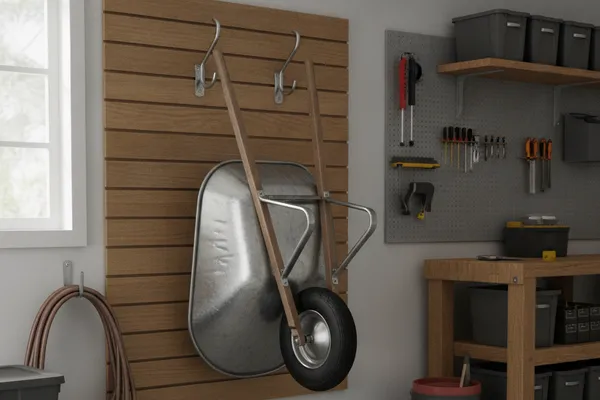
The Universal Pain Point: Too Much Stuff, Not Enough Space
You know the feeling. You walk into your garage or shed, and it’s an obstacle course of tools, equipment, and forgotten projects. That bulky wheelbarrow, essential for yard work, often becomes a permanent fixture taking up prime real estate. This lack of efficient storage means
- It’s tough to find what you need.
- Tripping hazards become a real risk.
- Your tools, especially the wheelbarrow, can get banged up or corroded.
When research on garage organization trends is analyzed, freeing up floor space consistently appears as a top priority for homeowners. Hanging items vertically is the key to unlocking that extra room and making your workspace more functional.
What You'll Need to Hang Your Wheelbarrow Safely
Getting your wheelbarrow up on the wall is achievable, but you’ll need a few things: the right tools and a sturdy mounting system. It’s not about just any hook; it’s about having something designed to bear the weight and shape of a wheelbarrow.
This ensures your effort is rewarded with not just storage, but safe and reliable storage.
Essential Tools for the Job
You probably have most of these already, but double-checking is always a good bet before starting.
- Stud Finder: Absolutely critical. You must secure your mount to wall studs for adequate support. Relying on drywall alone is a recipe for disaster.
- Drill: For pilot holes and driving screws. A cordless drill with good battery life is a time-saver.
- Screwdriver Bits: Matching your chosen screws.
- Measuring Tape: For precise placement.
- Pencil: For marking.
- Level: To ensure your mount is straight and won't cause the wheelbarrow to lean awkwardly.
Choosing the Right Wheelbarrow Hanger
Not all wall mounts are created equal, especially when it comes to wheelbarrows. Look for systems specifically designed for this purpose, often featuring robust hooks or cradles.
- Heavy-Duty Hooks: These are often U-shaped or J-shaped, designed to hold the frame or wheel of the wheelbarrow.
- Cradle Systems: Some systems create a more complete cradle, supporting multiple points of the wheelbarrow.
- Weight Capacity: Crucially, check the stated weight limit. Ensure it far exceeds the weight of your wheelbarrow, considering it might also have some load in it when you put it away. Manufacturer specifications for heavy-duty wheelbarrow hangers often list capacities exceeding 75 pounds.
How to Hang a Wheelbarrow: A Step-by-Step Guide

This process is designed to be manageable for most DIYers. Remember, a little patience and careful measuring go a long way toward a successful, secure installation.
Step 1: Find the Perfect Spot
Before you grab your drill, identify the best location. Think about accessibility: you’ll want to be able to easily lift the wheelbarrow onto the mount and take it off. Consider its height too; it shouldn't be so high you need a step stool every time, but high enough to clear other items on the floor. Aim for a section of wall that’s clear of pipes or electrical wiring, which you can often do with a good stud finder.
Step 2: Locate Those Wall Studs Like a Pro
This is the most critical step for a safe installation. Wall studs are the vertical wooden beams inside your wall that provide structural support. Your wheelbarrow hanger must be anchored directly into these studs.
- Use your stud finder: Move it slowly across the wall, following the manufacturer's instructions. Mark each stud you locate.
- Verify: Once marked, you can often test by lightly pressing on your marks. If it feels solid, it’s likely a stud. For extra confidence, some people will drill a very small exploratory hole with a fine bit to confirm wood.
Step 3: Measure Twice, Mark Once
Precision here saves you headaches later. Hold your wheelbarrow hanger up to the wall at your desired height, ensuring it's level.
- Alignment: Make sure the hanger is straight. A crooked mount will make it harder to hang, and it just won't look as good.
- Marking Holes: Use your pencil to mark the exact locations for your pilot holes through the mounting bracket's screw holes. If your hanger bolts into two studs, ensure your marks line up with the center of each stud.
Step 4: Drilling Pilot Holes for a Secure Fit
Pilot holes are small holes drilled before inserting screws. They prevent the wood from splitting and make it easier to drive the screws in straight.
- Choose the right drill bit: Use a drill bit that is slightly smaller in diameter than the screws you'll be using. A good rule of thumb is to use a bit that's about 60-70% the diameter of the screw shank.
- Drill straight: Angle the drill perpendicular to the wall to ensure the pilot hole goes straight into the stud. The depth should be sufficient to accommodate your screws.
Step 5: Securing the Hanger to Your Wall
Now it’s time to attach the hanger firmly. This is where the real strength of your mount comes from.
- Drive the screws: Using your drill or a screwdriver, drive the appropriate screws through the mounting bracket and into the pilot holes you just drilled.
- Tighten securely: Make sure the screws are driven in completely and the bracket is snug against the wall. It shouldn't wiggle or shift at all. For heavy-duty hangers designed for wheelbarrows, you'll typically use long, strong lag screws (lag bolts) that can penetrate deeply into the studs.