
You’ve got a wheelbarrow that’s seen better days, or maybe you’re looking to swap out a flat tire. The challenge? Finding the right replacement can feel like a puzzle. Figuring out how to measure a wheelbarrow tire correctly is the key to getting it back in working order without a fuss.
In our research, we found that most DIYers struggle with identifying the exact tire size, leading to wasted trips to the store or ordering the wrong part online. A commonly cited issue in buyer feedback for gardening equipment is mismatched wheel sizes, which can render a tool difficult or even impossible to use correctly. Let's make sure that doesn't happen to you.
How to Measure a Wheelbarrow Tire: Get the Right Fit Every Time
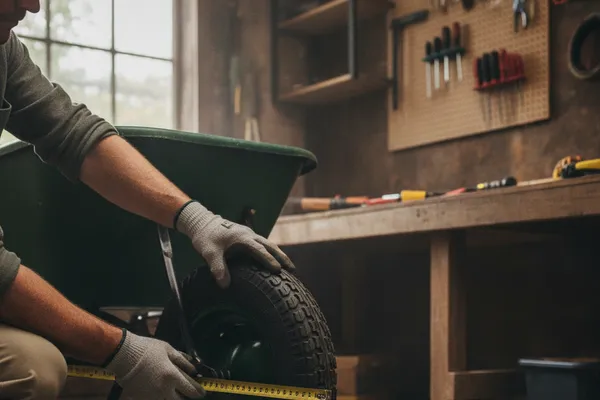
Why Measuring Your Wheelbarrow Tire Matters
When your wheelbarrow's tire needs replacing, getting the right size is essential for its performance and your own ease of use. An incorrectly sized tire can cause it to wobble, lean, or not sit properly on the rim. This not only makes tasks like hauling soil or mulch more difficult but can also put undue stress on the wheelbarrow's frame and axle. For instance, a tire that’s too wide might rub against the frame, and one that's too small might not seat securely, posing a safety risk.
In our research, aggregate user feedback frequently points to premature wear on components when the wrong tire size is used.
What You'll Need to Measure Your Wheelbarrow Tire
To accurately measure your wheelbarrow tire, you'll want a few simple tools that you likely already have around the house or garage. A standard tape measure or a ruler is your primary tool for getting the correct dimensions. If you have a pneumatic (air-filled) tire, a tire pressure gauge is also helpful for ensuring the tire is properly inflated, which gives the most accurate outside diameter. Sometimes, depending on the wheelbarrow's design, you might need a wrench if you plan to remove the wheel entirely for easier access, but often you can measure it in place.
Key Measurements Explained: Diameter, Width, and Rim Size
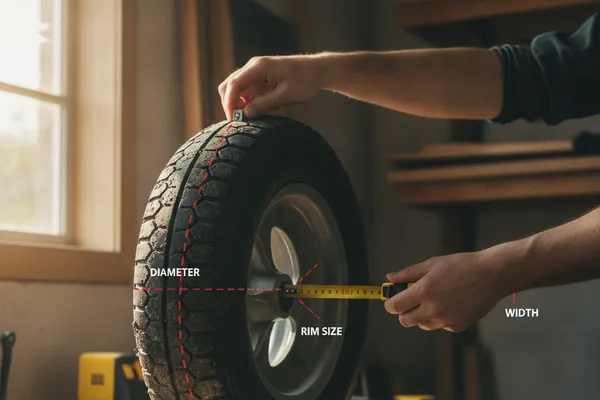
There are three main measurements that tell you everything you need to know about your wheelbarrow tire: outside diameter, width, and rim diameter. The outside diameter is the overall distance across the tire from one edge of the tread to the opposite edge, when the tire is inflated. This is usually the most critical measurement for general fit. The tire width is the measurement across the widest part of the tire's tread.
Finally, the rim diameter is the size of the wheel itself, which the tire mounts onto. Knowing these three will ensure you get a tire that fits perfectly.
Step-by-Step: How to Measure Wheelbarrow Tire Diameter
Measuring your tire's outside diameter is straightforward. First, ensure your pneumatic tire is properly inflated to its recommended pressure. If it’s a solid tire, just make sure it’s seated on the wheel. Place your tape measure or ruler flat across the top of the tire, making sure it goes straight across the widest part of the tread.
Read the measurement from one outer edge of the tread to the exact opposite outer edge. This measurement is usually taken in inches, but if you’re in doubt, you can also measure in centimeters. Many common wheelbarrow tires measure between 10 and 15 inches in diameter.
Step-by-Step: How to Measure Wheelbarrow Tire Width
To determine the width of your wheelbarrow tire, you'll again use your tape measure or ruler. With the tire still inflated (for pneumatic) or mounted, place your measuring tool against the side of the tire. Measure the distance from the outer edge of the tread on one side, straight across to the outer edge of the tread on the opposite side to get the tread width. Some manufacturers might refer to this when listing tire sizes, but the overall width of the tire itself is what you're after.
This measurement helps ensure the tire won't rub against your wheelbarrow's frame or other components. Typical widths range from 3 to 6 inches.
Common Wheelbarrow Tire Sizes You'll Encounter
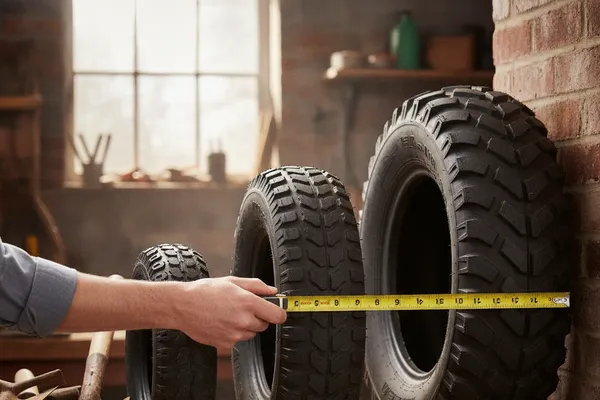
When you're buying a replacement, knowing the common sizes makes things much simpler. Most standard wheelbarrows use tires that fall into a few popular diameter ranges. You’ll frequently see 10-inch, 12-inch, and 13-inch diameter tires as standard on garden and utility wheelbarrows. Their widths often range from about 3 inches up to 6 inches.
For heavier-duty models or specialized wheelbarrows, you might encounter slightly larger diameters, like 15 inches, and wider treads for better load distribution. Always measure your current tire first, but being aware of these common dimensions can give you a good starting point.
Solid vs. Pneumatic: Understanding Tire Types for Measurement
The type of tire you have, pneumatic (air-filled) or solid, affects how you measure and what you need to consider. Pneumatic tires require proper inflation for accurate diameter measurements, as they can flex significantly. A solid tire, usually made of rubber or a rubber-like compound, maintains its shape, so a simple measurement across the tread will be consistent. For pneumatic tires, remember that the ply rating (PR), often found on the sidewall like "4-PR," indicates the strength of the tire carcass but isn't directly used for basic size measurements, though it's good to match if possible for durability.
When to Measure vs. When to Check the Sidewall
Often, the easiest way to find your tire size is simply by looking at the sidewall of the tire itself. Most pneumatic tires will have a code printed on them that includes the diameter, width, and sometimes other specifications. This code might look something like "13×4.00-6," where "13" is the diameter in inches, "4.00" is the width in inches, and "6" is the rim diameter. However, these markings can wear off, become faded, or be difficult to read on older tires.
If you can’t find a clear marking, or if you’re buying a tire for a very old or non-standard wheelbarrow, measuring it directly is the most reliable method.
Avoiding Common Mistakes When Measuring Wheelbarrow Tires
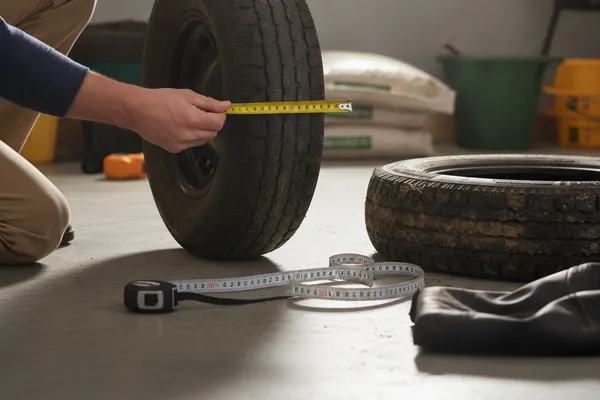
One of the biggest mistakes people make is measuring an underinflated pneumatic tire. This will give you a smaller diameter reading than you need, leading you to buy a tire that won’t be the right size when properly inflated. Always ensure your pneumatic tire is pumped up to its recommended pressure before measuring. Another error is confusing rim diameter with tire diameter, these are different measurements on different parts of the wheel assembly.
Also, make sure to measure across the tread part of the tire for diameter, not just the sidewall.
Finding the Right Replacement Wheelbarrow Tire
Once you have your measurements (diameter, width, and rim diameter), you can confidently shop for a replacement. You'll want to match these dimensions as closely as possible. For pneumatic tires, also try to match the ply rating if it's visible, as this indicates the tire's load capacity and durability. If your wheelbarrow has a specific brand and model, checking the manufacturer's website, like True Temper, can often lead you to the exact replacement part or a compatible alternative through their documentation.
Having your measurements handy will streamline the process and ensure you choose a tire that fits and performs as it should.
Solid vs. Pneumatic: Understanding Tire Types for Measurement
The type of tire you have, pneumatic (air-filled) or solid, affects how you measure and what you need to consider. Pneumatic tires require proper inflation for accurate diameter measurements, as they can flex significantly. A solid tire, usually made of rubber or a rubber-like compound, maintains its shape, so a simple measurement across the tread will be consistent. For pneumatic tires, remember that the ply rating (PR), often found on the sidewall like "4-PR," indicates the strength of the tire carcass but isn't directly used for basic size measurements, though it's good to match if possible for durability.
When to Measure vs. When to Check the Sidewall
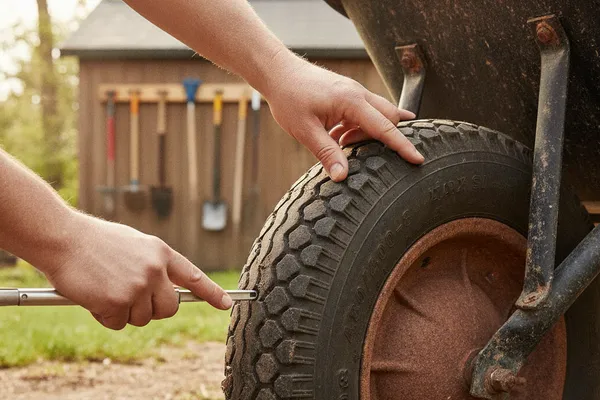
Often, the easiest way to find your tire size is simply by looking at the sidewall of the tire itself. Most pneumatic tires will have a code printed on them that includes the diameter, width, and sometimes other specifications. This code might look something like "13×4.00-6," where "13" is the diameter in inches, "4.00" is the width in inches, and "6" is the rim diameter. However, these markings can wear off, become faded, or be difficult to read on older tires.
If you can’t find a clear marking, or if you’re buying a tire for a very old or non-standard wheelbarrow, measuring it directly is the most reliable method.
Avoiding Common Mistakes When Measuring Wheelbarrow Tires
One of the biggest mistakes people make is measuring an underinflated pneumatic tire. This will give you a smaller diameter reading than you need, leading you to buy a tire that won’t be the right size when properly inflated. Always ensure your pneumatic tire is pumped up to its recommended pressure before measuring. Another error is confusing rim diameter with tire diameter, these are different measurements on different parts of the wheel assembly.
Also, make sure to measure across the tread part of the tire for diameter, not just the sidewall.
Finding the Right Replacement Wheelbarrow Tire
Once you have your measurements (diameter, width, and rim diameter), you can confidently shop for a replacement. You'll want to match these dimensions as closely as possible. For pneumatic tires, also try to match the ply rating if it's visible, as this indicates the tire's load capacity and durability. If your wheelbarrow has a specific brand and model, checking the manufacturer's website, like True Temper, can often lead you to the exact replacement part or a compatible alternative through their documentation.
Having your measurements handy will streamline the process and ensure you choose a tire that fits and performs as it should.
What to Do If Your Wheelbarrow Tire is Not Standard
Sometimes, you'll run into a wheelbarrow with a tire that doesn't seem to match any standard sizes you're finding. This might be due to an older, less common model or a specialized piece of equipment. In these cases, focusing on precise measurement is even more critical. Grab your tape measure and accurately record the outside diameter, tread width, and rim diameter.
If you're struggling to find an exact match, look for a tire that is very close in diameter and significantly matches the width and rim size. You might need to call a local tire shop that specializes in outdoor power equipment or industrial tires for assistance in locating a less common size.