
When your trusty wheelbarrow tire goes flat or just looks too worn to handle another load, your first thought might be to grab a replacement. But knowing precisely how to measure wheelbarrow tire dimensions is key to avoiding a frustrating mismatch. Getting the wrong size can lead to a wheelbarrow that doesn't sit right, handles poorly, or even damages its own wheel assembly.
Our research shows that most common wheelbarrow replacements come in standard sizes, but there are subtle variations that can trip you up in the store or online. For instance, a tire marked 4.00-8 isn't the same as a 3.50-8, even though both "fit" an 8-inch rim. Understanding these differences ensures you get a tire that performs reliably for all your hauling needs, from garden mulch to construction debris.
Why Measuring Your Wheelbarrow Tire Matters
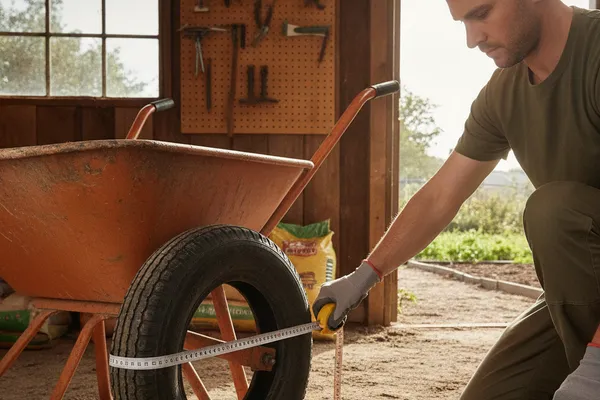
Getting the right size for your wheelbarrow tire isn't just about aesthetics; it's crucial for performance and longevity. A tire that's too large or too small can cause the wheelbarrow to sit unevenly, making it harder to maneuver and putting unnecessary stress on the frame and axle. For pneumatic tires, an ill-fitting tire can also affect how well it inflates and holds air, potentially leading to premature flats.
Manufacturer specifications often list the original tire size, but over time, tires can be replaced with aftermarket options. Without accurate measurements, you might end up with a tire that doesn't seat properly on the rim, or worse, one that's a safety hazard. This guide will walk you through exactly what you need to measure to ensure a perfect fit every time.
What's the Exact Size of My Wheelbarrow Tire? (Decoding Markings)
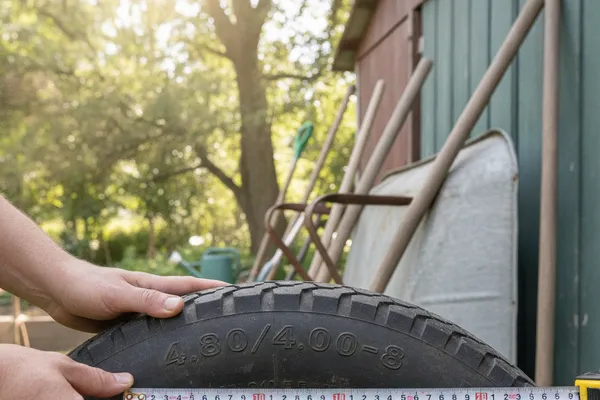
Most pneumatic wheelbarrow tires come with a series of numbers printed directly on the sidewall, like "4.00-8" or "3.50-4." These aren't just random digits; they're a code that tells you the tire's approximate dimensions. The first number (e.g., 4.00 or 3.50) usually refers to the tire's approximate width in inches across its widest point, though this can sometimes be more about design than exact measurement.
The second number (e.g., 8 or 4) refers to the diameter of the rim that the tire is designed to fit, also in inches. So, a "4.00-8" tire is intended for an 8-inch diameter wheel rim. It's important to note that these markings can sometimes be approximations rather than exact measurements, which is why physically measuring is always the most reliable method.
The Key Measurements You Need: Diameter, Width, and Rim Size
To confidently buy a replacement tire, you need to know three primary measurements: the overall tire diameter, the tire width, and the rim diameter. These three figures work together to ensure the tire fits snugly and functions correctly on your wheelbarrow's wheel assembly. Incorrect measurements can quickly lead to frustration and wasted money.
Knowing these dimensions allows you to compare potential replacements with certainty. It helps you avoid the common mistake of assuming all tires with the same rim size will fit interchangeably, as width and overall diameter play significant roles in the wheelbarrow's balance and performance.
Measuring Tire Diameter: From Sidewall to Sidewall
The overall tire diameter is the total height of the tire from its very top to its very bottom when it's properly inflated (if pneumatic). To measure this, you'll want to place the tire flat on a level surface. Use a measuring tape and measure straight up from the ground to the highest point of the tire's tread.
This measurement is crucial because it determines the overall height of your wheel and, consequently, how your wheelbarrow sits when upright. A significant difference in diameter can affect the balance and stability of your wheelbarrow, especially when it's loaded.
Measuring Tire Width: Across the Tread
Tire width refers to the measurement across the widest part of the tire's tread. This is usually the most visually apparent width measurement. Lay the tire flat on a level surface, and use your measuring tape to span from one edge of the tread to the other.
This measurement is important for ensuring the tire doesn't rub against the wheelbarrow frame or other components as it rolls. It also affects the tire's contact patch with the ground, influencing stability and how the wheelbarrow handles on different surfaces.
Measuring Rim Diameter: The Mount Point
The rim diameter is the measurement of the wheel's metal or plastic rim where the tire actually mounts. This is arguably the most critical measurement, as the tire must be designed to fit this specific rim diameter. To measure this, you can either use a measuring tape or, for more precision, calipers.
Measure across the widest part of the rim where the tire bead sits. If you're measuring a tire that's still on the rim, you'll measure the diameter of the lip that the tire bead rests against. If the tire is off the rim, you'll measure the diameter of the rim itself at that mounting point. This dictates compatibility.
Pneumatic vs. Solid: Understanding Your Tire Type
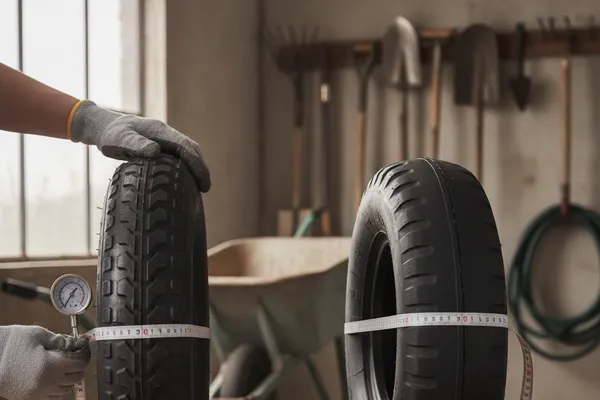
Before you measure, it's helpful to know whether you're dealing with a pneumatic tire or a solid tire. Pneumatic tires are filled with air and offer a more cushioned ride, absorbing shocks from rough terrain. They require proper inflation to maintain their shape and performance.
Solid tires, on the other hand, are made of dense rubber or foam and don't require air. They are puncture-proof and generally more durable but can offer a bumpier ride. The measurement process is largely the same for both types, but knowing the difference helps when you're looking for replacements.
Tools You'll Need to Measure Your Wheelbarrow Tire
Gathering the right tools makes the process much easier and more accurate. A standard flexible measuring tape is usually sufficient for most measurements. For a more precise rim diameter measurement, especially if the tire is still mounted, a set of calipers can be very helpful.
If you have a pneumatic tire that needs measuring, you might need a tire pressure gauge to check its current PSI (pounds per square inch) and to ensure it's properly deflated if you need to remove it from the rim. Having a clean, level surface to work on will also improve accuracy.
Step-by-Step: How to Measure Your Wheelbarrow Tire Accurately
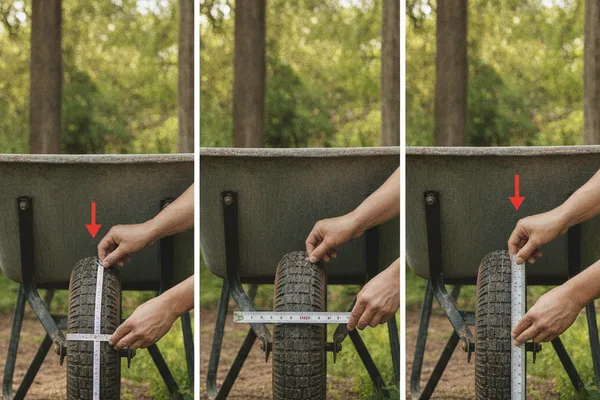
Measuring your wheelbarrow tire accurately involves a few straightforward steps. The goal is to get precise numbers for the tire's overall diameter, width, and the rim it fits. This ensures you select a replacement that will bolt right on and perform as expected.
Our research indicates that a systematic approach minimizes errors. By following these steps, you’ll be well-equipped to find compatible tire replacements for most standard wheelbarrows.
Step 1: Prepare Your Wheelbarrow and Tire
First, if the wheel is still attached to the wheelbarrow, it’s often easiest to remove it. This gives you better access and a stable platform for measurement. You might need a wrench or socket set to loosen and remove the axle nut or bolt securing the wheel.
Clear any debris from the tire and wheel. If it’s a pneumatic tire, ensure it’s fully deflated before proceeding, especially if you plan to remove the tire from the rim later.
Step 2: Read Existing Tire Markings (If Possible)
Take a good look at the sidewall of the tire you’re measuring. You might see markings like "4.00-8" or "10×3.00-4." The first number usually indicates the tire's approximate width in inches, and the second number is the rim diameter in inches.
While these markings are a great starting point, they can sometimes be slightly off. Always confirm them with actual measurements, as tire manufacturers’ specifications can vary.
Step 3: Measure the Overall Tire Diameter
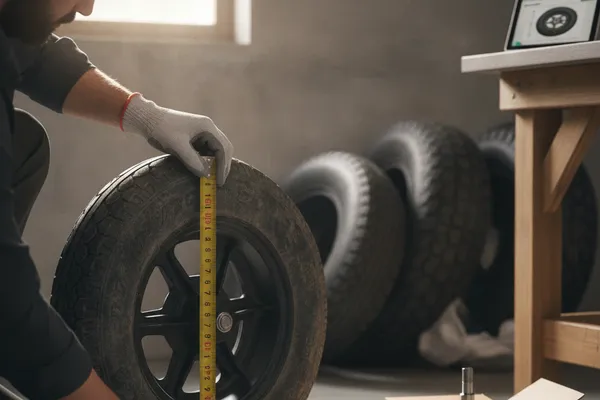
Place the tire (or the wheel with the tire) on a flat, level surface. Use a measuring tape to measure from the ground directly up to the highest point on the tire's tread. Ensure the tape is vertical.
This measurement tells you the tire's overall height, which affects how your wheelbarrow sits. This is a crucial dimension to match, especially if you're replacing a uniquely sized tire.
Step 4: Measure the Tire Width
Now, measure the tire's width across its widest point on the tread. Lay the tire flat and run your measuring tape from one edge of the tread pattern to the other. Make sure the tape measure is held straight across the tread.
This measurement is important for clearance. You don't want a tire that’s too wide and rubs against the wheelbarrow’s frame.
Step 5: Measure the Rim Diameter
This is the measurement of the wheel rim itself, not the tire. If the tire is still mounted on the rim, try to measure across the rim where the tire's bead sits. For the most accurate reading, especially if you have calipers, measure the diameter of the rim itself.
If you can't remove the tire, focus on measuring the diameter of the circular bead seat, the part inside the tire where it seals against the rim. This measurement is non-negotiable; the tire's listed rim size must match this value for the tire to fit correctly. Remember, different wheelbarrow models use different rim sizes, typically ranging from 6 to 10 inches in diameter for common models.
Step 6: Note Valve Stem Type and Bearing Size
For pneumatic tires, take a moment to note the type of valve stem. Most wheelbarrow tires use Schrader valves, which are the same as those found on car tires. Also, if you're replacing the entire wheel assembly, check the size of the bearings in the hub. This information can save you a secondary trip to the store.
Common Pitfalls: Mistakes to Avoid When Measuring
Most folks just eyeball it, or perhaps grab the old tire and try to match it visually. That’s a recipe for frustration. A common mistake is assuming a tire marked "4.00-8" looks identical to another "4.00-8" from a different brand or on a different wheelbarrow model. Subtle variations in tread depth or sidewall construction can impact the overall fit.
Another pitfall is trying to measure a tire that's completely flat and flattened out. For pneumatic tires, it's best to have them partially inflated when measuring diameter and width. This gives you the tire's true operational dimensions, not its collapsed state. For rim diameter, always measure the metal or plastic rim itself, not the old tire's bead seat, as those can become deformed.
What to Do With Your Measurements: Finding the Right Replacement
Once you have your precise measurements, tire diameter, tire width, and rim diameter, you're ready to shop. Look for replacement tires that match these specs as closely as possible. For pneumatics, pay attention to the ply rating, which indicates the tire's durability. A higher ply rating generally means a stronger tire, capable of handling heavier loads.
When shopping online, product descriptions usually list all these key measurements. Don't hesitate to compare them against your notes. If you're at a physical store, bring your measurements or even the old tire if possible. If you found a helpful guide on gardenten.com/blog/, compare those specifications to ensure compatibility.
Quick Tips for Easy Tire Installation or Removal
Getting the tire on and off the rim can sometimes be the trickiest part. For pneumatic tires, always ensure they are fully deflated first. A little bit of dish soap or a dedicated tire lubricant applied to the tire bead and the rim edge can help the tire slide on and off much more easily.
If you're struggling, a tire-changing tool or even a sturdy flathead screwdriver can help pry the bead over the rim. For solid tires, which are generally harder to remove, you might need to apply significant force or use heat to make them more pliable. Always wear protective gloves and eyewear, especially when dealing with stubborn tires.