
When you've got a small concrete job, like patching a crack in the driveway or setting a garden fence post, the question of how to mix concrete in a wheelbarrow often comes up. It’s a solid, old-school method that still works perfectly for smaller projects, saving you the hassle of renting larger equipment or ordering ready-mix.
Aggregate user reviews and DIY forums consistently point to the wheelbarrow as the go-to for batches under about 5 cubic feet. For these smaller tasks, achieving the right consistency and strength is entirely manageable with this straightforward approach, providing a cost-effective solution that’s well within reach for most homeowners.
Why Mix Concrete in a Wheelbarrow? Your Go-To for Small Jobs

Mixing concrete in a wheelbarrow is an essential skill for anyone tackling DIY home repairs or small landscaping projects. It’s incredibly practical for when you only need a small amount of concrete and don't want to deal with larger mixers or expensive ready-mix delivery. This method offers control and affordability for those specific tasks.
Our research indicates that for jobs requiring less than 5 cubic feet of concrete, a sturdy wheelbarrow is often the most efficient and cost-effective tool. It allows you to precisely measure and mix the components, ensuring a quality result without the waste or complexity of bigger operations.
Your Concrete Mixing Toolkit: What You'll Need
Before you start, gathering the right tools is key to a smooth mixing process. Having everything on hand prevents interruptions and ensures you can maintain the concrete's workability. Think of it like prepping ingredients before cooking; it makes the whole operation go much better.
Having the correct equipment not only makes the job easier but also helps ensure the quality and durability of your finished concrete work. It’s about setting yourself up for success from the very first step.
The Wheelbarrow: More Than Just a Cart
For mixing concrete, you’ll need a heavy-duty wheelbarrow, ideally with a capacity of at least 6 cubic feet, though 4-5 cubic feet is ideal for mixing batches. Look for one with thick, durable plastic or metal, a sturdy frame, and a strong wheel that can handle the weight.
This isn’t the time for a flimsy garden cart; concrete is very heavy. A robust wheelbarrow ensures it won't buckle under the load and that you can maneuver it safely to your job site. Most manufacturer specifications for concrete additives will note appropriate mixing vessel requirements.
Measuring Up: Cement, Aggregates, and Water
The core ingredients for concrete are Portland cement, aggregate (a mix of sand and gravel), and water. The quality of these components directly impacts the strength and longevity of your finished concrete. Using clean, well-graded aggregates is crucial.
Using clean ingredients is vital. Dirty sand or gravel can weaken the mix, and contaminated water can interfere with the cement's curing process. Always ensure your materials meet basic construction standards; specifications can often be found on manufacturer packaging or industry standard documents from bodies like ASTM International.
Essential Tools: Shovel, Hoe, and Buckets
Beyond the wheelbarrow, you'll need a good shovel for scooping dry ingredients and a sturdy mixing hoe specifically designed for concrete, these have a wider, flatter blade than a garden hoe. You'll also need at least two buckets: one for measuring water and another for carrying smaller amounts of mixed concrete if needed.
A strong, flat-edged shovel is perfect for moving dry materials into the wheelbarrow, while the mixing hoe excels at turning the mass thoroughly. Having measured water readily available is critical, as is having a spare bucket for transferring the mixed concrete to tighter spots.
The Golden Rules: Concrete Mix Ratios Explained
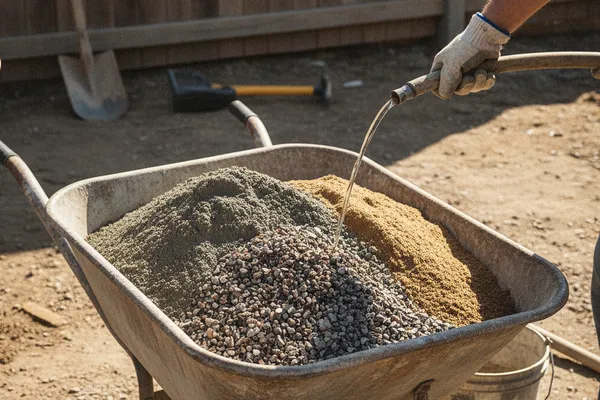
Understanding concrete mix ratios is the secret to getting strong, durable concrete every time. It’s not just about dumping everything together; it's about proportions that create the ideal chemical reaction needed for hardening.
Getting these ratios right means your concrete will perform as expected, whether it's for a simple repair or a structural element. It’s a fundamental principle that builders have relied on for centuries.
Understanding the 1:2:3 Ratio (and When to Adjust)
A common starting point for general-purpose concrete is a 1:2:3 ratio. This means one part Portland cement, two parts sand, and three parts gravel. This ratio typically yields concrete with a compressive strength of around 3,000 pounds per square inch (PSI), suitable for many common DIY applications.
For instance, setting fence posts or creating small garden paths might use this standard mix. However, for applications requiring higher strength, like structural footings, you might adjust to a 1:2:2 or even a 1:1.5:2 ratio for increased cement content. Rely on manufacturer guidelines or project-specific engineering advice for critical structures.
Getting the Water-to-Cement Ratio Just Right
The amount of water you add is perhaps the single most critical factor in concrete strength. Too much water, and the concrete becomes weak, prone to cracking, and less durable. Too little, and it becomes difficult to mix and place, potentially leading to voids.
A good rule of thumb is to add water gradually, aiming for a slump, or consistency, that allows the concrete to be workable but not soupy. Generally, for a standard 94-pound bag of Portland cement, you'll need about 5 to 6 gallons of water. Always consult the cement manufacturer's specifications for their recommended water content.
Step-by-Step: How to Mix Concrete in a Wheelbarrow
Now that you've got your tools and understand the ingredients, let's get down to the actual mixing. This process is straightforward, but paying attention to each step will make a big difference in your final result. It’s about building the mix layer by layer.
The goal here is to create a homogenous mixture where all the components are evenly distributed, leading to consistent strength and performance throughout your concrete pour. Follow these steps carefully for best results.
Prep Your Workspace and Gather Your Gear
First, clear the area where you'll be working. Make sure there’s enough space to maneuver the wheelbarrow and lay out your tools. Protect the surrounding ground if you're concerned about spills, perhaps with a tarp or plastic sheeting. Ensure your wheelbarrow is clean and dry from previous uses.
Having everything within easy reach is crucial. You don't want to be hunting for your measuring bucket halfway through the mixing process. A little preparation goes a long way to making the job smoother and less stressful.
Dry Mix First: Combining Cement and Aggregates
Start by adding your dry ingredients to the wheelbarrow. Put in the measured amount of Portland cement first, then add the sand, and finally the gravel (aggregate). Use a shovel to lightly break up any clumps in the cement.
Now, take your shovel or mixing hoe and thoroughly mix these dry ingredients together. You want to achieve a uniform color with no streaks of cement or separate piles of sand and gravel. This initial dry mix ensures the cement will coat the aggregates evenly when water is added later.
Gradually Add Water for Perfect Consistency
Once the dry ingredients are well combined, create a depression in the center of the mixture. Begin adding about two-thirds of your measured water into this depression. Use your shovel or hoe to start incorporating the dry ingredients into the water.
Continue mixing, gradually adding more water a little at a time until you reach your desired consistency. A good mix should look like thick oatmeal, it should hold its shape but be easily workable. It shouldn't be runny or stiff.
The Mixing Technique: Getting It Just Right
The key to a good mix is thoroughness. Use your hoe or shovel to turn the concrete over completely, ensuring all the dry pockets are worked into the wet mixture. Scrape the bottom and sides of the wheelbarrow to incorporate every bit.
Keep turning and mixing until the entire batch has a uniform color and texture. This can take several minutes of vigorous effort. A properly mixed batch will feel heavy and cohesive, not watery or crumbly.
Testing the Slump: Is it Ready?
The "slump" test is a simple way to gauge your concrete's consistency. After achieving what you think is the right mix, use your shovel to roughly form a small mound. If the mound holds its shape without slumping significantly, it’s likely ready.
If it slumps over like thick soup, you've added too much water. In this case, you can try adding a small amount of dry mix (cement, sand, gravel) and remix thoroughly. If it’s too stiff and crumbly, a little more water, added slowly, can help.
Common Concrete Mixing Mistakes to Sidestep

Even with the best intentions, it's easy to make a few common mistakes when mixing concrete for the first time. Avoiding these pitfalls will save you time, effort, and ensure your concrete project stands the test of time.
Many DIYers run into the same issues, often stemming from rushing the process or not understanding the critical role of each ingredient. Being aware of these common traps is half the battle.
Avoiding Dry Pockets and Over-Watering
One of the most common errors is not mixing thoroughly enough, leaving dry pockets of cement or aggregate within the batch. This creates weak spots and inconsistent strength in your final pour. Another frequent mistake is adding too much water, which compromises durability.
To combat dry pockets, commit to thorough mixing until every speck is uniform. For over-watering, remember to add water gradually. It's much easier to add more water if needed than to try and fix a concrete mix that's too watery. Think of it like baking; you can always add a bit more liquid, but you can’t easily remove it.
Don't Mix More Than You Can Use
Concrete begins to harden once water is added. This chemical process, called hydration, is irreversible. If you mix more concrete than you can pour and finish within its working time, typically 1-2 hours depending on ambient temperature, it will set up in your wheelbarrow.
This set concrete is incredibly difficult to clean and essentially wastes your materials and effort. Always estimate your needs carefully based on your project scope. For instance, if you're setting fence posts, a hole for one post usually requires only a small amount, so mixing one small batch at a time is best.
When is Mixing Concrete in a Wheelbarrow the Smart Choice?
Deciding when to mix concrete by hand in a wheelbarrow comes down to the scale and nature of your project. It's a highly practical method for certain situations where larger equipment is overkill or simply not feasible.
For many homeowners, this method offers the perfect balance of convenience, cost-effectiveness, and control, making it the ideal choice for a variety of common tasks.
Perfect for Patching and Repairs
When you need to fill a small crack in a sidewalk, repair a chipped step, or mend a section of a concrete patio, mixing concrete in a wheelbarrow is ideal. These jobs typically require only a small volume of material, making a large mixer entirely unnecessary.
The ability to mix just the amount you need allows for precise repairs, ensuring the new concrete blends well with the existing structure and cures properly for durability. It's about having the right amount of material without excess.
Setting Posts and Small Footings
Whether you're installing fence posts, deck supports, or simple garden stakes, a wheelbarrow is your best friend. These applications usually call for a few cubic feet of concrete per post or footing, which is easily handled in a wheelbarrow.
You can mix the exact amount needed for each post, ensuring consistent placement without having leftover concrete that will harden in a mixer. This is also true for small, non-structural footings for garden sheds or retaining walls.
DIY Project Powerhouse
For countless other small DIY projects around the house and garden, from creating durable garden edging to building a small concrete bird bath, the wheelbarrow method shines. It empowers you to tackle these jobs yourself without needing specialized equipment.
It's a fantastic way to learn the basics of concrete work and gain confidence. You’ll find that with a little practice, you can achieve professional-looking results for many home improvement tasks using just a wheelbarrow and basic tools.
When to Consider Alternatives: Other Mixing Methods

While mixing concrete in a wheelbarrow is fantastic for smaller jobs, there are times when other methods make more sense. Recognizing these alternatives ensures you're always using the most efficient tool for the task at hand, saving you time and effort.
The choice between a wheelbarrow, a portable mixer, or ready-mix delivery often depends on the sheer volume of concrete needed, your timeline, and the physical demands of the job.
Ready-Mix vs. DIY: Deciding What's Best for You
Ready-mix concrete, delivered in large trucks, is the go-to for big projects like pouring a new driveway, a large patio, or a foundation. It’s pre-mixed at a plant and arrives ready to pour, saving significant labor and ensuring consistent quality for large volumes. However, for jobs under 5 cubic feet, ordering ready-mix is often cost-prohibitive due to delivery minimums.
Mixing your own concrete in a wheelbarrow is far more economical for small patches or single fence posts. It requires more physical labor but offers hands-on control and is significantly cheaper for minimal quantities demanded by many homeowner tasks.
The Portable Mixer: A Step Up for Larger Batches
If your project is a bit larger than what a wheelbarrow can comfortably handle, say, a small patio slab or a significant foundation for a shed, a portable electric or gas-powered cement mixer is the next logical step. These machines do the heavy lifting (literally) and can mix larger batches more quickly and consistently than hand mixing.
For volumes between 5 and 10 cubic feet, a portable mixer often strikes a good balance between effort and volume. It’s a worthwhile investment if you anticipate doing several such projects over time. For larger volumes, a wheelbarrow becomes impractical due to the sheer weight and mixing time required.
Keeping It Clean: Cleaning Your Wheelbarrow and Tools
Properly cleaning your tools and wheelbarrow after mixing concrete is crucial for their longevity and for ensuring your next batch isn't contaminated. Wet concrete is corrosive and can quickly set, making it very difficult to remove.
The general rule is simple: clean everything thoroughly immediately after you finish using it. Don't let that wet concrete sit and harden. This will save you a lot of scraping and scrubbing later.
Immediate Cleanup Steps:
- Rinse the wheelbarrow: As soon as you've emptied the concrete, use a hose to thoroughly rinse out the inside of the wheelbarrow. Get into all the corners and around the wheel.
- Scrub if needed: If there are stubborn patches, use a stiff brush or a concrete hoe to scrub them away before they dry.
- Clean tools: Wash your shovel, mixing hoe, and buckets with water as well.
- Dispose of washout properly: Never wash excess concrete slurry down storm drains, as it can be harmful to aquatic life. Check local regulations for proper disposal; often, it can be allowed to harden and then disposed of as solid waste, or poured onto a sacrificial area like a gravel patch away from water sources.
Following these simple cleanup steps will keep your tools in good working order for years to come.
Common Concrete Mixing Mistakes to Sidestep

Even with the best intentions, it's easy to make a few common mistakes when mixing concrete for the first time. Avoiding these pitfalls will save you time, effort, and ensure your concrete project stands the test of time.
Many DIYers run into the same issues, often stemming from rushing the process or not understanding the critical role of each ingredient. Being aware of these common traps is half the battle.
Avoiding Dry Pockets and Over-Watering
One of the most common errors is not mixing thoroughly enough, leaving dry pockets of cement or aggregate within the batch. This creates weak spots and inconsistent strength in your final pour. Another frequent mistake is adding too much water, which compromises durability.
To combat dry pockets, commit to thorough mixing until every speck is uniform. For over-watering, remember to add water gradually. It's much easier to add more water if needed than to try and fix a concrete mix that's too watery. Think of it like baking; you can always add a bit more liquid, but you can’t easily remove it.
Don't Mix More Than You Can Use
Concrete begins to harden once water is added. This chemical process, called hydration, is irreversible. If you mix more concrete than you can pour and finish within its working time, typically 1-2 hours depending on ambient temperature, it will set up in your wheelbarrow.
This set concrete is incredibly difficult to clean and essentially wastes your materials and effort. Always estimate your needs carefully based on your project scope. For instance, if you're setting fence posts, a hole for one post usually requires only a small amount, so mixing one small batch at a time is best.
When is Mixing Concrete in a Wheelbarrow the Smart Choice?
Deciding when to mix concrete by hand in a wheelbarrow comes down to the scale and nature of your project. It's a highly practical method for certain situations where larger equipment is overkill or simply not feasible.
For many homeowners, this method offers the perfect balance of convenience, cost-effectiveness, and control, making it the ideal choice for a variety of common tasks.
Perfect for Patching and Repairs
When you need to fill a small crack in a sidewalk, repair a chipped step, or mend a section of a concrete patio, mixing concrete in a wheelbarrow is ideal. These jobs typically require only a small volume of material, making a large mixer entirely unnecessary.
The ability to mix just the amount you need allows for precise repairs, ensuring the new concrete blends well with the existing structure and cures properly for durability. It's about having the right amount of material without excess.
Setting Posts and Small Footings
Whether you're installing fence posts, deck supports, or simple garden stakes, a wheelbarrow is your best friend. These applications usually call for a few cubic feet of concrete per post or footing, which is easily handled in a wheelbarrow.
You can mix the exact amount needed for each post, ensuring consistent placement without having leftover concrete that will harden in a mixer. This is also true for small, non-structural footings for garden sheds or retaining walls.
DIY Project Powerhouse
For countless other small DIY projects around the house and garden, from creating durable garden edging to building a small concrete bird bath, the wheelbarrow method shines. It empowers you to tackle these jobs yourself without needing specialized equipment.
It's a fantastic way to learn the basics of concrete work and gain confidence. You’ll find that with a little practice, you can achieve professional-looking results for many home improvement tasks using just a wheelbarrow and basic tools. The core skills you develop here translate well to other projects.