If your fiddle leaf fig is growing straight up like a single green flagpole, you’ve probably wondered whether you can make it branch out without chopping the top off. Learning how to notch fiddle leaf fig plants is the most reliable way to force side shoots from a bare stem, and it takes about five minutes with a clean blade. Notching works by interrupting the flow of growth hormones inside the stem, which tricks a dormant bud into waking up and sprouting a new branch.
In our research, growers report a success rate between 60 and 80 percent when the notch is made in the right spot during active growth. That range comes from aggregate feedback in online houseplant communities and observations shared on university extension forums, not from a single lab study. The trick is understanding exactly where to cut and how deep.
Let’s walk through the whole process so you can try it with confidence.
Quick Answer
Make a shallow horizontal cut through the bark and into the green layer just above a leaf node. Cut about one-third of the stem’s thickness. Wait three to eight weeks.
A new branch should appear from the node below the cut.
What Is Notching and Why Does It Work on Fiddle Leaf Figs?
Notching is a mechanical technique that breaks apical dominance. Apical dominance is the plant’s natural tendency to grow upward from the tip while keeping side buds dormant. The tip produces auxins, a group of growth hormones, that travel down the stem and suppress the buds below.
When you notch the stem just above a node, you physically interrupt that auxin flow. The node’s axillary bud, a sleeping growth point that sits where the leaf used to attach, gets the signal that it’s clear to wake up.
A node is the raised bump or leaf scar along the stem. It contains the axillary bud, which has the genetic instructions to form a new branch. The internode is the smooth section between nodes, and it has no dormant bud.
Cutting into an internode accomplishes nothing. That’s why proper placement is the most critical part of the process.
The Science Behind It: Apical Dominance and Dormant Buds
The plant hormone auxin is produced in the apical meristem, the very tip of the stem. It moves downward through the vascular tissue. High auxin levels suppress the growth of lateral buds.
Notching cuts the vascular bundle and lowers auxin concentration in the section below the cut. Without that chemical suppression, cytokinins, hormones that promote cell division, can activate the axillary bud.
A 2023 review in the journal Frontiers in Plant Science confirmed that physical wounding above a node increases cytokinin accumulation at that bud. That’s the same principle at work when you notch a fiddle leaf fig. You’re giving the bud a hormonal green light.
How Notching Differs from Pruning the Top
Top pruning, cutting off the main growing tip, also releases apical dominance, but it removes the tallest part of the plant. That changes the shape permanently and forces branching much lower down. Notching leaves the top intact, so your tree keeps its height while filling out the middle.
It’s the better option if you want a fuller look without making the plant shorter.
When Should You Notch? Signs Your Fiddle Leaf Fig Needs Branching
Look for a stem that’s at least a quarter‑inch (6 mm) thick and has several healthy leaves higher up but bare sections below. A single‑stem plant with no side branches is the classic candidate. If your fiddle leaf fig is already branching naturally, notching is unnecessary.
If it’s struggling, dropping leaves, showing brown spots, or leaning severely, fix those problems first.
The Best Time of Year for Notching
Notch only during the active growing season. For most indoor fiddle leaf figs in the Northern Hemisphere, that’s April through July. The plant needs warm temperatures, longer daylight hours, and vigorous metabolism to heal the wound and push new growth.
Notching in winter, when the plant is resting, will likely produce no result and may cause dieback.
What a “Good Candidate” Plant Looks Like
- Stem thickness at least the diameter of a pencil, preferably thicker.
- At least three healthy leaves above the node you plan to notch.
- No signs of root rot, pest infestation, or severe leaf drop.
- Currently receiving bright, indirect light for most of the day.
If your fiddle leaf fig is under a grow light in a setup like those discussed in our grow tent setup guide, you have more control over light and temperature, which can extend the window for notching beyond the natural season.
What You’ll Need Before You Start
The tool list is short. A sharp blade is non‑negotiable. Dull blades crush the stem instead of cutting cleanly, which leads to ragged wounds and slower healing.
Tools: Blade, Alcohol, and a Steady Hand
| Supply | Purpose | Notes |
|---|---|---|
| Razor blade or sharp pruning knife | Making the cut | A utility knife with a fresh snap‑off blade works well. |
| 70% isopropyl alcohol | Sterilization | Dip the blade or wipe it down before each cut. |
| Paper towel or clean cloth | Wiping the wound | Optional but recommended. |
| Gardening gloves | Sap protection | Fiddle leaf fig sap can irritate skin. |
Optional Supplies for Better Results
- Cinnamon powder, has mild antifungal properties. Dust it on the cut if you’re worried about moisture.
- Keiki paste, a synthetic cytokinin gel. Apply to the notch for a hormone boost. Some growers swear by it, though notching alone works for most plants.
- Small paintbrush, for applying keiki paste or cinnamon precisely.
You don’t need rooting hormones. The wound is not meant to form roots. You’re only trying to wake up a dormant bud.
Step‑by‑Step: How to Notch a Fiddle Leaf Fig (With Visual Guidance)
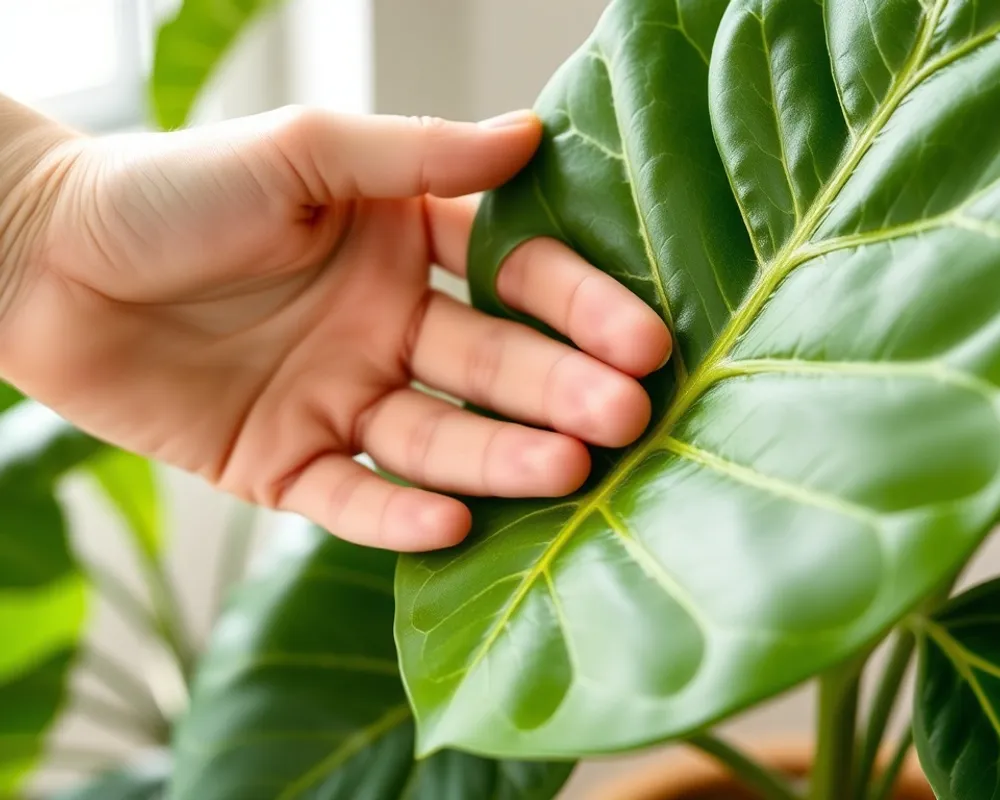
This is the core of the process. Follow each step exactly. If you skip the sterilization or cut in the wrong place, you’ll get nothing but a scar.
Step 1: Find the Right Node
Look at the stem. You’ll see small raised rings or bumps where leaves used to attach. That’s the node.
The dormant bud is located just above that ring, inside the stem. Pick a node that has a healthy leaf above it, that leaf will feed the new branch while it grows.
Step 2: Sterilize Your Blade
Dip the blade in 70% isopropyl alcohol for 30 seconds. Let it air dry. Don’t skip this.
A dirty blade can introduce bacteria or fungi that rot the stem from the inside.
Step 3: Make the Cut — Depth, Angle, and Placement
Hold the blade horizontally, parallel to the node. Position it about 1/8 to 1/4 inch (3 to 6 mm) above the node ring. Make a single, clean cut across the width of the stem.
Cut deep enough to go through the bark and the green cambium layer underneath. You’ll see a pale green or white ring when you’ve cut deep enough. For a stem that’s half an inch thick, that means cutting about 1/8 inch deep.
For a thicker stem, maybe 1/4 inch.
Do not cut more than halfway through the stem. Do not angle the cut upward or downward. Horizontal is correct.
The cut should look like a thin slit going across the stem.
Step 4: Wipe the Wound (Optional but Recommended)
Use a clean paper towel to blot any sap that oozes out. Sap can form a seal that slows bud activation. Some growers apply a tiny pinch of cinnamon to the cut to discourage fungal growth.
That’s optional but harmless.
Step 5: Aftercare — Light, Water, and Patience
Place the plant in its usual bright spot. Do not move it into direct sun. Water normally, don’t overwater in hopes of speeding things up.
Fertilize once a month with a balanced houseplant fertilizer (20‑20‑20) diluted to half strength during the growing season.
Now you wait. New growth can appear in as little as three weeks, sometimes up to eight. A small swelling near the cut is the first sign.
Then a tiny green bump appears, followed by a leaf.
Common Notching Mistakes That Kill the Results
Most failures come from one of three errors. Each is easy to avoid if you know what to look for.
Cutting Too Deep Into the Stem
If you slice more than halfway through the stem, you cut the vascular transport system deep inside. The upper leaves may wilt or die. Worse, the wound becomes a weak point that can snap in high wind or when you move the plant.
Aim for one‑third of the stem thickness. If you hit the center pith, you’ve gone too far.
Notching on an Internode (Wrong Spot)
The internode has no dormant bud. Cutting there creates a visible scar and nothing else. The plant will heal the wound over, but no branch will ever appear.
Double‑check you are above a node by feeling for the bump or looking for the leaf scar line.
Doing It During Dormant Season
A fiddle leaf fig that’s not actively growing cannot respond to the hormone signal. The wound will simply callus over, and the bud stays asleep. If you notch in November or December, expect zero results.
Wait until spring when new leaves are pushing out at the top. That’s the plant’s way of saying it’s ready.
For more on timing your plant care around seasonal changes, our article on when to fertilize lawn covers the same principle of working with the growth cycle, though for grass the timing shifts earlier in spring.
How Long Until You See New Growth?
Patience is the hardest part of notching. Most growers see the first signs of swelling within three to six weeks. In our research, plants notched during peak growing season in April or May showed new shoots faster than those notched in late summer.
The first visual cue is a slight swelling or bump just below the cut. That’s the axillary bud waking up. A few days later, a tiny green point emerges.
After that, the first leaf unfolds within one to two weeks.
What to Expect in Weeks 1 Through 8
| Timeframe | What You’ll See | What’s Happening |
|---|---|---|
| Week 1–2 | Clean cut, no visible change | The wound is callusing. Hormone levels are shifting. |
| Week 3–4 | Slight swelling near the cut | The axillary bud is activating. |
| Week 5–6 | Small green bump appears | New growth pushes through the bark. |
| Week 7–8 | First leaf begins to unfurl | The branch is now established. |
If you hit week eight with zero change, the notch likely failed. That happens. Try again at a different node or wait for the next growing season.
Signs That Notching Worked (or Failed)
A success is obvious. You get a visible new branch growing outward from the stem. The branch will have its own leaves within a few more weeks.
A failure leaves a scar that heals over like a callus. No swelling, no bump, no leaf. The plant simply seals the wound and continues growing upward.
If the cut site turns black or mushy before any swelling appears, that’s a sign of rot. That can happen if the blade was dirty or if the plant stays too wet afterward. Cut away any rotting tissue with a sterile blade and let the area dry out.
Notching vs. Alternatives: Which Method Is Best for Your Plant?
Notching is one of several ways to encourage branching. Each method has a different trade-off between risk and result. Here’s how they compare.
Top Pruning
Top pruning means cutting off the main stem at your desired height. It removes the apical meristem entirely. This forces the plant to activate multiple lower buds at once.
The result is a bushier plant, but you lose the top section and the plant will be shorter permanently. It’s a faster technique than notching, with a near‑100 percent success rate if the plant is healthy. Use it when you want to reduce height and don’t mind the shape change.
Keiki Paste (Cytokinin Hormone)
Keiki paste is a commercial gel containing synthetic cytokinins. You apply it directly to a node. It forces bud activation artificially without cutting the stem.
Some growers report faster results with keiki paste than with mechanical notching. However, the paste costs money and must be reapplied in some cases. Aggregate reviews on houseplant forums suggest a success rate around 70 to 90 percent with proper application.
It’s a good option if you’re nervous about cutting into the stem.
Pegging and Bending
Pegging involves bending the stem sideways and securing it near the soil level. This physically breaks apical dominance by lowering the tip relative to the rest of the plant. The lower nodes receive less auxin and may activate on their own.
It works well on flexible stems but is hard to do on a mature fiddle leaf fig with a thick woody trunk. It also requires space and patience.
| Method | Difficulty | Success Rate | Risk to Plant |
|---|---|---|---|
| Notching | Low | 60–80% | Low (if done correctly) |
| Top pruning | Low | 90–100% | Moderate (loses height) |
| Keiki paste | Low | 70–90% | Low |
| Pegging | Medium | 50–70% | Low (stem may snap) |
Can You Notch Multiple Times on the Same Stem?
Yes, you can. Many growers notch two or three spots along a single stem to create multiple new branches at different heights. This is how you turn a bare flagpole into a full, multibranched tree.
But spacing matters.
Spacing Multiple Notches for Best Results
Leave at least three to four inches (8 to 10 cm) between notches. The plant needs enough stem to transport water and nutrients past each wound. Notches that are too close together create competing wounds that the plant struggles to heal simultaneously.
Make notches at different heights on opposite sides of the stem if possible. This encourages branches to grow in different directions and avoids crowding.
When to Try Again if the First Notch Didn’t Work
Wait at least eight weeks before attempting another notch on the same stem. The plant needs time to fully heal the first wound and return to active growth. If the first notch failed because the plant was dormant, wait for spring.
If it failed because you cut too shallow or in the internode, correct the placement on the next attempt.
You can notch a stem that already has one successful branch. The plant will continue producing energy from existing leaves and can support a second growing point.
Safety Tips: Handling Sap, Sterilization, and Plant Stress
Fiddle leaf fig sap contains calcium oxalate crystals. These can irritate skin and are toxic to pets if ingested. The sap is also sticky and can stain fabrics.
Wear gloves if you have sensitive skin. Wash your hands with soap and water immediately after handling.
Why Clean Cuts Matter
A clean cut heals faster than a ragged one. The cambium layer seals over smoothly when cut with a sharp, sterile blade. A dull blade tears the fibers, creating a larger surface area for pathogens to enter.
Use a fresh razor blade or a sharp pruning knife. Wipe it with 70 percent isopropyl alcohol before each cut.
What to Do If the Cut Site Turns Brown or Rots
Browning around the edge of the cut is normal. It’s the plant callusing over the wound. Rot, on the other hand, looks wet, mushy, and dark.
It smells like decay. If you see rot, cut out the affected tissue with a sterile blade. Reduce watering and increase airflow around the plant.
In severe cases, sprinkle a small amount of cinnamon powder on the wound as a natural antifungal.
The plant’s overall stress level matters too. Do not notch a fiddle leaf fig that has recently been repotted, moved to a new location, or suffered a pest infestation. Let the plant stabilize for at least four to six weeks before attempting any wounding technique.
FAQs About Notching Fiddle Leaf Figs
Can I Notch a Fiddle Leaf Fig That’s Already Drooping?
No. A drooping plant is stressed. It may be underwatered, overwatered, or suffering from root rot.
Notching adds injury to an already struggling system. Fix the watering or lighting issue first. Wait until the plant has perked up and is showing new growth at the top before notching.
Will Notching Work on a Very Young Plant?
Not usually. A plant with a stem thinner than a pencil lacks enough stored energy to push a branch from a dormant bud. Young plants are also still developing their root systems.
Wait until the stem is at least a quarter inch (6 mm) thick and the plant has several mature leaves. That usually happens after the first year of growth.
Do I Need to Use Rooting Hormone or Keiki Paste?
No. Notching works by mechanical interruption of auxin flow, not by chemical stimulation. Rooting hormone is designed for rooting cuttings, not for branch induction.
Keiki paste works but is optional. Many growers get excellent results with just a clean blade and proper timing. If you want extra insurance, keiki paste applied to the cut can increase the success rate, but it is not required.
Final Take: When Notching Is Worth It and When It’s Not
Notching is the right move when you want a fuller fiddle leaf fig without sacrificing height. It works best on healthy, actively growing plants with stems at least a quarter inch thick. If your plant matches that description and you’re willing to wait three to eight weeks for results, notching is a low-risk, low-cost technique worth trying.
Skip notching if your plant is stressed, dormant, or less than a year old. In those cases, focus on fixing the underlying problem first. Give the plant proper light, consistent watering, and a balanced fertilizer.
Once it’s thriving, you can revisit notching in the next growing season.
For plants that are tall and bare at the bottom with all the leaves at the top, notching the lower nodes can transform the whole look. Multiple notches spaced a few inches apart create a multi-tiered branching structure that mimics the natural shape of a mature fiddle leaf fig in the wild.
If you prefer a guaranteed outcome and don’t mind losing height, top pruning is more reliable. If you want to avoid cutting the stem entirely, keiki paste offers a chemical alternative with similar success rates. But for most home growers, a clean blade, a steady hand, and a little patience are all you need to turn a single stalk into a branching tree.
The key takeaway is simple. Notch above a node during active growth. Cut one third of the stem’s depth.
Wait. That sequence works more often than it fails. And when it works, the satisfaction of watching that first new leaf push out from a bare stem is worth every day of waiting.