
You might think planting daffodils is as simple as digging a hole and dropping in a bulb. But the difference between a handful of disappointing blooms and a drift that comes back bigger every year comes down to a few key decisions you make before the bulb ever touches the soil. How To Plant Daffodils Outdoors isn't complicated, but it does require matching your approach to your specific climate, soil, and goals.
Fall planting is the standard for most of North America, with the right timing varying by as much as six weeks between USDA Zone 3 and Zone 8. Our research draws on guidance from the Royal Horticultural Society (RHS) and university cooperative extension services to give you a workflow that actually works in your garden.

Image source: iNaturalist / Irene
Quick Answer
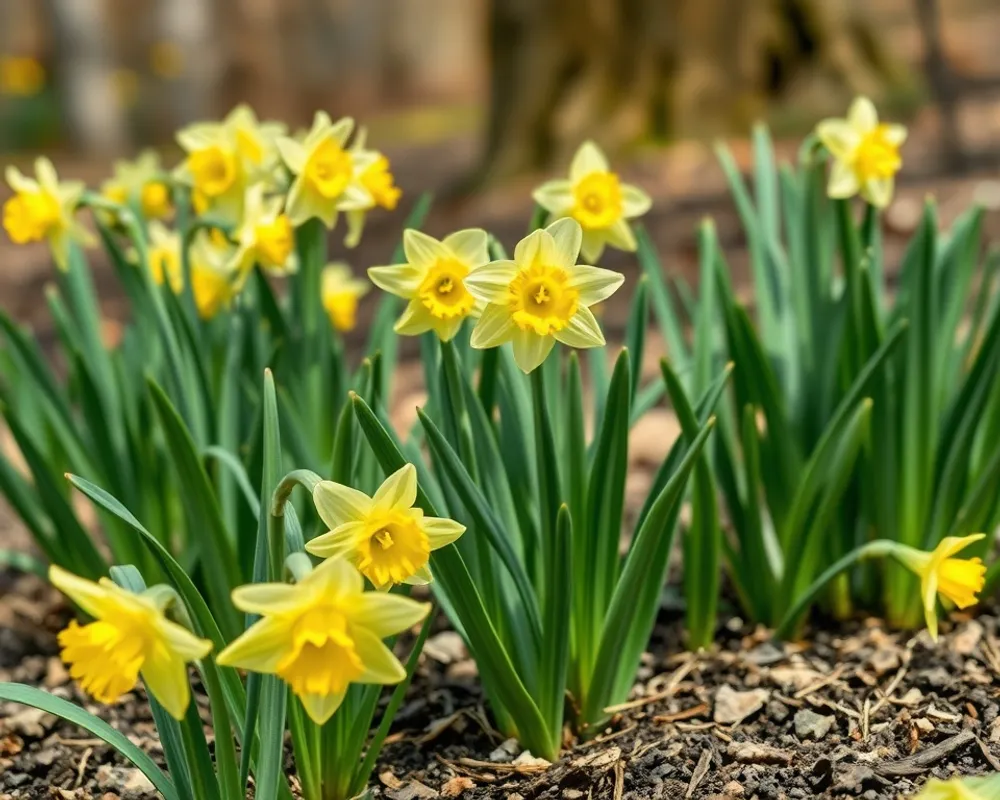
Plant daffodil bulbs in fall, 6 to 8 weeks before the ground freezes. Dig holes 6 to 8 inches deep in well-drained soil. Space bulbs 3 to 6 inches apart.
Point the tip up, cover with soil, and water once deeply. Choose a spot with full sun to partial shade.
Before You Plant: What Daffodils Really Need

Daffodils have three non-negotiable requirements. Get these right, and you are most of the way there.
First, sunlight. Daffodils bloom best in full sun at least six hours of direct light per day. They tolerate partial shade but produce fewer flowers. In warmer zones, a little afternoon shade helps blooms last longer.
Second, soil drainage. This is the biggest killer of daffodils. Bulbs rot in soggy soil. If your garden has heavy clay or stays wet after rain, you will need to amend the soil or plant in raised beds.
Third, a cold period. Most daffodil varieties need 12 to 16 weeks of soil temperatures below 40°F to trigger flowering. That is why fall planting works. If you live in USDA Zone 8 or warmer, you may need pre-chilled bulbs or low-chill varieties.
Your Zone, Your Timing: When to Plant in Fall
Timing is where most new gardeners get nervous. The good news is the window is wide. Plant daffodils when the soil temperature at planting depth has dropped to about 50°F to 60°F.
That usually happens two to four weeks before the first hard frost.
| USDA Zone | Typical Fall Planting Window |
|---|---|
| 3–4 | Late August to early September |
| 5–6 | Mid-September to mid-October |
| 7 | October to early November |
| 8–9 | November to December |
| 10 | Only low-chill varieties; treat as annuals or pre-chill bulbs for 12 weeks |
In zones 3 and 4, plant as soon as bulbs are available. In zone 7 and warmer, you can plant into December. Bulbs need at least a month of cool soil to root before the ground goes hard.
Soil Check: Is Your Drainage Good Enough?

Before you dig a hundred holes, test your soil. It takes ten minutes and saves you from a season of disappointment.
The percolation test: Dig a hole 12 inches deep and 12 inches wide. Fill it with water and let it drain completely. Then fill it again and time how long it takes to drain.
If the water level drops at least 1 inch per hour, your drainage is fine. If it takes longer than 6 hours, you have a drainage problem.
For heavy clay, mix in 2 to 3 inches of compost or coarse sand. Or plant bulbs shallower at 4 to 5 inches deep to keep them above the worst of the wet soil. For really poor drainage, consider a raised bed.
Choosing the Right Bulbs: Size, Type, and What to Avoid


Bulb size is measured by circumference. A 12/14 cm bulb (standard retail size) produces one or two flower stems. A 14/16 cm bulb often yields three stems. For most home gardens, 12/14 cm is fine.
For the best show, go with 14/16 cm or larger.
What to look for when buying:
- Firm bulbs with no soft spots or mold
- Intact papery outer skin
- No green shoots emerging
- No signs of rot at the basal plate
Avoid bargain bins. Discount bulbs are often undersized or poorly stored.
For variety choice, standard large-cupped daffodils like 'Dutch Master' or 'Carlton' are reliable for most zones. In warm areas (Zone 8, 10), choose low-chill types like 'Grand Primo', 'Erlicheer', or Paperwhite narcissus.
Step-by-Step: How to Plant Daffodil Bulbs
How Deep Should You Dig? (It Depends on Your Soil)

The old rule says "plant three times as deep as the bulb is tall." For a standard daffodil bulb (about 2 inches tall), that means 6 inches deep. But your soil changes the depth.
- Sandy soil: 7 to 8 inches deep. Sand drains fast, so deeper planting keeps bulbs cooler.
- Loam soil: 6 to 7 inches deep. Standard depth for most gardens.
- Clay soil: 4 to 5 inches deep. Shallower planting helps avoid rot.
Measure depth from the bottom of the hole to the soil surface. Point the narrow tip upward. The flat basal plate where roots grow goes down.
Spacing: Formal Beds vs. Naturalizing in Grass
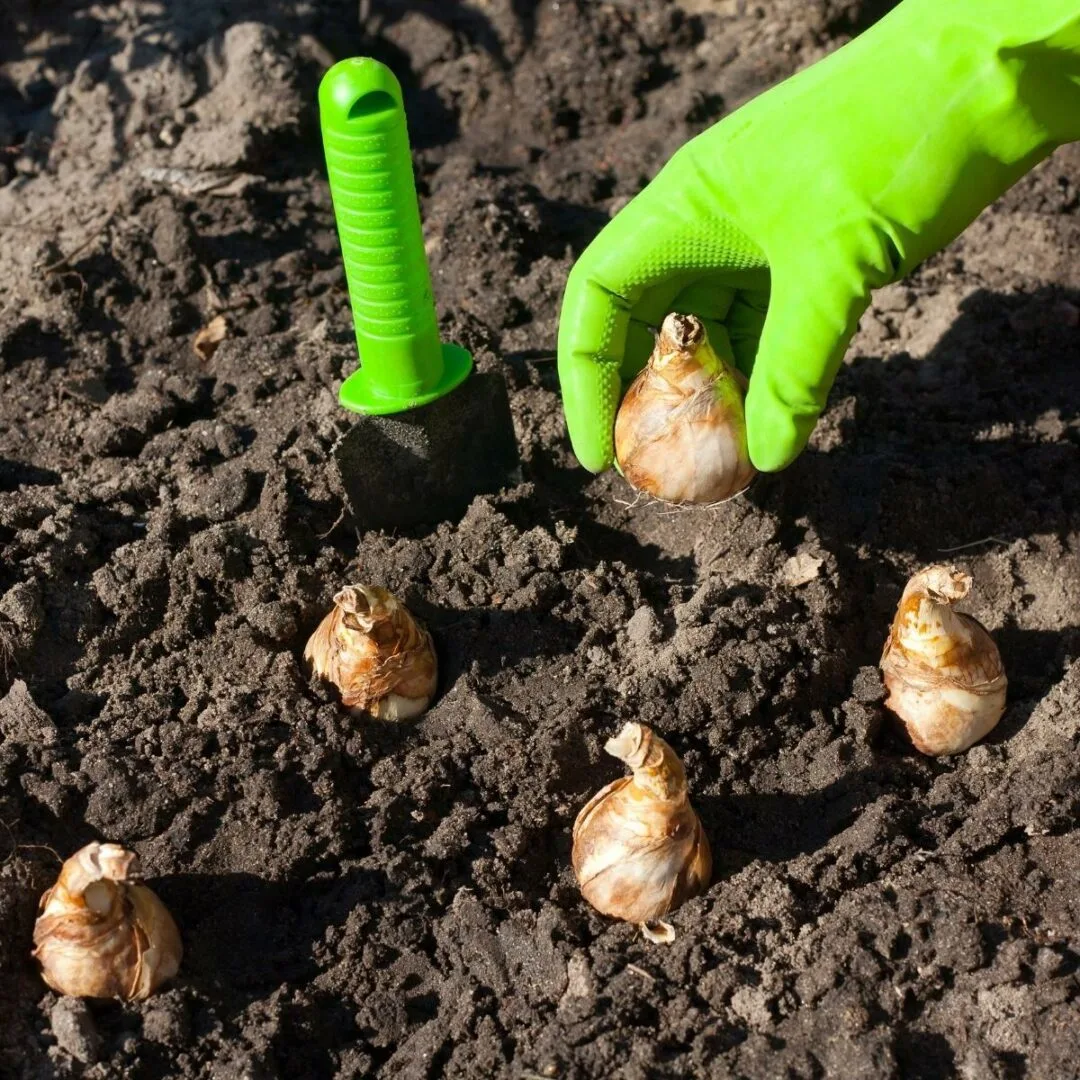
For formal beds, space bulbs 4 to 6 inches apart in a staggered grid. This creates a neat, uniform display.
For naturalizing in grass, plant bulbs in irregular clusters of 5 to 15 bulbs, spaced 3 to 6 inches apart within each cluster. Leave 12 to 18 inches between clusters. This mimics how daffodils spread naturally.
Wider spacing (6 inches) gives bulbs room to multiply before they become overcrowded. Tighter spacing (3 inches) gives a stronger first-year show but requires dividing sooner.
Fertilizer at Planting: Less Is More
Daffodils are not heavy feeders. Too much nitrogen causes lush leaves at the expense of flowers and invites bulb rot.
Use a low-nitrogen fertilizer like 5-10-10 or 0-10-10. Bone meal is a traditional choice for phosphorus. Mix a small handful into the soil at the bottom of each planting hole, then cover with an inch of soil before placing the bulb on top.
If your soil is rich in organic matter, you can skip fertilizer entirely. For more on choosing the right fertilizer, see our guide on what fertilizer to use in spring.
Special Scenarios: Clay Soil, Warm Climates, and Squirrel Troubles
Planting in Heavy Clay: The Shallow Rule
In heavy clay, plant bulbs 4 to 5 inches deep instead of 6 to 7. The top few inches of clay drain faster than deeper layers. Mix coarse sand or grit into each hole, and add compost to improve soil structure over time.
Plant bulbs on their side so water does not collect in the cup formed by the basal plate.
Warm Zones (8–10): Pre-Chilling and Late Planting
Standard daffodils need 12 to 16 weeks of soil temperatures below 40°F. In zones 8 through 10, that natural cold period is short or nonexistent.
Your options:
- Pre-chilled bulbs: Buy bulbs artificially chilled for 12 to 14 weeks. Store them in a paper bag in your refrigerator from September until planting in December or January.
- Low-chill varieties: 'Grand Primo', 'Erlicheer', 'Silver Chimes', or Paperwhite narcissus bloom with minimal cold.
- Treat as annuals: In Zone 10, accept that many daffodils will not naturalize. Enjoy them as a single-season display.
Keeping Squirrels and Rodents Away
Squirrels dig up bulbs out of curiosity, even though daffodils are toxic to them.
What works:
- Dust bulbs with cayenne pepper or a commercial repellent before planting
- Lay chicken wire over the planted area, then cover with soil or mulch
- Water the area well after planting to wash away the scent of disturbed soil
- Add a 2-inch layer of mulch
Aftercare: Watering, Mulching, and Post-Bloom Steps
Give bulbs one deep watering right after planting to settle the soil and trigger root growth. After that, let nature handle it. Daffodils need no summer watering in most climates.
In zones 3 through 6, add a 2 to 3 inch layer of organic mulch after the ground freezes to protect bulbs from frost heave. In warmer zones, skip the mulch or use a thin layer only to suppress weeds.
Post-bloom care:
- Deadhead spent flowers but leave the foliage intact
- Do not tie or braid the leaves. Let them yellow and die back naturally
- Apply a balanced fertilizer (5-10-10) when leaves emerge in spring
- In lawns, wait 6 to 8 weeks after bloom before mowing that area
Common Mistakes That Kill Daffodils (and How to Avoid Them)

Planting too shallow or too deep. Shallow bulbs heave out of the ground. Deep bulbs rot. Follow the depth chart based on your soil type.
Poor drainage. This is the number one cause of bulb rot. Amend clay soil or use raised beds.
Cutting leaves too early. Those leaves feed next year's bloom. Leave them until they turn yellow and flop. Plant hostas nearby to hide the dying foliage if needed.
Using high-nitrogen fertilizer. Nitrogen pushes leafy growth at the expense of flowers and softens bulb tissue. Stick with low-nitrogen bulb food.
Overcrowding. If your daffodils produce leaves but no blooms, they are likely overcrowded and need division.
When to Divide and Replant Overcrowded Clumps
Signs it is time to divide: Fewer flowers than previous years, thin grass-like leaves, or noticeably smaller blooms. Divide every 3 to 5 years.
How to divide: Wait until foliage has completely yellowed in early summer. Lift the clump with a garden fork. Separate bulbs by hand.
Discard any that are soft or damaged. Replant the largest bulbs immediately at the correct depth and spacing. Plant smaller offsets in a nursery bed for a year.
Quick Reference Table: Planting Depth and Spacing by Zone
| Soil Type | Planting Depth | Spacing (Formal) | Spacing (Naturalized) |
|---|---|---|---|
| Sandy | 7 to 8 inches | 5 to 6 inches | 4 to 5 inches |
| Loam | 6 to 7 inches | 4 to 6 inches | 3 to 5 inches |
| Clay | 4 to 5 inches | 4 to 5 inches | 3 to 4 inches |
Frequently Asked Questions About Planting Daffodils
Can I plant daffodils in spring instead of fall?
No. Standard daffodil bulbs need a cold period to bloom. Fall planting gives them time to root and develop flower buds.
Spring-planted bulbs usually produce leaves only. If you missed fall, buy pre-chilled bulbs for early spring planting.
How long do daffodils take to grow after planting?
Roots grow within a few weeks of fall planting. Shoots emerge in early spring, usually 4 to 5 months later. Bloom time varies by zone and variety, most flower in March or April.
Do daffodils need full sun?
They bloom best in full sun (6+ hours per day). They will grow in partial shade but produce fewer and smaller flowers. Deep shade under evergreens is not suitable.
What should I do if daffodils only produce leaves and no flowers?
Check for overcrowding, planting too deep, or too much nitrogen. Dig up a clump. If bulbs are tightly packed, divide them.
If soil is rich with nitrogen, switch to low-nitrogen bulb fertilizer next season.
Are daffodils toxic to pets?
Yes. All parts contain lycorine, which is toxic to dogs, cats, and horses. Ingestion can cause vomiting and diarrhea.
If your pet eats daffodil bulbs or leaves, call your veterinarian or Poison Control at 1-800-222-1222. Wear gloves when handling bulbs to avoid "daffodil itch."