It's a worrying sight. You walk out to your berry patch and see that your raspberry plant yellow leaves are staring back at you. Your first instinct might be to panic and reach for the nearest fertilizer.
But hold on. The color of those leaves is a clue. It's your plant's way of telling you what's wrong.
Here's the thing. Yellow leaves are a symptom, not a disease. And the pattern of that yellowing, whether between the veins, along the edges, or all over, points to the real cause.
Research from university extension services shows that over 80% of yellow leaf cases come from just three issues: incorrect soil pH, improper watering, or a nutrient deficiency. The tricky part is telling them apart. But once you know the patterns, you can fix it in a season.
Let's start with why visuals matter so much here.

Why Visuals Matter for Diagnosing Yellow Leaves
You can't diagnose raspberry yellow leaves by guessing. You need to look at the leaf. The pattern, the location, the color.
These visual cues are faster and more reliable than any soil test you can buy at the hardware store.
Your eyes are your best tool here. A quick glance tells you if the problem is old leaves or new growth. If the yellowing is uniform or patchy.
If the veins are green or yellow. Each pattern points to a different cause.
Think of it like a plant's body language. A leaf that's pale all over is saying something different than a leaf with bright green veins and yellow tissue between them. The difference is between a nitrogen deficiency and an iron deficiency.
And treating one when you have the other can make things worse.
That's why this article focuses on visuals. We're going to walk through exactly what each yellowing pattern means, how to tell them apart, and what to do about it. No guesswork.
If you're new to diagnosing plant problems, our full library of gardening advice can help you build a solid foundation for keeping your patch healthy.
The Quick Visual Triage: Is This an Emergency?
Some yellow leaves are no big deal. Others mean you need to act fast. Here's how to tell in 30 seconds.
First, check the age of the leaves. If only the oldest, lowest leaves are yellow, that's usually normal aging. Raspberries shed older leaves as they grow. Nothing to worry about.
If the yellowing is on new growth at the tips of canes, that's a problem. It means something is actively wrong. The plant can't take up what it needs.
Second, check the pattern. Is the whole leaf pale? Or is it yellow between the veins? Whole-leaf yellowing on older leaves points to nitrogen.
Yellow between veins on new growth points to iron. Both need fixing, but iron deficiency is more urgent because it affects the plant's ability to photosynthesize.
Third, check for spots or mottling. If you see irregular yellow patches, rings, or a mosaic pattern, that could be a virus. That's not an emergency in the sense that you need to act today. But it does mean you need to decide whether to remove the plant to protect the rest of your patch.
Fourth, check the soil moisture. Stick your finger two inches into the ground. Wet and soggy? You're overwatering.
Dry and dusty? You're underwatering. Both cause yellow leaves, but the fix is completely opposite.
Leaf Pattern Library: What Each Yellowing Look Means
This is the core of the article. Each pattern below is a distinct visual clue. Match your leaves to one of these, and you'll know what's wrong.
Uniform Yellowing (Pale All Over) — Nitrogen Deficiency
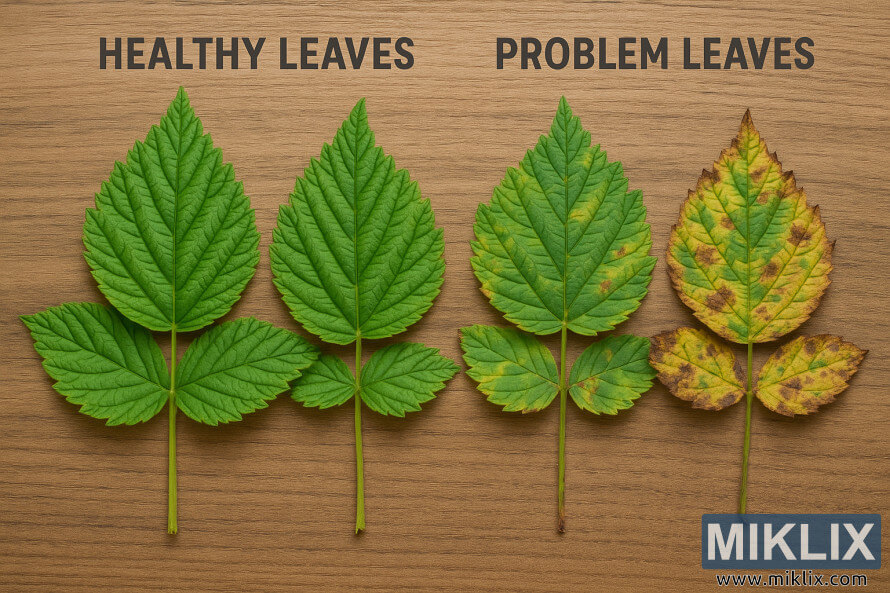
This is the most common cause. The whole leaf looks faded, pale green to yellow. It starts on the oldest leaves at the bottom of the cane and works its way up.
The veins stay green at first, then fade too.
Nitrogen is mobile in the plant. When it's low, the plant moves what it has to new growth. So old leaves suffer first.
This is a slow, predictable pattern.
Fix it with a balanced fertilizer or compost. You'll see results in a week or two. Understanding the difference between organic matter versus synthetic nutrients can help you choose the right approach for your soil.
Yellow Between Veins (Green Veins, Yellow Tissue) — Iron Deficiency
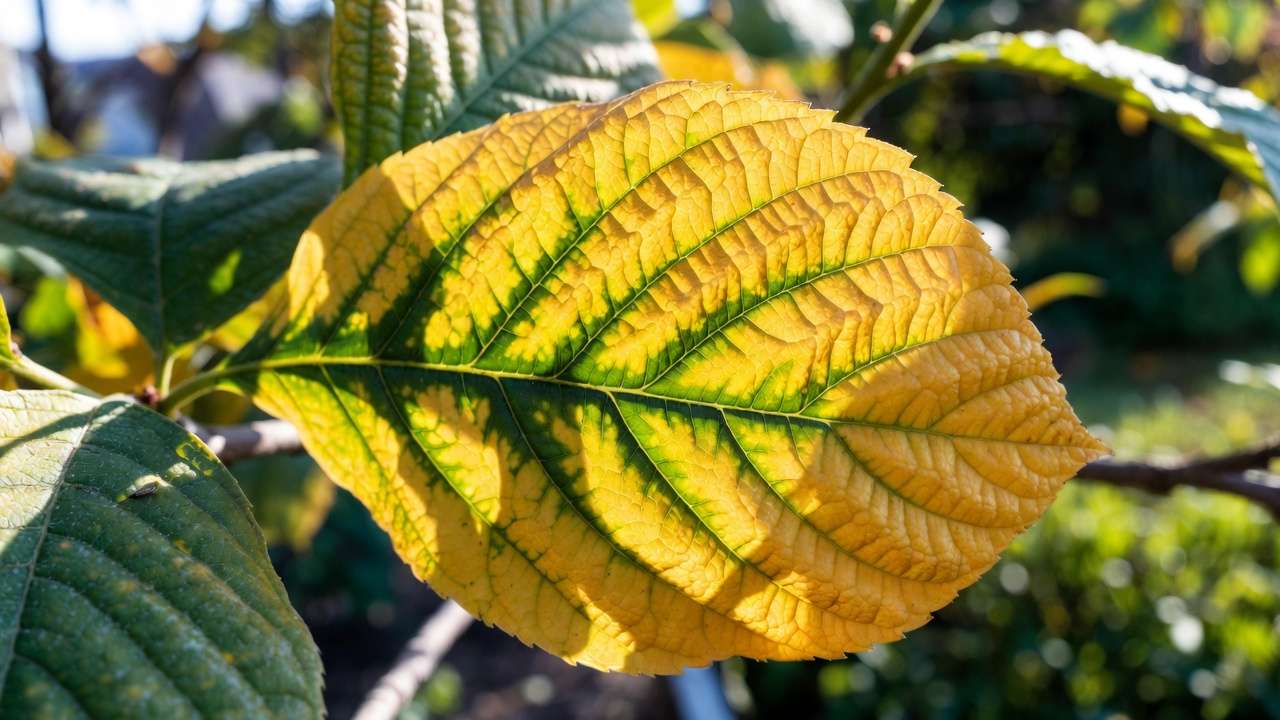
This is the classic sign of iron deficiency. The leaf tissue between the veins turns yellow, but the veins themselves stay dark green. It looks like a net pattern.
This starts on the newest leaves at the top of the cane.
Iron is immobile in the plant. So new growth shows the problem first. The most common cause is high soil pH.
Above 6.5, iron becomes unavailable to the plant, even if it's in the soil. This is very common in raspberries grown in alkaline soil or near concrete foundations.
Yellow Edges, Green Center — Potassium or Magnesium Issues
This is less common but worth knowing. If the edges of the leaves turn yellow while the center stays green, you're looking at potassium deficiency. It shows up on older leaves first.
The edges may also look scorched or brown.
Magnesium deficiency looks different. It causes yellowing between the veins on older leaves, but the yellowing starts at the edges and moves inward. You might see a triangle of green at the leaf base.
Mottled, Patchy Yellowing (Irregular Pattern) — Viral Infection
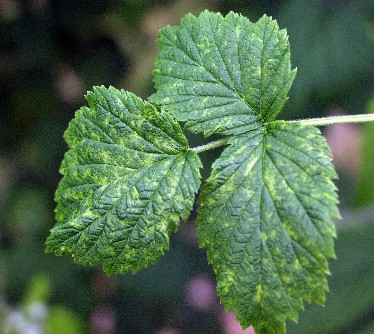
This is the one that scares people. The yellowing is irregular. You see patches, spots, rings, or a mosaic pattern.
It's not uniform. It doesn't follow a clear pattern like nutrient deficiencies.
Viruses like raspberry mosaic virus or tomato ringspot virus cause this. There's no cure. You need to remove and destroy infected plants to prevent spread.
Aphids often spread these viruses, so pest control is prevention.
Yellow Spots with Brown Centers — Fungal Leaf Spot
If you see small yellow spots that develop brown centers, that's fungal leaf spot. It's common in wet weather. The spots may merge and cause the leaf to die.
It's rarely fatal to the plant, but it weakens it.
Good air circulation and avoiding overhead watering help. Remove affected leaves and apply a fungicide if needed.
Lower Leaves Yellow First vs. New Growth Yellow First
This is the single most important clue. Look at which leaves are yellow. If it's the lower, older leaves, the problem is likely a mobile nutrient like nitrogen, magnesium, or potassium.
If it's the upper, new leaves, the problem is an immobile nutrient like iron, or a root issue that's preventing uptake.
This one clue alone narrows your diagnosis by about 80 percent. Don't skip it.
Beyond the Leaf: The Full Plant Picture
Leaves tell you a lot. But they don't tell you everything. You need to look at the whole plant and its environment.
Check the canes. Are they green and healthy? Or are they brown, cracked, or wilting? Discolored canes can indicate disease or root problems.
Healthy canes support healthy leaves.
Check the soil. Is it wet or dry? Stick your finger in the ground. If it's soggy, you're overwatering.
If it's bone dry, you're underwatering. Both cause yellow leaves, but in different patterns. Overwatering leads to soft, limp yellow leaves.
Underwatering leads to crispy, curled yellow leaves.
Check the roots. Gently dig around the base. Healthy roots are white and firm. Brown, mushy roots mean root rot.
That's usually from overwatering or poor drainage. If you spot root rot, you need to improve drainage immediately or move the plant.
Check the surrounding plants. Are they yellowing too? A systemic problem like soil pH affects everything. An isolated problem is likely specific to that plant.
This helps you decide whether to treat the whole patch or just one cane.
Check for pests. Look under the leaves. Aphids, spider mites, and leafhoppers can cause yellowing. They suck sap and weaken the plant.
A strong blast of water or insecticidal soap can handle most infestations.
Soil pH: The Hidden Driver of Iron Deficiency
This is a big one. Raspberry plants need slightly acidic soil. The ideal pH range is 5.6 to 6.2.
Above 6.5, iron starts to lock up. The plant can't absorb it, even if it's right there in the soil.
This is the most common cause of iron deficiency yellowing. And it's the hardest to diagnose because the soil looks fine. You can't see pH.
You have to test it.

Testing is simple. Buy a soil pH meter or a test kit. Follow the instructions.
Test in several spots in your berry patch. If the pH is above 6.5, you need to lower it.
Lowering pH takes time. Elemental sulfur is the best option. It's slow acting but effective.
Apply it in the fall for the following season. You can also use acidic fertilizers like ammonium sulfate. Using a spreader for even coverage across the patch helps ensure consistent results.
Don't try to lower pH quickly with vinegar or other home remedies. They don't work long-term and can harm the soil biology.
If you can't lower pH fast enough, use iron chelate as a foliar spray. This bypasses the soil and gives the plant iron directly. It's a temporary fix, but it works while you address the pH issue.
A balanced spring feeding schedule with the right nutrients can also help keep your raspberries healthy through the season.
Watering Mistakes That Turn Leaves Yellow
Watering is the easiest thing to get wrong. And it's the most common cause of yellow leaves that people misdiagnose.
Too Much Water: Yellow, Limp, Droopy
Overwatering suffocates the roots. They can't take up oxygen, so they start to rot. The leaves turn yellow, look soft and limp, and may drop off.
The soil feels wet and smells sour.
This is easy to confuse with a nutrient deficiency. But the pattern is different. Overwatering causes a general, uniform yellowing across the whole plant.
It's not just old leaves or new leaves. It's everything.
The fix is simple. Stop watering. Let the soil dry out completely before watering again.
If your soil drains poorly, consider moving the plants to a raised bed. In our research, raised beds improve drainage significantly for raspberries grown in clay soils.
Too Little Water: Yellow, Crispy, Wilting
Underwatering looks different. The leaves turn yellow, then brown at the edges. They get crispy and curl up.
The lower leaves drop off first. The soil is dry and pulls away from the sides of the pot or row.
Raspberries need consistent moisture, especially during fruiting. A dry spell of a few days can trigger yellowing. The fix is a deep, slow watering.
Drip irrigation works best because it delivers water to the roots without wetting the leaves.
How to check soil moisture correctly. Stick your finger two inches into the soil. If it feels wet, don't water. If it feels dry, water deeply.
Do this before every watering. It's the most reliable way to avoid both mistakes.
Nutrient Deficiencies vs. Diseases: Key Visual Differences
This is where most people get stuck. A nutrient deficiency and a virus can look similar at a glance. But the differences are clear once you know what to look for.
Here's a quick comparison table:
| Feature | Nutrient Deficiency | Viral Infection |
|---|---|---|
| Pattern | Uniform, follows a clear rule | Irregular, patchy, mottled |
| Veins | Green or yellow, but consistent | Often discolored or ringed |
| Spread | Affects all similar leaves | Random, sporadic, plant to plant |
| New growth | Shows first for iron, last for nitrogen | Shows at any time |
| Plant vigor | Slows but survives | Often stunted, distorted |
The key difference is predictability. Nutrient deficiencies follow a pattern. Nitrogen hits old leaves first.
Iron hits new leaves first. The pattern is consistent across the whole plant.
Viruses don't follow rules. You'll see a healthy leaf next to a mottled one. The yellowing is patchy and irregular.
The plant may also show stunted growth, curled canes, or crumbly fruit.
Another clue. Nutrient deficiencies affect the whole patch if the soil is the problem. Viruses typically start on one plant and spread.
If only one plant is showing yellowing, suspect a virus. If all plants look similar, suspect soil or watering.
Step-by-Step Diagnosis Flow for Yellow Raspberry Leaves
Follow this flow in order. It will eliminate most causes quickly.
Step 1. Check the leaves. Which leaves are yellow? Old or new?
Look at the pattern. Use the leaf pattern library above.
Step 2. Check the soil moisture. Stick your finger in the ground. Wet or dry?
This eliminates watering issues immediately.
Step 3. Check the soil pH. Test it. If it's above 6.5, you've found the likely cause of iron deficiency.
If it's below 5.5, you may have aluminum toxicity.
Step 4. Check for pests. Look under the leaves. Aphids, spider mites, and leafhoppers all cause yellowing.
A quick inspection saves you from treating the wrong problem.
Step 5. Check for disease. If the pattern is irregular, mottled, or ringed, suspect a virus. If you see spots with brown centers, suspect a fungus.
Step 6. Check the roots. Gently dig around the base. Healthy roots are white and firm.
Brown, mushy roots mean root rot.
Step 7. Make a decision. If you've eliminated soil pH, watering, pests, and disease, the most likely cause is a nutrient deficiency. Apply the appropriate fertilizer.
This flow works for 95 percent of cases. If you're still unsure, take a sample to your local extension office. They can run a soil test and a tissue test for a small fee.
The University of Minnesota Extension offers these services for home gardeners across the country.
Common Visual Mistakes That Lead to Wrong Treatment
These are the most common misdiagnoses we see in home gardens. Avoid them and you'll save a season of frustration.
Mistaking Iron Deficiency for Nitrogen Deficiency
This is the number one mistake. Both cause yellow leaves. But iron deficiency hits new growth, with green veins.
Nitrogen deficiency hits old growth, pale all over.
Treating iron deficiency with nitrogen fertilizer makes the problem worse. You add more nitrogen, the plant grows more, and the iron deficiency spreads. The leaves get yellower.
The correct fix is to lower soil pH or apply iron chelate.
Mistaking Herbicide Drift for a Virus
Herbicide drift causes distorted, twisted new growth. The leaves may look cupped, curled, or strap-like. The yellowing is irregular, similar to a virus.
The difference is timing. Herbicide drift happens after a nearby spraying. It affects the whole plant suddenly.
A virus develops slowly and spreads plant to plant. If you see twisted new growth and your neighbor sprayed their lawn last week, it's herbicide drift, not a virus.
Mistaking Overwatering for Underwatering
Both cause yellow leaves, but the feel is different. Overwatered leaves are limp and soft. Underwatered leaves are crispy and curled.
The soil tells the real story. Wet soil means overwatering. Dry soil means underwatering.
Fixing Yellow Leaves by Cause: What Actually Works
Once you know the cause, the fix is straightforward. Here's what works for each scenario.
For Nutrient Deficiencies: Soil Amendments and Foliar Sprays
Nitrogen deficiency needs a balanced fertilizer or compost. Apply it at the base of the plant and water it in. You'll see green-up in one to two weeks.
Iron deficiency needs a two-part approach. First, lower the soil pH with sulfur. Second, apply iron chelate as a foliar spray for immediate results.
The spray works in days. The pH fix takes months.
For a general spring feeding, a balanced granular fertilizer works well. Using a broadcast spreader ensures even coverage across the patch. This prevents one area from getting too much while another gets too little.
For Overwatering: Drainage Fixes and Watering Schedule
Stop watering immediately. Let the soil dry out. If the soil is compacted, aerate it with a garden fork.
Add organic matter to improve drainage.
For severe cases, move the plants to a raised bed. Raspberries need well-draining soil. They won't tolerate wet feet.
For Viral Infections: Removal and Prevention
There's no cure for a virus. Remove the infected plant, roots and all. Destroy it.
Do not compost it. The virus can survive in compost.
Prevent spread by controlling aphids. They're the main vector for raspberry mosaic virus. Insecticidal soap or neem oil works well.
Proper ventilation in your grow space can also help reduce humidity and pest pressure.
For Fungal Issues: Pruning and Fungicide Timing
Remove affected leaves. Prune to improve air circulation. Apply a fungicide labeled for raspberries at the first sign of spots.
Copper fungicide is effective for leaf spot. Apply it in early spring before the leaves emerge. Follow the label instructions for timing and dosage.
When Yellow Leaves Mean You Should Remove the Plant
Not all yellow leaves can be fixed. Some problems are terminal. If you've confirmed a viral infection like raspberry mosaic virus, the plant must go.
Remove it entirely, roots and all. Burn it or bag it for landfill. Do not compost it.
The same goes for severe crown rot. If the canes are collapsing and the roots are brown and mushy, the plant won't recover. Remove it and improve drainage before replanting.
A healthy raspberry patch starts with removing sick plants quickly.
Preventing Yellow Leaves Next Season
Prevention is easier than treatment. Start with the right soil pH. Test it before planting and adjust to 5.6 to 6.2.
Choose a well-draining site with full sun. Space plants two to three feet apart for good air circulation.
Water consistently but not excessively. Drip irrigation is best. Apply a two to three inch layer of mulch around the base.
This keeps soil moisture steady and suppresses weeds. A balanced fertilizer in early spring supports healthy growth all season.
Your Visual Reference Guide: Quick Look-Up Table
| Leaf Appearance | Likely Cause | What to Do |
|---|---|---|
| Pale all over, old leaves first | Nitrogen deficiency | Apply balanced fertilizer or compost |
| Yellow between veins, new leaves first | Iron deficiency | Check pH, lower if above 6.5, apply iron chelate |
| Yellow edges, older leaves | Potassium deficiency | Apply potassium-rich fertilizer |
| Mottled, patchy, irregular pattern | Viral infection | Remove and destroy the plant |
| Yellow spots with brown centers | Fungal leaf spot | Remove affected leaves, apply fungicide |
| Limp, soft yellow leaves, wet soil | Overwatering | Stop watering, improve drainage |
| Crispy, curled yellow leaves, dry soil | Underwatering | Water deeply, use drip irrigation |
Frequently Asked Questions
Can yellow raspberry leaves turn green again?
Yes, if the cause is a nutrient deficiency or watering issue. Once you correct the problem, new growth will be green. Existing yellow leaves may not recover fully, but the plant will push out healthy new leaves within one to two weeks.
Should I fertilize raspberries with yellow leaves?
Only if you've confirmed a nutrient deficiency. Applying fertilizer when the cause is overwatering or a virus can make things worse. Always diagnose the cause first.
A soil test is the most reliable way to know what your plants need.
How often should I water raspberry plants?
Raspberries need about one to two inches of water per week. Water deeply once or twice a week, depending on rainfall. Check soil moisture with your finger.
Water only when the top two inches feel dry.
What is the best fertilizer for yellow leaves on raspberries?
A balanced 10-10-10 fertilizer works for general deficiencies. For iron deficiency, use iron chelate as a foliar spray. A soil test will tell you exactly what your patch needs.
Over-fertilizing causes more problems than it solves.
Can too much sun cause yellow leaves on raspberries?
Raspberries prefer full sun, but intense heat can stress them. Leaves may turn yellow and curl at the edges. Provide afternoon shade in hot climates.
A 30 to 50 percent shade cloth helps during heat waves.
Are yellow leaves on raspberries a sign of disease?
They can be. Viral infections cause mottled, patchy yellowing. Fungal infections cause yellow spots with brown centers.
But most yellow leaves are from nutrient deficiencies, watering issues, or soil pH problems. Look at the pattern first.