
Deciding what is the best paint sprayer for a fence can feel overwhelming, but it doesn't have to be. Getting that smooth, even finish on your fence quickly and efficiently is entirely achievable with the right tool. Forget endless hours with a brush and roller; modern sprayers are designed to make big exterior jobs like this much simpler.
Aggregate user reviews show that the right sprayer can cut application time by more than half compared to manual methods, making it a worthwhile investment for many homeowners. We've researched the top options to help you find the perfect match for your project.
Why a Paint Sprayer is Your Best Friend for Fence Painting
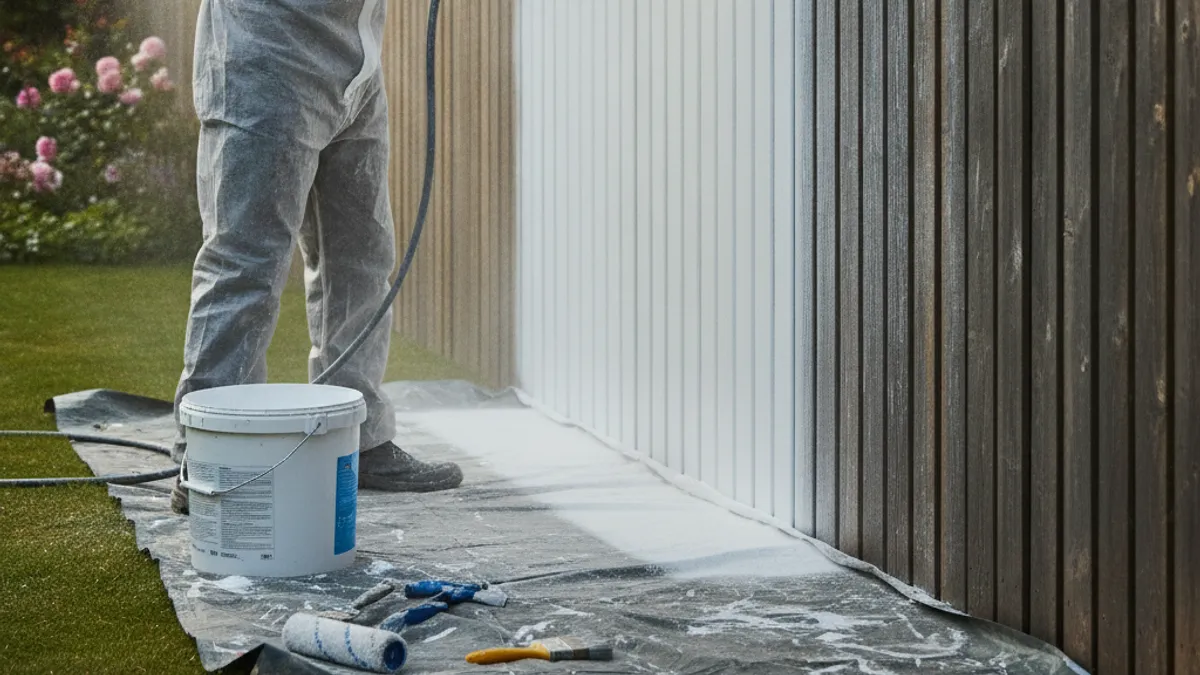
Why bother with a paint sprayer for your fence? It’s simple: speed and a superior finish. Imagine getting those long, straight sections of fence covered in a fraction of the time it would take with a brush or roller. Our research indicates that homeowners can often complete an entire fence in a single afternoon with a sprayer, compared to potentially multiple days of manual labor.
This tool is especially valuable when you're dealing with intricate fence designs or needing to reach every crevice. It’s not just about saving time; it's about achieving a professional, uniform look that’s nearly impossible to replicate by hand, especially on rough wood surfaces.
Tackling the Fence Painting Challenge: Common Headaches and How to Avoid Them
Painting a fence can quickly turn into a frustrating chore if you're not prepared. One of the biggest issues people face is achieving an even coat without drips or runs. It's easy to apply too much paint in one spot and not enough in another when using brushes or rollers, leading to a patchy appearance.
Another common pain point is dealing with clogs, especially when using thicker stains or paints. This often halts your progress and requires time-consuming cleanup. Plus, there’s the sheer physical toll, hours of bending, reaching, and repetitive motion that can leave you exhausted.
The Dread of Drips and Uneven Coats
Achieving a consistent finish across a large, often textured surface like a fence is tough. A paint sprayer, when used correctly, lays down a fine, even mist that coats the wood uniformly. This significantly reduces the chances of unsightly drips and uneven patches that can mar the fence's appearance and offer less protection.
The Frustration of Clogged Nozzles
Paint sprayers, particularly those designed for exterior use, are built to handle a range of viscosities. While thinner paints and stains are easier, many models can handle thicker latex coatings needed for durable fence finishes. Choosing a sprayer with a larger orifice tip and proper filtration minimizes the risk of clogs, keeping your project moving smoothly.
The Endless Hours of Back-Breaking Work
Let's be honest, painting a fence by hand is a marathon. A paint sprayer transforms it into a sprint. By spraying, you cover large areas much faster, reducing the physical strain and freeing up your time. For anyone with a substantial fence line, this efficiency is a game-changer, turning a dreaded weekend chore into a manageable task.
Can a Sprayer Really Be the Best Tool for My Fence?
Yes, a paint sprayer can absolutely be the best tool for your fence, especially if you value your time and want a quality result. For large fence projects, it significantly speeds up the process, allowing you to cover more ground in less time than traditional methods. Think about a privacy fence stretching dozens of feet, a sprayer can lay down a uniform coat in minutes per section.
It also excels at getting into all the nooks and crannies of wood grain that brushes and rollers often miss. This means better coverage and better protection for your fence against the elements. If you’re looking to refresh your fence quickly and effectively, a sprayer is your closest ally.
Faster Coverage, Smoother Finish?
Aggregate user reviews consistently show that paint sprayers are significantly faster for fence jobs. A good airless sprayer, for instance, can apply paint at a rate of over 300 square feet per hour. This speed doesn't compromise quality; the fine atomization process creates a very smooth, uniform finish that looks professional and wears well over time.
Reaching Every Nook and Cranny
Wood fences, especially aged ones, have texture. Brushes can leave bristle marks, and rollers might miss the deeper grain. Sprayers, with their fine mist, wrap around the wood, coating every surface including the rougher textures and edges. This ensures that the entire fence is protected, not just the high points.
Understanding Your Paint Sprayer Options for Fences
When you're looking for a paint sprayer, you'll encounter a few main types, each with its own strengths for fence painting. Airless sprayers are the workhorses, powerful and fast, they’re great for large areas and thicker paints. HVLP (High Volume Low Pressure) sprayers offer more control and less overspray, making them ideal for stains and sealers where precision matters.
Handheld electric sprayers are user-friendly and portable, perfect for smaller fences or touch-up jobs. Cordless models give you freedom from the power cord, which is a huge plus when working around a large yard. Understanding these differences helps narrow down what’s best for your specific fence project and needs.
Airless Paint Sprayers: The Heavy-Duty Contenders
Airless sprayers are king for large exterior jobs like fences. They work by forcing paint through a small opening at high pressure, atomizing it into a fine spray without the need for compressed air. Manufacturer specifications show they can achieve flow rates of 0.5 to 1 gallon per minute (GPM), making them incredibly fast for covering large, continuous surfaces like fence pickets and rails.
HVLP (High Volume Low Pressure) Sprayers: Precision for Stains and Sealers
HVLP sprayers use a lot of air volume at low pressure, which is excellent for controlling overspray. This makes them a top choice for applying wood stains, sealers, and even thinner paints where a delicate finish is desired. While typically slower than airless systems, their precision ensures less paint goes on surrounding areas, reducing masking time and cleanup effort.
Handheld Electric Sprayers: DIY Friendly Powerhouses
These compact units are a popular choice for homeowners tackling moderate fence projects. They are easy to set up, use, and clean, often featuring adjustable flow rates and nozzle sizes. While they might not match the speed of larger airless units for very long fences, they offer excellent portability and value, making them a strong contender for DIYers.
Cordless Paint Sprayers: Freedom from the Outlet
Cordless paint sprayers combine the convenience of handheld models with the advantage of battery power. This means you don’t have to worry about cord management or finding an outlet near your fence. For large yards or properties where outlets are scarce, the mobility offered by a cordless sprayer can be a significant benefit, allowing you to move freely around the entire fence perimeter.
Key Features to Look For When Choosing a Fence Sprayer
When you're shopping for a paint sprayer specifically for your fence, several features really make a difference. The power, measured in motor watts or horsepower, dictates how well it handles thicker paints and stains. Look for adjustable flow rates and nozzle sizes; this lets you dial in the spray pattern to match your paint and fence type, minimizing overspray and maximizing efficiency.
Consider the capacity, a larger hopper or a direct suction from a gallon container means fewer refills. Also, think about the hose length if you're going with an airless model, as it provides flexibility in positioning the sprayer unit. Ease of cleaning is crucial too, as you'll want to spend more time painting and less time dismantling.
Flow Rate and PSI: Powering Through Paint
The flow rate, often measured in Gallons Per Minute (GPM), tells you how quickly the sprayer can deliver paint. For large fences, a higher GPM is generally better as it speeds up your work. Pounds per Square Inch (PSI) indicates the pressure at which the paint is expelled. Higher PSI is needed to break down thicker paints effectively, ensuring a smooth atomization.
For instance, some airless units operate at PSI ranges of 1,000 to 3,000 PSI, which is essential for handling exterior latex paints.
Nozzle and Tip Size: Getting the Right Spray Pattern
The nozzle tip is critical for fence painting. Different tip sizes produce different spray widths, with wider tips (like .017 or .019 inch) being ideal for covering fence pickets and rails quickly. A tip that's too small will clog easily with thicker paints, and one that's too wide might lead to excessive overspray. Many sprayers come with a selection of tips, or interchangeable ones can be purchased separately.
Hopper vs. Hose: What Works Best for Your Project
If you choose a handheld sprayer, you'll likely have a hopper that holds the paint. These are convenient for smaller jobs, but for a long fence, you'll be refilling it often. Airless sprayers typically use a hose that draws paint directly from a gallon bucket or larger container. This setup is far more efficient for extended projects, minimizing downtime for refills and allowing you to work continuously for longer periods.
Material Thickness Capability: Stains, Sealers, and Thicker Paints
Not all sprayers can handle every type of coating. Thicker exterior latex paints and some stains require a sprayer with sufficient power and a larger nozzle to prevent clogging. HVLP sprayers are generally better for thinner materials like lacquers or stains, while airless sprayers are designed for the heavier body of exterior paints. Always check the manufacturer's specifications for the viscosity range the sprayer can handle; many provide guidelines using a viscosity cup.
The Fence Painting Sprayer Showdown: Airless vs. HVLP vs. Handheld
Choosing between an airless, HVLP, or handheld electric sprayer for your fence painting project involves weighing different priorities. Airless sprayers are the fastest and most powerful, ideal for large areas and dense coatings, though they can produce more overspray. HVLP units offer superior control and less overspray, making them excellent for precision work with stains or thinner paints but slower for large jobs.
Handheld electric sprayers are the convenience champions for smaller fences or moderate projects, offering a good balance of portability and power without complex setups, though they may struggle with very thick materials or extensive areas. Your choice hinges on fence size, paint type, and how much time you're willing to invest.
Speed and Coverage: Who Wins?
When it comes to sheer speed and coverage over a large area, airless paint sprayers typically take the crown. They can lay down a consistent, wide fan of paint quickly, covering linear feet of fence far faster than other types. For a fence that's hundreds of feet long, using an airless sprayer can cut your application time by more than half compared to an HVLP or handheld electric.
Finish Quality and Control: What's Your Priority?
HVLP sprayers often provide a finer atomization and less overspray, leading to a very smooth, controlled finish, particularly with stains and sealers. This delicate control is great if you’re aiming for a specific aesthetic or working with delicate wood. Airless sprayers can also achieve excellent finishes, but may require more practice to control the fan width and avoid tiger stripes or runs, especially on vertical surfaces like fence pickets.
Ease of Use and Cleanup: The Big Differences
Handheld electric sprayers are generally the easiest to set up and clean. They have fewer parts and simpler mechanisms. HVLP systems are a bit more involved, especially Wagner's turbine-driven units, but still manageable for DIYers. Airless sprayers, while incredibly efficient for spraying, can be the most complex to clean thoroughly, often requiring dedicated flushing procedures and solvent use.
This can be time-consuming after a project.
Cost Considerations for Each Type
Entry-level handheld electric sprayers can be found for under $100, making them highly accessible. Mid-range HVLP systems and more robust handheld units might cost between $150 and $400. Professional-grade airless sprayers, which offer the most power and speed for extensive fence work, typically start around $300 and can climb to well over $1,000 for high-end models. Your budget for the sprayer will likely influence the type and capabilities you can afford.
What Kind of Fence Paint or Stain Can You Spray?
The type of coating you plan to use on your fence is a massive factor in selecting the right sprayer. Latex exterior paints, commonly used for fences, are generally well-handled by most airless and many powerful handheld electric sprayers. If you're opting for wood stains or sealers, which are usually a thinner viscosity, an HVLP sprayer is often preferred to avoid overspray and achieve a more even, penetrating coat.
Always check the manufacturer's recommended viscosity range for the paint or stain and compare it against the sprayer's capabilities. Some sprayers even come with built-in viscosity measuring cups or adjustments to help you achieve the perfect consistency for optimal spraying.
Best Sprayers for Latex Paints
Latex paints, whether water-based or oil-based, generally require a sprayer with good power and pressure to atomize properly. Airless paint sprayers are the go-to choice here, with models offering sufficient PSI and flow rates to handle these thicker coatings without issue. A typical recommendation might point towards an airless sprayer with at least a .015 tip for exterior latex, or larger for faster coverage.
Spraying Wood Stains and Sealers Effectively
Wood stains and sealers are usually thinner than latex paints. For these, an HVLP sprayer is often recommended. The lower pressure and higher volume of air provide better control, reducing overspray that can land on your house or landscaping. Many handheld electric sprayers can also handle stains effectively, especially those with adjustable flow settings.
Tackling Thicker Exterior Coatings
When you're dealing with heavier-bodied exterior coatings, like some opaque stains or textured finishes, you'll need a sprayer that can handle the viscosity. Airless sprayers are best suited for this, as their high pressure can break down even dense materials. Always consult the paint manufacturer's technical data sheet (TDS) for their recommendations on spraying viscosity and the appropriate tip size or pressure settings.
Getting Your Fence Ready for Spraying: The Crucial Prep Steps
Before you even think about pulling the trigger on the sprayer, proper preparation is key. Skipping these steps is a fast track to a subpar finish and wasted paint. Your fence needs to be clean, dry, and free of any loose debris. This means a good scrub to remove dirt, mildew, and chalky residue, followed by ample drying time, especially if you're working in humid conditions.
Masking is also non-negotiable. Protect anything you don't want painted: house siding, windows, plants, and even the ground if you're particularly concerned about overspray. This upfront effort saves hours of cleanup later and ensures your project looks as professional as possible.
Cleaning Your Fence Surface
A clean canvas is essential for any paint or stain job. Dirt, grime, and mildew can prevent coatings from adhering properly, leading to peeling and premature failure. A stiff brush or a pressure washer on a low setting is effective for removing surface dirt. For stubborn mildew, a solution of one part bleach to three parts water can be used, followed by a thorough rinse.
Ensure the fence is completely dry before proceeding; moisture trapped beneath the coating can cause issues later.
Masking Off Adjacent Areas
Overspray is the bane of spray painting, and fences present a large, exposed canvas. It's vital to mask off any areas you don't want paint to land on. This includes the foundation of your house, garden beds, walkways, and any outdoor furniture. Use painter's tape or plastic sheeting for this.
For larger areas, a drop cloth or plastic sheeting laid along the base of the fence can catch falling overspray. This careful masking prevents hours of cleanup and ensures your property doesn't get an unintended coat of paint.
Proper Paint/Stain Thinning (When Needed)
Not all paints and stains require thinning for spraying, but some do, especially if you're using a system with smaller orifices or lower power. Check the paint manufacturer's technical data sheet (TDS) for their recommendations. If thinning is necessary, use a paint conditioner or thinner specifically recommended for your product. Over-thinning can compromise the integrity and durability of the coating.
Some sprayers, particularly HVLP models, might require the paint to be thinned to a specific viscosity, often measured with a Zahn cup or similar tool, to flow through correctly.
Mastering the Spray Technique for a Flawless Fence
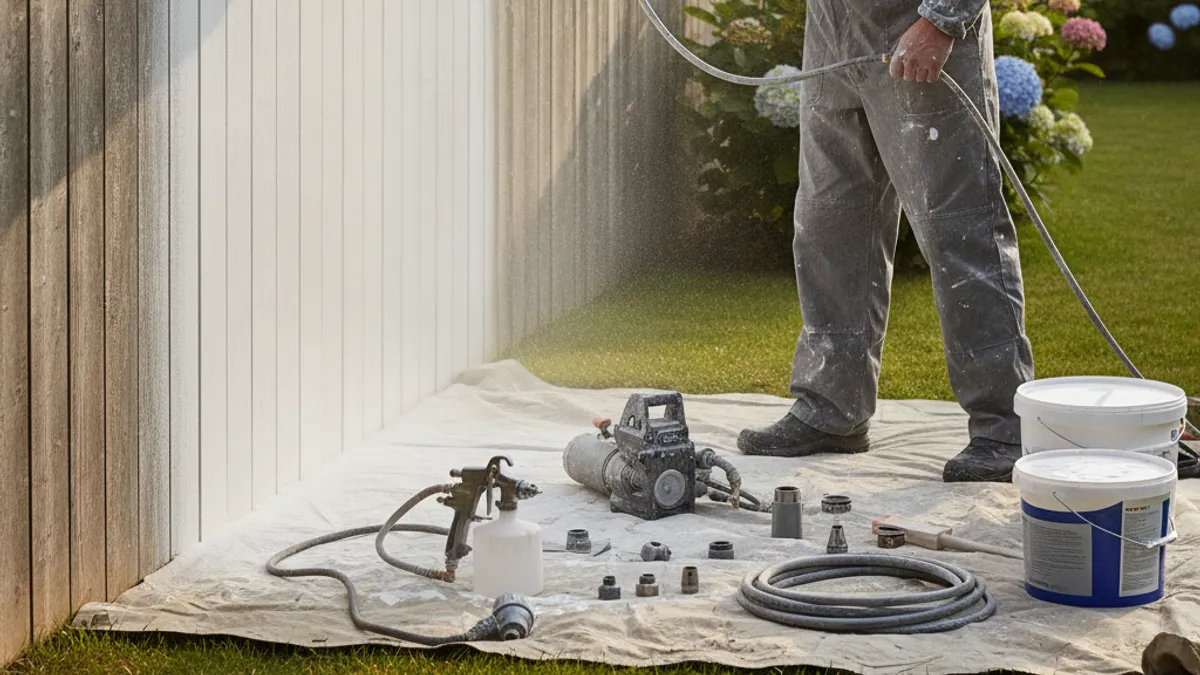
Once your fence is prepped and your sprayer is ready, it's time to master the actual application. The technique is simple but requires focus: maintain a consistent distance and speed, and overlap your passes properly. Moving too fast or too slow, or holding the sprayer too close or too far, will result in uneven coverage or drips. Practice on a piece of scrap wood if you're new to spraying before hitting the fence itself.
The goal is to create a smooth, continuous film of paint or stain. This means working in sections and ensuring each pass blends seamlessly into the last. Think of it as painting in long, even strokes, much like you would with a roller on a large wall.
Setting Up Your Sprayer Correctly
Before you start spraying, ensure your sprayer is primed and ready. For airless sprayers, this involves purging the system to remove any air or cleaning solvent, allowing paint to flow freely. For handheld units, it means filling the reservoir, attaching it securely, and testing the spray pattern on a piece of cardboard. Adjust the pressure or flow rate as recommended by the paint manufacturer and the sprayer’s manual for the specific coating you're using.
Maintaining Consistent Distance and Speed
The ideal spraying distance for most fence paints with an airless sprayer is typically between 10 to 12 inches from the surface. For HVLP sprayers, this distance might be closer, around 6 to 8 inches. The key is to keep this distance constant as you move. Similarly, your spraying speed should be steady and even.
A common mistake is speeding up at the end of a stroke, which leads to thin spots or drips. Try to coordinate your arm movement with the sprayer's trigger.
Overlapping Your Passes for Even Coverage
To achieve a uniform coat and avoid "tiger stripes" (darker lines where passes overlap unevenly), you need to overlap each spray pass by about 50%. This means the edge of your current spray pattern should hit the center of the previous one. When spraying fence pickets, this naturally leads to a consistent application. For longer sections, move the sprayer horizontally or vertically in long, sweeping motions, ensuring each new pass slightly overlaps the last.
Consistent overlap is more important than perfect alignment.
Troubleshooting Common Spraying Issues on the Fly
Even with preparation, issues can arise. If you notice sputtering, it might be an airless sprayer needing purging or a blockage in the tip or filter. If the spray pattern is uneven and "tails" at the ends, you're likely moving too fast or not overlapping enough. Drips often signal that you're too close, moving too slowly, or applying too much paint.
Many common issues can be resolved by adjusting pressure, cleaning the tip, or refining your technique as you go.
Sprayer Cleanup and Maintenance: Keeping Your Tool in Top Shape
Proper cleanup is probably the most crucial step in maintaining your paint sprayer. Skipping this can lead to clogs, reduced performance, and even permanent damage. For water-based paints, this involves thoroughly flushing the system with water and mild detergent. For oil-based paints or lacquers, you'll need to use the appropriate solvent, like mineral spirits or paint thinner, following strict safety precautions.
Beyond a quick rinse, perform a deep clean periodically, especially if you've used thicker coatings or the sprayer has been stored for a while. Manufacturers like Graco and Wagner provide detailed instructions in their user manuals for their specific models. A well-maintained sprayer will serve you faithfully for many fence-painting seasons.
The Essential Flushing Process
After you finish spraying, the first step is to flush the system. For water-based products, this means running clean water through the sprayer until it comes out clear. For oil-based products, use the recommended solvent. This process removes the bulk of the paint or stain from the pump, hose, and spray gun.
Many airless sprayers have a trigger-lock feature, allowing you to continuously flush them without holding the trigger, which is very handy.
Deep Cleaning for Longevity
A quick flush isn't always enough. For a thorough cleaning, disassemble the spray gun and clean the tip and guard separately. Check any filters for blockages and clean them as well. Some manufacturers recommend running a specialized cleaning solution through the system for a deeper clean, especially after using difficult-to-clean materials.
Always refer to your specific sprayer's manual for detailed disassembly and cleaning instructions. Proper storage after cleaning, often with a pump protector fluid for airless units, prevents corrosion.
Storing Your Sprayer Properly
Once your sprayer is clean and dry, proper storage is vital. For airless sprayers, especially those with an older piston pump, it's often recommended to store them with pump protector fluid. This fluid displaces water and prevents internal components from corroding during periods of inactivity. For all types of sprayers, store them in a dry, temperature-controlled environment, away from extreme heat or cold.
This ensures your sprayer is ready to go the next time you need it.
How Much Will a Fence Paint Sprayer Cost You?
The price of a paint sprayer for fence painting can vary wildly, from under $100 for basic handheld electric models to over $1,000 for professional-grade airless systems. For the average homeowner tackling a few fences a year, a solid mid-range handheld electric, like those from Wagner, often falls in the $150 to $300 range. These are usually powerful enough for exterior latex paints and stains.
If you have extensive fencing or plan on painting multiple structures, investing in a more robust unit, perhaps a smaller stationary airless sprayer or a higher-end HVLP system, might be sensible. These will typically cost between $300 and $600 but offer greater speed, durability, and capability. Accessories like extra tips, hoses, or cleaning kits can add another $50 to $100 to the overall cost.
Entry-Level vs. Mid-Range vs. Pro Options
Entry-level sprayers, often priced below $100, are best for small, occasional projects. They might struggle with thicker paints or extended use. Mid-range sprayers, from brands like Wagner or HomeRight, usually between $150 and $300, are perfect for most DIY fence painting. They offer better power, adjustable settings, and improved durability for moderate use.
Professional or semi-professional airless sprayers, costing $300 and up, are designed for daily use and heavy-duty coatings, offering the fastest application and greatest versatility.
Budgeting for Paint and Accessories
Beyond the sprayer itself, remember to budget for essential accessories. This includes paint strainers, which are crucial for preventing clogs by catching debris in your paint, and cleaning solvents or solutions. Replacement spray tips can also be a wise investment, as tips wear out over time, affecting the spray pattern. Factor in about $30-$75 for a decent set of accessories and consumables when budgeting for your fence painting project.
Is It Safe to Spray My Fence with Paint or Stain?
Safety absolutely comes first, especially when you're dealing with paints, stains, and sprayers. The primary concern is inhalation of the fine mist. Wearing a respirator designed for organic vapors is non-negotiable, not just a suggestion. Even with proper ventilation, tiny particles can be airborne, and inhaling them over time can lead to respiratory issues.
Beyond inhalation, protecting your skin and eyes is also critical. Many exterior coatings contain chemicals that can irritate skin or cause damage. Always use safety glasses or goggles and wear gloves, preferably nitrile, to protect your hands. Even if you're just doing a small section, proper personal protective equipment (PPE) is crucial for your well-being.
Essential Personal Protective Equipment (PPE)
For any paint spraying task, especially outdoors where wind can carry mist unpredictably, a few pieces of PPE are vital. First, a quality respirator or mask rated for organic vapors (often indicated by an OV rating) is necessary to prevent inhaling paint particles. Safety glasses or goggles are a must to protect your eyes from stray mist. Long sleeves, pants, and gloves will shield your skin from direct contact with paint and solvents.
Think of it as your essential uniform for a safe spraying project.
Working in Well-Ventilated Areas
Fences are typically outdoors, offering natural ventilation, which is a huge plus. However, you still need to be mindful of wind direction. You don't want the paint mist blowing back towards you or onto neighboring properties. If you're spraying near the house, ensure windows and doors are sealed shut.
For smaller or more enclosed areas, consider setting up temporary fans to improve air circulation. Proper ventilation ensures that airborne particles dissipate quickly.
When to Definitely Use a Sprayer (and When Maybe Not To)
A paint sprayer is a fantastic choice for painting fences, especially for larger projects. If you have a long stretch of fence, like a privacy fence or a property line enclosure, the speed and efficiency of a sprayer are unmatched. It’s also ideal if you’re looking for a very smooth, professional-looking finish that’s hard to achieve with brushes or rollers. If time is a major factor in your decision, a sprayer is likely your best bet.
However, if your fence is very small, or has intricate details and numerous tight corners, a sprayer might be overkill. In such cases, a good brush and roller might offer more control for detail work without the setup and cleanup hassle of a sprayer. Also, if you’re only staining a very small section, a simple brush application might be quicker overall.
Perfect for Large, Straight Fences
If your fence is predominantly long, straight sections, a paint sprayer will be your most valuable tool. Think of a typical backyard fence that runs the perimeter of your property. Airless sprayers, in particular, excel here with their high flow rates, allowing you to cover hundreds of linear feet quickly. The consistent fan pattern ensures an even application across these expansive areas, making the job feel much less daunting.
This is where the speed advantage of a sprayer truly shines.
Less Ideal for Intricate, Small Sections
When your fence has very complex designs, numerous small decorative elements, or tight spaces that are hard to reach, a sprayer's broad fan pattern might become a hindrance. In these scenarios, the overspray can become excessive, and the fine detail that a brush can achieve might be lost. For example, a highly ornamental picket fence with many spindles and delicate scrollwork might be better suited to careful brush application, ensuring you don't paint areas you don't intend to.
Your Go-To Sprayer for a Beautifully Painted Fence: Our Top Picks
Based on our research into performance, user feedback, and feature sets relevant to fence painting, certain sprayer types stand out. For sheer speed and ability to handle thicker exterior paints on long fence runs, a good quality airless sprayer from brands like Graco or Titan is often a top recommendation. These units offer robust power and consistent delivery.
If your focus is more on applying stains or sealers, or if you're concerned about overspray, a high-performance HVLP system from manufacturers like Fuji or Wagner is an excellent choice. For the DIYer on a budget needing a capable tool for moderate fence sizes, powerful handheld electric sprayers from brands like Wagner FLEXiO series offer a fantastic balance of performance and ease of use.
- For Maximum Speed on Large Fences: Look for entry-level to mid-range Airless Paint Sprayers (e.g., Graco Magnum series). These offer the power to quickly cover long stretches and handle thicker exterior paints, often with flow rates of 0.5 GPM or higher.
- For Finer Control with Stains/Sealers: Consider HVLP Sprayers (e.g., Wagner HVLP series or Fuji models). They provide excellent atomization for thinner materials and minimize overspray, making them ideal for a smooth finish on wood stains and sealers.
- For User-Friendly DIY Projects: Handheld Electric Sprayers (e.g., Wagner FLEXiO series) are a great value. They are easy to set up, operate, and clean, suitable for most homeowner fence painting needs, and can handle a variety of interior and exterior coatings.
- For Cordless Convenience: If you have a large property or lack easy access to power outlets, a Cordless Paint Sprayer can be a game-changer, offering freedom of movement without being tethered to an extension cord.
When to Fertilize Your Lawn: Timing is Everything
Timing your lawn fertilization correctly is crucial for healthy, green growth, and it depends on several factors. Generally, you want to fertilize when grass is actively growing. For most cool-season grasses (like fescue, ryegrass, and bluegrass), spring and fall are the primary fertilization windows, with a possible late fall application. Warm-season grasses (Bermuda, Zoysia, St.
Augustine) benefit most from early summer and late spring feeding. The goal is to provide nutrients when the grass can best utilize them without wasting fertilizer or encouraging weed growth.
What Kind of Fertilizer is Best for Your Grass?
Choosing the right fertilizer depends on your grass type, soil condition, and the time of year. Fertilizers are labeled with three N-P-K numbers (Nitrogen, Phosphorus, Potassium). Nitrogen (N) promotes green leafy growth, Phosphorus (P) helps with root development, and Potassium (K) aids in overall plant health and stress tolerance. For a general lawn fertilizer, a balanced blend like 10-10-10 or a higher nitrogen formula like 20-5-10 is common, especially for spring or fall applications aimed at promoting dense, green turf.
Understanding N-P-K Ratios
The three numbers on a fertilizer bag represent the percentage by weight of Nitrogen (N), Phosphorus (P), and Potassium (K). For example, a 20-5-10 fertilizer contains 20% nitrogen, 5% phosphorus, and 10% potassium. Nitrogen is key for lush, green growth and is often the primary nutrient for established lawns. Phosphorus is vital for new lawns and root establishment but is often already sufficient in many soils, so over-application is usually unnecessary.
Potassium helps the grass withstand heat, drought, and disease.
Soil Testing: The Foundation of Proper Feeding
Before you buy any fertilizer, consider getting a soil test. Universities and local extension offices often provide this service, or you can purchase DIY kits. A soil test reveals your soil's pH level and nutrient deficiencies. This information helps you select a fertilizer that specifically addresses your lawn's needs, preventing over-application of unnecessary nutrients and correcting deficiencies that might be hindering growth.
It's a data-driven approach to lawn care.