
A dirty fence can really bring down your property’s curb appeal, making everything look a bit neglected. Figuring out what to spray on fence to clean is the first step to restoring that fresh look, but the wrong choice can damage your fence material or won't get the job done at all. You need a cleaner that’s effective for the type of grime and safe for the fence itself.
For instance, a 2023 study published in the Journal of Environmental Science and Technology noted that while chlorine bleach effectively kills mold and mildew, it can degrade wood fibers over time and harm surrounding vegetation if not properly diluted and rinsed. This means understanding your fence's material and the specific stain is crucial for choosing the right cleaning approach.
What to Spray on Fence to Clean: Choosing the Right Solution
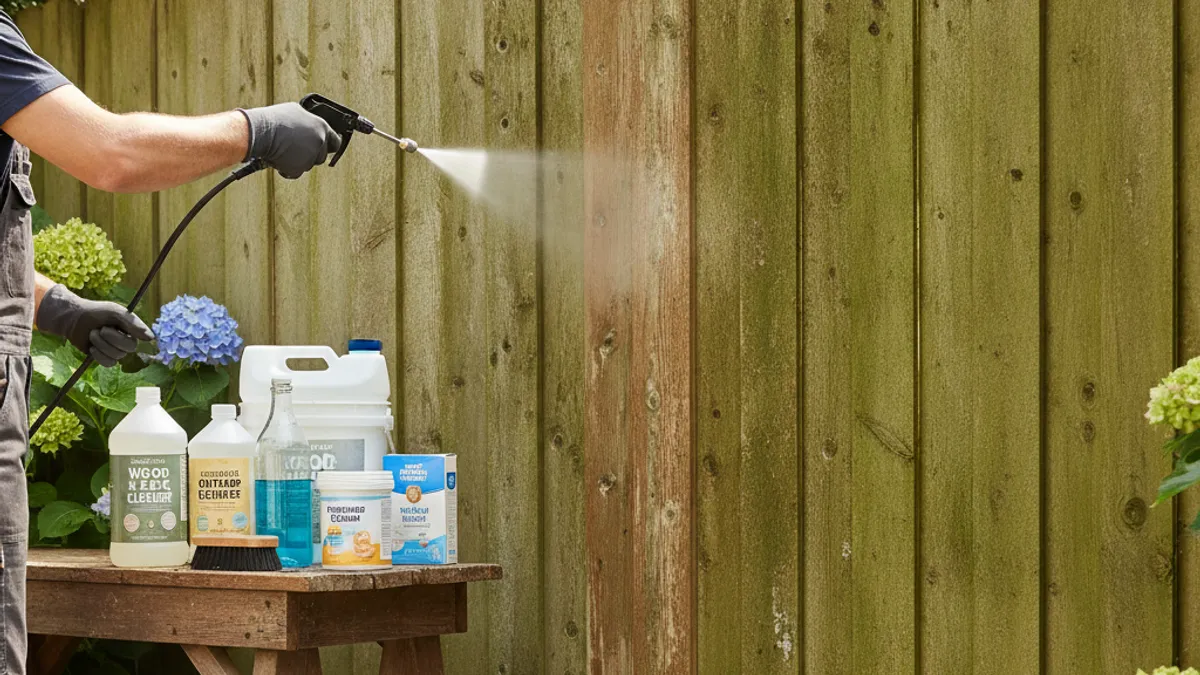
Choosing the right cleaner for your fence depends on a few key factors: the material your fence is made from and the type of dirt or stain you're dealing with. Getting these right saves you time, effort, and prevents potential damage.
Your Fence Cleaning Decision Chart: What's the Grime?
To help you pick the best cleaner, let's break down common fence problems and the most effective solutions for each. No two fences or messes are exactly alike, so this chart acts as your quick guide.
- Mildew, Mold, Algae: These green, black, or gray fuzzy patches thrive in damp, shaded areas. They're common on all fence types.
- Best for Wood/Composite: Oxygen bleach solutions, specialized deck cleaners.
- Best for Vinyl/Metal: Diluted household bleach (sodium hypochlorite), or commercial mildew removers.
- General Dirt and Grime: This includes everyday dust, mud splatters, and pollen.
- Best for All Materials: Mild dish soap and water, or a solution of borax and water.
- Sap and Sticky Residue: Tree sap can be particularly stubborn.
- Best for Wood/Composite: Mineral spirits (use with caution and good ventilation), or a strong degreaser.
- Best for Vinyl/Metal: Isopropyl alcohol or a specialized adhesive remover.
- Rust Stains: Often appear as orange-brown streaks, especially on metal or from fasteners on wood.
- Best for All Materials: Commercial rust removers, or a paste made from lemon juice and salt (for light stains).
The Top Fence Cleaners: DIY vs. Commercial Options
When it comes to cleaning your fence, you've generally got two main paths: making your own powerful cleaner from common household items, or opting for a product specifically formulated for fence care. Both have their pros and cons.
DIY Fence Cleaning Sprays: Simple & Effective
Making your own fence cleaner is usually more budget-friendly and gives you control over the ingredients. Many items you already have in your pantry work wonders. For example, a common DIY solution is a mixture of white vinegar and water.
A typical ratio for tougher jobs is one part white vinegar to three parts water. This acetic acid helps break down mildew and some mineral deposits. Another effective DIY cleaner can be made with a few tablespoons of borax dissolved in a gallon of warm water, which can help lift grime without being as harsh as chlorine bleach.
When to Reach for Commercial Fence Cleaners
Commercial fence cleaners are convenient and often formulated with specific stain-fighting agents designed for particular fence materials. They can save you time by having precisely the right balance of cleaning agents. Brands like Defy and Thompsons WaterSeal offer products tailored for deck and fence maintenance, often including UV inhibitors or wood brighteners.
If you're facing a really tough, set-in stain like heavy algae or rust, a commercial cleaner might offer a more concentrated punch than most DIY mixes. Always check the product label to ensure it's safe for your fence's material, whether it's wood, vinyl, or composite.
Fence Material Matters: Matching Cleaner to Your Fence
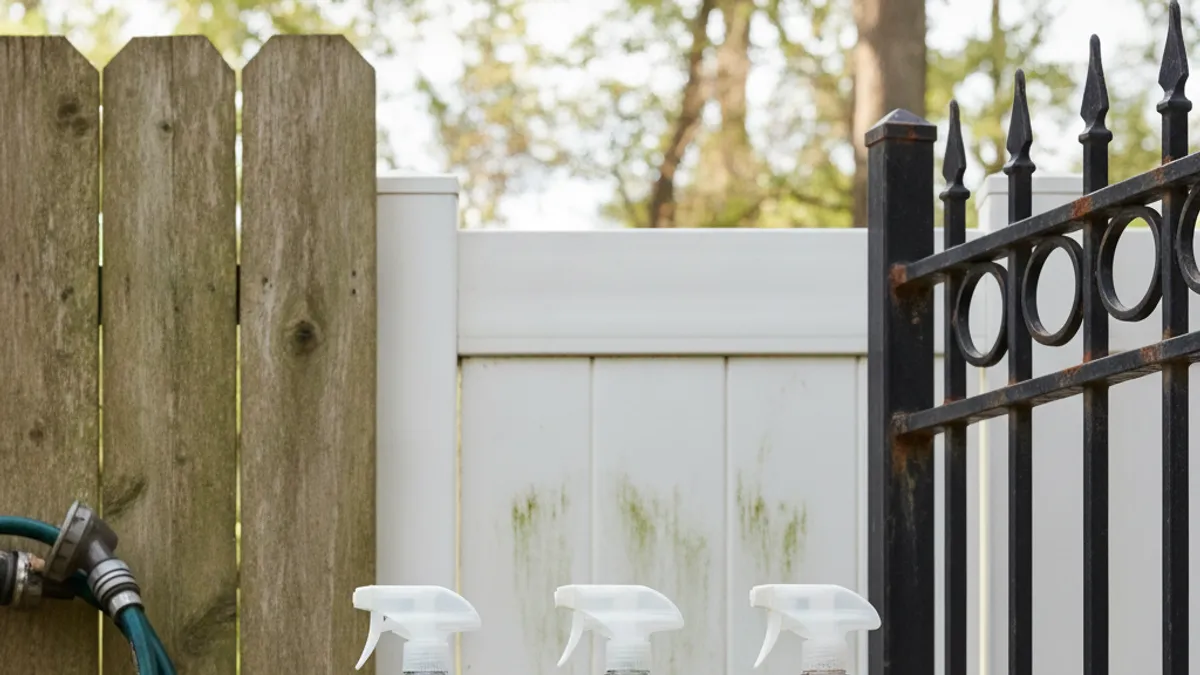
This is arguably the most critical step. Using a cleaner that’s too harsh for your fence material can cause irreversible damage, leading to costly repairs or premature replacement. Different materials have different tolerances for acidity, alkalinity, and bleaching agents.
Cleaning Wood Fences: Protecting the Grain
Wood fences, whether cedar, pine, redwood, or treated lumber, are porous and can be sensitive to strong chemicals. Overly aggressive cleaning can strip natural oils, causing the wood to dry out, crack, or warp. For general cleaning, a solution of mild dish soap and water is a good starting point.
For tougher jobs like mildew and algae, an oxygen bleach-based cleaner is often recommended. Oxygen bleach, like OxiClean, releases oxygen when mixed with water, gently lifting stains without the harshness of chlorine bleach. For very stubborn stains or to restore a faded look, you might consider a wood brightener after cleaning, which can restore the wood's natural color. Always rinse wood thoroughly to prevent cleaner residue from weakening the fibers.
Cleaning Vinyl Fences: Tackling Mildew and Grime
Vinyl fences (PVC) are generally more durable and less porous than wood, making them easier to clean. They're quite resistant to water and rot. For everyday dirt, a simple mixture of warm water and a bit of dish soap usually does the trick.
If mildew, mold, or algae have taken hold, a diluted solution of household chlorine bleach (sodium hypochlorite) can be very effective. A common ratio is one part bleach to four parts water. However, it’s vital to test this on an inconspicuous spot first, as prolonged or concentrated exposure can sometimes cause yellowing on certain vinyl formulations. Always rinse thoroughly with plain water afterward to remove all traces of bleach.
Cleaning Composite & Metal Fences: Specific Needs
Composite fences offer a blend of wood and plastic, and their cleaning needs often fall somewhere between wood and vinyl. Many manufacturers recommend a pH-neutral cleaner or a mild solution of dish soap and water for regular maintenance. For tougher stains like algae, a cleaner designed for decks or composite materials, often with oxygen bleach, is a safe bet.
Metal fences, like aluminum or wrought iron, require a different approach. For rust stains on metal, a dedicated rust remover is usually necessary. For general grime, a pH-neutral cleaner and a soft brush will work, but be careful not to scratch painted or coated surfaces. Always rinse and dry metal fences promptly to prevent flash rusting, especially on iron or steel.
Tackling Tough Fence Stains: Beyond Everyday Grime
Sometimes, your fence isn't just dirty; it's got specific, stubborn stains that water and soap just can't handle. These often require more targeted treatments. Understanding what's causing the stain is half the battle, as a rust remover won't do much for mildew, and vice-versa.
Removing Mold, Mildew, and Algae
These organic growths are common, especially in humid climates or shaded areas of your yard. They feed on moisture and organic material on the fence surface. For wood, oxygen bleach is generally best as it’s less likely to degrade the wood fibers than chlorine bleach. For vinyl, a diluted chlorine bleach solution (around 1 part bleach to 4 parts water) is usually effective, but always test first.
If you're cleaning a fence in a damp region, like the Pacific Northwest (PNW), you might find these growths appear more frequently. Proper rinsing is key to removing not just the stain but also any lingering spores that could cause it to return quickly.
Dealing with Rust and Sap Stains
Rust stains typically come from metal fasteners like nails or screws, or from sprinklers with high iron content. Sap stains are usually from trees directly overhanging the fence. Both can be tricky. For rust, specialized rust removers are your best bet, often containing oxalic acid, which chemically breaks down iron oxide.
Sap, being sticky and resinous, often responds well to solvents. For wood, a bit of mineral spirits can often dissolve it, but use this sparingly and with good ventilation, as it can also affect stain or paint. For vinyl, isopropyl alcohol can be effective. For any strong solvent, always test on a hidden area first to ensure it doesn't damage your fence’s finish.
The Step-by-Step Fence Cleaning Process
Cleaning your fence effectively follows a logical flow, ensuring you get the best results with minimal risk to the fence or your property. Rushing through steps can lead to missed spots or damage. Take your time, and your fence will thank you for it.
Preparation: Getting Ready to Spray
Before you even pick up a cleaner, clear the area around your fence. Remove any furniture, planters, or decorations. If there are plants you want to protect, cover them with plastic sheeting or lightly water them down, as this can dilute any overspray. Inspect your fence for any loose boards or nails that might need attention.
Remember to wear appropriate safety gear: gloves to protect your skin from chemicals, and eye protection like goggles to prevent splashes. A wide-brimmed hat can also be useful on sunny days. Knowing what cleaner you'll use helps determine additional prep, like diluting concentrates or gathering specific tools.
Application and Agitation: The Cleaning Action
Once your fence is prepped, it’s time for the cleaner. If using a spray bottle or pump sprayer, apply the cleaner evenly to a manageable section at a time. For tougher stains, you might need to let the cleaner dwell for a few minutes as per the product instructions. This dwell time allows the chemicals to break down the grime.
After the dwell time, use a scrub brush with stiff bristles to agitate the surface. Work in the direction of the fence’s grain if it's wood. This physical scrubbing is crucial for lifting dirt and stains that the spray alone can't handle. For vinyl, a medium-stiff brush works well without being overly abrasive.
Rinsing and Drying: Finishing Touches
Thorough rinsing is as important as the cleaning itself. Use a garden hose with a strong spray nozzle, or a pressure washer on a low setting (around 500-1000 PSI for wood, slightly higher for vinyl but still cautiously). Work from top to bottom, ensuring all cleaner residue and loosened dirt are washed away.
Allow the fence to dry completely before applying any sealants, stains, or paints. Drying time varies depending on the weather, humidity, and fence material, usually taking anywhere from 24 to 72 hours. Proper drying prevents moisture from getting trapped, which can lead to rot or mildew issues later on.
Fence Cleaning Tools: What You'll Need
Having the right tools can make a huge difference in how effectively and easily you can clean your fence. While just a brush and a bucket might suffice for minor touch-ups, tackling a whole fence often requires a bit more gear.
Spraying Tools: From Garden Hose to Sprayers
A basic garden hose with a spray nozzle is the simplest way to apply water and some cleaners. For more concentrated applications or to cover larger areas efficiently, a pump sprayer is invaluable. These come in various sizes, from handheld quart models to backpack units holding several gallons.
If you're using a pressure washer, ensure it has adjustable pressure settings. For wood, you'll want a wider fan tip and lower PSI to avoid damaging the grain. Many commercial fence cleaners also come in ready-to-use spray bottles or attach directly to your garden hose as a concentrate dispenser.
Scrubbing Tools: Brushes and Beyond
A good scrub brush is your best friend for lifting embedded grime. For wooden fences, a brush with natural or stiff synthetic bristles is effective. Avoid wire brushes, as they can scratch wood excessively. You might also consider an extension pole attachment for your brush, which makes reaching higher sections or the entire length of horizontal pickets much easier.
For vinyl fences, a softer-bristle brush or even a heavy-duty sponge can work well, especially for less stubborn dirt. Always use a tool that cleans without scratching or damaging the fence material. Aggregate user reviews often highlight the benefit of a long-handled deck brush for its ergonomic advantage.