
A flat tire on your wheelbarrow can bring your gardening, landscaping, or hauling project to a grinding halt. The good news is that a quick and affordable wheelbarrow tire replacement at Home Depot is often all you need to get back to work. Instead of tossing the whole wheelbarrow, understanding this simple repair can save you time and money.
In our research, we found that most common wheelbarrow tires range from 10 to 16 inches in diameter, and finding the right fit at a large retailer like Home Depot is usually straightforward. With just a few basic tools and a little know-how, you can swap out that worn or punctured tire and restore your wheelbarrow’s full functionality.
Your Wheelbarrow Tire is Flat? Here's How to Fix It at Home Depot

Quick Check: What Kind of Wheelbarrow Tire Do You Need?
Before you head to Home Depot, it's crucial to know what you're looking for. The most common wheelbarrow tires are pneumatic, meaning they’re filled with air, just like your car’s tires. These offer the best shock absorption and make for a smoother ride over bumpy terrain. You might also encounter solid or semi-pneumatic tires, which are maintenance-free but can provide a rougher experience.
Understanding the type of tire on your current wheelbarrow will guide your purchase.
Measuring Your Old Wheelbarrow Tire – Don't Guess!
Getting the right size is the most critical step for a successful wheelbarrow tire replacement at Home Depot. Look for markings directly on the sidewall of your current tire. You'll typically see a series of numbers like "4.00-8" or "13 x 4.00-6." The first number (e.g., 4.00) often refers to the tire's width in inches, while the second number (e.g., 8 or 6) indicates the rim diameter in inches. Your new tire needs to match this rim diameter precisely.
Pneumatic vs. Solid vs. Semi-Pneumatic: Which Tire Type is Right?
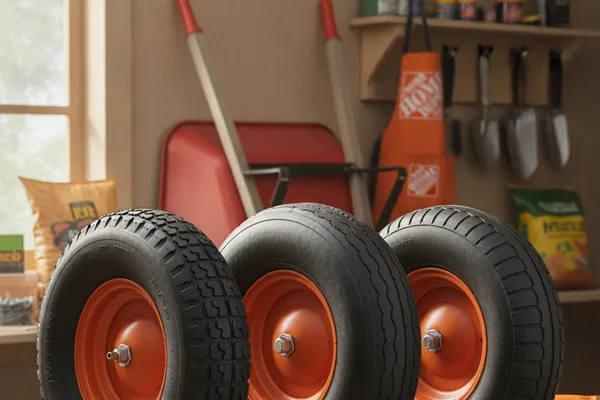
When you're at Home Depot, you'll notice different tire types. Pneumatic tires are the go-to for most users because they provide excellent cushioning, making it easier to move heavy loads across uneven ground. However, they can go flat. Solid tires, made of solid rubber, never go flat but offer a much bumpier ride and can be harder on your wheelbarrow's frame.
Semi-pneumatic tires are a hybrid, offering some cushioning without the risk of a flat, making them a good compromise for many.
Key Wheelbarrow Tire Features to Compare at Home Depot
Beyond size and type, several features matter. Check the ply rating (PR) on the tire; higher numbers mean stronger sidewalls, better for heavy-duty use. Tread pattern is also important: knobby treads offer better grip on loose surfaces, while rib or diamond patterns are smoother on hard ground. Ensure the valve stem type (usually straight TR13 or angled) matches what your rim can accommodate.
For heavy loads, look for tires with a higher load capacity rating.
Finding the Perfect Replacement at Home Depot
Home Depot offers a decent selection of wheelbarrow tires, fitting various brands and models. You'll find options ranging from budget-friendly basic pneumatic tires to more robust, heavy-duty versions suitable for demanding tasks. Pay attention to the brand's reputation if you're familiar with tool manufacturers, but often, a generic tire that matches your specs will perform just as well. Don't hesitate to ask an associate for help if you're unsure about compatibility.
Step-by-Step: Replacing Your Wheelbarrow Tire
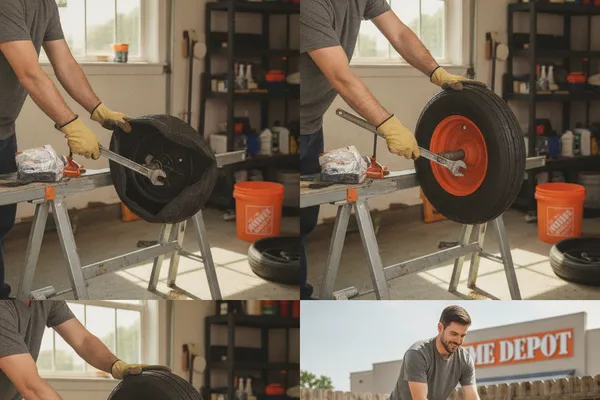
Removing the Old Wheel
First, you'll need to get the wheel off your wheelbarrow. This usually involves using a wrench to loosen and remove the nut or cotter pin holding the wheel assembly to the frame. Then, slide the wheel off the axle. If you're replacing just the tire or tube, you'll need to deflate the old tire completely by pressing the valve core.
Mounting the New Tire and Tube
Once the wheel is off, you'll need to pry the old tire off the rim. This can be tough, so using a tire iron or even a flathead screwdriver (carefully!) can help break the bead and work the tire off. If you're replacing the tube, insert the new tube into the new tire, inflating it just enough to give it shape. Then, carefully mount the new tire onto the rim, working your way around until it's fully seated.
Reinstalling the Wheel on Your Wheelbarrow
After the tire is securely on the rim, inflate it to the recommended pressure, usually found on the tire's sidewall (often around 30 PSI). Now, slide the wheel back onto the axle and reattach the nut or cotter pin. Make sure it's snug but allows the wheel to spin freely. A properly inflated, correctly sized tire can make a world of difference in how your wheelbarrow handles.
Common Mistakes When Replacing Wheelbarrow Tires (and How to Avoid Them)
One of the biggest blunders people make is buying the wrong size tire. If the rim diameter doesn't match, the tire simply won't fit, leading to a frustrating trip back to the store. It's also common to forget about the valve stem type; mixing a straight valve with an angled opening on your rim will cause issues. In our research, we've seen buyers struggle with trying to force a tire that's too small onto a rim, which can damage the new tire and the rim itself.
Another mistake is not replacing the inner tube when it's old or damaged. While the tire might look okay, a weak tube can lead to a flat a day later. Over-inflating the tire is also a risk, which can cause it to blow out or damage the rim over time. Conversely, under-inflating a tire can make it less stable and harder to maneuver, especially when carrying a heavy load.
Always check the recommended PSI.
Wheelbarrow Tire Costs and What to Expect
For a standard pneumatic wheelbarrow tire, you can expect to spend anywhere from $15 to $30 at Home Depot. Solid tires tend to be a bit more expensive, often ranging from $25 to $40, due to their denser material. The price can also increase if you opt for a tire with a higher ply rating or a specialized tread pattern designed for extreme conditions. Tube replacements are usually quite affordable, often costing between $5 and $10.
When considering the cost, remember you're investing in durability and performance. A slightly more expensive, heavy-duty tire might last longer and handle heavier loads better than a budget option. It's worth checking manufacturer specifications for load capacity and ply rating to ensure you're getting a tire that meets your needs. As of 2026, these price ranges remain generally consistent for entry-to-mid-level options.
Keeping Your New Wheelbarrow Tire in Top Shape
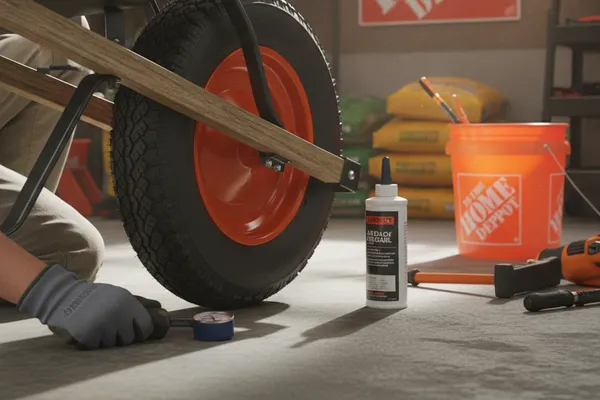
Proper maintenance extends the life of your new wheelbarrow tire significantly. Regularly check the tire pressure and inflate it to the recommended PSI, usually printed on the tire sidewall. This prevents uneven wear and reduces the risk of flats or blowouts. After each use, clear any debris, sharp objects, or excessive mud from the tire and rim.
Storing your wheelbarrow out of direct sunlight and extreme weather can also help. Prolonged exposure to UV rays can degrade the rubber over time, making it brittle. If you're storing the wheelbarrow for an extended period, it's a good idea to slightly under-inflate the tires or even lift the wheelbarrow so the tires aren't bearing the full weight. This prevents flat spots from forming.
When It Might Be Time for a Whole New Wheelbarrow
While replacing a tire is a fantastic way to extend your wheelbarrow's life, there comes a point where the entire unit might be beyond repair. If the wheelbarrow's frame is rusted, bent, or cracked, no amount of tire replacement will fix its structural integrity. A wobbly or damaged rim that can’t be straightened is another sign it's time for an upgrade.
Consider also the overall condition of the wheelbarrow. If the handles are splintered, the basin is deeply corroded, or the linkage points are severely worn, replacing just the tire might be a temporary fix. For frequent, heavy-duty use, investing in a new, sturdier wheelbarrow might be more cost-effective in the long run than constantly repairing an old one.
Quick Check: What Kind of Wheelbarrow Tire Do You Need?
Before you head to Home Depot, it's crucial to know what you're looking for. The most common wheelbarrow tires are pneumatic, meaning they’re filled with air, just like your car’s tires. These offer the best shock absorption and make for a smoother ride over bumpy terrain. You might also encounter solid or semi-pneumatic tires, which are maintenance-free but can provide a rougher experience.
Understanding the type of tire on your current wheelbarrow will guide your purchase.
Measuring Your Old Wheelbarrow Tire – Don't Guess!
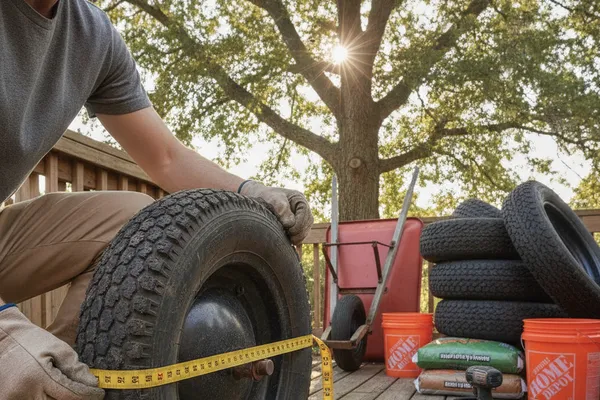
Getting the right size is the most critical step for a successful wheelbarrow tire replacement at Home Depot. Look for markings directly on the sidewall of your current tire. You'll typically see a series of numbers like "4.00-8" or "13 x 4.00-6." The first number (e.g., 4.00) often refers to the tire's width in inches, while the second number (e.g., 8 or 6) indicates the rim diameter in inches. Your new tire needs to match this rim diameter precisely.
Pneumatic vs. Solid vs. Semi-Pneumatic: Which Tire Type is Right?
When you're at Home Depot, you'll notice different tire types. Pneumatic tires are the go-to for most users because they provide excellent cushioning, making it easier to move heavy loads across uneven ground. However, they can go flat. Solid tires, made of solid rubber, never go flat but offer a much bumpier ride and can be harder on your wheelbarrow's frame.
Semi-pneumatic tires are a hybrid, offering some cushioning without the risk of a flat, making them a good compromise for many.
Key Wheelbarrow Tire Features to Compare at Home Depot
Beyond size and type, several features matter. Check the ply rating (PR) on the tire; higher numbers mean stronger sidewalls, better for heavy-duty use. Tread pattern is also important: knobby treads offer better grip on loose surfaces, while rib or diamond patterns are smoother on hard ground. Ensure the valve stem type (usually straight TR13 or angled) matches what your rim can accommodate.
For heavy loads, look for tires with a higher load capacity rating.
Finding the Perfect Replacement at Home Depot
Home Depot offers a decent selection of wheelbarrow tires, fitting various brands and models. You'll find options ranging from budget-friendly basic pneumatic tires to more robust, heavy-duty versions suitable for demanding tasks. Pay attention to the brand's reputation if you're familiar with tool manufacturers, but often, a generic tire that matches your specs will perform just as well. Don't hesitate to ask an associate for help if you're unsure about compatibility.