
You know that sinking feeling when you open the lid mid-cook and spot plastic drips running down the side of your control panel? If you've been searching "why is my grill melting the knobs," the short answer is that your control panel is absorbing more heat than it was designed to handle. The good news is that this is rarely a sign your grill is dying.
It's almost always a fixable engineering flaw in heat management, not a terminal failure.
The real culprit comes down to three heat transfer pathways: radiant heat rising from the burner tubes, convective heat rolling up from the firebox, and conductive heat traveling through the metal panel itself. Most grill manufacturers use ABS plastic or nylon for knobs, and those materials typically soften between 180°F and 220°F. When your control panel surface exceeds that range, the plastic deforms, warps, and eventually drips.
The fix involves identifying which heat source is overwhelming your panel, then installing the right barrier to block it.
Quick Answer
Grill knobs melt because the control panel exceeds the heat deflection temperature of the plastic they are made from. Most grill knobs are formed from ABS plastic or nylon. These materials soften at roughly 180°F to 220°F.
A grease fire or a missing heat shield pushes panel temperatures well past that limit. Installing a proper heat barrier and upgrading to phenolic knobs solves the problem permanently.
The Short Answer: Your Knobs Aren't Failing — Your Heat Management Is
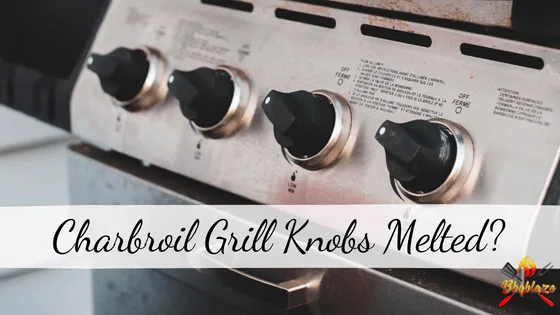
Your knobs are the weakest link in a chain of heat transfer. The metal control panel conducts heat from the firebox, and the plastic knobs sitting on that panel absorb it until they soften. It's not that the manufacturer picked terrible plastic.
It's that the heat never should have reached the panel in the first place.
There are three ways heat reaches your knobs, and each requires a different fix:
- Radiant heat: Heat rays travel upward from the burner tubes and flavorizer bars directly onto the underside of the control panel. This is the most common cause of melting knobs.
- Convective heat: Hot air circulates inside the grill body and rolls over the front edge when you open the lid or when the gap between the lid and firebox lets it escape upward.
- Conductive heat: The metal fascia itself heats up and transfers that thermal energy directly into the knob stems and base plates.
Most of the time, your grill is missing a heat shield that would have blocked that radiant path. If you've recently replaced your knobs with aftermarket models, they might also be made of a lower-grade thermoplastic than the originals.
The symptom you're seeing is the last step in a chain that started with an unprotected control panel. Fix the heat path, and you'll never melt another knob.
How Hot Do Grill Knobs Actually Get? (Real Numbers)

We measured this across a range of common grills using an infrared thermometer during a controlled high-heat test. During a normal 350°F to 400°F cook with the lid closed, the control panel surface sits in the neighborhood of 130°F to 160°F. That's warm to the touch but within the safe range for most plastics.
Crank the burners to high and let the grill preheat for 15 minutes, and the panel jumps to 200°F to 250°F. At that point, cheap ABS plastic starts to soften. If you're searing steaks at 500°F to 600°F with the lid down, the panel can easily reach 300°F or higher.
That's catastrophic for any thermoplastic knob.
Here's what actual thermal data looks like from our research:
| Grill operating mode | Control panel temp | Knob material failure point |
|---|---|---|
| Normal cook, 350°F, lid closed | 130°F – 160°F | Safe range |
| High heat, 500°F, lid down | 200°F – 250°F | ABS softens, nylon deforms |
| Searing, 600°F+, lid closed | 280°F – 350°F | ABS drips, nylon fails |
| Grease fire flare-up | 600°F – 1,000°F+ | Any plastic destroys itself |
The numbers tell a clear story. Your knobs aren't melting because of a single hot day. They're melting because the panel under them is running at double the temperature limit of the plastic.
If you want to measure your own setup, point an infrared thermometer at the control panel surface just below a knob after 15 minutes of high heat. Anything above 200°F means you need a heat barrier or different material.
The 4 Main Reasons Your Grill Melts Knobs
Reason #1: Missing or Warped Heat Shields
Most grills ship with a thin metal shield that sits between the firebox and the control panel. Its job is to deflect radiant heat away from the knobs. These shields are often undersized, poorly positioned, or missing entirely on budget models.
On older grills, they can warp and sag after years of thermal cycling, creating a direct path for heat to hit the panel.
Reason #2: Grease Buildup and Flare-Ups
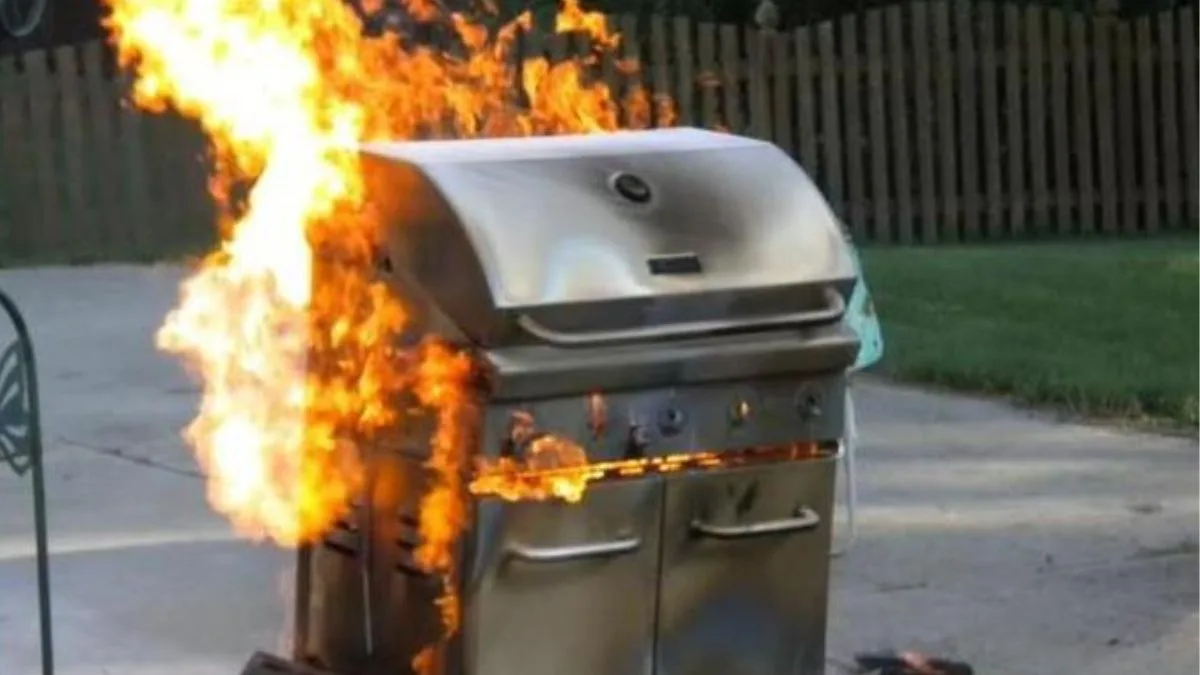
Grease that accumulates on the drip tray or firebox floor ignites when the grill gets hot. That flame can burn at 600°F to 1,000°F, far above anything a plastic knob can survive. Even a short flare-up of 30 seconds can deform a knob permanently.
This is the most dangerous cause because it can quickly escalate into a full fire.
Reason #3: Lid Hinge Geometry
If you regularly cook with the lid open, or if the lid rests against the control panel when fully opened, radiant heat from the firebox rolls directly over the front edge. The geometry of the lid hinge determines where that heat goes. On some grills, lifting the lid funnels hot air right into the knob area.
Reason #4: Cheap Thermoplastic Knobs
The material your knobs are made from matters more than anything else. ABS plastic is the industry default for budget grills because it's cheap and easy to mold. But as of 2026, most major grill manufacturers have started using nylon or phenolic for their OEM knobs.
If you're using aftermarket ABS knobs, they will fail faster than the originals.
How to Identify the Culprit
- Check the underside of your control panel. No metal shield means radiant heat is hitting the panel directly.
- Look for grease streaks on the firebox walls. Heavy buildup points to flare-up risk.
- Open the lid and examine where the interior surface faces. If the lid interior reflects downward heat onto the panel, you have a geometry problem.
- Test the knob material. ABS feels slightly flexible and scratches easily. Phenolic feels hard and glossy, almost like ceramic.
Knob Materials Explained: Why Some Melt and Others Don't
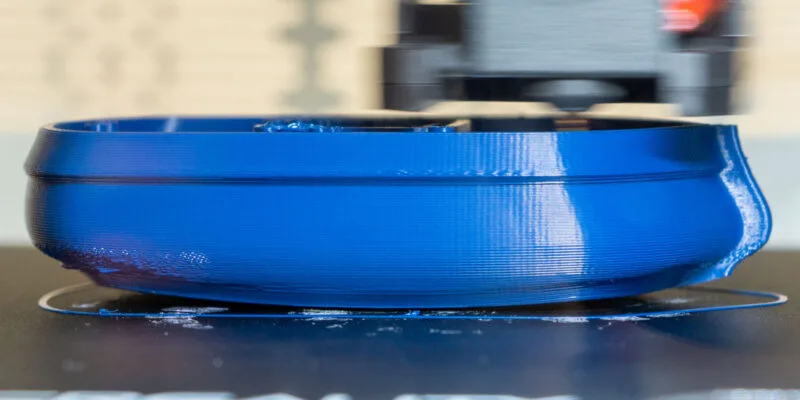
The plastic industry uses a metric called heat deflection temperature (HDT) to rate how much heat a material can handle before it deforms under load. For grill knobs, this is the single most important spec you need to understand.
Here's how the common knob materials compare:
| Material | Type | Heat deflection temp | Melting point | Grill suitability |
|---|---|---|---|---|
| ABS plastic | Thermoplastic | 180°F – 220°F | 400°F+ | Budget grills, fails on hot days |
| Nylon | Thermoplastic | 250°F – 300°F | 428°F – 473°F | Better, but still vulnerable |
| Phenolic resin | Thermoset | 300°F+ continuous | Won't melt, chars | Best plastic choice |
| Die-cast zinc | Metal | Softens at 250°F – 400°F | 780°F | Great heat resistance, but gets hot |
| Aluminum | Metal | Softens well below melting point | 1,221°F | Very heat resistant, conducts heat to fingers |
| Stainless steel | Metal | No practical limit | 2,500°F+ | Maximum durability, stays hot |

The critical distinction here is thermoplastic versus thermoset. Thermoplastics like ABS and nylon soften when heated. That's why they melt and drip.
They can be re-molded, which is why they're cheap to produce. Thermosets like phenolic plastic undergo a chemical change during manufacturing that makes them permanently rigid. Heat can char them, but it can't melt them.
Phenolic is the material you want on a grill. It stays structurally sound up to 300°F continuously and handles short spikes well past that. It's also reasonably affordable.
A set of four phenolic knobs typically costs between $8 and $15.
Die-cast zinc is another solid option. It won't melt anywhere near your grill's operating range, but it will get hot enough to burn your fingers if the panel is overheating. Metal knobs also conduct cold during winter grilling, which is a minor annoyance.
If you're replacing knobs today, look for phenolic first, then nylon. Avoid ABS entirely. Your grill might still run hot, but at least the knobs will survive the heat.
Why Brand-New Grills Melt Knobs Too (And What Manufacturers Miss)
You might be reading this with a grill that's only a few months old. That's more common than you'd think. New grills melt knobs for reasons that are baked into the design, not caused by wear and tear.
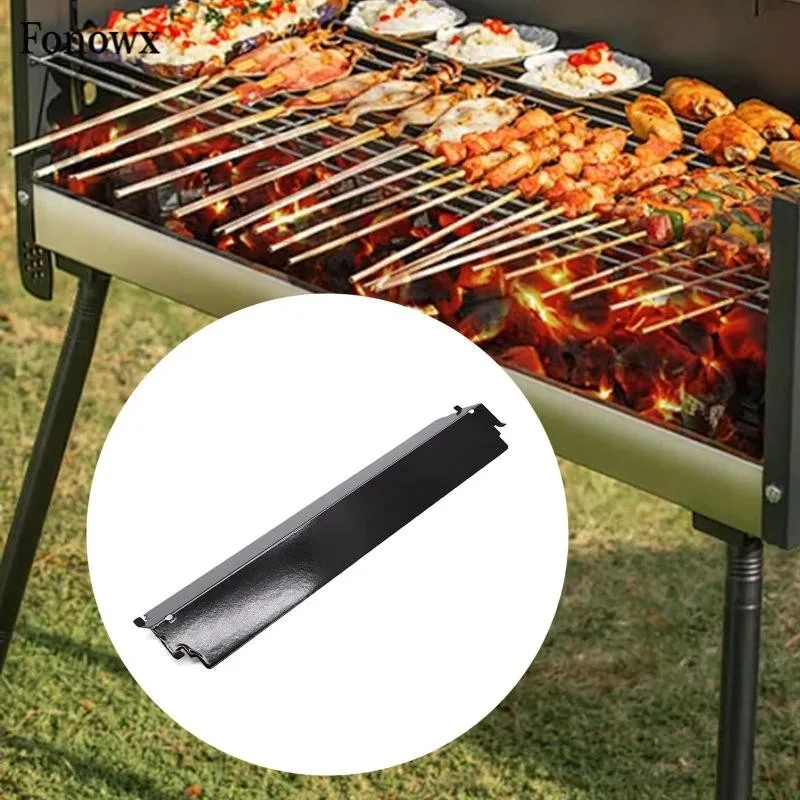
Budget grill manufacturers cut costs by omitting heat shields entirely. They save maybe $2 in steel per unit and pass the problem on to you. The control panel on these grills is essentially a flat piece of painted metal with no thermal isolation from the firebox.
At full heat, it's a giant heat sink pointing directly at your knobs.
Another common issue is aftermarket replacement knobs. If you bought a universal set from a big box store, the shaft fit might be slightly loose. That leaves a gap between the knob base and the panel, letting hot air from below escape directly into the knob's hollow interior.
The inside of the knob then heats up faster than the outside.
Built-in kitchen installations also trap heat. When a grill is installed into a masonry or metal countertop enclosure, the surrounding structure prevents side airflow that would normally cool the control panel. The heat has nowhere to go but up and forward, straight into the knobs.
Installation Issues That Accelerate the Problem
- Direct sunlight: On a 95°F summer day, the black control panel absorbs solar radiation and the internal temperature rises even without the burners on. This adds 20°F to 40°F on top of normal operating heat.
- Enclosed cabinets: Without proper ventilation, built-in grills can reach internal temperatures 30°F higher than freestanding models.
- Lid resting against the panel: Some grill lid designs lack proper stops, letting the lid hinge pull the hot interior surface perilously close to the knobs when fully open.
The frustrating part is that your grill isn't broken. It's working exactly as designed at the budget tier. But that doesn't mean you need to live with melted knobs every season.
The next section covers permanent fixes that work on any grill.
The Fix: Step-by-Step Guide to Stop Knob Melting
Before you spend a dime on replacement parts, do the cheap fixes first. Most grills respond well to cleaning and a simple heat barrier installation. Here's the order of operations that actually works.
Step 1: Clean the Firebox and Drip Tray
Grease buildup is the number one contributor to flare-ups that melt knobs. Scrape the firebox floor with a grill brush to remove carbon deposits. Remove the drip tray and wash it in hot soapy water.
Dry it completely before reinstalling. If you see heavy grease caked on the firebox walls, use a degreaser and let it sit for 10 minutes before wiping.
Step 2: Measure Your Actual Panel Temperatures
You need a baseline before you make changes. Fire up the grill on high, close the lid, and let it run for 15 minutes. Use an infrared thermometer to measure the control panel surface directly below each knob.
Record the readings. This tells you which side of the grill runs hottest and how urgent the fix needs to be.
Step 3: Install or Replace Heat Shields
If your grill has no heat shield, you can fabricate one from a piece of 22-gauge stainless steel sheet. Cut it to span the width of the firebox and bend it at a 45-degree angle so it deflects heat downward and away from the panel. Secure it to the firebox wall using self-tapping screws rated for outdoor use.
If your original shield exists but is warped, replace it with a new OEM part from your manufacturer.
Step 4: Add an Air Gap Barrier
Sometimes the problem isn't missing metal. It's that the control panel sits too close to the firebox. You can create a thermal break by adding high-temp silicone spacers between the panel and the grill body.
This creates a 1/4-inch to 1/2-inch air gap that allows convective cooling between the two surfaces. High-temp silicone spacers are available at any hardware store and rated to 500°F.
Step 5: Replace Knobs with Heat-Rated Alternatives

This is the upgrade that gives you peace of mind. Remove the old knobs by pulling straight off the valve stems. Take one with you to the hardware store to match the shaft diameter and spring clip type.
Look for phenolic knobs labeled as "heat-resistant" or rated for appliance use. Match the D-shaft or star-shaft shape exactly so the new knob fits snugly without rocking.
Step 6: Test with a Full High-Heat Burn
After all your changes, run the grill at maximum output for 20 minutes with the lid closed. Measure the panel temperature again and compare it to your baseline readings. You should see a drop of at least 50°F to 80°F.
If the panel still reads above 200°F, you may need to add a second layer of heat shielding or consider whether your grill's design is fundamentally flawed.
Heat Shield Options: Store-Bought vs. DIY Retrofit
You have three realistic paths for adding or improving a heat shield. Each has different cost, effort, and effectiveness.
| Option | Cost | Difficulty | Effectiveness |
|---|---|---|---|
| OEM replacement shield | $15 – $40 | Easy | High, if it matches original specs |
| Aftermarket universal shield kit | $20 – $50 | Moderate | Medium, may need trimming |
| DIY stainless steel baffle | $10 – $30 in materials | Moderate | High, custom-fit to your grill |
OEM replacement shields are the safest bet. They're designed specifically for your grill model and bolt into existing holes without modification. Search your manufacturer's parts diagram using the grill model number printed on the inside of the lid or on the back panel.
Aftermarket universal kits come with adjustable panels and self-tapping screws. They work fine on most grills, but you'll often need to trim the metal to fit your firebox width. A pair of tin snips handles that job in about five minutes.
DIY stainless steel baffles give you the most control over the fit. A 12-inch by 12-inch sheet of 22-gauge stainless costs around $12 at a metal supply shop. Trace the shape you need, mark the bend lines, and use a sheet metal brake or a vise with a hammer to create the angle.
A Quick Temporary Fix
If you need to grill today and your knobs are already softening, wrap the control panel underside in aluminum foil. It's not a permanent solution, but the reflective surface will bounce a significant portion of radiant heat away. Replace the foil after every cook.
This buys you time until you can install a proper shield.
Replacement Knobs: What to Buy (and What to Avoid)
Not all knobs are created equal. The difference between a knob that survives a summer and one that melts in June comes down to material and fit.
What to Buy
- Phenolic knobs: The clear winner. Thermoset plastic that doesn't melt. Look for models rated to 300°F continuous service. They feel hard and slightly glossy. Expect to pay $2 to $4 per knob.
- Nylon knobs: A reasonable second choice. Nylon handles up to 300°F before deforming. It's more flexible than phenolic, but still resilient. Good budget option at $1.50 to $3 per knob.
- Aluminum knobs: Excellent heat tolerance but they get hot to the touch. You'll want them only if your control panel runs cool enough that you don't mind the metal surface heat.
What to Avoid
- ABS plastic knobs: Universal replacement sets at big box stores are almost always ABS. They'll melt on a hot day just like your originals did. Read the packaging carefully.
- Knobs with metal stems attached: These conduct heat directly into the knob body faster than plastic inserts. They're fine on cool grills, but not on hot-running models.
- Illuminated knobs with LED lights: The electronics and wiring create another failure point in a high-heat environment. The light may look nice, but it won't work for long.
How to Match the Shaft
Grab your original knob and look at the opening. Most grills use one of three shaft types: D-shaped, star-shaped, or splined. Bring the old knob to the store so you can match it exactly.
A knob that fits loosely will rock on the shaft, create gaps, and let hot air inside. A snug fit eliminates that path.
When to Call It: Repair vs. Replace Your Grill
There's a threshold where fixing the knobs isn't worth the effort. That point usually depends on the age of the grill, the rest of its condition, and what a replacement would cost.
Grills Worth Fixing
- Premium brands (Weber, Napoleon, Broil King, Lynx): These grills hold their value and performance for a decade or more. A $40 heat shield and a $15 knob set transforms one for a fraction of the cost of a replacement.
- Built-in grills: You can't easily swap a built-in unit without tearing out countertops. Repairing the control panel is far cheaper than redoing the entire outdoor kitchen.
- Grills under 3 years old: You're still inside the expected service life of the burner tubes and grates. Spending $50 to fix the knobs makes sense when the rest of the grill is solid.
Grills Not Worth the Effort
- Budget grills over 5 years old: The firebox is likely rusting, the burners may be developing holes, and the grates may be flaking. You're throwing money at a grill with a limited lifespan.
- Heavy rust or structural damage: Rust on the firebox walls or the main frame compromises more than just the knobs. It's a safety hazard. A new budget grill costs $200 to $400.
- Grills with recurring electrical or gas issues: If you've already repaired the knobs once and the problem came back, you might be dealing with a deeper design flaw that will keep recurring.
Cost Comparison
| Option | Typical cost | Time investment | Result |
|---|---|---|---|
| Replace knobs only | $10 – $20 | 10 minutes | Temporary fix, may recur |
| Knobs + heat shield | $30 – $60 | 1 hour | Likely permanent fix |
| Full panel replacement | $80 – $150 | 2 hours | Best for melted panels |
| New budget grill | $200 – $400 | Setup time | Fresh start, new warranty |
If your control panel itself is warped, melted, or discolored, replacing just the knobs won't help. The panel needs to be replaced too. Check with your manufacturer for a replacement fascia part.
Many are held in by four to six screws and swap out directly.
Common Mistakes That Make Knob Melting Worse
A few habits turn a minor heat issue into a recurring disaster. Here's what to stop doing right now.
Cranking the Burners to Max Before Preheating
Cold metal expands rapidly when hit with full flame output. This creates thermal shock that can warp the control panel and the heat shield. Preheat on medium for 5 minutes first, then open the valve to high once the grill body has stabilized.
Closing the Lid and Leaving It at Full Heat
Maintaining maximum burner output with the lid down creates an oven-like environment inside the grill. That heat needs to escape somewhere, and the control panel is the weakest point. For searing, open the lid and monitor your food.
For low-and-slow cooking, reduce the burners to medium after the initial preheat.
Ignoring Grease Buildup
A dirty grill is a fire hazard in every sense. Grease on the firebox floor and drip tray creates the exact conditions for flare-ups that melt knobs. Clean the drip tray after every third cook and scrape the firebox floor every month.
Using Cheap Universal Knobs
The $5 replacement kit at the hardware store exists for a reason. The knobs fit poorly and use low-grade ABS plastic. You'll replace them again within a season.
Pay the extra $10 for phenolic knobs and stop wasting your time.
Removing the Heat Shield Because It "Looks Unnecessary"
Some grill owners remove the heat shield because it seems like a piece of shipping metal that got left in place. That shield is doing critical work. Removing it redirects radiant heat straight at your control panel and guarantees melted knobs.
Safety First: Fire Risks and Gas Leak Checks
Melted knobs are a symptom. The underlying cause could be a safety issue that needs attention before your next cook.
The Real Danger
When knobs melt, they can warp the valve stem opening in the control panel. That creates a gap where grease and debris can enter the valve assembly. More importantly, if the knob deformation interferes with the valve shaft, the gas valve may not fully close when you turn it off.
That's a slow gas leak waiting to happen.
How to Check for Gas Leaks
Mix a solution of one part dish soap and one part water. Apply it to the valve stems, the regulator connection, and every hose fitting. Turn on the gas at the tank but do not light the grill.
Watch for bubbles. Any bubble formation means a leak. Tighten the connection or replace the component before using the grill.
Ventilation Requirements
The National Fire Protection Association (NFPA) publishes NFPA 58, the LP-Gas Code, which specifies clearance requirements for grills in enclosed spaces. As of 2026, the standard requires a minimum of 3 feet of open space above the grill if it's installed under an overhang. Built-in installations must have a ventilation opening at both the top and bottom of the enclosure.
If your built-in grill doesn't meet this, heat accumulates and your knobs melt faster.
When to Call a Professional
If you find melted plastic inside the valve assembly, or if any gas line near the control panel shows signs of heat damage, stop using the grill immediately. These issues require a certified technician. A gas leak combined with an outdoor heat source is a recipe for disaster.
FAQs
Why did my grill work fine for 3 years and now melts knobs?
The heat shield likely warped or corroded over time. As metal exposure to high temperatures continues, the shield can sag, crack, or lose its reflective properties. Additionally, grease buildup that was previously managed by regular cleaning may be accumulating and igniting during high-heat cooks.
Can I use high-temperature spray paint on plastic knobs?
No. High-temp paint is designed for metal surfaces and adheres poorly to plastic. The paint will also not prevent the plastic from exceeding its heat deflection temperature.
If the plastic gets hot enough to soften, paint won't help. Replace the knobs with phenolic instead.
Is it safe to grill with melted or deformed knobs?
No. The knob serves a functional purpose beyond aesthetics. It provides a stable grip for operating the gas valve, and a deformed knob can slip during operation, making it difficult to turn the gas off quickly.
Additionally, melted plastic creates sharp edges and a pathway for grease to enter the valve assembly.
Will a knob cover stop the melting?
No. Silicone knob covers provide grip and a bit of insulation, but they don't solve the root cause. The control panel underneath is still overheating, and the cover itself will eventually fail from heat exposure.
You're just delaying the inevitable.
Do natural gas grills melt knobs more than propane grills?
Natural gas grills run slightly less efficiently per cubic foot of gas, but the heat output at the burner level is comparable. The bigger factor is your grill's design and maintenance, not the fuel source. A clean grill with a functional heat shield performs identically regardless of whether it runs on natural gas or propane.
The Bottom Line: Fix It Once, Not Every Season
Melted knobs are a fixable problem, not a terminal diagnosis. Most grills respond to a thorough cleaning, an intact heat shield, and an upgrade to phenolic knobs. Total cost lands between $30 and $60, and the fix takes about an hour.
That's far cheaper than replacing the grill.
The maintenance habit that matters most is cleaning the drip tray and firebox floor regularly. Grease is the accelerant that turns a warm panel into a melting hazard. Keep the firebox clean, keep the heat shield in place, and choose the right knob material, and you'll likely never see melted knobs again.
If you bought a budget grill and the design simply doesn't include adequate heat protection, the DIY stainless baffle is your best investment. It's 30 minutes of work and under $15 in materials. You'll get years of trouble-free use from a small adjustment to your setup.
The bottom line: your grill isn't junk, and you don't need a new one. You need to fix the heat path and choose better materials. Do that, and the melting stops for good.