You've got weeds popping up in your driveway cracks, between patio stones, or in that one garden bed where nothing seems to grow right. You want something cheap, natural, and already in your kitchen. That's exactly why baking soda as a weed killer has become such a popular DIY fix.
But here's the thing: it's not a miracle cure. While sodium bicarbonate (baking soda) is listed as a minimum-risk pesticide by the EPA, it works only under very specific conditions. As of 2026, university extension research confirms it's effective on young annual weeds in hardscape areas, but it can harm your soil if used wrong.
Let's walk through what actually happens when you reach for that box.
Quick Answer
Baking soda kills weeds by drawing moisture out of leaves. It works best on small, young weeds in cracks and patios. Apply it as a spray or dry sprinkle on a dry day.
It won't kill established weeds or deep roots. It can damage lawn grass and raise soil sodium over time. Use it for spot treatment only.
Why Baking Soda for Weeds? The Real Problem
Most people turn to baking soda because they want an alternative to synthetic herbicides. Maybe you've got kids or pets running around the yard. Maybe you just don't like the idea of spraying glyphosate near your vegetable garden.
The appeal is obvious: it's a white powder from your pantry that costs pennies per application.

Image source: YouTube / Daisy Creek Farms with Jag Singh (YouTube thumbnail (fair-use with source credit))
The real problem, though, is that most people expect it to work like a commercial weed killer. It doesn't. It's a contact herbicide, meaning it only kills the parts of the plant it touches.
It doesn't travel down to the roots. It doesn't prevent new weeds from germinating. And it doesn't discriminate between a weed and your prized petunias.
In our research, the biggest frustration people report is that they try baking soda once, don't see results, and assume they did something wrong. Usually, they didn't. They just used it on the wrong weed or the wrong spot.
What baking soda can and can't do
| What it can do | What it can't do |
|---|---|
| Kill small annual weeds (chickweed, crabgrass seedlings) | Kill established perennials (dandelions, bindweed, clover) |
| Work on weeds in cracks, patios, and gravel | Work on weeds in lawn grass without killing the grass |
| Provide quick results (24 to 72 hours) | Prevent regrowth from roots or seeds |
| Cost about $0.50 per spray bottle | Replace a systemic herbicide for large infestations |
| Be safe around kids and pets when dry | Be safe for edible plants if over-applied |
How Baking Soda Kills Weeds (and What It Does to Soil)
Here's the science in plain English. Baking soda is sodium bicarbonate, a salt. When it lands on a weed leaf, it pulls water out of the plant cells through osmosis.
The leaf dehydrates, turns brown, and dies within a couple of days. That's the same basic mechanism as using table salt, but with a milder effect.
The key word is "leaf." If the weed has a deep taproot, the leaves might die, but the root survives and sends up new growth. That's why you often need to reapply every week or two for persistent weeds.
The soil angle nobody talks about
Sodium doesn't just disappear after you spray. It lands on the soil, and over time, it accumulates. High sodium levels in soil cause two problems:
- Soil structure breakdown. Sodium causes clay particles to disperse, which makes the soil dense and poorly drained.
- Root damage to nearby plants. Sodium competes with calcium and potassium, blocking essential nutrients.
This is why university extension services recommend using baking soda only on hard surfaces like driveways, patios, and walkways. If you spray it in a garden bed, you're essentially adding salt to the soil. A few applications might not matter, but repeated use can create a patch of ground where nothing wants to grow.
For maintaining healthy soil in the rest of your yard, focusing on the right soil amendments like those discussed in our compost vs fertilizer guide will do more for weed prevention than any spot treatment ever could.
The Big Decision: Should You Try It? (A Simple Flowchart in Words)
This is where the decision tree comes in. Whether baking soda works for you depends on three variables. Let's walk through them one at a time.
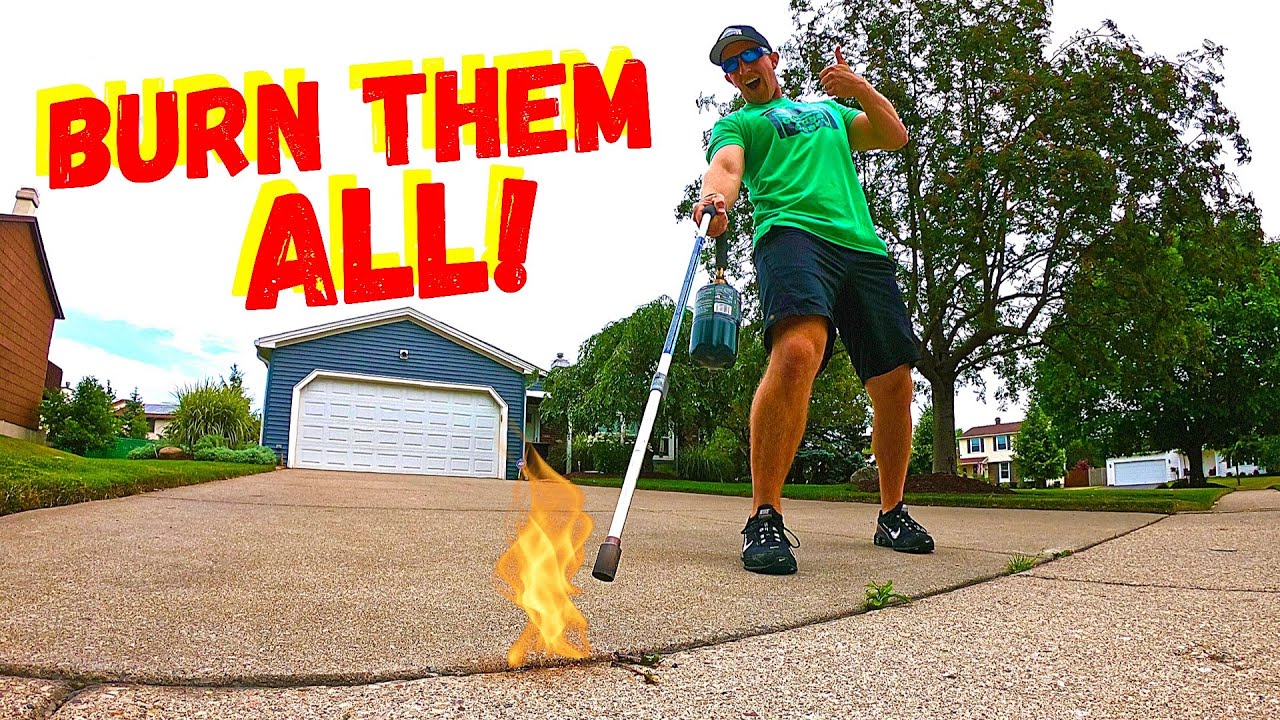
Image source: YouTube / Garage Gear (YouTube thumbnail (fair-use with source credit))
Step 1: Identify your weed type
If the weed is small and young (less than 4 inches tall, with thin leaves and no deep taproot), baking soda has a good chance of working. Think chickweed, annual bluegrass, or young crabgrass.
If the weed is large, woody, or has a thick taproot (dandelion, thistle, bindweed, poison ivy), skip the baking soda. It won't kill the root. You'll waste your time and end up with a half-dead weed that bounces back in a week.
Step 2: Check where the weed is growing
If it's in a crack in the driveway, sidewalk, patio, or between pavers, go ahead. The soil underneath is usually compacted and low in organic matter anyway. Sodium buildup is less of a concern here.
If it's in your lawn, stop. Baking soda is non-selective. It will kill the grass just as fast as it kills the weed.
You'll end up with a brown patch that takes weeks to recover.
If it's in a garden bed or near vegetables, think twice. One careful spot application might be okay on an isolated weed, but repeated use will build up sodium and harm your soil's ability to grow anything.
Step 3: Assess your soil and nearby plants
If you have alkaline soil (pH above 7.0), baking soda is a bad idea. It raises pH further, which can lock up nutrients like iron and zinc. Most vegetables prefer slightly acidic to neutral soil.
If you have sandy soil, sodium moves through it faster, so the risk is lower. But it also means the baking soda washes away more quickly, so you might need more applications.
If you have clay soil, sodium accumulates more easily. Stick to hardscape applications only.
Step 4: Choose your path
| If you have… | Then… |
|---|---|
| Young annual weeds in hardscape cracks | Use baking soda (it's a good fit) |
| Dandelions or thistles anywhere | Choose a different method |
| Weeds in lawn grass | Use a selective herbicide or hand-pull |
| Weeds in a garden bed | Hand-pull or use mulch |
| A large area of weeds | Use vinegar, boiling water, or a torch |
Step-by-Step Guide: How to Apply Baking Soda as a Weed Killer
If you've decided to go ahead, here's the process that gives you the best chance of success. It's simple, but the details matter.

Image source: YouTube / Daisy Creek Farms with Jag Singh (YouTube thumbnail (fair-use with source credit))
What you'll need
- Baking soda (standard arm and hammer or any brand works)
- A spray bottle (for liquid application)
- Water (preferably warm, to help it dissolve)
- A small spoon or measuring spoon
- Optional: a small hand broom (for dry application on cracks)
Method 1: Liquid spray (best for general use)
- Mix 1 tablespoon of baking soda into 1 quart of warm water. Shake until the powder dissolves completely. For tougher weeds, you can go up to 2 tablespoons, but don't exceed that or the solution may not dissolve fully.
- Choose a dry day with no rain forecast for at least 6 hours. The baking soda needs time to dry on the leaves and start pulling moisture out.
- Spray the leaves and stems thoroughly. Cover all visible foliage. Don't drench the soil around the weed; you want the solution on the plant, not the ground.
- Wait 24 to 48 hours. You should see browning and wilting. If the weed looks unaffected, it might be too mature for this method.
- Reapply if needed. Stubborn weeds may need a second or third treatment, spaced 3 to 5 days apart.
Method 2: Dry sprinkle (best for cracks and crevices)
- Dampen the weed leaves slightly with a spray of plain water. This helps the powder stick.
- Sprinkle a pinch of dry baking soda directly onto the wet leaves. Use just enough to coat the foliage, not pile it up.
- Leave it alone. Don't water it in. The moisture on the leaves will activate the baking soda.
- Sweep away any excess powder from the surrounding area after 24 hours to avoid it washing into the soil.
When to apply
The best time is early morning on a sunny day. The sun helps dry the solution on the leaves, and the heat increases the dehydration effect. Avoid applying before rain or irrigation, as water will wash the baking soda off before it can work.
For proper lawn care, it's worth knowing how to restart your equipment after winter if you plan to maintain a healthy lawn that crowds out weeds naturally.
Common Mistakes That Ruin Your Garden (and How to Avoid Them)
Most problems with baking soda aren't caused by the ingredient itself. They come from how people apply it. Here are the four biggest errors we see in aggregate user reviews and extension service reports.

Image source: YouTube / Turf Culture (YouTube thumbnail (fair-use with source credit))
Mistake 1: Using it on lawn grass
You spray baking soda on a dandelion in your lawn, and three days later you have a brown circle of dead grass. Baking soda doesn't know a weed from a blade of bluegrass. It kills whatever leaf it touches.
The fix: Spot-treat in hardscape areas only. For lawn weeds, hand-pull or use a selective herbicide labeled for your grass type. Keeping your lawn thick and healthy naturally crowds out many weeds.
That's where routine upkeep like cleaning a lawn mower air filter helps maintain strong grass growth.
Mistake 2: Overapplying in garden beds
People think "more is better" and drench the soil around weeds. That dumps sodium right where your vegetables or flowers need to grow. After a few applications, the soil turns salty and plants start yellowing or stunting.
The fix: Spray only the weed foliage, not the ground. If you must treat a weed in a bed, use a small paintbrush to apply the solution directly to the leaves. Better yet, pull the weed by hand.
Mistake 3: Expecting it to kill mature perennial weeds
A 12-inch dandelion with a taproot as thick as your finger isn't going to die from baking soda. The leaves might brown, but the root stores enough energy to send up new leaves within a week.
The fix: Reserve baking soda for young annual weeds under 4 inches tall. For established perennials, dig them out or use a systemic herbicide that moves to the roots.
Mistake 4: Applying before rain or watering
If rain falls within four to six hours, the baking soda washes off before it can dehydrate the leaves. You've just wasted your time and added sodium to the soil for nothing.
The fix: Always check the forecast. Apply on a clear, dry morning. If rain comes sooner than expected, reapply after the soil dries.
When Baking Soda Fails — Better Alternatives for Tough Situations
Sometimes baking soda just isn't the right tool. Here's what to use instead for specific scenarios, based on our research and university extension recommendations.
For deep-rooted perennial weeds (dandelions, thistles, bindweed)
Baking soda can't reach the root system. Your best bet is mechanical removal. Use a weeding tool with a long fork to pull the entire taproot.
For large infestations, a systemic herbicide containing glyphosate or triclopyr works better. Apply it directly to the leaves on a calm day to avoid drift.
For large areas of weeds (driveways, gravel paths, patios)
Spraying every weed individually with baking soda takes forever. A better option is a horticultural vinegar (20% acetic acid). It's stronger than kitchen vinegar and kills weeds faster.
Wear gloves and goggles, as it can burn skin. Another fast option is boiling water. It's free, instantly kills leaves, and has no soil residue if you're careful about runoff.
For weeds in lawn grass
Baking soda kills grass, so it's useless here. Use a selective broadleaf herbicide formulated for lawns. Products containing 2,4-D or dicamba target broadleaf weeds without harming grass.
Follow the label rates exactly. Alternatively, spot-treat with a weed puller tool.
For preventing weeds from germinating
Baking soda has no pre-emergent effect. For prevention, use a thick layer of organic mulch (2 to 3 inches) in garden beds. In lawns, apply corn gluten meal in early spring.
It stops weed seeds from sprouting. For gravel areas, pre-emergent herbicides like prodiamine work well.
| Weed type | Best approach | Why baking soda fails |
|---|---|---|
| Young annuals in cracks | Baking soda works fine | No failure expected |
| Dandelions (any age) | Dig out the taproot | Root survives leaf kill |
| Large patches on gravel | Horticultural vinegar or torch | Too time-consuming |
| Weeds in lawn | Selective herbicide | Kills the grass too |
| Weeds in garden beds | Hand-pull or mulch | Sodium builds up in soil |
Safety and Soil Health: What You Need to Know Before You Start
Baking soda is generally safe around kids and pets once it's dry. The EPA lists sodium bicarbonate as a minimum-risk pesticide under FIFRA Section 25(b), meaning it doesn't require registration. But "safe" doesn't mean "no consequences." Let's look at the real risks.

Image source: YouTube / The Ripe Tomato Farms (YouTube thumbnail (fair-use with source credit))
Sodium accumulation in soil
The biggest hidden risk is sodium buildup. Each application adds salt to the soil. Over time, this can raise the pH and disrupt nutrient availability.
If you're treating a large area repeatedly, test your soil every season. A simple pH test kit from a garden center costs about $10 and tells you if your soil is becoming more alkaline.
If the pH climbs above 7.5, stop using baking soda. You can lower soil pH with elemental sulfur or organic matter like compost. For ongoing garden health, understanding how to pick the right soil inputs matters.
Our guide on what fertilizer to use in spring at your garden explains how to balance nutrients in alkaline conditions.
Impact on beneficial insects and soil life
Baking soda isn't a broad-spectrum poison, but it can harm earthworms and beneficial microbes if applied heavily to soil. Earthworms are sensitive to high salt concentrations. Keep applications to leaves and hard surfaces to minimize contact with soil life.
Safe handling tips
- Wear gloves when mixing to avoid skin irritation from the alkaline solution.
- Avoid spraying on windy days to prevent drift onto desirable plants.
- Store baking soda out of reach of children (it's edible but can cause stomach upset in large amounts).
- Never mix baking soda with vinegar or other household chemicals. The fizzing reaction creates sodium acetate and water, neither of which kills weeds effectively and wastes your ingredients.
Real-World Scenarios: When It Worked, When It Backfired
Let's look at actual situations so you can see the decision tree in action.
Scenario 1: The driveway crack annuals (worked well)
A homeowner had chickweed and annual bluegrass sprouting in concrete expansion joints. They mixed 1 tablespoon per quart of water and sprayed on a sunny morning. Within 48 hours, the weeds turned brown and crispy.
A second application two weeks later got the stragglers. No regrowth for the rest of the season. The compacted gravel under the concrete had low organic matter, so sodium buildup wasn't a concern.
What made it work: Young weeds, hard surface, dry weather, timely reapplication.
Scenario 2: The dandelion in the lawn (backfired)
A gardener tried baking soda on a cluster of dandelions in their fescue lawn. They sprayed the leaves thoroughly. Three days later, the dandelions looked sad, but the grass around them turned yellow and died in a six-inch circle.
The dandelion roots survived and sent up new leaves a week later. The lawn patch took a month to fill back in.
Why it backfired: Non-selective application on lawn grass, mature perennial weeds with roots intact, soil sodium killed grass roots.
Scenario 3: The vegetable bed spot treatment (mixed results)
A gardener found a few young pigweed seedlings in a tomato bed. They carefully brushed a baking soda paste onto each weed leaf, avoiding the soil. The pigweed died within two days.
No harm to the tomatoes. But they noticed the soil around the treated area tested slightly higher in sodium by the end of the season. They amended with compost and saw no long-term issues.
Key takeaway: Works if you're precise, but monitor soil health and limit to isolated spots.
The Bottom Line: Is Baking Soda Right for You? (Decision Guide)
Here's the simple decision tree. Run through these questions before you grab that box from the pantry.
Question 1: Is the weed less than 4 inches tall and an annual (not a deep-rooted perennial)?
- Yes → Continue to Question 2.
- No → Skip baking soda. Use a different method.
Question 2: Is the weed growing on a hard surface (driveway, patio, crack, gravel)?
- Yes → Continue to Question 3.
- No (lawn or garden bed) → Stop. Hand-pull or use a selective method.
Question 3: Is rain forecast within the next 6 hours?
- No → Proceed with application.
- Yes → Wait for a dry day.
Question 4: Have you used baking soda in this spot more than 3 times this season?
- No → Apply.
- Yes → Consider rotating to a different method to avoid soil sodium buildup.
Final checklist
| Use baking soda when | Skip it when |
|---|---|
| Young annual weeds in cracks or pavers | Mature perennials anywhere |
| Small, isolated patches | Large areas or dense infestations |
| You don't mind reapplying | You want a one-time fix |
| Hard surfaces or non-garden areas | Lawn grass or vegetable beds |
| Dry weather ahead | Rain or irrigation expected |
Baking soda is a useful tool in your weed control arsenal, but it's not a cure-all. Use it for the right job and you'll save time and money. Use it for the wrong job and you'll create more problems than you solve.
Know your weeds, know your soil, and you'll make the right call every time.