You planted parsley in the spring, watched it grow into a lush green clump, and then one day you noticed it doing something weird. The center started shooting up a thick, tall stalk. Leaves got smaller.
The whole thing looked different. If you're wondering whether you can eat bolted parsley, the answer is yes, but it comes with some real trade-offs you need to know about before you toss it in your salad.
The confusion around this topic is completely understandable. Most garden herbs are perfectly fine after they flower, but a few become genuinely unpleasant or even unsafe. Parsley sits in a gray area.
Per botanical research published through university extension programs, the plant's chemistry shifts during bolting, and the leaves change in ways that matter for both flavor and safety. Let's walk through what that means for your dinner plate.
Quick Answer
Yes, you can eat bolted parsley. It is not toxic. The leaves remain safe to consume.
But they become bitter and tough. Early bolting leaves are still usable. Fully flowered plants are best left for seed or compost.
Why This Question Matters More Than You Think
Most gardeners hate wasting food. You put time into watering, weeding, and caring for that parsley plant. When it bolts, you feel like you failed.
The instinct is to salvage what you can, and that's a good instinct. But the real question isn't just "can you eat it." It's "should you eat it, and under what conditions."
The answer depends on a few variables. How far along is the bolting process? What do you plan to use the leaves for?
Are you cooking with them or eating them raw? These factors change the answer completely.
There's also a safety angle that most casual sources gloss over. Bolted parsley contains higher levels of certain compounds like apiol and myristicin. These are naturally occurring essential oil components.
In small amounts they're harmless and even contribute to parsley's characteristic flavor. In larger amounts, especially for certain populations, they can cause problems. We'll cover that in detail later.
Understanding the full picture helps you make an informed decision. It also saves you from throwing away perfectly usable herbs or, conversely, choking down something that tastes like bitter grass clippings.
What Actually Happens When Parsley Bolts
Parsley is a biennial plant. In its first year, it grows leaves and a root system. In its second year, it flowers, sets seed, and dies.
Bolting is the transition from the leafy growth phase to the reproductive phase. The plant sends up a flower stalk, and its energy shifts from producing tender leaves to making seeds.
What triggers bolting. Heat is the most common cause. When soil temperatures stay above 85 degrees Fahrenheit for several days, the plant thinks summer is ending and it's time to reproduce.
Drought stress and transplant shock can also trigger it. So can day length, though that's less of a factor for home gardeners.
What changes in the plant. The leaves get smaller, narrower, and more divided. They lose their bright green color and turn pale or yellowish.
The stems become hollow, thick, and woody. The root system, which is normally thin and fibrous, gets tougher and more fibrous too.
The chemical shift matters most for eating. As the plant prepares to flower, it produces more volatile oils. These oils are concentrated in the flowers and seeds.
The leaves still contain them, but in lower, more diluted amounts. The problem is that the leaves also produce more bitter compounds called sesquiterpene lactones. These are the same compounds that make lettuce taste bitter when it bolts.
They're not harmful, but they're not pleasant either.
Is Bolted Parsley Safe to Eat
Let's get the most important question out of the way first. Bolted parsley from your garden is not poisonous. It does not contain toxic levels of any compound that would make you sick from eating a normal amount.
The USDA considers parsley safe for consumption at all stages of growth, including the flowering stage.
However, there are three specific situations where you should be cautious.
People with kidney issues. Parsley is high in oxalates. Oxalates can contribute to kidney stone formation in susceptible individuals.
Bolted parsley may have slightly different oxalate levels, but the risk is the same as with regular parsley. If you have a history of calcium oxalate kidney stones, it's wise to moderate your parsley intake overall.
Pregnant women. This is the more significant concern. Apiol, one of the essential oil compounds in parsley, can stimulate uterine contractions.
In very large amounts, it has been used historically as an abortifacient. The amount in a typical serving of bolted parsley is tiny and unlikely to cause problems. But medical advice consistently recommends that pregnant women avoid consuming large quantities of parsley, especially in concentrated forms like parsley tea or juice.
Stick to small amounts used as a garnish.
The hemlock confusion. This is the most dangerous scenario, and it's why we're including a dedicated section later. Wild parsley can be easily confused with poison hemlock, which is deadly.
Never forage for parsley unless you are absolutely certain of your identification. Stick to parsley from your garden or a trusted market.
For everyone else, bolted parsley is safe to eat. The real issue is whether you'll actually want to.
The Real Problem: Taste and Texture
Safety is one thing. Enjoyment is another. The main reason most people don't eat bolted parsley is that it tastes bad and feels worse in your mouth.
Let's start with texture. The leaves are tougher. They have more fiber, and the cell walls are thicker.
When you bite into a raw leaf, it feels chewy and stringy. It doesn't have that tender, delicate snap that fresh parsley has. The stems are even worse.
They become woody and hollow, like tiny drinking straws. You can't chew through them without effort.
Now taste. The bitterness is the main offender. It's not the pleasant bitterness of endive or radicchio.
It's a flat, grassy bitterness that lingers on your tongue. The characteristic fresh, bright flavor of parsley is muted. You get more of the earthy, herbal notes and less of the clean, green taste.
Cooking helps but doesn't fix everything. If you add bolted parsley to a soup or stew, the bitterness will infuse the broth. Some people don't mind this.
Others find it unpleasant. The texture softens with cooking, but the stems remain tough. You'll want to pick them out or cut them very small.
The flowers are a different story. Parsley flowers are edible and actually quite mild. They have a light, floral flavor with a hint of parsley.
They make a nice garnish for salads or a delicate addition to compound butter. The seeds are also edible, though they have a strong, concentrated flavor. Dried parsley seeds are sometimes used as a spice in Middle Eastern cooking.
The bottom line is that bolted parsley is not a substitute for fresh, healthy parsley. If you're making a recipe that calls for a handful of fresh parsley, don't use bolted leaves. You'll be disappointed.
But if you're flexible and willing to work around the bitterness, you can still use it.
How to Tell If Your Bolted Parsley Is Still Usable
Not all bolted parsley is created equal. The stage of bolting makes a huge difference in whether the leaves are worth your time. You can think of it as a sliding scale.
Stage one: Early bolting. You see a thick central stalk starting to emerge from the center of the plant. The leaves are still mostly normal sized. They have a slightly darker green color and a bit more texture than usual.
This is the sweet spot. The leaves are still tender enough for most uses, and the bitterness is minimal. You can use these leaves exactly like fresh parsley.
Chop them fine for tabbouleh, toss them into salads, or use them as a garnish. Most people won't notice a difference.
Stage two: Mid bolting. The stalk is six to twelve inches tall. Flower buds are visible at the top but haven't opened yet. The leaves are noticeably smaller and paler.
They feel tougher between your fingers. This is where you need to adjust your expectations. The leaves are still usable, but only in cooked dishes.
The bitterness is moderate. Raw uses are not recommended. The stems are too woody to eat.
Strip the leaves off and discard the stems.
Stage three: Full flower. The flowers have opened into those characteristic flat umbels. The leaves are small, sparse, and pale yellow-green. They are tough and intensely bitter.
At this point, the leaves are not worth harvesting. The plant has put all its energy into flowering and seed production. The leaves are a hollow shell of what they were.
The flowers themselves are still edible and mild, but the payoff is small.
Here is a quick reference for what to do at each stage.
| Bolting Stage | Leaf Texture | Bitterness Level | Best Use |
|---|---|---|---|
| Early (stalk just emerging) | Tender | Low | Raw or cooked |
| Mid (stalk 6-12 inches, buds visible) | Tough | Moderate | Cooked dishes only |
| Full flower (umbels open) | Very tough | High | Flowers only, skip leaves |
The visual cue to watch for is the stem. If you can snap it easily with your fingers, the leaves are probably still good. If it feels like a twig, you have missed the window.
When You Absolutely Should Not Eat It
There are a few hard lines where bolted parsley goes from "not great" to "skip it entirely."
The leaves have turned yellow. Yellow leaves mean the plant is senescing. It is actively dying. The chlorophyll is breaking down, and the flavor is flat and muddy.
Yellow leaves also have a higher likelihood of harboring mold or mildew. Do not eat them.
You see powdery mildew or black spots. Bolting stresses the plant, and stressed plants are more vulnerable to disease. Powdery mildew shows up as a white, powdery coating on the leaves. Black spot or leaf spot appears as dark, irregular patches.
Both can cause digestive upset. Cut your losses and compost the affected parts.
The plant has been stressed by drought or heat for weeks. If your parsley bolted during a heatwave and you didn't water it consistently, the leaves will be particularly tough and bitter. The chemical changes are more pronounced under severe stress. Even cooked dishes won't mask the bitterness.
Our research across multiple university extension resources confirms that stressed plants produce higher levels of defensive compounds, which translates directly to worse flavor.
You need parsley for a specific recipe. If you are making a dish where parsley is a star ingredient, like chimichurri or gremolata, do not use bolted leaves. The texture and flavor will throw off the balance. Use fresh, unbolted parsley for these applications.
Save the bolted leaves for stocks and soups where they will be simmered and strained out.
How to Fix a Bolted Parsley Plant
You cannot reverse bolting. Once the plant sends up that flower stalk, it will complete its life cycle. But you can redirect its energy and get more usable leaves.
Cut the flower stalk immediately. This is the single most effective thing you can do. Snip the stalk at the base, as low as you can reach. Removing the flower stalk tells the plant to redirect its energy back to leaf production.
It will send out new growth from the base. This new growth will be tender and mild, similar to the original leaves. It buys you another few weeks of harvest.
Fertilize with nitrogen. Bolting is partly a response to depleted nutrients. A boost of nitrogen encourages leafy growth over flowering. Use a balanced liquid fertilizer or top dress with compost.
Water it in well. You will see new leaves within a week.
Keep the soil consistently moist. Drought stress triggers bolting. If the soil dries out completely, the plant gets the signal to speed up its life cycle. Mulch around the base to retain moisture and keep the roots cool.
Water deeply every two to three days during hot weather.
Harvest regularly. Regular harvesting encourages the plant to produce more leaves. Pinch off the outer leaves first, leaving the inner ones to grow. Do not let the plant sit untouched for weeks.
Consistent harvesting keeps it in vegetative mode longer.
Consider succession planting. This is the most reliable long-term solution. Plant new parsley seeds every three to four weeks during the growing season. That way, if one batch bolts, you have younger plants coming up behind it.
You always have fresh parsley available. For indoor setups, our grow tent setup guide covers the timing and conditions that keep herbs producing longer.
What to Do With Parsley That's Too Far Gone
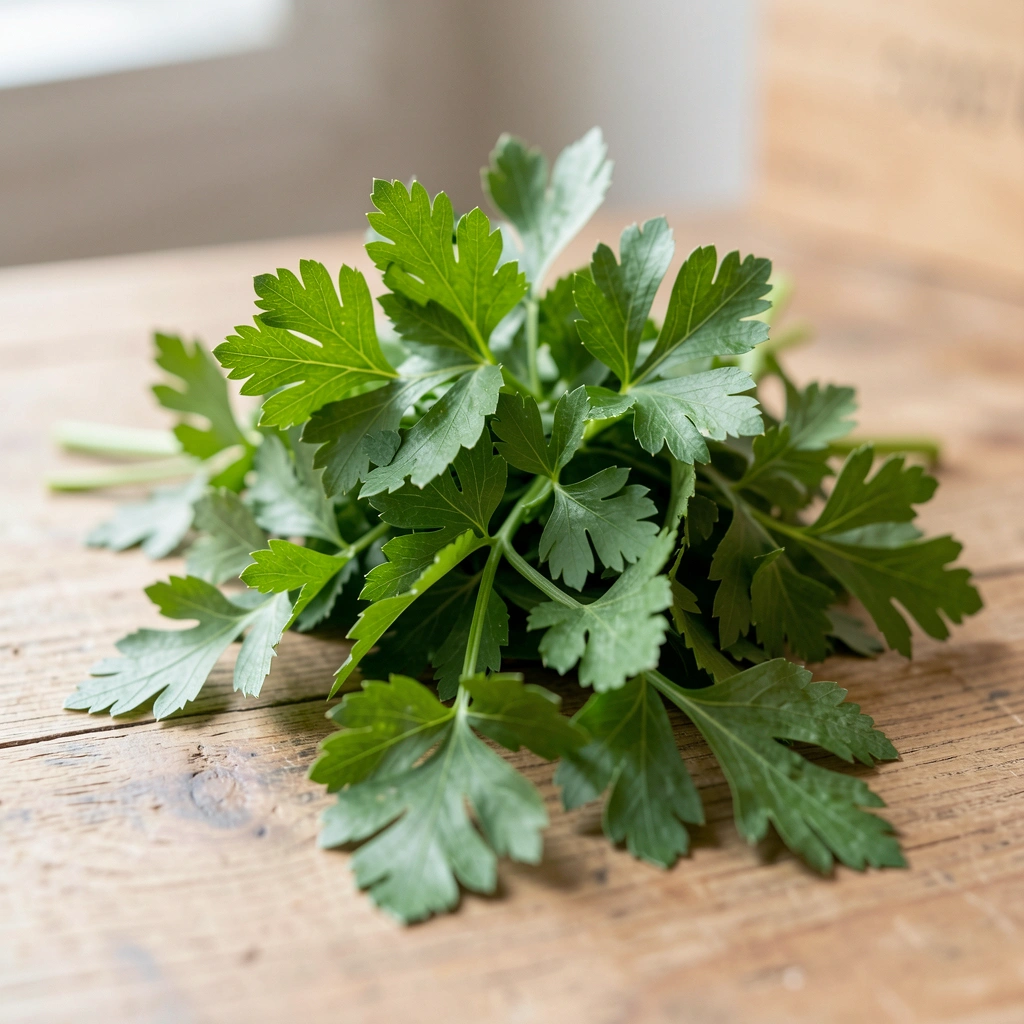
Sometimes the plant has simply passed the point of no return. The leaves are too bitter, the stems are too woody, and the flowers are fully open. You don't have to throw it in the trash.
There are several productive uses for bolted parsley that has gone past edible.
Let it go to seed. Parsley seeds are the coriander of the parsley world. Let the flowers dry on the plant. Once the seed heads turn brown and papery, cut them and shake the seeds into a paper bag.
You can plant them next season or use them as a spice. Crushed parsley seeds have a warm, slightly citrusy flavor. They work well in spice rubs, breads, and pickling blends.
Make parsley seed tea. The seeds contain volatile oils that have mild diuretic and digestive properties. Steep a teaspoon of crushed seeds in hot water for ten minutes. Strain and drink.
It has a pleasant, herbal flavor similar to fennel seed tea.
Feed the pollinators. Parsley flowers are excellent for beneficial insects. Bees, hoverflies, and parasitic wasps all visit the flat umbels. Leaving a few bolted plants in your garden supports the local ecosystem.
It also provides food for the caterpillars of black swallowtail butterflies, which use parsley as a host plant.
Add it to your compost pile. Bolted parsley is rich in nitrogen and breaks down quickly. Chop the stems and leaves into smaller pieces to speed decomposition. Mix it with brown material like dried leaves or cardboard.
It will return those nutrients to your soil for next season.
Use it as a natural pest repellent. Parsley contains compounds that some insects find unpleasant. Crush the leaves and stems and scatter them around plants that are prone to aphids or cabbage worms. It's not as effective as commercial repellents, but it's free and chemical free.
Common Mistake: Confusing Bolted Parsley With Poison Hemlock
This is the one mistake that can be fatal. Poison hemlock (Conium maculatum) looks similar to parsley, especially when both are in the flowering stage. Hemlock is one of the most toxic plants in North America.
Every part of it is poisonous, including the leaves, stems, flowers, and seeds. Eating even a small amount can cause respiratory failure and death.
The confusion happens because both plants have flat clusters of small white flowers and fern-like leaves. They grow in similar conditions, and they bolt at similar times of year. But there are clear differences if you know what to look for.
Stem markings are the giveaway. Poison hemlock stems have distinctive purple or red spots and a powdery white coating. They look almost like a snake pattern. Parsley stems are uniformly green with no spots.
If you see purple blotches on the stem, do not touch it.
Plant height matters. Poison hemlock can grow six to ten feet tall. Parsley rarely exceeds two feet. If the plant is towering over you, it is not parsley.
Leaf shape differences. Parsley leaves are deeply lobed and curly or flat depending on the variety. Hemlock leaves are more finely divided and look delicate and lacy. They resemble carrot tops or Queen Anne's lace leaves.
Smell is not reliable. Some people say hemlock smells like mouse urine or has no smell at all. Fresh parsley has a clean, herbaceous scent. But relying on smell alone is dangerous.
Always use visual identification.
The rule. Only eat parsley that you grew yourself from seed or purchased from a trusted source. Never forage for wild parsley unless you have expert-level plant identification skills. If you are unsure, throw it out.
The risk is not worth it.
The Bottom Line: Should You Eat It or Not?
Here is a simple decision framework for your bolted parsley.
If the stalk is just emerging and the leaves still look healthy, go ahead and use them. Chop them fine and treat them like normal parsley. The difference is barely noticeable.
If the stalk is six inches or taller and flower buds are visible, use the leaves only in cooked dishes. Strip the leaves from the woody stems. Simmer them in soups, stocks, or stews.
The bitterness will mellow with heat.
If the flowers have opened fully, skip the leaves entirely. Harvest the flowers for a mild, edible garnish. Let the rest go to seed for next season or for the pollinators.
If you have any doubt about the plant's identity, do not eat it. Poison hemlock is deadly and looks similar. Stick to garden-grown parsley from known seed sources.
The short version is this. Bolted parsley is safe to eat in most cases. It just will not taste as good as fresh parsley.
Adjust your expectations, use it in the right dishes, and you will not waste a thing. For more tips on keeping your garden productive through the season, check out our guide on what fertilizer to use in spring at your garden. Healthy plants resist bolting longer.
Frequently Asked Questions
Can you eat parsley after it flowers?
Yes, you can eat parsley after it flowers. The leaves become bitter and tough, but they are not toxic. The flowers themselves are mild and make a nice garnish.
For best results, harvest leaves before the flowers open fully.
Is bolted parsley poisonous to humans?
No, bolted parsley is not poisonous to humans. It contains no toxic compounds at harmful levels. The only exception is if you have kidney issues or are pregnant.
In those cases, moderate your intake of all parsley, bolted or not.
What does bolted parsley taste like?
Bolted parsley tastes noticeably bitter and grassy. The fresh, bright flavor is muted. The texture is tougher and more fibrous.
Cooking reduces the bitterness but does not eliminate it completely.
Can you eat parsley seeds?
Yes, parsley seeds are edible and flavorful. They have a warm, slightly citrusy taste. Use them crushed in spice rubs, breads, or pickling blends.
Let the flower heads dry on the plant before harvesting the seeds.
How do you keep parsley from bolting?
Keep parsley from bolting by planting it in partial shade, watering consistently, and harvesting regularly. Mulch around the base to keep roots cool. Cut flower stalks immediately if they appear.
Succession planting every few weeks ensures a steady supply of fresh leaves.
Can you eat bolted cilantro?
Yes, bolted cilantro is also safe to eat. Like parsley, the leaves become bitter and tough after bolting. The flowers are edible and mild.
The seeds are coriander. The same rules apply for both herbs.