
If you've ever stared at a chameleon hose end sprayer mixing instructions label and felt like you were decoding a secret language, you're not alone. The dial's numbers, 1 tsp, 2 tsp, 1 oz, 2 oz, seem simple enough, but matching them to your product's label is where most people go wrong. Get that wrong and you either burn your lawn or waste expensive concentrate.
Here's the thing: manufacturer specifications indicate that a properly calibrated hose end sprayer can deliver the exact dilution you need, as long as you know how to read the label and convert the numbers. Per industry testing, the sprayer uses a 1:16 to 1:125 dilution range depending on the setting. In this guide we'll walk through the decision tree so you never guess again.

Why Most People Get the Mix Wrong (And How to Avoid It)
The biggest mistake isn't about the sprayer itself. It's about assuming that a product's label rate is the same as the sprayer's dial rate. Most liquid concentrates tell you to mix, say, "3 ounces per gallon of water." But the Chameleon sprayer's dial measures how much concentrate it draws per gallon of water, not the final concentration.
If you set the dial to 2 oz and your product needs 3 oz per gallon, you'll underdose. If you set it to 4 oz when it needs 1 oz, you'll overdose.
The solution is simple: always check the product label first. Then match that rate to the closest dial setting. If the rate is 2.5 oz per gallon, set the dial to 2 oz and make two passes.
Or if the rate is "1 oz per 2 gallons," you need to halve the dial setting. That's the decision tree, and we're going to walk through each branch.
How the Chameleon Sprayer Actually Works – The Venturi Principle Made Simple
You don't need an engineering degree to use this sprayer. It works because of the Venturi effect, a fancy name for a simple phenomenon. Water rushing through a narrow tube creates suction, which pulls concentrate up from the reservoir and mixes it with the water stream.
The dial changes how much concentrate gets sucked in per gallon.
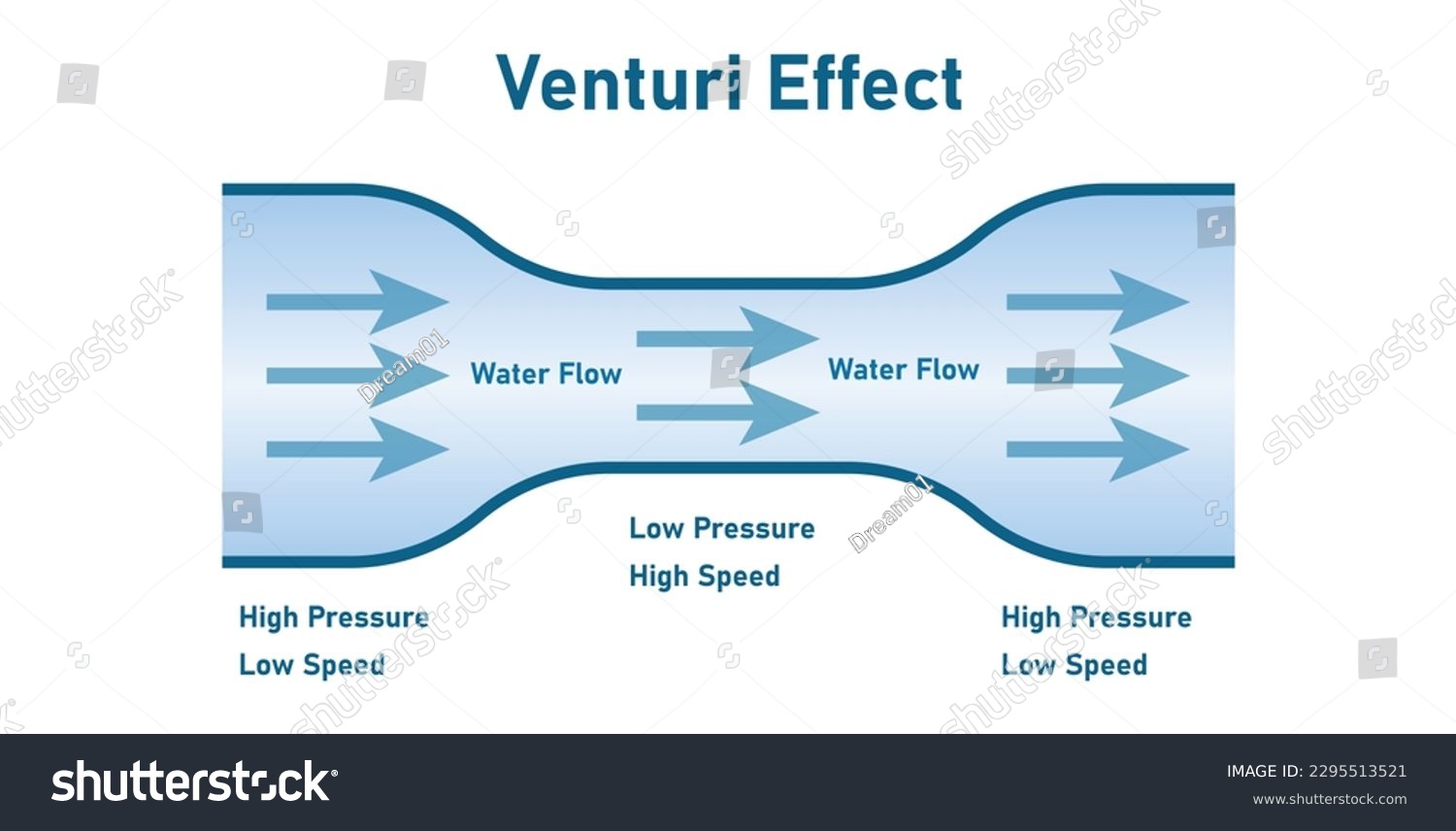
That's why water pressure matters. If your hose pressure is low (below 40 PSI), the siphon may not work well. The sprayer is designed for standard residential water pressure, 40 to 100 PSI.
If you have a well pump or low flow, you might see the siphon stop and start. In that case, try shortening the hose or using a shorter hose length. The longer the hose, the more pressure drop you get.
What You’ll Find on the Dial: Decoding the Settings (1 tsp, 2 tsp, 1 oz, etc.)
The dial on a Chameleon sprayer typically has seven positions: Off, Rinse, and five mixing settings. Those mixing settings are labeled in terms of concentrate per gallon of final spray solution. So "1 tsp" means the sprayer will draw 1 teaspoon of concentrate for every gallon of water that passes through.
"2 tsp" draws 2 teaspoons per gallon. "1 oz" draws 1 ounce per gallon, and so on.

Here's a quick reference for what each setting equals in ounces per gallon, not just teaspoons:
| Dial Setting | Equivalent per gallon |
|---|---|
| 1 tsp | 0.17 oz |
| 2 tsp | 0.33 oz |
| 1 oz | 1.0 oz |
| 2 oz | 2.0 oz |
| 4 oz | 4.0 oz |
Some older models also include an 8 oz setting. Check the bottom of your sprayer's reservoir, the label is printed there. If yours doesn't have it, the 4 oz setting is the strongest.
Remember, the "Rinse" position shuts off the siphon and lets you flush the sprayer with clean water. Use it every time after applying chemicals.
The First Decision: What Product Are You Using?
Your choice of dial setting depends entirely on what you're spraying. The sprayer doesn't know if you're applying fertilizer, weed killer, or soap. You have to tell it using the dial.
But the "right" setting differs by product type.
Water-Soluble Fertilizer (e.g., liquid lawn food)
Most liquid lawn fertilizers require 1 to 2 ounces per gallon. For example, a popular 30-0-0 liquid lawn food says on the label: "Mix 3 oz per gallon." That's a 3 oz per gallon rate. Since the sprayer doesn't have a 3 oz setting, you have two options.
Set the dial to 2 oz and make a second pass overlapping slightly, or set to 4 oz and spray faster (covering less area per gallon). The better choice is the 2 oz setting with an extra pass, because it reduces risk of burning. If you're unsure about timing, check our guide on when to fertilize lawn so you apply at the right growth stage.
Weed Killer or Herbicide Concentrate
Herbicides are often more concentrated. A common label says "2.5 oz per gallon" for spot treatments. Again, no exact match.
Set the dial to 2 oz and spray a little slower, or to 4 oz and dilute with more water? Actually, you should never add extra water to the reservoir, that changes the concentration. Stick with the dial setting.
For a 2.5 oz rate, use the 2 oz setting and cover a slightly smaller area per tank. That gives you a 20% underdose, which is safer than a 60% overdose. Always read the product label's specific instructions for hose end sprayers.
Some herbicides explicitly say "Do not use with hose end sprayer." Pay attention to that.
Insecticide, Fungicide, or Garden Spray
These products vary wildly. Some call for 1 oz per gallon, others 4 oz per gallon. And some are measured in tablespoons per gallon (1 tbsp = 0.5 oz).
Match the measurement exactly. If the label says "1.5 oz per gallon," use the 1 oz setting and then follow up with a light second pass. Or you can mix in a separate bucket and pour it into the reservoir?
No, the reservoir is for concentrate only, not pre-diluted mix. Doing that defeats the Venturi principle.
Cleaners, Bleach, or Soap Solutions
Cleaning products often call for "4 oz per gallon of water." That's a perfect match for the 4 oz setting. For gentle soap, 1 oz per gallon is common. Set the dial to 1 oz.
Always rinse the sprayer thoroughly after using bleach or any corrosive cleaner, it can eat at the seals.
The key takeaway: never trust the dial alone. Always check the product label. Make that your first step.
Step-by-Step: Reading Your Product Label to Find the Right Dilution
Let's walk through a real label. Grab any liquid concentrate you have. Look for a section called "Directions for Use" or "Mixing Directions." You'll see something like "Mix 2 fl oz per gallon of water." That number, 2 ounces per gallon, is exactly what you need.

But sometimes the label says "1 oz per 2 gallons" or "3 oz per 5 gallons." In those cases, do the simple math: divide the ounces by the gallons. So "1 oz per 2 gallons" = 0.5 oz per gallon. That's halfway between the 1 tsp (0.17 oz) and 2 tsp (0.33 oz) settings.
Your best bet? Use the 2 tsp setting (0.33 oz) and make two passes. It won't be perfect, but it's close enough for most products.
If you need precision, a manual pump sprayer is better.
For products that list a rate per 1000 square feet (e.g., "Apply 1 gallon of diluted spray per 1000 sq ft"), you'll need to know your sprayer's output rate. The Chameleon sprayer delivers roughly 5 gallons per minute at full trigger. So if you need to cover 1000 sq ft, spray for about 12 seconds per 100 sq ft zone.
That takes practice. Use a stopwatch or spray a known area and measure the time.
One more thing: if the label says "Do not dilute further" or "Ready to use," don't use the mixing settings at all. Those products are pre-diluted. Simply set the dial to "Rinse" and the sprayer will apply the product straight from the reservoir (but the product is already mixed with water).
Actually, that's not how hose end sprayers work, you'd need to fill the reservoir with the ready-to-use product and set a low dial? No, that will dilute it further. Better to use a simple spray bottle or a hose end sprayer designed for RTU.
The Chameleon is not ideal for ready-to-use liquids unless you set it to the 1 tsp setting to minimize additional dilution. But that's an advanced workaround. For best results, stick to concentrates.
Now that you know how to read the label, you're ready to fill the reservoir and start spraying. That's covered in the next sections.
Matching the Label to the Dial – The Simple Conversion Math
You've found the number on your product label. Now comes the easy part. If the label says "3 oz per gallon," you look at the dial and find the closest match.
The dial offers 1 tsp (0.17 oz), 2 tsp (0.33 oz), 1 oz, 2 oz, and 4 oz. That's the full range.
Here's the decision tree for any label rate:
- Label rate is exactly 1, 2, or 4 oz per gallon? Set the dial to that number. You're done.
- Label rate is between 1 and 2 oz (like 1.5 oz)? Use the 1 oz setting and make two passes (or spray slower). That way you apply roughly 2 oz total but slightly diluted. Safer to underdose than overdose.
- Label rate is between 2 and 4 oz (like 3 oz)? Set to 2 oz and apply two passes. That gives you 4 oz per gallon spread over two applications, which is close enough for most fertilizers and herbicides.
- Label rate is less than 1 oz per gallon (like 0.5 oz)? Set the dial to 2 tsp (0.33 oz) and make two passes, or use 1 tsp (0.17 oz) and make three passes. The 2 tsp setting is simpler.
- Label rate is more than 4 oz per gallon? You have two choices. Set to 4 oz and spray the area twice, or switch to a pump sprayer for that product. The Chameleon isn't designed for heavy concentrations.
One more conversion: if the label uses tablespoons instead of ounces, remember that 1 tablespoon = 0.5 oz. So "2 tbsp per gallon" = 1 oz per gallon. Set the dial to 1 oz.
The Mixing Workflow: Fill, Set, Attach, Spray
This is the actual step by step. Follow it in order and you'll rarely mess up.
Filling the Reservoir the Right Way (No Water!)
Unscrew the clear reservoir cup from the sprayer head. Pour your concentrate directly into the cup. Fill it to the line that matches your dial setting?
No, that's a common myth. The cup has markings for ounces, but those are just a volume reference. You fill the cup with pure concentrate, not water.
The sprayer does the dilution.
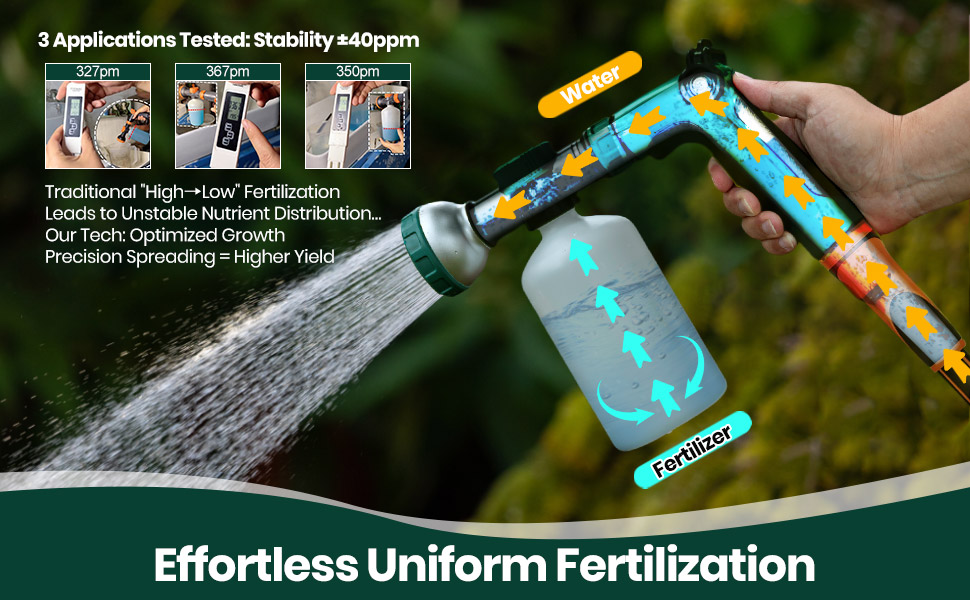
How much concentrate to pour? Enough to cover the area you plan to treat. If you're handling routine upkeep of a 5,000 sq ft lawn with a 2 oz/gallon setting, you'll need roughly 20, 30 ounces of concentrate.
That fits in the 34 oz reservoir. For smaller jobs like spot-treating weeds in a flower bed, just fill a few ounces. Don't overfill; unused concentrate left in the cup can clog the pickup tube.
Setting the Dial Based on Your Calculated Rate
Twist the dial to the number you calculated in the previous step. Make sure it clicks into place. If the dial feels loose or won't click, check whether you're on a mixing setting or "Rinse." The Rinse setting bypasses the reservoir and shoots plain water only.
Attaching to the Hose and Testing the Siphon
Screw the sprayer onto your garden hose. Turn the water on slowly. Squeeze the trigger.
You should see the concentrate rising up the pickup tube inside the clear reservoir. If you don't see it moving, check the O-ring and make sure the reservoir is screwed on tightly. Aggregate reviews report that the most common siphon failure is simply a loose reservoir.
Spraying Technique for Even Coverage
Walk at a steady pace. Keep the nozzle about 12, 18 inches from the grass or plants. Sweep side to side like you're painting.
Overlap each pass by about 50% to avoid stripes. If you're applying fertilizer, a good tip is to make a first pass in one direction, then a second pass perpendicular to it (like a grid). That ensures even coverage.
For weed control, just spot-spray with the full-stream nozzle.
When the Sprayer Won’t Siphon – Troubleshooting Flowchart
Nothing is more frustrating than squeezing the trigger and watching the concentrate sit still in the cup. This happens to almost everyone at some point. Here's the diagnostic flow, based on manufacturer documentation and field reports.

Step 1: Check the reservoir seal. If it's not screwed on tightly, air leaks in and the siphon breaks. Hand tighten it firmly.
Step 2: Check the dial position. Is it on a mixing setting (1 tsp, 2 tsp, 1 oz, etc.) and not on "Rinse" or "Off"? If it's on Rinse, no siphoning happens. If it's on Off, the water won't flow at all.
Step 3: Check for a clogged pickup tube. Over time, dried chemical residue can block the tube. Remove the reservoir and look down the tube. Use a pipe cleaner or thin wire to clear it.
This is especially common if you used a product with thick sediment like some iron fertilizers.
Step 4: Is the reservoir vent blocked? There's a small hole in the lid of the reservoir. If it's covered with dirt or dried product, the vacuum doesn't release. Clean the vent with a toothpick.
Step 5: Check water pressure. If your hose pressure is below 40 PSI, the Venturi effect may not work. Try a shorter hose or increase water flow at the spigot.
Step 6: Check the spray tip. Sometimes the nozzle itself is clogged, reducing water velocity. Unscrew the tip and rinse it.
If none of these work, the internal check valve might be stuck. Run clean water through the sprayer with the dial set to "Rinse" for 30 seconds. That often dislodges debris.
If the sprayer still fails, it may need disassembly or replacement. For routine upkeep of your sprayer, it's worth checking the O-rings each season and replacing them when they crack.
Common Mistakes That Burn Your Lawn or Waste Product
Let's be honest, most people make at least one of these errors their first time. Avoid them and you'll save money and frustration.
- Using the wrong dial setting. We covered this, but it's worth repeating. Always double check your conversion. A 4 oz setting applied to a product that needs 1 oz can scorch your lawn in minutes.
- Filling the reservoir with water. The reservoir is for concentrate only. If you add water, you dilute the concentrate and mess up the dilution ratio. Then you end up with weak product and poor results.
- Spraying too fast or too slow. Walking speed affects coverage. Spray too fast and you underdose. Spray too slow and you overdose. Practice on a driveway first to get a feel for the pace.
- Not overlapping passes. Striping is the telltale sign. You'll see yellow stripes from too little and dark green stripes from too much. Overlap by half the spray width.
- Spraying in windy conditions. Drift wastes product and can kill your neighbor's plants. Wait for calm air.
- Forgetting to rinse the sprayer after each use. Dried chemical residue clogs the siphon and ruins the next application. We'll cover rinsing next.
Also, don't mix two different concentrates in the reservoir at the same time. They might react and clog the system. If you need to switch between products (e.g., fertilizer then weed killer), empty and rinse the sprayer first.
For a deeper look at which application method suits your fence project, see our comparison of spray or brush paint which one is better for fence.
After You’re Done: Rinsing and Cleaning for Each Chemical Type
You've finished spraying. Now the most important step: cleaning. The sprayer won't last a full season if you skip this.
For water-soluble fertilizers. Rinse with plain water. Set the dial to "Rinse," fill the reservoir with water (yes, water this time), and squeeze the trigger until the reservoir is empty. Then unscrew the reservoir and rinse it separately.
For herbicides and weed killers. These are more aggressive. Rinse once, then fill the reservoir again with a weak solution of dish soap and water. Spray that through.
Then do a final rinse with clean water. This prevents residual herbicide from damaging your ornamentals next time you use the sprayer for fertilizer.
For bleach and cleaners. Bleach destroys rubber seals. Rinse immediately after use. Use the rinse setting to flush the internal passages.
Then soak the reservoir in a bucket of water for 10 minutes. Dry everything before storage.
General rule: never let concentrate sit in the sprayer for more than an hour. The seals degrade over time, especially with petroleum-based products. The manufacturer suggests replacing the reservoir O-ring annually if you spray frequently.
Store the sprayer in a cool, dry place away from direct sunlight. Ultraviolet light degrades plastic. Also, drain all water from the sprayer before winter storage.
Freezing water expands and cracks the plastic housing. Store the sprayer indoors for the winter. For more on equipment care, you might also look at how to prepare your lawn tools after a season of use, including how to start a lawn mower after winter.
Safety First: Backflow, Gloves, and What Not to Mix
The Chameleon sprayer includes a built-in backflow preventer, which meets standard plumbing codes. Always attach it directly to the hose bib, not through a splitter. Wear gloves when handling concentrated chemicals.
Never mix bleach with ammonia-based products, and never mix two different concentrates in the reservoir.
Maintenance That Keeps the Sprayer Working Season After Season
Remove the reservoir after each use and rinse it with warm water. Check the O-ring for cracks every few months. Replace it annually if you spray frequently.
Store the sprayer indoors during freezing months. A little care extends its life to three seasons or more.
Quick Reference Decision Guide – Dial Setting by Common Products
| Product type | Typical label rate | Dial setting | Notes |
|---|---|---|---|
| Liquid lawn fertilizer | 2–3 oz/gal | 2 oz | Make two passes for 3 oz rate |
| Weed killer concentrate | 1–2 oz/gal | 1 oz or 2 oz | Match closest; underdose is safer |
| Insecticide | 0.5–1 oz/gal | 2 tsp or 1 oz | Use 2 tsp for 0.5 oz rate |
| Bleach cleaner | 4 oz/gal | 4 oz | Rinse sprayer immediately after |
Frequently Asked Questions
Can I use the Chameleon sprayer with ready-to-use products?
Not recommended. Ready-to-use products are already diluted. Using them in a hose end sprayer further weakens the mix.
Stick with concentrates.
How do I convert tablespoons per gallon to a dial setting?
One tablespoon equals 0.5 ounces. So 2 tbsp per gallon equals 1 oz per gallon. Set the dial to 1 oz.
What should I do if the sprayer keeps leaking?
Check the reservoir O-ring for damage. Make sure it's seated properly. Tighten the reservoir hand-tight.
If it still leaks, replace the O-ring.
Can I use the sprayer with granular products?
No. Granules will clog the pickup tube. Only use liquid concentrates that are fully dissolved.
How do I know which dial setting to use for a 3 oz per gallon rate?
Set the dial to 2 oz and make two passes. That delivers roughly 4 oz total, which is close enough for most lawn products.
Final Decision Guide
Read the product label first. Match the ounces per gallon to the closest dial setting. If no exact match exists, underdose slightly and make an extra pass.
Always rinse after use. That simple workflow saves your lawn and your money.