
How do I know if my soil already has gnat eggs? The short answer is that you can check with a few simple tests you can do right at home. Fungus gnat eggs are tiny pale yellow specks buried just beneath the soil surface.
They're barely visible to the naked eye, but there are reliable ways to find them.
A single female fungus gnat can lay 100 to 300 eggs in her short lifetime. Most of those eggs end up in the top inch of damp potting soil. Knowing where and how to look saves you from a full-blown infestation.
Let's walk through the methods that work.
What Fungus Gnat Eggs Actually Look Like (And Where to Find Them)
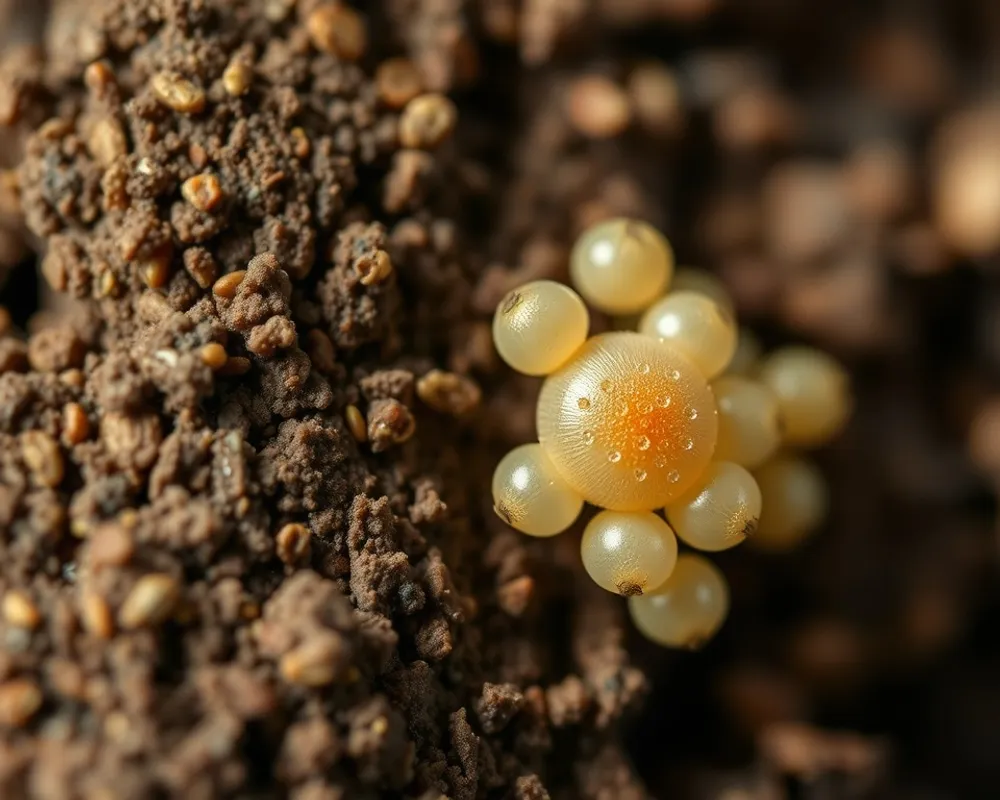
Fungus gnat eggs are oval, translucent white to pale yellow, and about 0.3 to 0.5 millimeters in diameter. That's roughly the size of a grain of table salt. They're laid in small clusters of five to thirty eggs, usually right on or just below the soil surface.
Fungus gnats (Bradysia species) are small fly-like insects that thrive in damp organic potting soil. The eggs need constant moisture to survive. You'll find them in the top one to two inches of soil, especially near the edges of the pot where moisture collects.
They also gather around drainage holes and in the crevices of peat moss or coconut coir.
Here's what you're looking for:
- Color: Pale yellow or off-white, never bright white or shiny.
- Shape: Oval, slightly elongated, not perfectly round.
- Texture: Soft and moist, not hard or brittle.
- Location: In the soil itself, not on top of it like perlite or fertilizer pellets.
A common mistake is confusing gnat eggs with perlite particles or slow-release fertilizer prills. Here's a quick comparison:
| Lookalike | Appearance | Where Found | Hardness |
|---|---|---|---|
| Fungus gnat eggs | Pale yellow, oval, 0.3-0.5 mm | In soil, in clusters | Soft, squishy |
| Perlite particles | White, round, irregular surface | Mixed through soil | Hard, crunchy |
| Fertilizer prills | Bright white, smooth, uniform | Scattered on surface | Hard, dissolves slowly |
| Springtail eggs | White, round, 0.1-0.2 mm | In soil, single | Very small, hard to see |
If you see tiny moving white specks with black heads, those are gnat larvae, not eggs. Eggs don't move. Larvae hatch from eggs after four to six days at room temperature.
The Potato Slice Test: The Easiest Way to Check for Eggs
You don't need a microscope or any special gear. A raw potato slice is one of the most reliable tools for detecting gnat eggs and larvae. University extension programs, including the UC Statewide IPM Program, recommend this method for home gardeners.
Here's how to do it:
- Cut a raw potato slice about half an inch thick. Leave the skin on one side.
- Lay the slice skin-side down directly on the soil surface. Press it gently into the damp soil.
- Wait 24 hours. Check the slice and the soil underneath.
- Look for larvae feeding on the potato, tiny white worms with black heads. Eggs may also cling to the bottom of the slice.
What you're really looking for is larvae. If eggs are present, they'll hatch within days and the larvae will be attracted to the moist potato. A single slice can trap dozens of larvae overnight.
When this test works best: when the soil is warm (70 to 75°F) and consistently damp. Dry soil kills eggs and larvae, so if your soil has dried out, the test may come back clean even if eggs were there a week ago.
What to do if you find larvae: That confirms eggs were laid recently. You need to treat both the soil and the surface. Options include a hydrogen peroxide drench (one part 3% hydrogen peroxide to four parts water) or applying Bacillus thuringiensis israelensis (BTI), a naturally occurring bacteria that kills gnat larvae without harming your plants.
How to Inspect Your Soil Surface Like a Pro
A thorough visual inspection catches most egg clusters before they hatch. But you have to know what to look for and where to look.
Step 1: Get the right light. Natural daylight or a bright LED work light is best. Shine it at a low angle across the soil surface. Eggs cast a tiny shadow, making them easier to spot.
Step 2: Moisten the soil lightly. Eggs are more visible when the soil is damp because the water makes them slightly translucent and they reflect light differently. Dry soil looks dusty and hides the eggs.
Step 3: Use a magnifying lens. A jeweler's loupe or a simple 10x magnifying glass turns a fuzzy speck into a clear oval shape. You can find cheap loupes online for under ten dollars. They're worth keeping near your plant care supplies.
Step 4: Check the edges of the pot. Eggs often accumulate where the soil meets the pot wall. Gently pull the soil away from the edge with a chopstick and look for clusters.
Step 5: Tap the pot. Hold the pot at a slight angle and gently tap the side. If eggs are loose in the top layer, some may fall onto a white sheet of paper placed underneath. They'll look like tiny yellow dots.
One pro tip: After watering, wait about 30 minutes and then inspect. The disturbance of watering brings eggs closer to the surface, and the fresh moisture makes them stand out against the darker soil.
Why You Can't Always See the Eggs (And What to Look For Instead)
Sometimes you can stare at soil for ten minutes and see nothing, yet a week later you're swatting gnats. That's normal. Fungus gnat eggs are masters of camouflage.
Here's why they're so hard to spot, and what you should watch for instead.
Eggs are nearly invisible in certain conditions. When the soil is dark, dry, or covered in a layer of bark or decorative pebbles, eggs blend right in. They're also smaller than the width of a pencil tip. If you're not using magnification, you'll miss them.
So instead, look for indirect signs that eggs are present:
- Adult gnats flying near the soil: Each adult you see means eggs were laid three weeks ago. A single gnat can lay dozens of eggs.
- Larvae in the soil: These are the proof that eggs hatched. Look for tiny clear worms with black heads, about 1/4 inch long.
- Soil that stays wet too long: If the top inch of soil never dries out, it's a breeding ground. Eggs need constant moisture to survive.
- Mold or algae on the soil surface: These are indicators of high moisture and organic decay, perfect conditions for gnat eggs.
- Yellow sticky traps catching many adults: If you catch more than ten adults per trap per week, there's an active egg-laying population.
The best strategy is to combine these indirect signs with a direct test like the potato slice. That way you're not relying on spotting eggs that might be invisible.
The Chopstick Trick for Checking Deeper Soil Layers
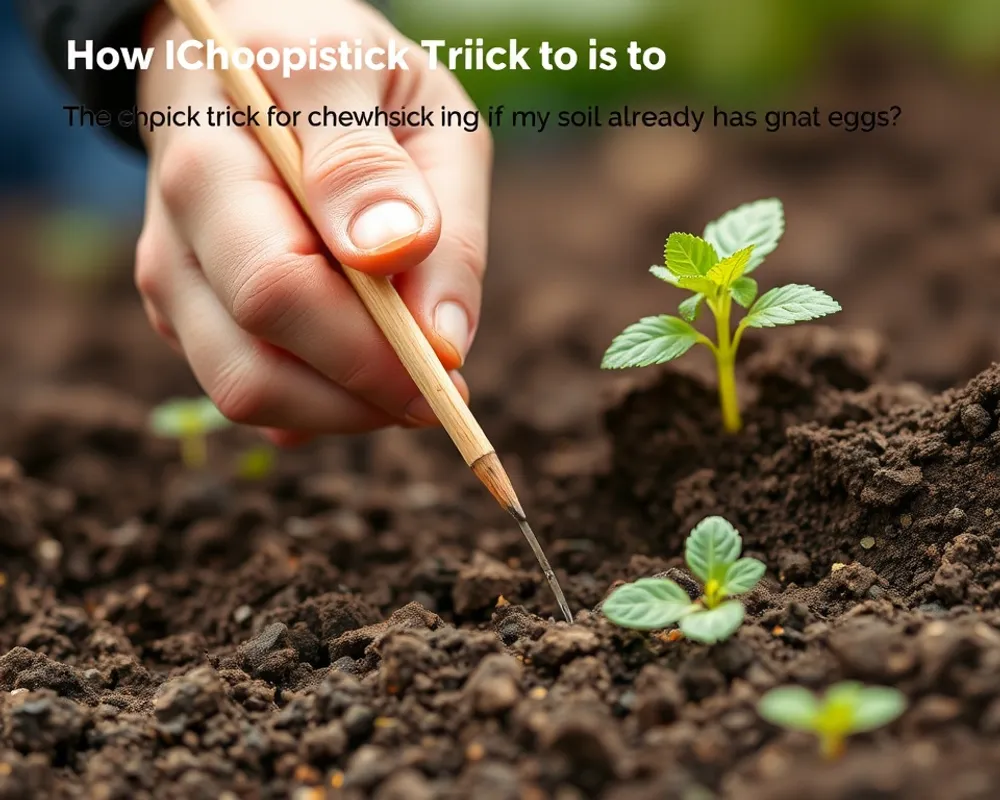
Eggs are most common in the top inch of soil, but they can be deeper, especially in large pots where moisture pools at the bottom. The chopstick trick lets you sample deeper layers without disturbing the whole root ball.
Here's what to do:
- Take a clean wooden chopstick or a thin skewer. Bamboo works well.
- Insert it into the soil at a 45-degree angle, about two to three inches deep. Avoid stabbing large roots.
- Twist gently and pull it out. Look at the soil that clings to the wood.
- Check for eggs or larvae stuck to the soil. Use a magnifying lens if you have one.
The chopstick pulls up a core sample of the soil profile. If eggs are present at that depth, you'll see them as tiny pale yellow specks mixed in with the darker soil. Larvae may also be visible wriggling in the sample.
When to use this method: If you've had the plant in the same pot for months or years, eggs may have worked their way down. Also use it if the surface test came back clean but you still see adult gnats. That's a sign the breeding is happening deeper.
Alternate method for larger pots: Gently lift the entire root ball out of the pot (if the plant is loose) and inspect the sides and bottom. Eggs and larvae often concentrate near the drainage layer. This works especially well if you're already planning to repot the plant, it's a good opportunity to check soil quality.
Choosing a well-draining potting mix in the first place can prevent eggs from settling deep. A guide to best soil for indoor plants (no bugs) is worth reading if you're considering a fresh start with a cleaner mix.
Fungus Gnat Eggs vs. Everything Else That Looks Similar
The hardest part of this whole process is telling the difference between gnat eggs and harmless soil debris. You're not alone if you've stared at a speck and wondered if it's an egg or just a piece of perlite. Let's break down the lookalikes one by one.
Gnat Eggs vs. Perlite Particles
Perlite is the most common false alarm. It's the white, popcorn-like material mixed into potting soil to improve drainage. A perlite particle looks round and white, but it's hard and crunchy when you touch it.
Gnat eggs are soft and will collapse under gentle pressure.
A quick test solves this every time. Lightly touch the speck with the tip of a damp toothpick. If it's perlite, it stays solid.
If it's an egg, it sticks to the toothpick or breaks apart easily. Perlite also floats to the surface when you water, while eggs stay buried in the soil.
Gnat Eggs vs. Fertilizer Prills
Slow-release fertilizer pellets are another common lookalike. These are smooth, perfectly round, and often bright white. They're usually scattered on the soil surface, not buried in it.
Gnat eggs are duller in color and always found in clusters, not alone.
Fertilizer prills dissolve slowly over weeks. Gnat eggs don't dissolve. If you're unsure, leave a suspicious speck on a paper towel overnight.
If it's still there the next day, intact and unchanged, it's likely fertilizer.
Gnat Eggs vs. Springtail Eggs
Springtails are tiny soil insects that feed on decaying organic matter. They're harmless to plants, and their eggs look similar to gnat eggs. The difference is size and behavior.
Springtail eggs are smaller, about 0.1 to 0.2 millimeters. They're also perfectly round, not oval.
The easiest way to tell them apart is to wait. Springtails hatch into tiny jumping insects that scatter when you disturb the soil. Gnat eggs hatch into crawling larvae.
If you see small white specks that don't move, they're probably eggs of one kind or the other. The species matters less than the moisture condition that's causing them.
How Moisture Levels Tell You If Eggs Are Likely Present
Soil moisture is the single strongest indicator of whether gnat eggs are in your pot. Fungus gnat eggs cannot survive in dry soil. They desiccate and die within hours when moisture drops below a certain threshold.
The eggs need a soil moisture level above 60 percent to stay viable. That's roughly the feeling of a wrung-out sponge, not muddy or dripping. If the top inch of your soil feels damp to the touch, you've created a nursery for gnat eggs.
Here's how to check moisture accurately:
- The finger test: Push your index finger into the soil up to the second knuckle. If it feels damp, the top layer is too wet for long-term plant health and perfect for gnat eggs.
- A moisture meter: These cheap tools give you a numeric reading. Anything above 4 on a 1-to-10 scale means the soil is too wet for egg prevention.
- Visual cues: Dark soil that stays dark for days after watering is holding too much water. You want the surface to dry out between waterings.
The relationship is straightforward. If you keep the soil surface dry, you break the gnat lifecycle. Eggs need moisture to survive.
Controlling ventilation and air circulation in your growing space is a long-term strategy that works. A well-ventilated room allows the soil surface to dry faster, reducing the chance of eggs surviving.
What to Do If You Find Gnat Eggs (Quick Action Steps)
Finding eggs isn't a crisis. It's a heads-up that you caught the problem early. Here's what to do in order.
Step 1: Let the soil dry out. Stop watering until the top two inches of soil are completely dry. This kills any eggs that haven't hatched yet. Most eggs die within 24 hours of the soil surface drying out.
Step 2: Remove the top layer. Scrape off the top inch of soil and discard it in a sealed bag. This physically removes most of the eggs and any larvae that have already hatched. Don't compost this soil.
The eggs can survive in the compost pile.
Step 3: Apply a treatment. A hydrogen peroxide drench is the fastest option. Mix one part 3 percent hydrogen peroxide with four parts water. Pour it through the soil until it drains out the bottom.
The peroxide kills eggs and larvae on contact, then breaks down into harmless oxygen and water within hours.
Step 4: Set up yellow sticky traps. Place sticky traps near the soil surface to catch any adults that emerge from eggs you missed. Replace them every week. If you catch fewer than five gnats per trap per week, you're winning.
Step 5: Adjust your watering habits permanently. Switch to bottom watering or let the soil dry fully between waterings. This prevents future egg problems.
If you're building a new growing space from scratch, taking precautions early pays off. Planning the right conditions from the start saves you the hassle of dealing with gnat eggs later.
Common Mistakes People Make When Checking for Eggs

Most people miss gnat eggs because they look in the wrong place or at the wrong time. Here are the most frequent errors.
Mistake 1: Only checking the soil surface. Eggs can be half an inch deep. You have to disturb the soil to find them. The chopstick trick works because it brings deeper soil into view.
Mistake 2: Checking right after watering. Wet soil makes eggs harder to see. The water darkens everything and creates reflections that hide the eggs. Check before you water, when the soil is damp but not soaked.
Mistake 3: Using the wrong light. Overhead lighting creates shadows that hide small objects. Shine a light at a low angle across the soil surface. This casts shadows on the eggs and makes them pop out.
Mistake 4: Giving up too fast. If you don't find eggs in thirty seconds, you might assume the soil is clean. Gnat eggs are tiny and well-camouflaged. Spend at least two minutes inspecting each pot, especially if you've seen adult gnats.
Mistake 5: Confusing adults for the problem. Seeing a few adult gnats means eggs are already in the soil. The adults you see today came from eggs laid two to three weeks ago. Don't wait for more adults to appear.
Check for eggs immediately.
How to Prevent Eggs From Ever Showing Up in Your Soil
Prevention is easier than treatment. Once you know what creates a gnat-friendly environment, you can avoid it entirely.
Start with clean soil. Store bags of potting soil in a dry, sealed container. Wet soil in the bag can already contain gnat eggs. If you bring home a new bag, open it and let it dry for a day or two before using it.
Water from the bottom. Pour water into the saucer or tray, not onto the soil surface. This keeps the top layer of soil dry while still giving the roots moisture. Gnat females only lay eggs in damp surface soil, so dry tops stop them cold.
Use a top dressing. A half-inch layer of coarse sand, fine gravel, or perlite on the soil surface creates a physical barrier. Gnat females cannot push through it to reach the moist soil below. This is one of the most effective and low-effort prevention methods.
Avoid overwatering. Let the soil dry out between waterings. Most houseplants prefer this anyway. Overwatering is the number one cause of gnat infestations.
If you're unsure, wait another day before watering.
Quarantine new plants. Isolate new plants for two weeks before placing them near your other plants. Check the soil for eggs or adults during this time. Many infestations start from a single infected plant brought home from a store.
If you choose the right soil from the beginning, you'll have fewer problems later. A well-draining, properly stored potting mix is your first and best defense against gnat eggs.
When to Repot vs. When to Treat in Place
You don't always need to repot. In fact, repotting can stress the plant more than the gnats themselves. Treat in place when the infestation is small and the plant is healthy.
Only repot if you see larvae crawling out of drainage holes or if treatments fail after two attempts. Use fresh, sterile potting mix to avoid reintroducing eggs.
Frequently Asked Questions About Gnat Eggs in Soil
Can fungus gnat eggs survive in dry soil?
No. Eggs die within hours when the top two inches of soil dry out. Keeping the soil surface dry is your best prevention.
How long do gnat eggs take to hatch?
At 70 to 75°F, eggs hatch in four to six days. Cooler temperatures slow this to ten days or more.
Do gnat eggs look like tiny white balls?
They're pale yellow ovals, not perfect white spheres. Bright white round specks are usually perlite or fertilizer prills.
Quick Reference: Signs You Definitely Have Gnat Eggs
- Adult gnats near the soil surface
- Larvae on a potato slice after 24 hours
- Pale yellow ovals visible under magnification
- Soil that stays wet for days at a time
- More than ten gnats per sticky trap per week