So you've got a grassy slope that's begging for spring color. The truth is, how to plant a hillside of daffodils in grass comes down to three things: how steep the hill is, how thick the grass is, and what soil you're working with. Get those right, and you'll have a naturalized display that keeps coming back for years.
A 2023 survey by the American Daffodil Society found that over 70% of failed hillside plantings were due to one mistake. People planted too shallow or in grass that was too aggressive. This guide matches your planting method to your specific slope conditions.
Quick Take: Yes, You Can Plant Daffodils on a Grass Hillside
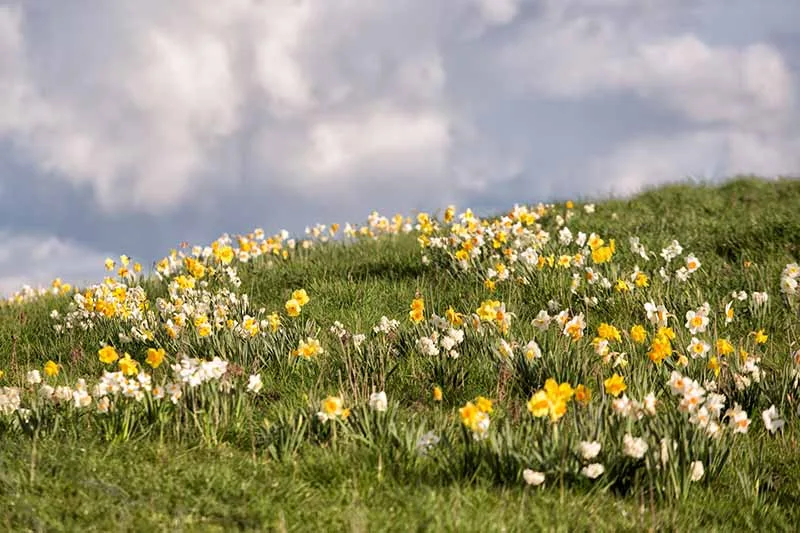
Image source: Bing (Web (fair-use with source credit))
The secret is to avoid disturbing the soil too much on steep grades. Loose soil on a hill washes away with the first heavy rain. You also need to work with the grass rather than fighting it.
Three techniques handle most hillsides. Use a bulb auger for gentle slopes. Use slit-planting with a spade for moderate slopes.
Use the sod-lift method for steep or erosion-prone hillsides.
First, Assess Your Slope Angle and Grass Density

Image source: Bing (Web (fair-use with source credit))
Grab a long level and a measuring tape before you buy bulbs. Slope angle determines which planting method works safely. A slope under 15 degrees is gentle.
A 15 to 30 degree slope is moderate. Anything over 30 degrees is steep.
How to measure slope angle. Lay a 6-foot level on the slope. Lift the low end until it reads level. Measure the vertical gap at the low end.
Divide that gap in inches by 72 inches and multiply by 100. A 12-inch gap gives roughly a 17% slope. That is in the moderate range.
You can also use a smartphone inclinometer app.
Grass density matters just as much. Thick turf with heavy thatch from Kentucky bluegrass or tall fescue needs a different approach than thin grass. If you cannot easily push a trowel into the soil, use slit-planting or a plugger. Loose sandy soil with thin grass is the easiest scenario for a bulb auger.
Soil Matters: Drainage, Compaction, and pH

Image source: Bing (Web (fair-use with source credit))
Daffodils hate wet feet. If your hillside stays soggy after rain, the bulbs rot before they bloom. Dig a hole 8 inches deep.
Fill it with water and let it drain completely. Fill it again and time the drainage. If the water drops less than 1 inch per hour, you have drainage problems.
Quick fixes for poor drainage. Mix 2 to 3 inches of well-rotted compost into the top 6 inches of soil. On very wet slopes, create a slight mound 4 to 6 inches high at each planting spot. Plant on the upper two-thirds of the slope where water drains better.
Daffodils prefer a pH between 6.0 and 7.0. A simple garden center test kit tells you yours. Below 6.0, add garden lime per package directions.
Above 7.0, incorporate sulfur or peat moss. Test compaction by pushing a 6-inch screwdriver into the soil. Hard resistance deeper than 3 inches means you need to loosen the soil first.
Choosing Naturalizing Daffodil Varieties

Image source: Bing (Web (fair-use with source credit))
Some daffodils need pampering. Others are tough enough to compete with grass roots and multiply on their own. For a hillside, choose naturalizing or landscape daffodils.
These varieties produce strong stems, resist disease, and return reliably.
| Variety | Bloom Height | Bloom Time | Notes |
|---|---|---|---|
| 'Carlton' | 16 to 18 inches | Mid-spring | Large flowers, very reliable multiplier |
| 'Ice Follies' | 14 to 16 inches | Early-mid spring | White petals with yellow cup, vigorous |
| 'Thalia' | 12 to 14 inches | Mid-spring | Pure white, delicate, 2 to 3 flowers per stem |
| 'Pheasant's Eye' | 14 to 16 inches | Late spring | Fragrant, extends bloom season |
Avoid exhibition types like 'King Alfred' unless you are willing to dig and divide every few years. Skip miniature varieties like 'Tete-a-Tete' because tall grass smothers them. Stick with standard-height naturalizing mixes from reputable bulb suppliers.
Look for bulbs labeled 14/16 cm or 16/18 cm circumference. Bigger bulbs produce bigger blooms. Plant 5 to 7 bulbs per square foot in clusters.
A 5-pound bag covers roughly 50 to 80 square feet.
When to Plant: Fall Timing by Your Hardiness Zone

Image source: Bing (Web (fair-use with source credit))
Daffodils need a cold period for root growth and flower development. Plant them in fall, not spring. The ideal window is 2 to 4 weeks before the ground freezes solid.
| USDA Hardiness Zone | Ideal Planting Window | Soil Temperature Target |
|---|---|---|
| Zones 3 to 4 | Late August to mid-September | 50 to 55°F |
| Zones 5 to 6 | Mid-September to mid-October | 50 to 55°F |
| Zones 7 to 8 | October to early November | 55 to 60°F |
| Zones 9 to 10 | November to December | 60°F or below |
Planting too late means weak blooms or none at all. Planting too early in warm soil above 60°F causes rot before the bulbs root. For zones 9 and 10, pre-chill bulbs in a refrigerator for 6 to 8 weeks.
Place them in a paper bag away from fruit.
Order your bulbs in late summer for the best selection. Store them in a cool, dark, dry place around 55 to 65°F until planting.
Dibber, Slit-Plant, or Sod-Lift: Which Method for Your Slope?
Gentle Slope (Under 15 Degrees) with Loose Soil → Bulb Auger or Dibber

Image source: Bing (Web (fair-use with source credit))
A bulb auger is your fastest option for gentle slopes with loose soil. It attaches to a standard power drill and drills a hole, loosens the soil, and pulls out a plug all at once. Set your drill to 300 to 500 RPM.
Drill straight down to 6 inches deep. Drop in the bulb and push the loose soil back with your foot.
Use a handheld dibber for fewer than 100 bulbs or very sandy soil. It is cheaper and quieter. A dibber takes about 10 seconds per bulb versus 3 seconds with an auger.
Moderate Slope (15 to 30 Degrees) with Thick Grass → Slit-Planted

Image source: Bing (Web (fair-use with source credit))
Use a sharp spade for the slit-planting method. Push it 6 inches deep at a slight angle. Rock the handle forward to create a wedge-shaped gap.
Drop the bulb into the gap pointy side up. Pull the spade out and press the turf back with your foot.
The slit disturbs less soil than an auger hole. The grass root mat stays mostly intact, which holds the slope together during winter rains.
Steep Slope (Over 30 Degrees) or Loose Soil → Sod-Lift Method
Use a half-moon edger or sharp spade. Cut three sides of a rectangle about 4 inches wide and 6 inches long. Fold the sod back like a hinge.
Loosen the soil underneath with a trowel. Place the bulb. Fold the sod back and press firmly.
For bare dirt slopes, use a bulb auger with biodegradable erosion matting on top. For established grass, the sod flap is the best erosion prevention available.
Step-by-Step Workflow for Each Planting Method
| Step | Bulb Auger | Slit-Plant | Sod-Lift |
|---|---|---|---|
| 1 | Mark locations with flour | Mark locations | Cut U-shaped sod flap |
| 2 | Drill hole 6 inches deep | Insert spade at angle | Fold back sod |
| 3 | Drop bulb pointy side up | Lever spade to open gap | Loosen soil underneath |
| 4 | Push soil back with foot | Drop bulb into gap | Place bulb |
| 5 | Tamp lightly | Close gap, press turf | Fold sod back, press |
| 6 | Water if no rain in 3 days | Same | Same |
Plant with the pointed end facing up at 6 inches depth. Space bulbs 4 to 6 inches apart within clusters. Leave 12 to 18 inches between clusters for a naturalized look.
Scatter bulbs randomly rather than planting in rows.
Erosion Control: How to Stop Bulbs From Washing Downhill
Use jute netting for bare spots after planting. It is a biodegradable mesh that you unroll and pin with landscape staples. It breaks down in one to two growing seasons.
By then, the bulbs have rooted and the grass has filled back in.
Skip matting if you used the slit-plant or sod-lift method with thick grass. The grass acts as a natural erosion blanket. Add a thin scattering of shredded bark or leaf mulch at 1 inch deep to slow raindrop impact.
Check the 10-day forecast before planting and wait if heavy rain is expected within 48 hours.
Spring Care: Mowing, Fertilizing, and Foliage Dieback
The biggest mistake is mowing too early. After daffodils bloom, the foliage needs about 6 weeks of green growth to store energy for next year. If you cut the leaves off early, the bulbs stop blooming.
You have three options. Stop mowing that section for 6 weeks. Mow around the clumps at a high blade setting of 3 to 4 inches.
Hand-trim individual dead leaf tips once they turn completely yellow. Option two keeps the slope tidy while still recharging the bulbs.
Apply a low-nitrogen, high-phosphorus fertilizer like 5-10-10 in early spring. Scatter it around the base of the foliage. Water it in well.
Avoid high-nitrogen lawn fertilizers near daffodils because they push grass growth that smothers the bulbs. Hand-pull broadleaf weeds instead of using herbicides.
Common Problems: Washouts, Squirrels, and Poor Blooms
If bulbs appear on the surface after heavy rain, press them back to the correct depth and cover with compost. Add jute matting if washouts keep happening.
Squirrels dig up freshly planted bulbs out of curiosity. They rarely eat daffodils because the bulbs are toxic. Cover the planted area with chicken wire for the first two weeks after planting.
Top-dress with coarse gravel or crushed oyster shell to make digging less appealing.
Poor bloom the first spring is common. The bulbs need a full season to settle in. Water them during the 6-week foliage dieback and apply bulb-specific fertilizer.
They usually bloom better in year two. If no bulbs bloom at all, check planting depth, sun exposure, and bulb storage conditions.
Tools and Costs: Budgeting for Your Daffodil Hillside
| Item | Estimated Cost | Notes |
|---|---|---|
| Daffodil bulbs for 100 square feet | $30 to $80 | Bulk naturalizing mixes cost less per bulb |
| Bulb auger bit | $15 to $30 | Fits standard drill chuck |
| Hand dibber | $8 to $15 | Good for small areas |
| Jute erosion matting | $20 to $40 | Only for steep or bare slopes |
| Landscape staples | $10 | For pinning matting |
| Total estimated | $65 to $165 | Excludes drill most people already own |
Buy in bulk from reputable suppliers for the best prices. A 100-bulb bag of mixed naturalizing daffodils runs about $25 to $45 as of 2026. Shop in late summer for the best selection.
Alternatives to Planting in Grass: When Mulching Works Better
If your grass is extremely dense like Bermuda or zoysia, or your soil is pure clay, mulching may work better. Remove a circular sod patch 8 inches wide at each spot. Loosen the soil underneath.
Plant the bulb. Cover with 2 inches of wood chip mulch.
The downside is that mulched patches stand out against a green lawn. This approach works best when you are converting a section into a dedicated bulb bed. For most home gardeners, slit-planting or auger methods give a more natural look.
Frequently Asked Questions
Can I plant daffodils on a hill that gets afternoon shade?
Yes. Daffodils need 4 to 6 hours of direct sun during spring. Afternoon shade is fine as long as they get enough morning sun.
How long does it take for daffodils to naturalize on a slope?
Most varieties start multiplying noticeably in 2 to 3 years. By year 4, a well-tended planting can double or triple in size.
Do I need to water daffodils on a hillside?
Typically no. Fall rainfall is usually enough. Water once after planting if no rain falls within 5 days.
Will deer eat daffodil bulbs?
No. Daffodils contain lycorine, a toxic alkaloid that deer and rodents avoid.
What if my hillside is overrun with weeds?
Hand-pull weeds in early spring before they go to seed. Avoid herbicides near bulbs. A thin layer of compost around bulb clusters helps suppress weeds naturally.
My Honest Take: Why This Project Is Worth the Work
A hillside of daffodils takes planning, physical effort, and patience through the first couple of years. The payoff is a slope that lights up every spring with almost no ongoing maintenance.
Match the method to your conditions. A gentle slope with loose soil is a 5-hour job with a drill auger. A steep slope takes longer but works well with the sod-lift method.
Start small with 100 bulbs in one section and add more next fall.
That first spring when the hillside turns yellow and white makes every hour spent worth it.