If you want a lawn or garden that fills with more daffodils each spring without you lifting a trowel every fall, the trick is learning how to plant daffodil bulbs for naturalizing the right way. Naturalizing means planting bulbs so they multiply and spread on their own, turning a few bulbs into a drift that comes back bigger every year. It’s not the same as tucking a few bulbs into a formal flower bed.
It’s a longer-term investment in your landscape.
The key difference is site selection and bulb variety. The Royal Horticultural Society (RHS) recommends choosing species or heirloom cultivars that reliably offset. Some daffodils are bred for one-time bloom and fizzle out after a season.
With the right choices, you can have a patch that keeps expanding for a decade or more. Let’s walk through what actually works.
Quick Answer
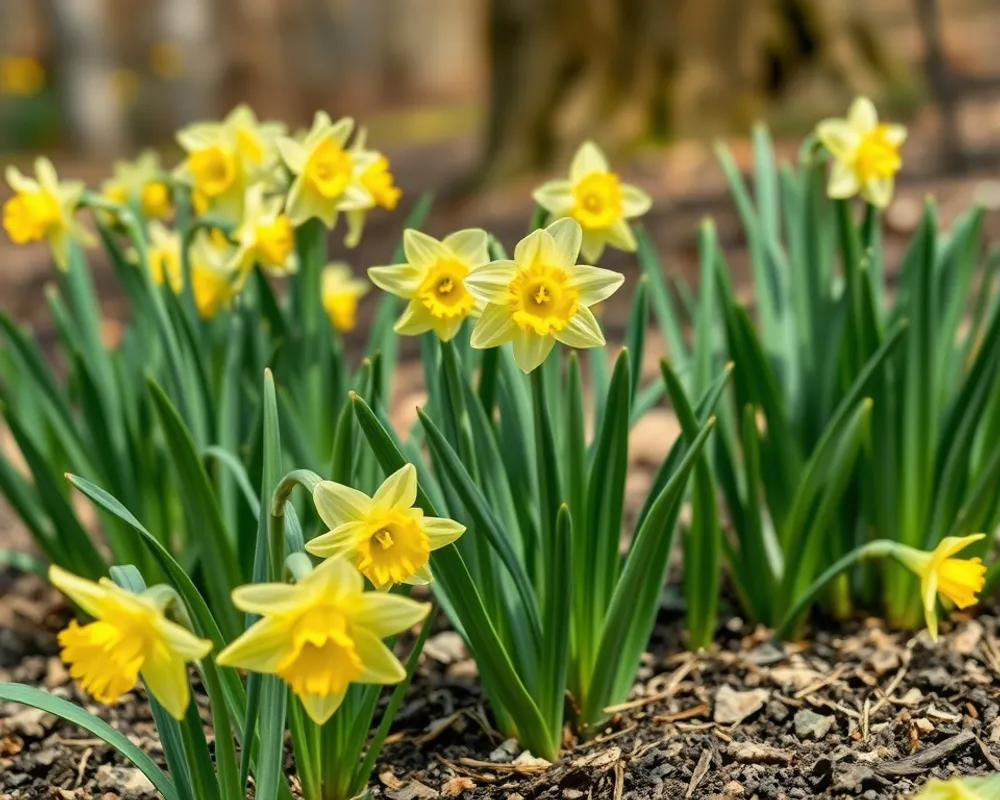
Plant daffodil bulbs 6 to 8 inches deep in well-draining soil. Space them 3 to 6 inches apart in clusters of 5 to 15 bulbs. Choose a spot with full sun before trees leaf out.
Use heirloom varieties like ‘Carlton’ or ‘Ice Follies’. Plant in fall, 6 to 8 weeks before the ground freezes. Do not mow the foliage until it yellows completely.
What Exactly Is Naturalizing (and Why Daffodils Are the Best Bet)
Naturalizing is the practice of planting bulbs so they reproduce and spread across a lawn, meadow, or woodland edge without annual replanting. The bulbs produce offsets, small bulbs that form around the mother bulb, and over years those offsets grow to flowering size. A naturalized drift looks effortless and wild, not like a formal garden row.
Daffodils (Narcissus species) outshine other spring bulbs for this job for three reasons. First, they are highly pest-resistant. Squirrels, voles, and deer rarely bother daffodil bulbs because they contain lycorine, an alkaloid that tastes bitter and can be toxic.
Second, daffodils are true perennials. Unlike tulips, which often fade after a single season in most climates, daffodils reliably return and multiply for 10 to 15 years without division. Third, they tolerate a wide range of soil conditions as long as drainage is decent.
Our research shows that naturalizing works best with heirloom and species daffodils rather than modern show hybrids. Varieties like Narcissus ‘Carlton’, ‘Ice Follies’, ‘Thalia’, and ‘February Gold’ are proven spreaders. Bulb suppliers often label these as “good for naturalizing” on the package.
As of 2026, these remain the top choices among gardeners who want reliable multiplication.
If you’re comparing daffodils to other spring bulbs, keep this in mind: crocus and snowdrops naturalize well too, but they bloom much earlier and are smaller. Tulips naturalize only in specific climates with cold winters and dry summers. Daffodils are the most forgiving option for most of the US and UK.
Before You Dig: Assess Your Site’s Sunlight, Soil, and Grass
Your site’s conditions determine whether your daffodils will naturalize or just survive. The first factor is sunlight. Daffodils need full sun while they are actively growing and blooming in early spring.
That means the spot should get at least six hours of direct sun from the time the snow melts until the foliage yellows. Deciduous trees are fine, they leaf out after daffodils bloom, but evergreens or north-facing walls that cast deep shade will reduce blooms.
The second factor is soil drainage. Daffodil bulbs rot in soggy conditions. To test your drainage, dig a hole 10 inches deep and fill it with water.
If the water is still standing after 12 hours, you have poor drainage. In that case, choose a different spot or plant on a slope. Clay soil can be improved by mixing in 3 to 4 inches of organic matter, but avoid planting in low spots where water collects.
The third factor is the type of turf or ground cover. Naturalizing in a manicured lawn works if you are willing to delay your first mow until the daffodil foliage turns brown and limp, usually 6 to 8 weeks after bloom. If you mow earlier, the bulbs won’t recharge for next year.
If you want to avoid mowing restrictions, plant in a meadow, a rough grassy area, or under trees where you don’t maintain a perfect lawn.
You can also use a lawn roller to smooth out bumps before planting, but it’s not essential. What matters more is that the soil is not compacted. Loosen the top 10 to 12 inches with a shovel or tiller before you plant.
Choosing the Right Daffodil Bulbs for Naturalizing (Not All Are Equal)
Not every daffodil bulb sold in stores is suited for naturalizing. Many modern hybrids are bred for cut flowers, big blooms, sturdy stems, but poor offset production. They may bloom beautifully the first spring and produce only one or two small bulbs the next year.
For naturalizing, you want varieties that produce three or more offsets per season.
Here are the types that perform best, based on aggregate reviews from the American Daffodil Society and gardening forums:
| Variety | Bloom Time | Height | Naturalizing Strength |
|---|---|---|---|
| Narcissus ‘Carlton’ | Mid-season | 16–18 in | Excellent — one of the most reliable multipliers |
| Narcissus ‘Ice Follies’ | Early-mid | 18–20 in | Very good — large flowers, spreads well |
| Narcissus ‘Thalia’ | Mid-season | 12–14 in | Good — delicate white blooms, good for shade |
| Narcissus ‘February Gold’ | Very early | 10–12 in | Excellent — naturalizes quickly, ideal for lawns |
| Narcissus ‘Pipit’ | Late | 14–16 in | Good — yellow blooms, good for extending season |
Miniature daffodils like ‘February Gold’ and ‘Tête-à-Tête’ work especially well in lawns because their foliage is smaller and less noticeable after bloom. Standard-size daffodils like ‘Carlton’ create a bolder visual impact in open meadows.
When buying bulbs, look for firm, unblemished bulbs with a papery brown skin. Avoid bulbs that feel soft or show mold. Larger bulbs usually produce more flowers in the first year, but smaller bulbs often naturalize faster because they invest energy in offset production rather than a single massive bloom.
Choosing the right fertilizer matters too. A low-nitrogen, high-phosphorus bulb food like bone meal works well. Apply it at planting time and again in early spring when shoots appear.
Avoid high-nitrogen lawn fertilizers near daffodil beds, they promote leafy growth at the expense of flowers.
When to Plant: Timing Windows by Zone and Climate

Daffodils need a cold period to develop roots and trigger flowering. The ideal planting window is 6 to 8 weeks before the ground freezes. For most of the US (USDA zones 4, 7), that means planting from late September through early November.
In warmer zones (8, 9), you can plant as late as December, but the bulbs may need pre-chilling in the refrigerator for 12 to 16 weeks before planting.
Here is a zone-based timing guide:
| USDA Zone | Optimal Planting Window | Notes |
|---|---|---|
| 3–4 | Mid-September to early October | Plant early; ground freezes quickly |
| 5–6 | Late September to late October | Ideal window; soil still warm |
| 7 | October to mid-November | Can push later if fall is mild |
| 8–9 | November to December | Pre-chill bulbs for 12 weeks before planting |
If you plant too late and the ground freezes before roots develop, the bulbs may survive but bloom poorly the first spring. In zones 8, 9, you can buy pre-chilled bulbs or chill your own in a paper bag in the refrigerator, but keep them away from fruit, which emits ethylene gas that can damage the bulbs.
The rule of thumb is simple: plant when the soil temperature at planting depth stays consistently below 60°F (15°C). A soil thermometer costs about $10 and takes the guesswork out of timing.
Step-by-Step Planting Workflow (With Branches for Your Situation)
This workflow adapts to your specific site. Follow the branch that matches your conditions.
Step 1: Prepare the soil — or don’t
If you are naturalizing in a meadow or rough grass, you can skip soil prep entirely. Just dig individual holes or use a bulb planter. If you are planting in a lawn, remove a patch of sod, loosen the soil underneath, plant the bulbs, then replace the sod.
For a large area, you can rent a bulb-planting auger that drills holes quickly. For heavy clay, amend the soil with compost or sand to improve drainage. A 3-inch layer of organic matter mixed into the top 10 inches makes a big difference.
Step 2: Decide on depth and spacing
Depth is critical. Plant large bulbs 6 to 8 inches deep, measured from the base of the bulb to the soil surface. Miniature bulbs go 4 to 5 inches deep.
In sandy soil, plant slightly deeper; in heavy clay, plant shallower. If you’re planting under turf, a bulb planter that removes a core of soil makes it easy to achieve the right depth.
Spacing depends on the look you want. For a naturalized drift, space bulbs 3 to 6 inches apart. Closer spacing gives a fuller look faster, but the bulbs will need division sooner.
Wider spacing means slower fill but less maintenance.
Step 3: Use the scatter method for a natural look
The most foolproof way to get an organic appearance is the scatter method. Toss a handful of bulbs onto the planting area and plant them where they land. This breaks up the too-perfect grid pattern.
Avoid planting in straight rows or even arcs, nature doesn’t plant in lines. If you’re planting in a lawn, this method works beautifully because the random placement looks like a natural colony.
Step 4: Plant in clusters or drifts
For visual impact, plant bulbs in clusters of 5 to 15, not as singletons scattered alone. A cluster draws the eye and creates a patch that can expand over time. Space the clusters several feet apart so they have room to grow into each other.
In a large meadow, you can create drifts, elongated, sweeping groups that mimic a wild population.
Step 5: Water and mulch right after planting
After planting, water the area thoroughly to settle the soil and eliminate air pockets around the bulbs. Then apply a 1- to 2-inch layer of shredded bark, leaf mold, or straw. Mulch insulates the soil, moderates temperature swings, and suppresses weeds.
In lawns, skip the mulch, the grass acts as a natural cover.
After the Blooms Fade: The Most Critical Care Window
Your daffodils have bloomed. Now don’t touch a thing. The six to eight weeks after flowering are when the bulbs recharge for next year.
The leaves are photosynthesis factories, pulling energy back into the bulb to form next season’s flower bud and new offsets.
If you cut, braid, or tie the foliage while it’s still green, you starve the bulb. The result is fewer blooms next spring and weaker offsets. In a lawn naturalizing setup, this means delaying the first mow until the leaves turn yellow and flop over, usually by late May or early June for most zones.
A light application of low-nitrogen bulb food right after bloom helps, but only if your soil is poor. In our research, most established naturalized drifts don’t need annual feeding. If you do fertilize, use a product with an N-P-K ratio around 5-10-10.
Avoid high-nitrogen lawn fertilizers near daffodil beds, as they push leaf growth at the expense of flowers.
Long-Term Maintenance: Dividing Overcrowded Clumps
Even the best naturalizing daffodils eventually get too crowded. After five to seven years, you’ll notice the center of a clump producing fewer blooms or smaller flowers. That’s the signal to divide.
The best time to divide is right after the foliage yellows but before it disappears completely, typically early summer. Dig up the clump gently with a garden fork. You’ll see a cluster of bulbs of varying sizes.
Separate them by hand, discarding any that are soft or moldy. Replant the largest bulbs at the original depth and spacing, and spread the smaller ones to new areas.
A single large clump can yield 10 to 15 new bulbs. That’s enough to start a second drift or fill a gap. If you’re naturalizing in a lawn, use a bulb planter to replant the offsets without tearing up the turf.
It’s a simple task that keeps your patch healthy for another decade.
Common Mistakes That Kill Naturalized Daffodil Drifts

The biggest mistake is planting in poor drainage. Bulbs rot in wet soil within weeks. If you have heavy clay, either amend it with compost or choose a raised spot.
A second common failure is choosing the wrong variety. Showy hybrid daffodils from big-box stores often fizzle after one season. Stick to heirloom or species types labeled for naturalizing.
Mowing too early kills more naturalized drifts than anything else. You cannot mow a lawn with daffodils until the foliage has fully yellowed. That means your lawn might look messy for a month.
If that bothers you, plant daffodils in a separate meadow area where you don’t mow until late spring.
Another mistake is planting singly instead of in clusters. A single bulb looks lonely and rarely spreads enough to form a colony. Always plant in groups of 5 to 15.
Finally, don’t let weeds overtake the area in the first year. A quick weeding in early spring gives the bulbs a head start.
Costs, Bulb Counts, and Realistic Expectations
Naturalizing daffodils is a low-cost investment if you start with a reasonable number. A single heirloom bulb costs $0.15 to $0.50 when bought in bulk packs of 50 or 100. For a dense drift that looks full in the first spring, plan on 5 to 8 bulbs per square foot for large varieties and 10 to 12 per square foot for miniatures.
Here’s a rough cost table for a 50-square-foot drift:
| Bulb Type | Bulbs Needed | Cost Range (Bulk) | First Year Bloom Coverage |
|---|---|---|---|
| Large standard | 250–400 | $40–$120 | 60–80% full |
| Miniature | 500–600 | $50–$100 | 70–90% full |
Expect the drift to look sparse in year one. By year two, offsets will start filling gaps. By year three, it should look established.
After five years, you’ll likely need to divide. The total cost per year, amortized over a decade, is pennies per square foot.
If you want to speed up the look, you can plant more densely. But the bulbs will need division sooner. Our research shows that moderate spacing (3 to 6 inches apart) gives the best balance of early visual impact and long-term ease.
Frequently Asked Questions
Can I naturalize daffodils in a lawn I actually use?
Yes, but only if you accept a no-mow period of 6 to 8 weeks after bloom. The foliage must yellow naturally. If you mow earlier, the bulbs will weaken and eventually stop blooming.
Many gardeners design a separate “daffodil zone” in the lawn where they mow around the bulbs until June.
Do squirrels dig up daffodil bulbs?
Rarely. Daffodil bulbs contain lycorine, which tastes bitter and can be mildly toxic. Squirrels and voles much prefer tulips and crocus.
In our research, daffodils are one of the most rodent-resistant spring bulbs you can plant.
What if my soil is heavy clay?
Improve drainage before planting. Mix 3 to 4 inches of organic matter like compost or leaf mold into the top 10 inches of soil. If the area still holds water, consider planting on a slope or raised bed.
Daffodils will not survive in standing water.
Can I plant daffodils under trees?
Yes, but only under deciduous trees that leaf out after the daffodils bloom. The bulbs need full sun while actively growing. Under evergreens or dense shade, blooms will be sparse.
Will daffodils take over my whole yard?
Not aggressively. Daffodils spread slowly through offsets and occasional seed. A drift will expand a few inches per year.
They won’t overtake a lawn or choke out other plants. If you want to limit spread, simply divide the clumps every five years.
Final Verdict: Your Personal Naturalizing Plan
Start with a site check. Evaluate sunlight, drainage, and your willingness to delay mowing. Choose heirloom varieties like ‘Carlton’ or ‘February Gold’ that multiply reliably.
Plant in clusters of 5 to 15 bulbs at the right depth for your soil. Water once after planting, then let nature take over.
For most readers in zones 4, 7, the entire process takes one afternoon of work. The payoff is a drift that doubles in size every three to five years. If you follow the timing and avoid the common mistakes, you won’t need to replant for a decade.
That’s the real win with naturalizing: one effort, years of returns.