
That bulky wheelbarrow can gobble up precious garage real estate, leaving you tripping over it or struggling to park your car. Learning how to store a wheelbarrow in a garage effectively is key to reclaiming your space and keeping your tools organized. You've likely looked at your garden workhorse taking up a significant chunk of your garage floor and wondered, "There has to be a better way."
Our research dives into practical, space-saving methods that work for various garage sizes and wheelbarrow types. From simple wall hooks to more involved overhead systems, we'll explore how to get that wheelbarrow up and out of the way. According to manufacturer specifications, many wall-mounted storage systems are rated to hold up to 50-75 pounds, easily accommodating most common wheelbarrow models while meeting basic safety requirements.
Let's find the perfect spot for yours.
Quick Answer: How to Store a Wheelbarrow in a Garage
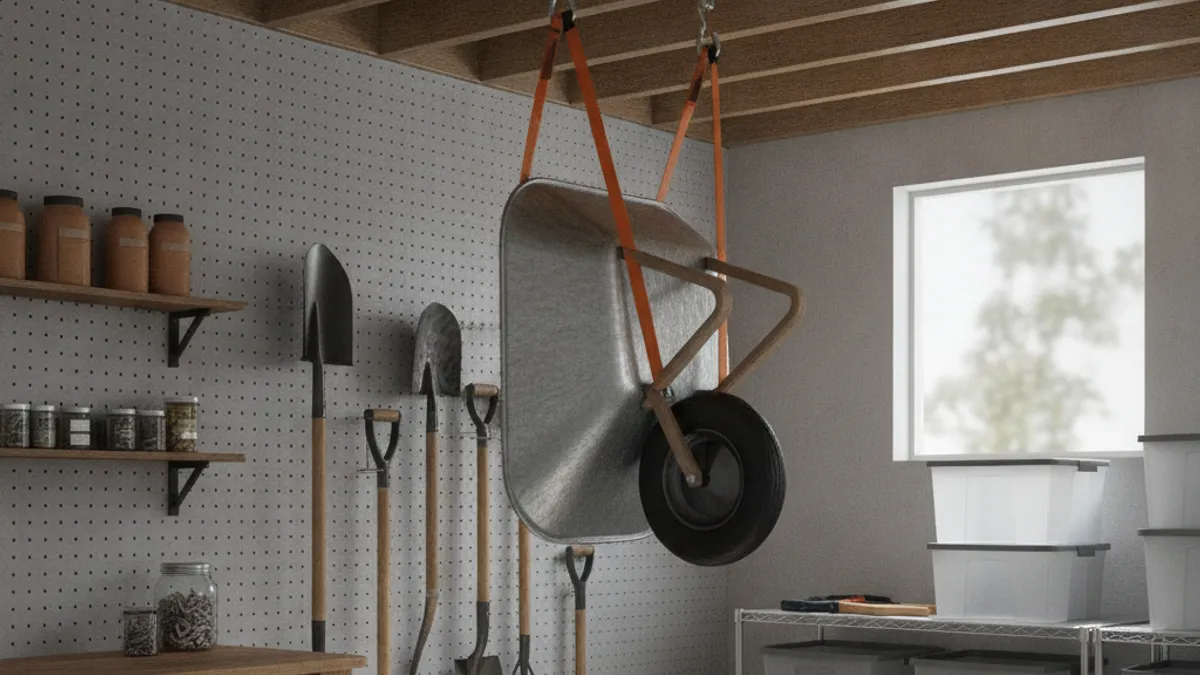
To store a wheelbarrow in a garage, utilize vertical space with wall-mounted racks, overhead hoists, or sturdy hooks. The goal is to lift the wheelbarrow off the floor, freeing up valuable garage real estate. Consider your garage layout, wall strength, and the wheelbarrow's dimensions to select the best method.
Secure installation is crucial to prevent damage or injury.
The Wheelbarrow Space Hog Problem

It's a classic garage dilemma: you need your wheelbarrow for gardening, yard work, or hauling materials, but once you're done, it becomes a giant, awkward obstacle. The sheer size and unwieldy shape of most wheelbarrows make them a challenge to store. They don't neatly fit on shelves or slide under benches; they tend to sprawl.
This leads to a cluttered garage, making it difficult to walk, find other tools, or even park vehicles.
Why Garage Storage Matters
Proper garage storage isn't just about aesthetics; it's about functionality and safety. A disorganized garage can turn into a hazard zone. Tools left lying around can become tripping hazards, and the constant jostling for space can lead to damage to both your equipment and your vehicles.
Maximizing your garage's vertical space is one of the most effective ways to combat this disarray, creating distinct zones for storage that keep the floor clear. Getting your garden equipment, like your wheelbarrow and various types of hoes, neatly stored means quicker access and less frustration.
Common Storage Frustrations
Many people face similar issues when trying to store their wheelbarrow:
- Limited Floor Space: The most obvious problem. A wheelbarrow can occupy 3-5 square feet of prime floor area.
- Awkward Shape: The deep tray and large wheel make it difficult to stack or place against a wall without it tipping or rolling away.
- Accessibility Issues: If you shove it into a corner, you might need to move other things to get to it, defeating the purpose of having it handy.
- Damage Risk: Leaning it against a wall can scratch paint or dent the tray. Storing it carelessly can also damage the tire.
Wall-Mounted Wheelbarrow Racks: Sturdy & Space-Saving
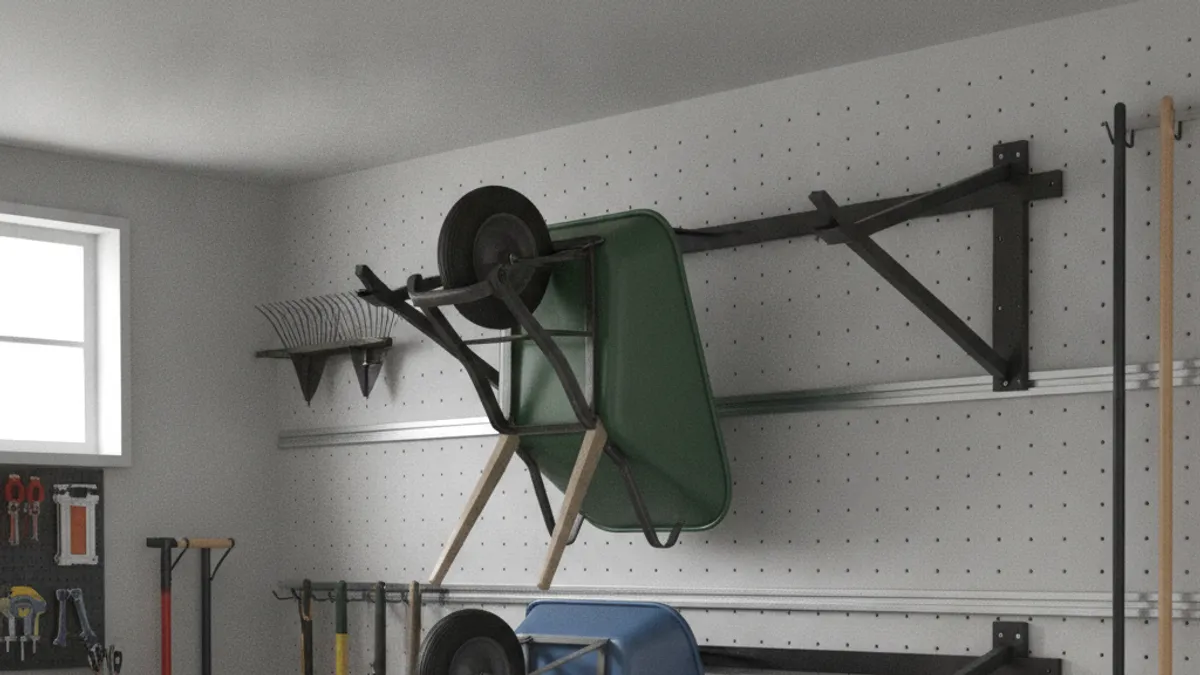
When you want to get a wheelbarrow completely off the floor, wall-mounted racks are often the go-to solution. These systems use your garage walls to create a secure perch for your wheelbarrow, freeing up floor space significantly. Think of it as giving your wheelbarrow its own dedicated parking spot, just vertically.
Types of Wall Racks
There's a variety of designs, but they generally fall into a few categories:
- Hook Systems: These are usually simple, heavy-duty hooks designed to cradle the wheelbarrow's frame or axle. You might need two hooks for larger or heavier models.
- Cradle Racks: These are more substantial, often with a specific shape to hold the wheelbarrow's tray or frame securely. Some might have padded arms to prevent scratching.
- Lift-Assist Racks: Some advanced systems incorporate pulleys or springs to make lifting the wheelbarrow onto the rack easier.
How They Work Visually
Imagine looking at your garage wall. A rack system typically mounts directly into the wall studs, providing a robust anchor point. For a hook system, you'd position the hooks at a height that allows you to lift the wheelbarrow's frame or axle onto them.
For a cradle, the entire rack protrudes from the wall, creating a shelf-like structure for the wheelbarrow's tray. The key visual is the wheelbarrow's bulk being held away from the ground, typically oriented horizontally or at a slight angle that prevents it from sliding off.
Installation Snapshot
Mounting these racks correctly is crucial for safety and longevity.
- Locate Studs: Use a stud finder to locate the vertical wooden beams within your garage wall. Most storage racks require anchoring into these studs for adequate support.
- Mark and Drill: Hold the rack against the wall at your desired height. Mark the screw holes and pre-drill pilot holes into the studs.
- Secure the Rack: Use the provided heavy-duty lag screws or bolts that came with the rack to attach it firmly to the wall. Ensure it’s level and doesn't wobble.
Manufacturer specifications for many of these racks often state they should be mounted into studs that are spaced 16 or 24 inches apart, which is standard framing in most homes. Always check the specific instructions for your chosen rack.
Overhead Hoists: Out of the Way, Out of Mind

If you have a garage with a usable ceiling height, overhead wheelbarrow hoists offer another excellent way to get your equipment stored out of sight and out of the way. This method uses a pulley system to lift the wheelbarrow up towards the ceiling, essentially hanging it from above. It’s particularly useful if you have limited wall space or want to keep the sides of your garage completely clear.
How Hoists Operate
An overhead hoist system typically involves a bracket that attaches to the ceiling joists. From this bracket, ropes and pulleys are connected to a mechanism that clamps onto the wheelbarrow's frame or tray. You then operate the hoist, usually by pulling a rope, which raises the wheelbarrow smoothly.
As of 2026, many home garage hoist systems are designed for ease of use, allowing you to lift even a fairly heavy wheelbarrow with minimal effort.
Visualizing Overhead Storage
Picture your garage ceiling. A hoist system typically involves mounting a central pulley assembly to one or more ceiling joists. Ropes then descend, connecting to a spreader bar or clamps that grip the wheelbarrow.
When not in use, the wheelbarrow sits nestled up against the ceiling, usually suspended parallel to the floor or at a slight angle. The visual here is your wheelbarrow a few feet above where you typically walk, completely clearing the floor and lower wall areas. It's like tucking it away in its own little loft.
Freestanding Caddies & Shelving: Flexible Options

Sometimes, drilling into walls or ceiling isn't ideal, or you need a more flexible storage solution. Freestanding caddies and shelving units offer a practical alternative for storing your wheelbarrow without permanent installation. These are great if you rent your home or simply prefer not to modify your garage structure.
Caddy Features
A dedicated wheelbarrow caddy is essentially a stand designed to hold the wheelbarrow. These often have a base that sits on the floor and arms or a cradle that supports the wheelbarrow's tray or frame. Some are designed to hold the wheelbarrow vertically, propped up on its nose or side, while others might store it horizontally.
They’re portable, so you can move them around your garage as needed, offering flexibility. The benefit is immediate storage without any tools required.
Shelving as a Solution
While not always designed specifically for a wheelbarrow, heavy-duty garage shelving can sometimes accommodate one. You would typically place the wheelbarrow on a larger, lower shelf. This requires a robust shelving unit capable of supporting the wheelbarrow's weight.
It's a good option if you already have such shelving installed and need to find a spot for your equipment alongside other stored items. Think of this as integrating the wheelbarrow into your existing garage organization system. It’s a pragmatic approach, especially if your shelving is sturdy, perhaps rated for up to 250 pounds per shelf, ensuring it can handle the load.
Hooks and Simple Mounts: Basic Solutions

For lighter-duty wheelbarrows or for those with very limited space, simple hooks can be a surprisingly effective storage solution. These are often the most budget-friendly and easiest-to-install options, requiring minimal effort and tools. They rely on strategically placed hooks to hold the wheelbarrow in a more compact configuration.
When Hooks Make Sense
Hooks are ideal when you have a lighter single-wheel garden cart, a small utility cart, or a wheelbarrow you can easily lift. They work best when you can suspend the wheelbarrow by its handles or its axle. The key is ensuring the hooks are strong enough for the weight and are installed securely to prevent anything from falling.
For instance, a heavy-duty J-hook or a set of L-shaped brackets designed for tools could work, provided they’re rated for the load and anchored into studs.
Visualizing Hook Placement
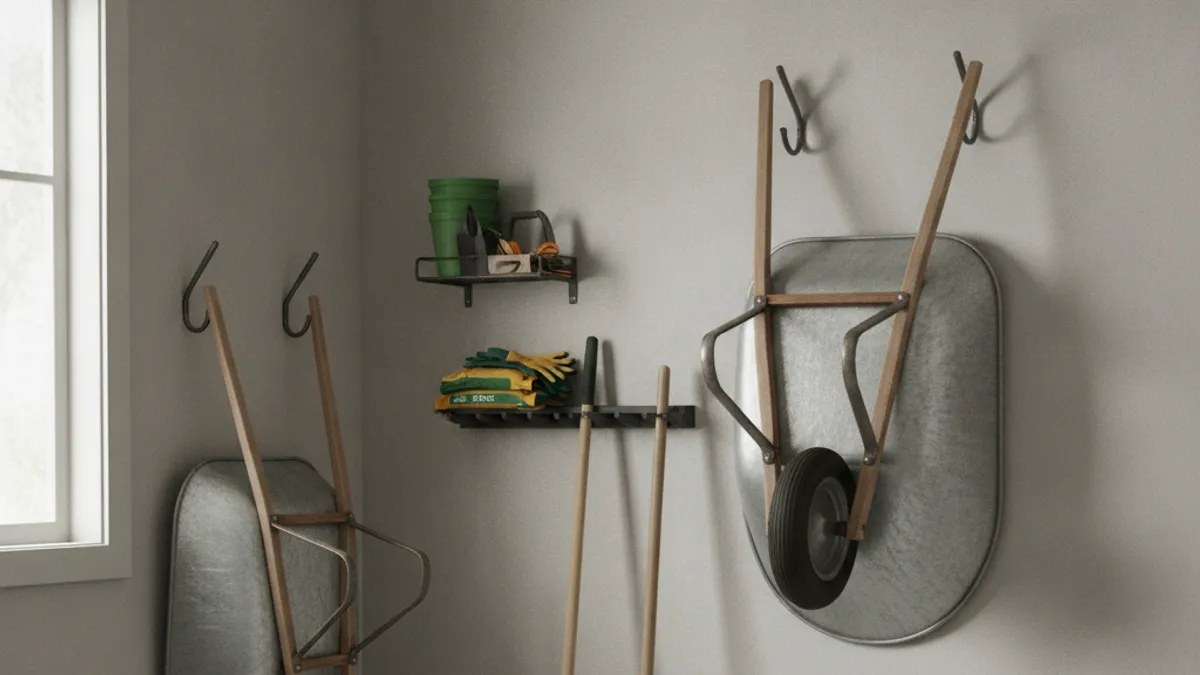
Imagine your garage wall again. With hooks, you’re looking for points where you can hang the wheelbarrow without it taking up excessive horizontal or vertical space. One common method is to hang it by its handles, with the hooks supporting the handlebars themselves.
Another is to position hooks to catch the axle or frame. The visual outcome is the wheelbarrow suspended, often at an angle, against the wall. It’s less about a dedicated rack and more about finding the right points of contact to hold it securely off the ground.
This approach often looks simpler and less obtrusive than a full rack system.
Choosing the Right Spot in Your Garage

Finding the ideal location for your wheelbarrow storage isn't just about slapping a hook on the nearest wall. You need to consider the overall layout of your garage and how you use the space. Think about traffic flow, where do you typically walk?
Where do you park your car? The goal is to place the wheelbarrow so it’s accessible when you need it but out of the way when you don't. It should also be a spot where it won’t interfere with other daily activities or storage.
Assessing Your Walls and Ceiling
Your garage's construction plays a big role. Are your walls made of drywall over wood studs, concrete block, or metal studs? Most wall-mounted systems are designed for wood studs, which offer the best anchor point for heavy loads.
Concrete walls might require special anchors and different mounting hardware. For overhead hoists, you’ll need to check your ceiling joists. Are they strong enough to support the weight of the wheelbarrow plus the hoist mechanism?
Ensure joists are spaced appropriately for the hoist mounting bracket.
Measuring for Success
Before you buy any storage system, get out your tape measure. You need to know the exact dimensions of your wheelbarrow, its length, width, and height, especially including how high the handles come up. Measure the available wall space you're considering.
How high can you reasonably reach to hang or retrieve the wheelbarrow? Is there enough clearance between the wheelbarrow and any other stored items, like bicycles or lawnmowers when it’s in its storage position? This due diligence prevents the common mistake of buying a storage solution that ends up being too big or too small for the space or the equipment.
Wheelbarrow Dimensions to Consider
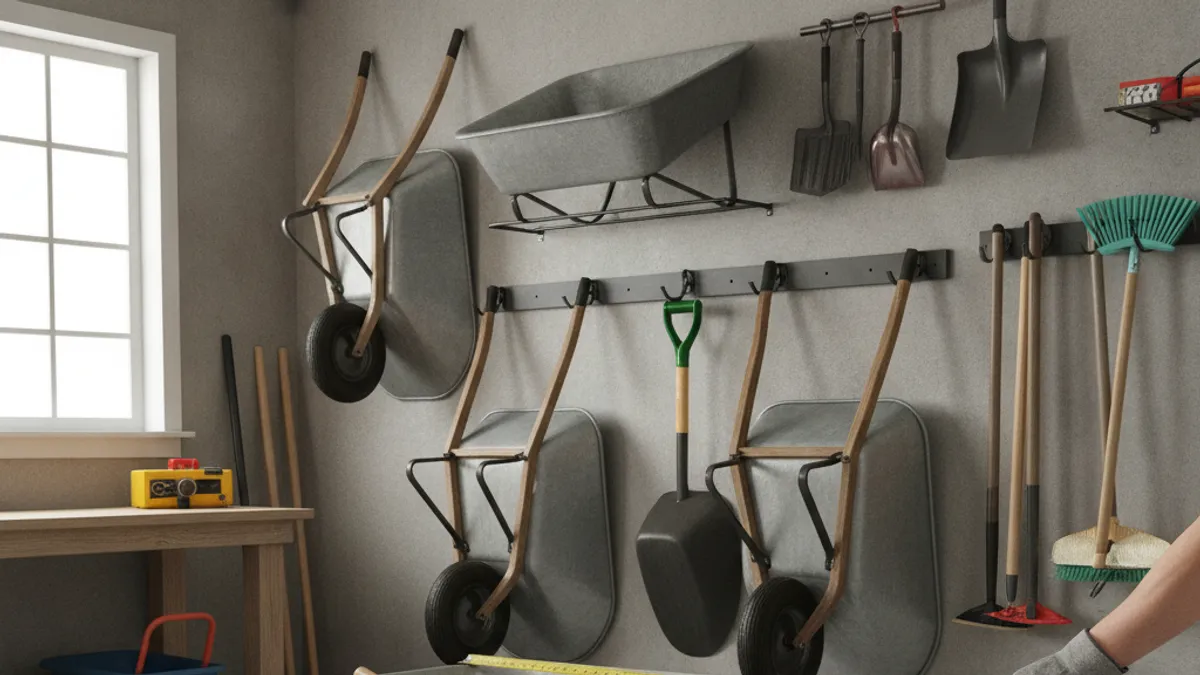
When selecting a storage method, the physical size and shape of your wheelbarrow are critical factors. Not all wheelbarrows are created equal, and a storage solution that works for a lightweight homeowner model might struggle with a heavy-duty contractor's version. Understanding these dimensions helps you avoid buying a system that looks good on paper but won't actually fit your specific tool.
Tray Size vs. Storage
The deepest part of a wheelbarrow is its tray. This means when you're storing it horizontally, the tray's width and depth will dictate how far it protrudes from the wall or how much space it needs on a shelf. For wall-mounted systems that cradle the tray, ensure the rack's dimensions are slightly larger than your wheelbarrow’s tray to allow for easy placement and removal.
If you're using hooks that support the frame, the tray's presence still affects how the wheelbarrow hangs, potentially causing it to sit at an odd angle if not properly balanced.
Tire Clearance
Don't forget the wheel! The tire, especially a pneumatic one, adds significant depth to the wheelbarrow. When storing it vertically or angled on a wall, ensure there’s enough clearance for the tire so it doesn’t rub against the wall or other objects.
For overhead hoists, you need to ensure there's enough vertical space to lift the wheelbarrow completely clear of any obstacles on the floor, considering the tire's diameter. A 16-inch diameter tire, for example, will require more vertical lift than an 8-inch solid one.
Installation Steps: Getting it Up and Secure
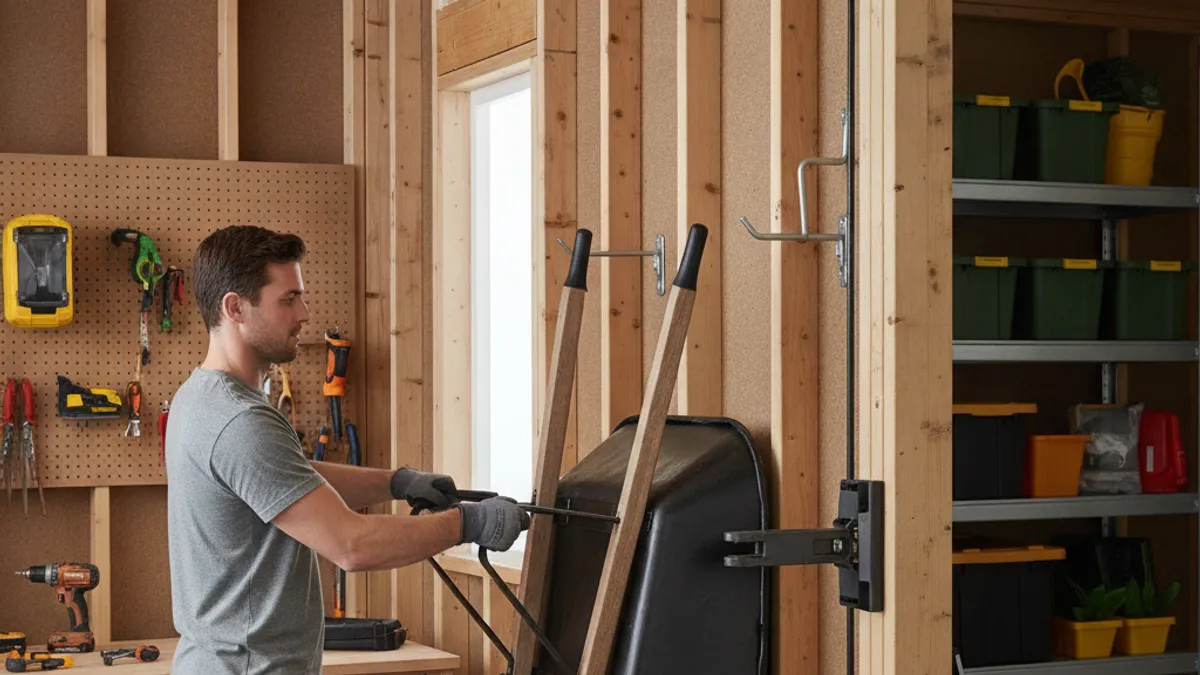
Proper installation is non-negotiable when it comes to storing heavy items like wheelbarrows. A poorly installed rack or hook system isn't just ineffective; it can be dangerous. Taking the time to do it right ensures your wheelbarrow stays put and prevents damage to your garage or injury.
Always follow the manufacturer’s specific instructions for your chosen storage system.
Preparing Your Space
Before you start drilling, clear the designated storage area. You'll want enough room to maneuver the wheelbarrow into place and, more importantly, to work safely. If you're using wall-mounted hardware, identify your wall studs using a reliable stud finder.
Most storage systems are designed to be screwed directly into these solid wood supports, which can easily handle the load. If you have metal studs or concrete walls, you’ll need to use appropriate anchors and possibly consult hardware specifications for weight limits.
Securing Hardware Properly
Once you've located your anchor points, mark where the hardware will go. Pre-drill pilot holes slightly smaller than your screws to make installation easier and prevent wood from splitting. Ideally, use lag bolts or heavy-duty screws specifically designed for mounting storage systems.
For wall racks, ensure the hardware is flush against the wall and doesn't wobble. For overhead hoists, confirm that the mounting bracket is firmly attached to at least two joists, distributing the weight effectively. Always double-check that everything is tight and secure before attempting to hang your wheelbarrow.
Avoiding Common Storage Mistakes
Even with the best intentions, some common pitfalls can turn a smart storage solution into a problem. Recognizing these errors ahead of time can save you frustration and potential damage down the line. These mistakes often stem from not fully considering the wheelbarrow's weight and dimensions, or the limitations of the garage space.
What Not To Do
Here are a few things to steer clear of:
- Into Drywall Only: Never mount a significant storage system directly into drywall without hitting studs. Drywall alone cannot support the weight of a loaded or even empty wheelbarrow, and it will likely pull away from the wall.
- Ignoring Weight Limits: Storage racks and hooks have weight capacities. Exceeding these limits is a recipe for disaster, potentially damaging the system, the wall, and the wheelbarrow.
- Blocking Pathways: Storing the wheelbarrow in a main walkway or near the garage door opening where it needs to be moved frequently defeats the purpose of easy access.
- Improper Angle: If you're hanging the wheelbarrow by hooks, ensure it's angled securely to prevent it from sliding off. A poorly balanced hang can turn into a falling hazard.
Overloading Storage Systems
This is a big one. If you opt for a hoist, it’s tempting to think you can hang other tools or bags on it along with the wheelbarrow. Resist that urge.
Most hoists are engineered for the specific weight and form of a wheelbarrow. Adding extra weight strains the system, potentially leading to failure. Similarly, some wall racks have a weight limit listed.
If the manufacturer says 50 pounds, don't try to hang a 100-pound wheelbarrow on it, especially if there's debris in the tray. Always respect the stated limits for your chosen storage solution.
When to Consider an Alternative Storage Spot

While the garage is the most common place to stash a wheelbarrow, it's not always the most practical or the only option. If your garage is packed to the brim, or if you simply don't have the right kind of wall or ceiling space for a dedicated storage system, exploring alternatives can be a smart move. Sometimes, a different location offers better accessibility or protection for your tool.
Outdoor Storage Options
For those living in milder climates, storing a wheelbarrow outdoors is an option, though it requires some protection. You can use a heavy-duty tarp to cover it, shielding it from rain and direct sun. Placing it under an overhang, like the eaves of your house or a covered porch, offers natural protection.
Another simple method is to simply tip it on its side away from direct weather. However, be aware that prolonged exposure, even with protection, can degrade plastic components or rust metal parts over time. This is generally less ideal than indoor storage for the longevity of the wheelbarrow.
Shed Storage
If you have a garden shed, it might be the perfect place to store your wheelbarrow. Sheds offer protection from the elements and can keep your yard looking tidier year-round. You can often lean the wheelbarrow against the shed's interior wall, or even install simple hooks or racks inside if space allows.
This keeps it close to where you'll use it most often, eliminating the need to trek back and forth to the garage. For those who have a dedicated outdoor growing space, a nearby shed storage solution makes a lot of sense.
Essential Wheelbarrow Dimensions to Consider
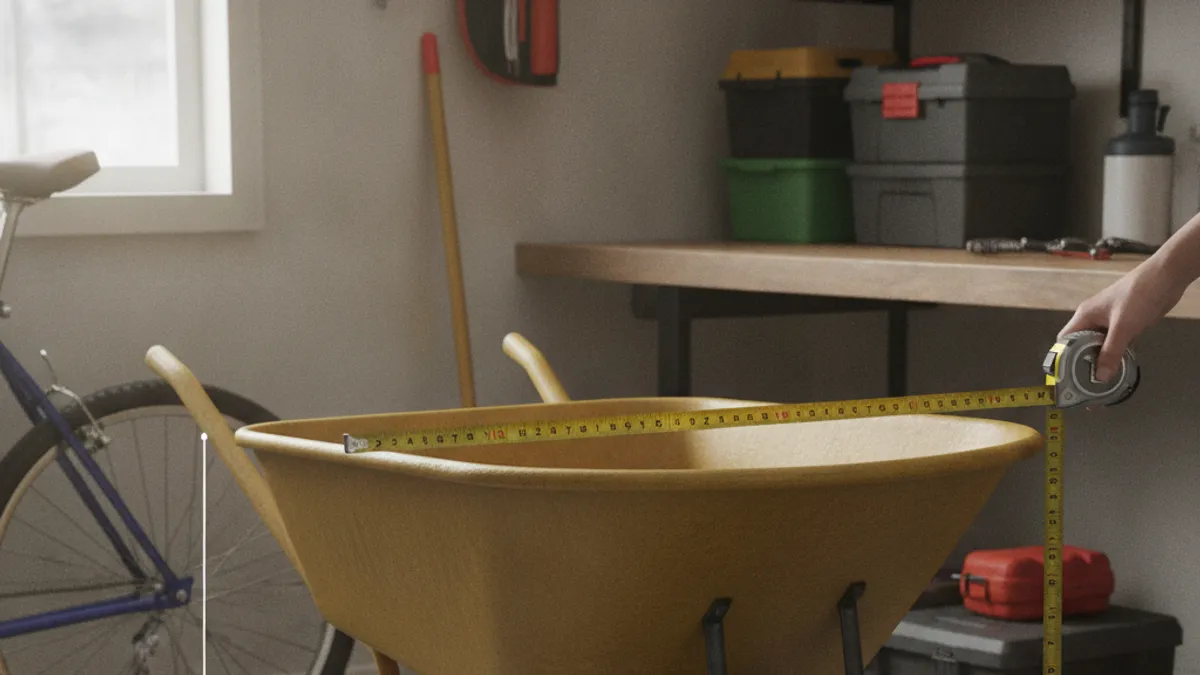
When selecting a storage method, the physical size and shape of your wheelbarrow are critical factors. Not all wheelbarrows are created equal, and a storage solution that works for a lightweight homeowner model might struggle with a heavy-duty contractor's version. Understanding these dimensions helps you avoid buying a system that looks good on paper but won't actually fit your specific tool.
Tray Size vs. Storage
The deepest part of a wheelbarrow is its tray. This means when you're storing it horizontally, the tray's width and depth will dictate how far it protrudes from the wall or how much space it needs on a shelf. For wall-mounted systems that cradle the tray, ensure the rack's dimensions are slightly larger than your wheelbarrow’s tray to allow for easy placement and removal.
If you're using hooks that support the frame, the tray's presence still affects how the wheelbarrow hangs, potentially causing it to sit at an odd angle if not properly balanced.
Tire Clearance
Don't forget the wheel! The tire, especially a pneumatic one, adds significant depth to the wheelbarrow. When storing it vertically or angled on a wall, ensure there’s enough clearance for the tire so it doesn’t rub against the wall or other objects.
For overhead hoists, you need to ensure there's enough vertical space to lift the wheelbarrow completely clear of any obstacles on the floor, considering the tire's diameter. A 16-inch diameter tire, for example, will require more vertical lift than an 8-inch solid one.
Installation Steps: Getting it Up and Secure
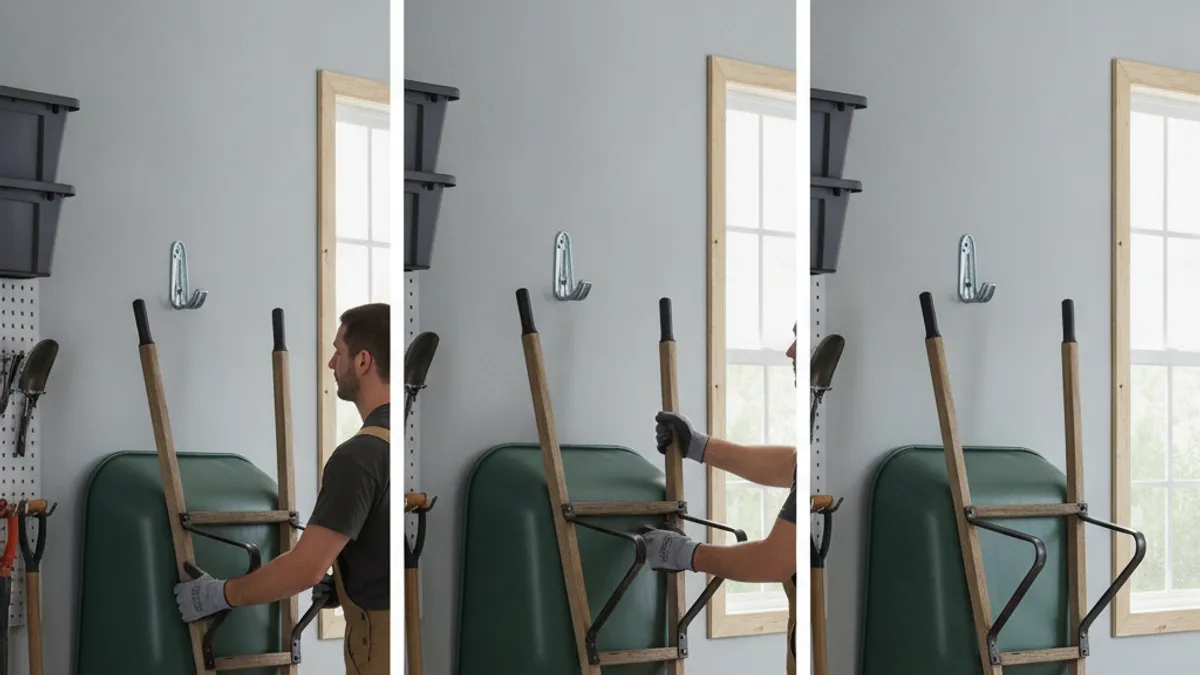
Proper installation is non-negotiable when it comes to storing heavy items like wheelbarrows. A poorly installed rack or hook system isn't just ineffective; it can be dangerous. Taking the time to do it right ensures your wheelbarrow stays put and prevents damage to your garage or injury.
Always follow the manufacturer’s specific instructions for your chosen storage system.
Preparing Your Space
Before you start drilling, clear the designated storage area. You'll want enough room to maneuver the wheelbarrow into place and, more importantly, to work safely. If you're using wall-mounted hardware, identify your wall studs using a reliable stud finder.
Most storage systems are designed to be screwed directly into these solid wood supports, which can easily handle the load. If you have metal studs or concrete walls, you’ll need to use appropriate anchors and possibly consult hardware specifications for weight limits.
Securing Hardware Properly
Once you've located your anchor points, mark where the hardware will go. Pre-drill pilot holes slightly smaller than your screws to make installation easier and prevent wood from splitting. Ideally, use lag bolts or heavy-duty screws specifically designed for mounting storage systems.
For wall racks, ensure the hardware is flush against the wall and doesn't wobble. For overhead hoists, confirm that the mounting bracket is firmly attached to at least two joists, distributing the weight effectively. Always double-check that everything is tight and secure before attempting to hang your wheelbarrow.
Avoiding Common Storage Mistakes
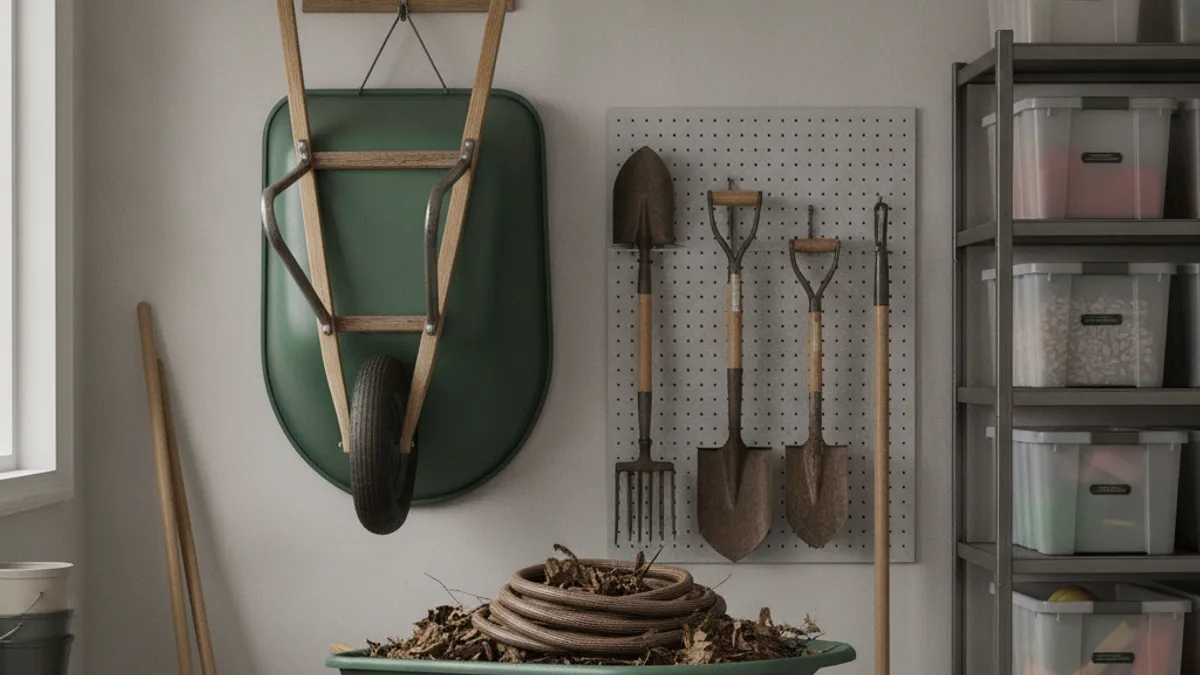
Even with the best intentions, some common pitfalls can turn a smart storage solution into a problem. Recognizing these errors ahead of time can save you frustration and potential damage down the line. These mistakes often stem from not fully considering the wheelbarrow's weight and dimensions, or the limitations of the garage space.
What Not To Do
Here are a few things to steer clear of:
- Into Drywall Only: Never mount a significant storage system directly into drywall without hitting studs. Drywall alone cannot support the weight of a loaded or even empty wheelbarrow, and it will likely pull away from the wall.
- Ignoring Weight Limits: Storage racks and hooks have weight capacities. Exceeding these limits is a recipe for disaster, potentially damaging the system, the wall, and the wheelbarrow.
- Blocking Pathways: Storing the wheelbarrow in a main walkway or near the garage door opening where it needs to be moved frequently defeats the purpose of easy access.
- Improper Angle: If you're hanging the wheelbarrow by hooks, ensure it's angled securely to prevent it from sliding off. A poorly balanced hang can turn into a falling hazard.
Overloading Storage Systems
This is a big one. If you opt for a hoist, it’s tempting to think you can hang other tools or bags on it along with the wheelbarrow. Resist that urge.
Most hoists are engineered for the specific weight and form of a wheelbarrow. Adding extra weight strains the system, potentially leading to failure. Similarly, some wall racks have a weight limit listed.
If the manufacturer says 50 pounds, don't try to hang a 100-pound wheelbarrow on it, especially if there's debris in the tray. Always respect the stated limits for your chosen storage solution.
When to Consider an Alternative Storage Spot

While the garage is the most common place to stash a wheelbarrow, it's not always the most practical or the only option. If your garage is packed to the brim, or if you simply don't have the right kind of wall or ceiling space for a dedicated storage system, exploring alternatives can be a smart move. Sometimes, a different location offers better accessibility or protection for your tool.
Outdoor Storage Options
For those living in milder climates, storing a wheelbarrow outdoors is an option, though it requires some protection. You can use a heavy-duty tarp to cover it, shielding it from rain and direct sun. Placing it under an overhang, like the eaves of your house or a covered porch, offers natural protection.
Another simple method is to simply tip it on its side away from direct weather. However, be aware that prolonged exposure, even with protection, can degrade plastic components or rust metal parts over time. This is generally less ideal than indoor storage for the longevity of the wheelbarrow itself.
Shed Storage
If you have a garden shed, it might be the perfect place to store your wheelbarrow. Sheds offer protection from the elements and can keep your yard looking tidier year-round. You can often lean the wheelbarrow against the shed's interior wall, or even install simple hooks or racks inside if space allows.
This keeps it close to where you'll use it most often, eliminating the need to trek back and forth to the garage. For those with a dedicated outdoor growing space, a nearby shed storage solution makes a lot of sense.