
Storing your wheelbarrow properly is more than just tucking it away; it's about protecting your investment and keeping your workspace safe. Learning how to store a wheelbarrow efficiently can prevent rust, tire damage, and general wear and tear, ensuring it’s ready when you need it. Think of it as essential maintenance that pays off in the long run.
In our research, we found that improper storage is a leading cause of premature wheelbarrow failure, with many buyers reporting issues like flat tires or handles weakening from exposure. According to aggregate user feedback, a well-stored wheelbarrow can last upwards of ten years, while neglected ones often give up the ghost in half that time. This guide will walk you through the best practices to keep yours in prime condition.
Why Storing Your Wheelbarrow Matters (More Than You Think)

A wheelbarrow is a workhorse, but it's also susceptible to the elements and simple neglect. When you're done with a big hauling job, it's tempting to just leave it wherever it lands. However, this casual approach can lead to significant problems down the road. Not storing your wheelbarrow correctly can cause rust on metal parts, premature cracking in plastic bins, and flat or damaged tires.
These issues aren't just inconvenient; they can shorten the lifespan of your tool significantly. A wheelbarrow that’s properly cared for, especially through smart storage, will serve you reliably for years. It’s about maximizing its utility and minimizing costly replacements or repairs.
Quick Guide: The Best Way to Park Your Wheelbarrow
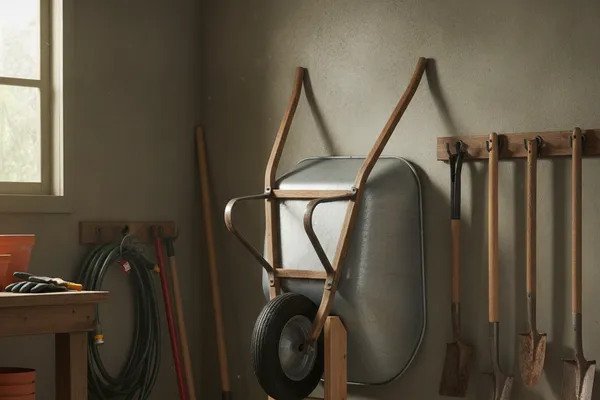
The most effective way to store your wheelbarrow typically involves positioning it vertically against a wall, with slight angling to ensure stability. This method saves the most space and keeps the wheel off the ground, preventing flat spots. If vertical storage isn't feasible, a clean, flat surface inside a shed or garage is the next best option.
Key to this approach is ensuring the wheelbarrow is clean and dry before storage. This simple step dramatically reduces the risk of rust and mold. For longer-term storage, like through winter, considering tire pressure adjustments can also prevent damage.
Before You Store: A Quick Wheelbarrow Check-Up
Before you park your wheelbarrow for the day or for the season, giving it a quick once-over is crucial. This prevents small issues from becoming big problems later on. It’s a small investment of time that pays dividends in tool longevity.
Cleaning Out Debris
Always empty the bin completely. Leaves, dirt, gravel, or any other debris left inside can hold moisture. This moisture accelerates rust on metal frames and can encourage mold growth on various materials. A quick rinse with a hose and a wipe down is usually all it takes.
Checking Tires and Wheels
A quick look at the tire is important. If it's a pneumatic (air-filled) tire, check for obvious signs of deflation or damage. While you don't need to check the PSI every single time for short-term storage, it’s a good habit to notice if it looks low. For solid tires, just ensure nothing is lodged in the tread.
Inspecting for Damage
Take a moment to visually scan the entire wheelbarrow. Look for any loose bolts, cracked plastic, or rust spots that might be forming. Catching these early allows for simple fixes, like tightening a bolt or applying a rust inhibitor, before they become major repair jobs.
Space-Saving Wheelbarrow Storage Strategies
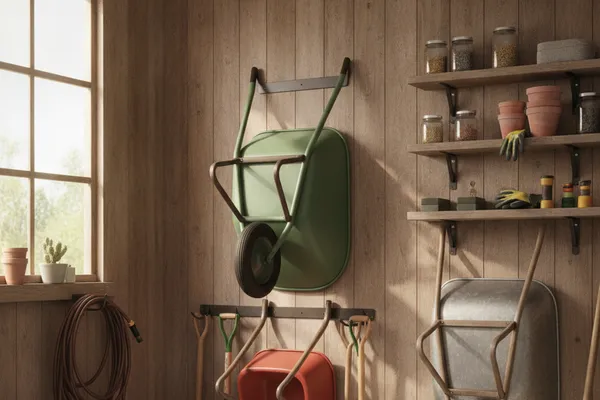
Finding space for a bulky item like a wheelbarrow can be a challenge, especially in smaller garages or sheds. Fortunately, there are several smart strategies that can help you reclaim valuable square footage while keeping your wheelbarrow accessible and protected. The goal is to utilize often-overlooked vertical space or strategic horizontal placement.
Vertical Storage: Using Wall Space Wisely
Vertical storage is your best friend when space is tight. By leaning your wheelbarrow against a wall or using specialized hooks, you lift it off the ground and out of the way. This also keeps weight off the tire, preventing flat spots and deformation over time.
Hooks and Racks for Wheelbarrows
Specialized wheelbarrow hooks or racks can be mounted to shed walls or garage studs. These are designed to cradle the wheelbarrow's frame or handles, holding it securely off the floor. Some heavy-duty options allow for multiple tools to be stored vertically. Always ensure the mounting hardware is appropriate for your wall type and secure.
Leaning Against a Wall (The Simple Way)
If you don't have specialized hooks, simply leaning the wheelbarrow against a sturdy wall is an option. Position it so the handles rest on the ground and the bin is angled upwards. Ensure it's stable and won't easily tip over. This method is quick and requires no extra equipment, making it ideal for frequent use.
Horizontal Storage: When Floor Space is Available
If you have a bit more room, storing the wheelbarrow horizontally on the floor can also work well. This might be simpler if you can’t easily lift it for vertical storage. However, it’s crucial to manage how the wheel rests to avoid damage.
Flat on the Ground (Considerations)
When stored flat, try to ensure the primary weight isn't resting solely on the tire for extended periods, especially if it's a pneumatic tire. Some users place a small block or piece of wood under the frame to slightly lift the wheel. This reduces pressure and helps maintain tire integrity. Always ensure the area is clear of tripping hazards.
Shed and Garage Storage Hacks
Garages and sheds are prime locations for wheelbarrow storage, offering protection from the elements. The key is to integrate it efficiently with other stored items. Think about how often you use the wheelbarrow; if it’s daily, keep it accessible. If it’s seasonal, it can be tucked away more neatly.
Fitting it into Tight Spots
Often, the best spot is in a corner or against a side wall where it won't obstruct main pathways. You might be able to slide it under a workbench or alongside a stack of lumber. Measure your available space first to avoid buying storage solutions that won't fit. Sometimes, turning the wheelbarrow sideways can make it take up less depth.
Outdoor Storage Solutions (When Indoors Isn't an Option)
If indoor storage simply isn't possible, you'll need to protect your wheelbarrow from rain, snow, and excessive sun. Exposed to the elements, even the toughest wheelbarrows will degrade faster. Covered areas are always better than nothing.
Tarps and Covers for Protection
A heavy-duty tarp or a dedicated wheelbarrow cover can offer a good level of protection. Drape it over the wheelbarrow, ensuring it's secured at the bottom so it doesn't blow away. This shields the bin, handles, and wheel from direct precipitation and UV rays. Make sure the tarp is breathable enough to prevent moisture buildup underneath.
Wheelbarrow Storage Mistakes That Cost You
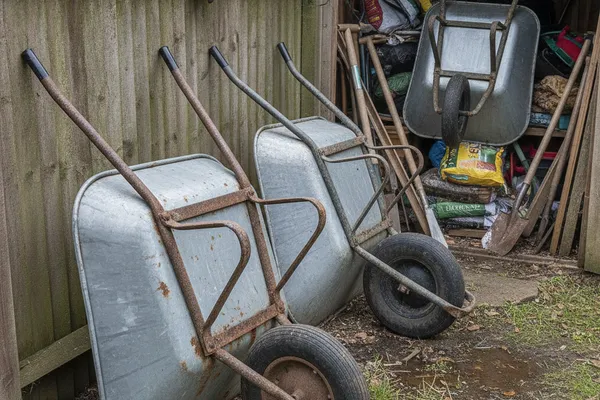
It might seem straightforward, but there are a few common blunders people make when storing their wheelbarrows that can lead to premature failure. These mistakes often stem from convenience or simply not knowing better, but understanding them can save you money and hassle in the long run. Avoiding these pitfalls is just as important as choosing the right storage spot.
Ignoring Rust and Corrosion
Metal wheelbarrows, especially those with steel frames, are prime candidates for rust if left damp or exposed to the elements. Water trapped in seams, joints, or around bolts can quickly create a corrosion problem. Neglecting to wipe down a metal wheelbarrow after use, particularly if it's gotten wet, means you're practically inviting rust to set in.
Leaving Tires Inflated (or Deflated) Too Long
Pneumatic tires on wheelbarrows can suffer if left parked in one position for extended periods. If consistently stored with full air pressure, the weight can cause a flat spot on the bottom of the tire. Conversely, leaving an air-filled tire completely deflated for months can lead to the tire walls deteriorating or becoming misshapen.
Stacking Improperly
While not always an issue, stacking other items directly on top of a wheelbarrow, or trying to stack wheelbarrows without proper support, can cause damage. Heavy items pressing down on the bin can cause it to warp or crack, especially if it's made of plastic. Over time, this can compromise the wheelbarrow's structural integrity.
Keeping Your Wheelbarrow in Top Shape: Maintenance for Storage
Proper storage goes hand-in-hand with basic maintenance. Before you tuck your wheelbarrow away, a few simple checks can make a big difference in how well it survives storage, whether it's for a week or an entire winter. Think of this as a quick spa treatment for your trusty tool.
Tire Care Through the Seasons
For pneumatic tires, aim for a moderate inflation level for long-term storage. Don't let them sit completely flat, but also don't overinflate them to their maximum. A slightly reduced pressure, perhaps just enough to keep the tire shape without extreme bulging, is often recommended. This helps prevent both flat spots and undue stress on the tire walls.
Preventing Rust and Rot
If your wheelbarrow has a metal frame, a light coat of lubricant or a spray-on rust inhibitor on susceptible areas can provide excellent protection. Apply it to bolts, joints, and any areas showing surface rust. For wooden handles, a light sanding and a coat of wood sealant or linseed oil can prevent drying and cracking.
Storing Different Wheelbarrow Types
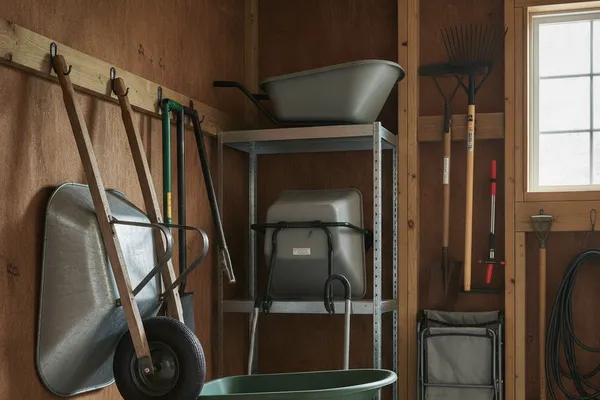
Not all wheelbarrows are created equal, and the material or number of wheels can influence the best storage approach. Understanding these differences helps you tailor your storage methods for optimal longevity. What works perfectly for one type might require a slight adjustment for another.
Single-Wheel vs. Dual-Wheel Storage Differences
Single-wheel wheelbarrows are often easier to maneuver into tight vertical storage spots due to their more compact design. Their single point of contact means less floor space if laid flat. Dual-wheel models offer more stability when loaded but can be bulkier to store. They might lean better or require a wider area if placed horizontally.
Plastic vs. Metal Wheelbarrow Storage
Plastic wheelbarrows are generally more resistant to rust and corrosion, which simplifies storage and reduces maintenance needs. However, plastic can become brittle in extreme cold or crack if subjected to heavy impacts or improper stacking. Metal wheelbarrows, while strong, are highly susceptible to rust, making thorough drying and rust prevention crucial for storage, especially in humid or wet environments.
Making the Most of Small Spaces: Storage in Compact Garages and Sheds
Living in smaller homes often means garages and sheds are packed with essentials. Storing a wheelbarrow without it becoming an eyesore or tripping hazard requires a bit of spatial creativity. The key is to think vertically and utilize every inch of available wall and ceiling space.
Fitting it into Tight Spots
Consider sliding the wheelbarrow into the narrow gap between your car and a wall, or tucking it behind larger items like a lawnmower or storage cabinets. If using wall hooks, ensure you're mounting them into studs or using heavy-duty anchors suitable for the weight of the wheelbarrow. A hook that allows the wheelbarrow to hang by its handles can be very efficient.
This is where visual planning really helps. Imagine using a measuring tape and sketching out how it could fit. For instance, a corner might be perfect for a vertical lean, or a high shelf could accommodate a lighter plastic model if you have a step stool handy.