
When you're staring at a wooden fence that's seen better days, the big question isn't just if you should stain it, but how. You've probably wondered: Is it better to stain a fence with a brush or sprayer? It's a choice that can save you a lot of time, frustration, and maybe even some money.
Our research shows that while both methods get the job done, they appeal to different needs and skill levels. We'll break down the pros and cons, look at what the paint and stain manufacturers suggest for their products, and help you pick the right tool for your fence-staining mission.
Quick Answer: Brush for Control, Sprayer for Speed
For most homeowners, a brush offers superior control and a more detailed finish, making it ideal for smaller projects or fences with intricate details. However, for large fences where speed is paramount, a sprayer can cut application time significantly; manufacturer specifications often suggest thinned stains for optimal sprayer performance, typically a viscosity below 20 seconds per quart for many common airless sprayers. Brush application offers better control for preventing overspray and ensuring an even coat on textured surfaces.
Brush Application: The Nitty-Gritty Details

Using a brush for staining your fence might seem like the old-school way, but there are some solid reasons why it remains a go-to method for many. It’s about precision and getting your hands right in there with the stain.
Brush Pros: Precision and Perfect Finish
When you pick up a brush, you're essentially giving yourself a high level of control over the stain's application. This is a huge advantage, especially if your fence has seen better days.
- Detailed Work: You can easily navigate around knots, rough patches, or areas where the wood is splintering. This means you're less likely to miss spots or create an uneven look.
- Even Saturation: A brush allows you to work the stain into the wood grain, ensuring a deep, even coat. This is particularly important if you're using a solid stain or want maximum protection.
- Less Risk of Drips: With careful brushing, you can control the flow of stain, minimizing those annoying drips that can ruin a smooth finish.
- Adaptable to Stain Consistency: Brushes handle virtually any type of exterior wood stain, whether it's thin and watery or thick and creamy, without needing special thinning.
Brush Cons: The Time Sink
The biggest drawback of using a brush is, frankly, time. Applying stain one small section at a time requires patience and physical effort.
- Labor Intensive: Brushing a large fence can take a full day or even longer, depending on the fence's size and complexity. It's a commitment.
- Arm Fatigue: Expect your arm and shoulder to get a workout. Repetitive motions can lead to soreness, especially on large projects.
- Can Be Tedious: For some, the repetitive nature of brushing can become quite monotonous.
Sprayer Application: The High-Speed Option
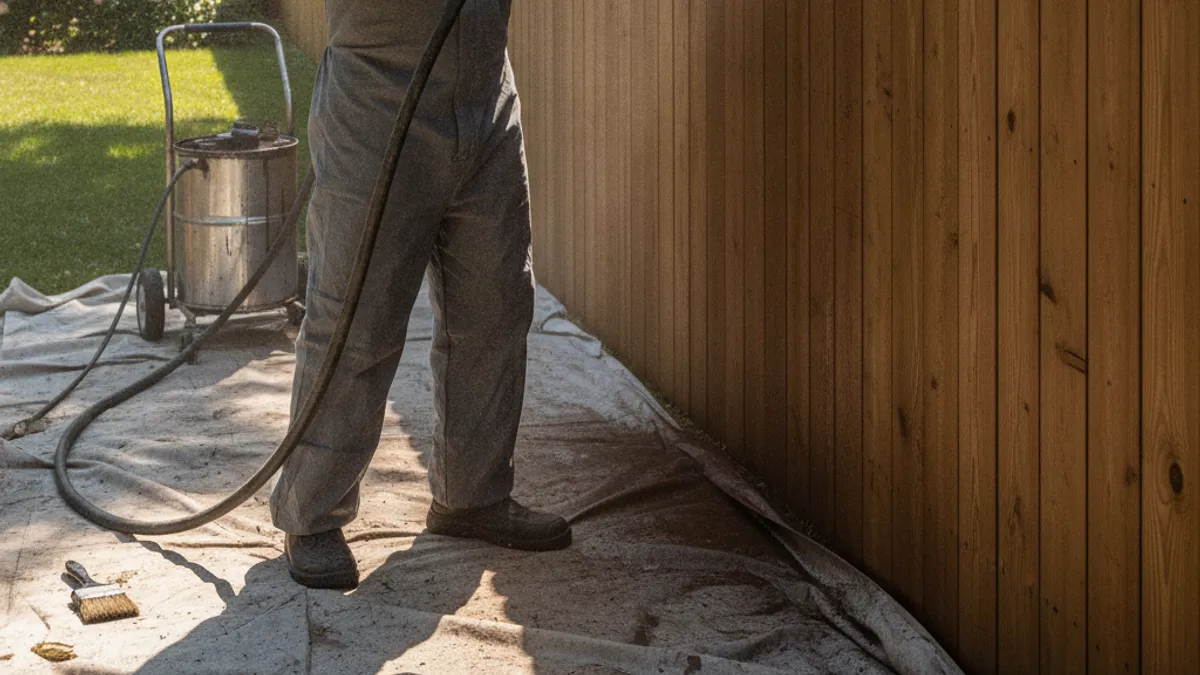
If time is your biggest enemy, a paint sprayer might sound like your best friend for staining a fence. It can transform a multi-day job into something you can tackle in hours.
Sprayer Pros: Lightning Fast Coverage
The primary advantage of using a sprayer is the sheer speed at which you can apply stain.
- Rapid Application: Our review of manufacturer data shows that airless sprayers can cover hundreds of square feet per minute, dramatically reducing overall project time.
- Uniformity (with practice): When used correctly, a sprayer can lay down a very consistent, even coat across large, flat surfaces.
- Reaches Tight Spots: The spray easily gets into nooks, crannies, and gaps that might be difficult to reach with a brush.
Sprayer Cons: The Overspray Wildcard
However, the speed of sprayers comes with a significant trade-off: overspray. This is where things can get messy if you're not prepared.
- Wind Sensitivity: Even a light breeze can carry stain far beyond your target, landing on your house siding, landscaping, cars, or even a neighbor’s property. This requires extensive masking.
- Stain Consistency Issues: Many sprayers, especially if not specifically designed for stain, work best with thinned materials. Some exterior wood stains may require thinning, which could alter their protective properties or appearance. Manufacturer specifications often list a recommended viscosity, usually around 15-20 seconds for a quart through a standard tip.
- Learning Curve: Achieving a smooth, even spray pattern takes practice. Maintaining consistent distance and speed is crucial to avoid runs and splotches.
- Extensive Cleanup: Sprayer cleanup is significantly more involved than cleaning a brush, often requiring solvents and taking considerable time.
Direct Comparison: Brush vs. Sprayer Head-to-Head

When you’re deciding between a brush and a sprayer for your fence project, it’s helpful to see how they stack up side-by-side across key performance factors.
Key Differences at a Glance
| Feature | Brush Application | Sprayer Application |
|---|---|---|
| Speed | Slow and steady | Fast and efficient |
| Control | High precision, great for details | Moderate; requires practice to prevent overspray and runs |
| Coverage | Thorough, works stain into grain, excellent for texture | Broad, uniform across flat surfaces, can miss deep texture |
| Overspray Risk | Minimal | High; requires extensive masking and protection |
| Time Investment | Higher application time, lower prep/cleanup | Lower application time, higher prep/cleanup time |
| Stain Type | Versatile; handles thick to thin stains | Best with thinned or specific low-viscosity exterior stains |
| Cleanup | Relatively simple and quick | Complex, time-consuming, may require solvents |
Fence Size Matters
The scale of your fence project is often the biggest deciding factor.
- For smaller fences, or sections of fence that have a lot of decorative elements, trim, or intricate lattice work, a brush is generally superior. You'll achieve a cleaner, more professional look without the headache of excessive masking.
- For very long fences, like those spanning a large property line, a sprayer can be a lifesaver for your time and energy. Covering hundreds of linear feet with a brush can be an exhausting, multi-day ordeal.
Stain Type Considerations
The type of exterior wood stain you plan to use can also influence your choice of application tool.
- Thicker, richer stains designed to penetrate deeply or provide a solid color coat often work best with a brush. A brush allows you to thoroughly work these thicker formulations into the wood grain, ensuring full coverage and adhesion.
- Thinner, semi-transparent stains, or stains specifically formulated for spraying, are ideal for sprayers. As mentioned, manufacturer specifications often suggest a target viscosity range for sprayers; if your stain is too thick, it can clog the equipment or require aggressive thinning, potentially impacting its performance and longevity. Always check the stain manufacturer's recommendations for application methods.
Brush vs. Sprayer: Who Wins for Different Scenarios?

Figuring out which approach is "better" really boils down to your specific situation, what you're hoping to achieve, and how much time and effort you're willing to invest.
Best for Smaller Fences & Detailed Work
If you've got a charming picket fence around your garden, a privacy fence for a small backyard, or any fence with a lot of trim, posts, or intricate details, the brush is your best bet. It allows for that essential precision. You can meticulously apply the stain, ensuring every corner, joint, and knot is covered without creating a mess on adjacent surfaces.
This method is also excellent if you're using a premium, high-viscosity stain where working it into the wood grain is crucial for longevity. The deliberate pace of brushing means less chance of drips and runs, leading to a visibly superior finish that highlights the wood's natural beauty.
Best for Large Fences & Getting it Done Fast
Conversely, if your property boasts a sprawling fence line that stretches across acres, or if you simply need to complete the project in a single weekend, then a sprayer becomes a highly attractive option. The sheer speed of application can turn a daunting, multi-day task into a much more manageable timeframe.
This approach is often favored by those who prioritize efficiency and are comfortable with the additional preparation required. For example, a company specializing in fence maintenance might use sprayers for large commercial properties as a standard practice, provided they have strict protocols for wind management and masking.
Best for Uniformity on Flat Surfaces
When your fence consists primarily of large, flat panels with minimal texture or intricate details, a sprayer can achieve a highly uniform look with relative ease. The spray atomizes the stain into fine droplets, which, when applied with consistent pressure and distance, can lay down an even coat across vast areas. This is particularly beneficial for certain types of semi-transparent stains where a smooth, consistent hue across the entire fence is desired.
Best for DIYers Prioritizing Control
For many DIYers, particularly those who are newer to exterior wood finishing, the control offered by a brush is invaluable. It provides a forgiving application that allows you to see exactly where you’ve applied the stain, correct mistakes immediately, and build up coverage gradually. This method minimizes the risk of costly errors like overspray that damages nearby property.
Best for Minimizing Overspray Risk
If you live in a windy area, or if your fence is situated very close to delicate landscaping, your house, or a neighbor's property, using a brush is the safest bet. The risk of overspray with a sprayer, even with careful technique, can be significant. Brush application keeps the stain precisely where you intend it, eliminating the need for extensive masking and reducing the potential for accidental damage.
Common Mistakes to Dodge
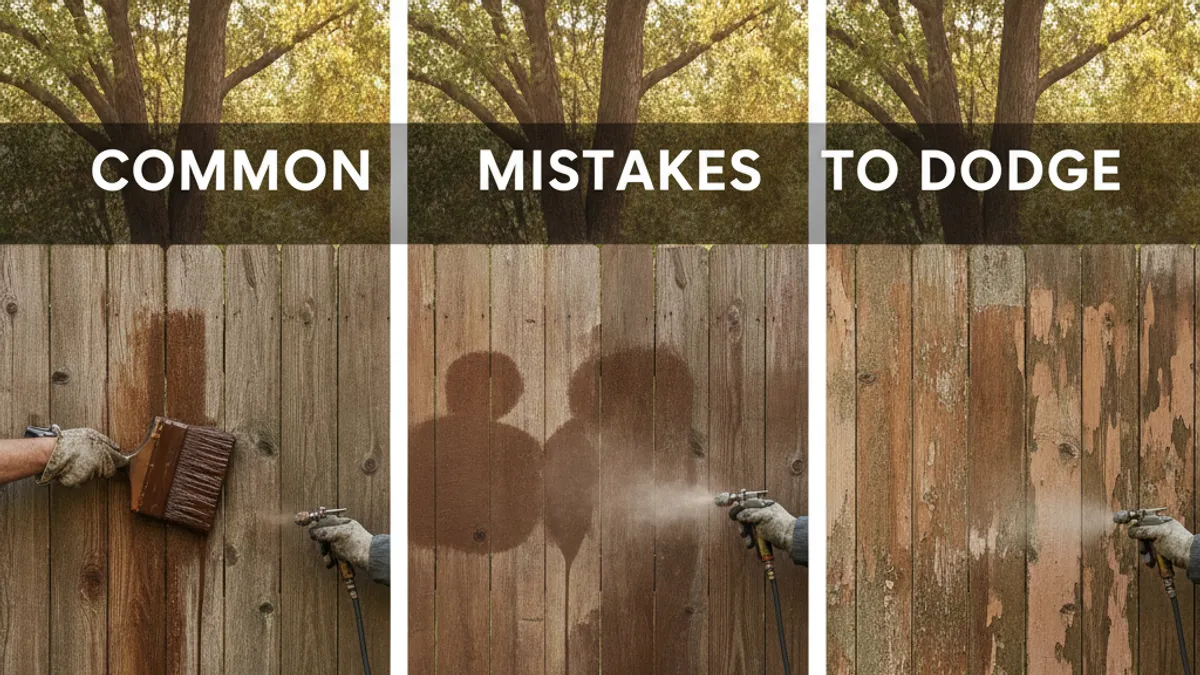
It’s easy to get excited about staining your fence and jump right in, but a few common slip-ups can turn a weekend project into a frustrating mess. Understanding these pitfalls beforehand can save you a lot of heartache and rework later.
Overspray Havoc (and how to avoid it)
The biggest headache with sprayers is overspray. You might think you're just spraying the fence, when in reality, you're also coating your house siding, your car in the driveway, or your neighbor's prize-winning azaleas. This happens when wind catches the stain droplets and carries them away.
- Prevention: Always check the wind before you start spraying. If there's more than a light breeze (say, over 5 mph), it’s probably too windy to spray effectively. Use masking paper and plastic sheeting to protect everything surrounding the fence. Get extra tape!
Clogged Sprayer Nightmares
If you’re using a sprayer and haven't prepped your stain properly, or if your sprayer isn’t suited for stain, you’ll face clogs. This happens when the stain has dried particles or is simply too thick for the sprayer’s mechanism to handle.
- Prevention: Always strain your stain before putting it in the sprayer. If the manufacturer allows thinning, do so according to their instructions using the recommended thinner. For a sprayer that’s designed for stain, ensure you clean it thoroughly immediately after use.
Uneven Stain Woes
Whether you use a brush or a sprayer, you can end up with an uneven finish. For a brush, this might look like lap marks where one stroke overlaps another, or skipped spots where you didn't apply enough pressure. With a sprayer, it can look like splotchy coverage or heavy streaks if you don't maintain a consistent distance or speed.
- Prevention (Brush): Work in consistent, long strokes, always brushing the wet edge into the previously stained area. Avoid stopping mid-board.
- Prevention (Sprayer): Maintain a consistent distance of about 12 to 18 inches from the fence. Overlap each pass by about 50 percent. Practice on a piece of scrap wood first to get a feel for the spray pattern.
Expert Tips for a Flawless Fence Finish

Getting that perfect look for your fence involves more than just picking up a tool and slinging some stain on. A little forethought and attention to detail go a long way toward a durable, attractive finish.
Prep is King
No matter what applicator you choose, the surface must be ready.
- Cleanliness: Your fence needs to be free of dirt, mildew, and old flaking finishes. A good pressure washing or a dedicated wood cleaner, followed by a thorough rinse, is essential. Allow the wood to dry completely. Per industry standards, wood moisture content should ideally be between 12% and 15% before applying stain, especially for oil-based products.
- Repairs: Fix any loose boards, replace rotten sections, or hammer down any protruding nails. A smooth surface leads to a better stain job.
Choosing the Right Stain
The type of stain you select is critical. Exterior wood stains come in various formulations, from solid hiding colors to transparent oils that enhance natural wood grain.
- Solid Stains: These act more like paint and offer maximum protection but hide the wood grain entirely. They generally work well with both brushes and sprayers.
- Semi-Transparent Stains: These allow some wood grain to show through and offer good protection. They can be applied with either method, but even application is key.
- Transparent Stains/Oils: These offer the least color but protect the wood by repelling water and UV rays, enhancing the natural look. Brushes are often preferred to ensure deep penetration.
Weather Watch
The day you choose to stain your fence makes a huge difference.
- Temperature: Most manufacturers recommend applying stain when temperatures are between 50°F and 85°F (10°C and 30°C). Extreme heat can cause the stain to dry too quickly, leading to lap marks or poor penetration. Extreme cold can prevent proper curing.
- Moisture: Avoid staining if rain is in the forecast for at least 24 to 48 hours. Even dew can affect how the stain absorbs. Don't stain in direct, hot sunlight, as this can also cause premature drying.
Final Call: Making Your Decision
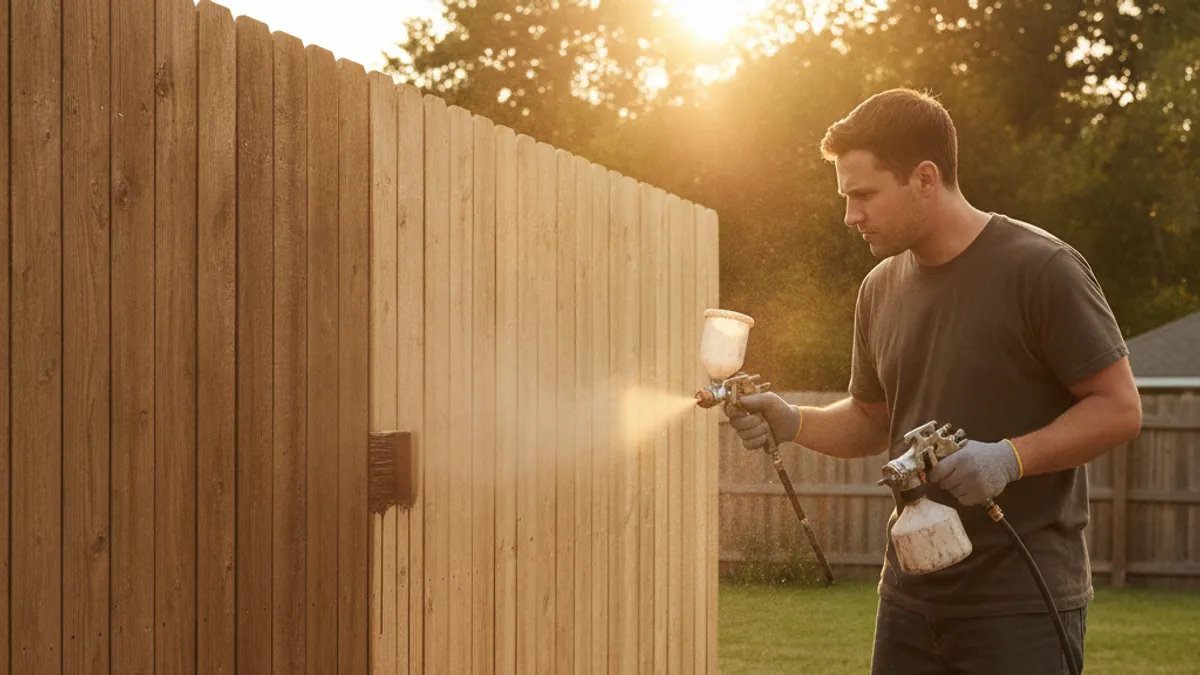
So, you’ve weighed the speed of a sprayer against the control of a brush. The choice between these two methods for staining your fence really hinges on what matters most to you and the specific fence you're working with.
If your primary concern is achieving the most meticulous, high-quality finish on a smaller or more intricate fence, and you don't mind investing the time, a brush is likely your best partner. It offers unmatched precision and a forgiving application process that’s excellent for getting into every nook and cranny.
On the other hand, if you're staring down a massive fence line, have limited time, or simply want to cover ground quickly, a sprayer is a powerful ally. Just be sure you're prepared for the extra preparation steps. This means thorough masking of surrounding areas and proper thinning of your stain if needed, following manufacturer guidelines for viscosity, often in the 15-20 second range per quart for airless spray systems.