
You're standing in the garden center staring at two rows of spray bottles. One side says "organic" with pictures of ladybugs and green leaves. The other is full of chemical names you can barely pronounce.
The question Organic vs synthetic: does it matter for bugs? is probably the most common one home gardeners ask, and the answer is more nuanced than most people expect. The short version is that it matters a lot, but not always in the way you might think.
A 2023 study in the Journal of Economic Entomology found that the organic insecticide spinosad achieved over 90% mortality on thrips within 24 hours. That matches the performance of synthetic pyrethroids. But the same study noted that spinosad degrades in sunlight within 24 hours, while synthetic options persist for days.
That trade-off between speed, safety, and staying power is what makes this choice complicated.
Quick Answer
Yes, the choice matters. But context is everything. Organic options like neem oil and spinosad work well for light to moderate infestations.
They are safer for beneficial insects when applied correctly. Synthetic options like pyrethroids or neonicotinoids offer faster knockdown and longer residual activity. The best choice depends on the pest, the plant, the timing, and your tolerance for risk.
The Short Answer – Does Organic vs Synthetic Actually Matter for Bugs?
The honest answer is yes, it matters, but not for the reasons you might expect. Organic does not automatically mean weak. Synthetic does not automatically mean dangerous.
What matters far more is understanding what each option actually does once it hits the leaf.
A botanical insecticide like neem oil (azadirachtin) works by disrupting insect growth hormones. It does not kill on contact the way a synthetic pyrethroid like bifenthrin does. That means neem is slower but also less likely to wipe out the ladybugs and lacewings you want in your garden.
A synthetic like permethrin can stop a Japanese beetle infestation in hours. But it can also harm bees if applied during bloom.
The decision between synthetic and organic should fit into your overall garden strategy. Your fertilizing schedule, your approach to weed management, and how you set up a grow tent all feed into the bigger picture of pest control. The organic versus synthetic question is one piece of that puzzle.
Why People Get Stuck on This Question
There is a lot of conflicting advice out there. Most of it comes from well-meaning but oversimplified sources. One person swears by neem oil for everything.
Another says you have to use synthetics or you will lose your tomatoes. Both could be right depending on the situation.
Here are the main reasons this question trips people up:
- Marketing labels are misleading. An "organic" label tells you where the active ingredient came from. It does not tell you how safe or effective it is. Rotenone is organic and highly toxic to fish. Pyrethrins are organic but break down in hours.
- People confuse toxicity with exposure. A synthetic pesticide might have low acute toxicity to mammals when used correctly. But the same person will fear it because of the chemical name. Meanwhile, they might overapply an organic oil and burn their plants.
- Resistance is a hidden factor. Using the same product repeatedly, organic or synthetic, selects for resistant bugs. Many gardeners do not realize that an organic product can stop working just as fast as a synthetic one if you do not rotate modes of action.
The key takeaway is that the question has more than two answers. It is not organic versus synthetic. It is about choosing the right active ingredient for your specific pest, plant, and season.
Organic Bug Control – What's Actually in the Bottle
Organic pesticides come from natural sources. They can be plant extracts, beneficial microbes, or simple physical barriers. The common thread is that they are derived from something found in nature, not cooked up in a chemistry lab.
But this does not automatically make them better for all situations.
Botanical Ingredients That Work
Plant-based insecticides have been used for centuries. Some of the most common options available today are well-studied and reliable.
- Neem oil (azadirachtin): Extracted from the neem tree. It works as an insect growth regulator. It prevents young insects from molting and maturing. It is effective on aphids, whiteflies, spider mites, and scale. It has little effect on adult insects, so you need to catch infestations early.
- Pyrethrins: Extracted from chrysanthemum flowers. These are contact poisons that attack the nervous system of insects on contact. They break down in sunlight within a few hours. This makes them relatively safe for the environment but frustrating for heavy infestations that require follow-up sprays.
- Neem oil (clarified hydrophobic extract): A lighter version that suffocates soft-bodied insects and fungal spores. It is less potent than azadirachtin but safer for plants in hot weather.
Microbial Options (Bt, Spinosad)
Microbial insecticides use bacteria or fungi to target specific pests. They are some of the most effective and selective tools in the organic toolbox.
- Bacillus thuringiensis (Bt): A soil bacterium that produces a protein crystal toxic to caterpillars. It is specific to the order Lepidoptera. It will not hurt bees, ladybugs, or humans. Apply it when caterpillars are actively feeding. It degrades in UV light within 48 hours.
- Spinosad: Produced by the bacterium Saccharopolyspora spinosa. It targets thrips, caterpillars, leafminers, and some beetles. The EPA classifies it as a reduced-risk pesticide. It is toxic to bees when wet but virtually harmless once dry.
- Beauveria bassiana: A fungus that infects insects directly. It is used for aphids, whiteflies, thrips, and mealybugs. It needs high humidity to germinate, so it is better suited to greenhouses than dry outdoor gardens.
Soaps, Oils, and Physical Barriers
These are the most approachable organic options. They are often the first thing a home gardener tries.
- Insecticidal soap (potassium salts of fatty acids): Breaks down the waxy coating on soft-bodied insects like aphids and mites. It works on contact only and leaves no residue. It is safe for most plants but can cause leaf burn in hot sun.
- Horticultural oil (mineral or vegetable): Suffocates insects and their eggs by coating them. It is effective on scale, mealybugs, and mite eggs. Apply during the dormant season for best results on trees and shrubs.
- Diatomaceous earth (DE): Crushed fossilized algae with microscopic sharp edges. It scratches the waxy coating of crawling insects and causes them to dehydrate. It is useful for ants, cockroaches, and slugs. It loses effectiveness when wet.
Synthetic Bug Control – What's in the Bottle
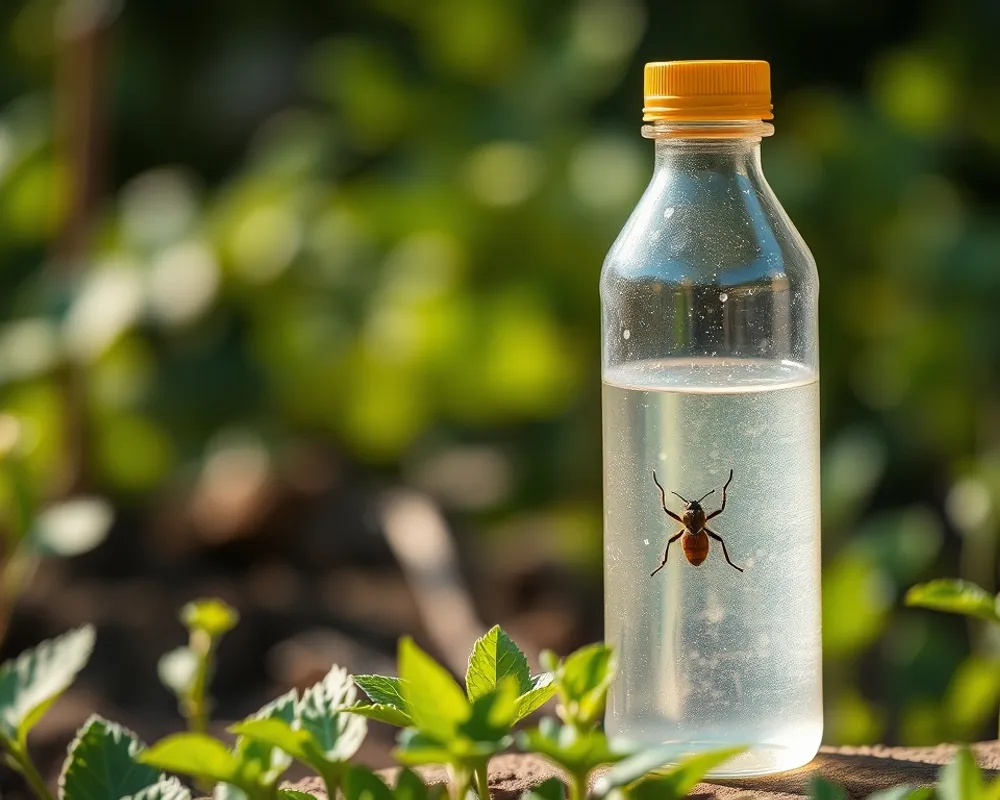
Synthetic pesticides are human-made compounds designed to be stable, potent, and fast-acting. They are the result of decades of research into insect biology and chemistry. When used correctly, they are effective tools.
When misused, they can create bigger problems than the ones they solve.
Pyrethroids – The Workhorses
Pyrethroids are synthetic versions of the natural pyrethrins from chrysanthemums. They were developed to be more stable and longer lasting.
- Permethrin: One of the most common home-garden insecticides. It works on contact and ingestion. It kills a broad range of insects including aphids, beetles, caterpillars, and spider mites. It persists for 7 to 14 days on foliage.
- Bifenthrin: Similar to permethrin but even more photostable. It can remain active for 2 to 4 weeks on leaves. It is highly toxic to fish and aquatic invertebrates.
- Lambda-cyhalothrin: A newer pyrethroid used in many lawn and garden products. It provides rapid knockdown and long residual. It is toxic to bees at the time of application but poses less risk after the spray dries.
Pyrethroids are excellent for knocking down a sudden heavy infestation. But they are broad-spectrum. They kill beneficial insects as easily as they kill pests.
Systemic Options (Neonicotinoids)
Systemic insecticides are absorbed by the plant. They travel through the sap to all parts of the plant, including new growth. This makes them effective against hidden feeders like aphids and scale that are hard to reach with contact sprays.
- Imidacloprid: The most widely used neonicotinoid. It blocks nerve signals in insects. It is effective on sucking pests like aphids, whiteflies, and mealybugs. It also works on soil-dwelling grubs. It persists in the soil for weeks to months depending on organic matter content.
- Acetamiprid: A newer neonicotinoid with a shorter soil half-life of about 3 to 6 days. It is less toxic to bees than imidacloprid when used as a foliar spray. It is commonly used on fruit trees and ornamentals.
- Thiamethoxam: Similar to imidacloprid but faster acting. It is used in both foliar and soil applications. It has been linked to colony collapse disorder in honeybees. It is now restricted in many parts of the European Union.
Other Common Synthetics
Beyond pyrethroids and neonicotinoids, there are a few other synthetic insecticide classes you might encounter.
- Spinetoram: A semi-synthetic product derived from spinosad. It has a longer residual than spinosad but still degrades relatively quickly. It is effective on thrips, caterpillars, and leafminers.
- Carbaryl (Sevin): A carbamate insecticide that kills a broad range of pests on contact. It is very toxic to bees and aquatic life. It is becoming less common as more targeted options become available.
- Malathion: An organophosphate insecticide that has been used since the 1950s. It is still used for mosquito control and on fruit crops. It degrades relatively quickly in the environment but is moderately toxic to humans.
The takeaway on synthetics is that they are potent and reliable. They deliver predictable results. But they also carry a higher burden of responsibility in terms of timing, application, and environmental impact.
Side-by-Side Comparison – How They Really Stack Up
To make the choice clearer, here is a direct comparison of the most common organic and synthetic options based on the factors that actually matter in a garden.
| Attribute | Organic Example (Spinosad) | Synthetic Example (Permethrin) |
|---|---|---|
| Speed of knockdown | 24 to 48 hours | 1 to 4 hours |
| Residual activity | 1 to 2 days in sun | 7 to 14 days |
| Bee toxicity (contact) | High when wet, low when dry | High for several hours |
| OMRI listed | Yes | No |
| PHI (pre-harvest) | 1 day | 7 to 14 days |
| Pest spectrum | Selective (thrips, caterpillars) | Broad (most insects) |
As you can see, there is no clear winner. The organic option is better if you are harvesting soon or concerned about bees. The synthetic option is better if you need fast results and can wait a week to harvest.
The practical insight here is that many experienced gardeners use both types strategically. They might use a synthetic pyrethroid to knock down a heavy flea beetle infestation early in the season. Then they switch to neem oil for maintenance later.
This approach balances speed with safety and reduces the chance of resistance building up.
When Organic Works Best (and When It Doesn't)
Organic options shine in specific situations. They are ideal for preventative or maintenance spraying. They work well when pest pressure is light to moderate.
They are also the better choice when you are harvesting vegetables within a few days.
Here is when you should reach for an organic product:
- Early season prevention: Apply neem oil or horticultural oil before pests establish. This disrupts the life cycle before populations explode.
- Light infestations: If you spot a few aphid clusters or a handful of caterpillars, organic options can handle it without collateral damage.
- Edible crops close to harvest: Spinosad has a 1-day pre-harvest interval. That is much shorter than most synthetics.
- Pollinator safety is a priority: Apply in the evening when bees are not active. Choose options like Bt that are specific to caterpillars.
- Indoor or greenhouse use: Organic options are less likely to cause phytotoxicity in controlled environments.
Here is when organic falls short:
- Heavy, established infestations: If Japanese beetles are skeletonizing your roses, neem oil will not stop them fast enough.
- Severe weather pressure: If it rains every other day, contact organics will wash off before they work. You will need to reapply constantly.
- Specific hard-to-kill pests: Spider mites and scale are notoriously difficult to control with organic options alone. Systemic synthetic options are often more effective.
- Large areas: Spraying an entire lawn for grubs with an organic product can be expensive and labor-intensive compared to a single synthetic application.
When Synthetic Works Best (and When It Doesn't)
Synthetic options are the right choice when you need decisive action. They are tools for emergencies and for situations where organic options simply cannot deliver.
Here is when you should reach for a synthetic product:
- Heavy, active infestations: When caterpillars are stripping your brassicas overnight, a pyrethroid will stop them in hours.
- Soil-dwelling pests: Grubs, root aphids, and fungus gnat larvae are hard to reach with contact sprays. A systemic like imidacloprid applied to the soil works from the inside out.
- Large-scale applications: If you are treating a whole lawn or a large orchard, synthetic options are more cost-effective and require fewer applications.
- Specific pest problems: Some pests like squash bugs and stink bugs have thick exteriors that resist contact organics. A synthetic pyrethroid is more reliable.
- Short growing windows: If you need to protect a crop before harvest and the PHI is tight, choose a synthetic with a short PHI like spinetoram.
Here is when you should avoid synthetics:
- Plants in bloom: Neonicotinoids and pyrethroids are highly toxic to foraging bees. Do not spray anything flowering.
- Vegetables you will eat soon: Most synthetics have PHIs of 7 to 21 days. Read the label before spraying.
- Near water sources: Pyrethroids are extremely toxic to fish and aquatic invertebrates. Runoff from lawns treated with bifenthrin can harm streams and ponds.
- When beneficial insects are active: Broad-spectrum synthetics do not discriminate. They kill predators and parasites along with the pests.
The Safety Question – Toxicity vs Exposure
This is where most of the confusion lives. People see "chemical" and assume danger. They see "organic" and assume safety.
The reality is more complicated.
What the Label Numbers Actually Mean
The toxicity of a pesticide is measured by its LD50 value. This is the dose that kills 50% of a test population. A higher number means lower toxicity.
- Pyrethrins (organic): Oral LD50 of about 2000 mg/kg in rats. This is low toxicity.
- Permethrin (synthetic): Oral LD50 of about 2000 mg/kg in rats. Also low toxicity.
- Imidacloprid (synthetic): Oral LD50 of about 450 mg/kg in rats. Moderate toxicity.
- Spinosad (organic): Oral LD50 of about 5000 mg/kg in rats. Very low toxicity.
The numbers show that some organic options are safer than some synthetics. But some organic options like rotenone have oral LD50 values around 60 mg/kg, which is highly toxic. The source of the chemical does not predict the safety profile.
What matters more is exposure. A synthetic product with low acute toxicity that you apply sparingly according to the label is safer than an organic product you overapply because you assume it is harmless.
Risks to Bees and Beneficial Insects
This is the biggest practical difference between organic and synthetic options.
- Highly toxic to bees: Imidacloprid, bifenthrin, lambda-cyhalothrin, carbaryl, malathion.
- Toxic to bees when wet, safe when dry: Spinosad, permethrin.
- Low toxicity to bees: Bt, neem oil (azadirachtin), insecticidal soap, horticultural oil.
The per the Xerces Society guidelines, the safest approach is to spray in the evening. This reduces the risk to bees regardless of which product you choose. If you are growing pollinator-friendly plants, choose options from the low-toxicity list.
Risks to Pets, Kids, and Garden Soil
The National Pesticide Information Center (NPIC) provides clear guidance. Most garden pesticides, organic or synthetic, have low oral toxicity to mammals when used correctly. The bigger risk is ingestion of concentrated product or application to edible plants too close to harvest.
For soil health, synthetic pyrethroids and neonicotinoids can persist and accumulate with repeated use. Organic options like Bt and spinosad break down faster in soil. But even organic options like copper-based fungicides can accumulate in soil over time and become toxic to beneficial soil organisms.
Resistance – The Hidden Risk with Both Types
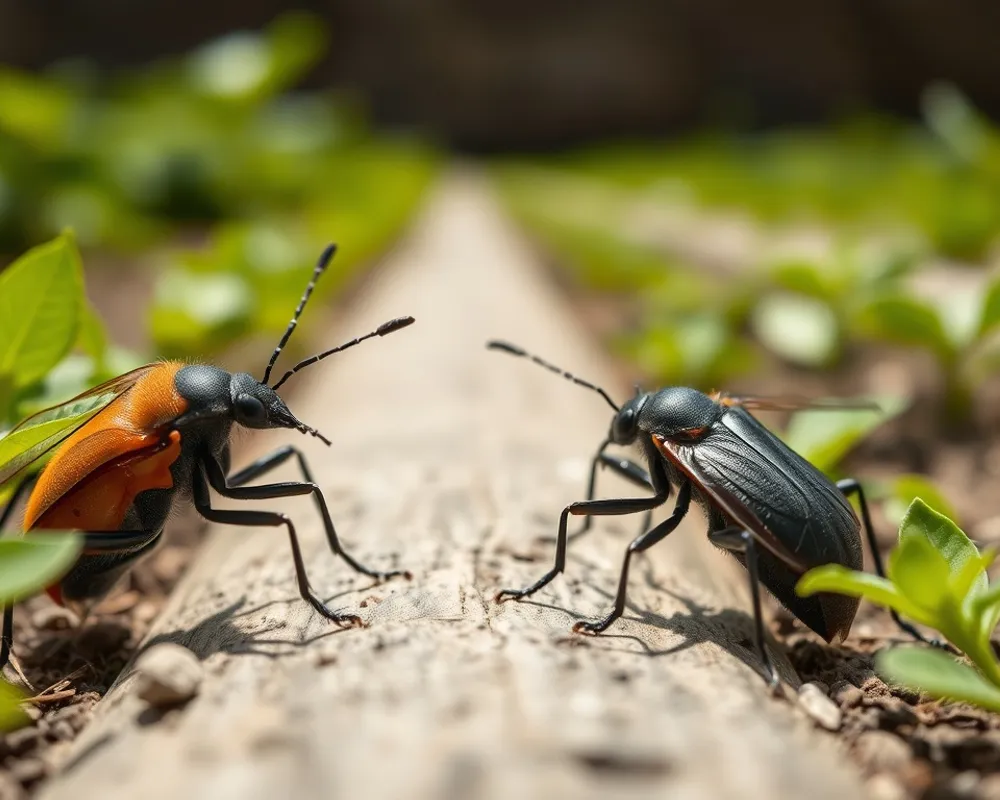
Resistance is a problem with both organic and synthetic pesticides. It happens when you repeatedly use the same mode of action. The few insects that survive reproduce.
Their offspring carry the resistance trait.
How Resistance Develops
Resistance develops faster with synthetic options because they often have a single, highly specific mode of action. But it also happens with organic options.
- Spinosad resistance: Thrips and diamondback moths have developed resistance to spinosad in many regions. This happened because growers used it repeatedly without rotation.
- Pyrethroid resistance: Many aphid and whitefly populations are now resistant to permethrin and bifenthrin. This is widespread in agricultural areas.
- Bt resistance: Diamondback moths and cabbage loopers have shown resistance to Bt in areas where it was used heavily.
Rotation Strategies That Work
Per the EPA and NPIC guidelines, you should rotate between different modes of action. Do not use the same product more than two times in a row. Switch to a product with a different mode of action for the next application.
A simple rotation schedule might look like this:
- Neem oil (azadirachtin) for early season prevention.
- Bt if caterpillars appear.
- Spinosad if thrips or more caterpillars show up.
- Insecticidal soap for spot treatment of aphids.
If you need synthetics, rotate between pyrethroids and spinetoram or other classes. Keep a record of what you used and when. This is a simple habit that saves you from losing a whole season to resistant pests.
Cost, Availability, and Convenience
The wallet question matters. Organic and synthetic options differ in price, where you can find them, and how easy they are to use.
Price Per Application
Here is a rough breakdown based on current retail prices at major garden centers.
| Product Type | Price per Ounce (Ready-to-Use) | Price per Application |
|---|---|---|
| Neem oil | $0.30 to $0.50 | $0.15 to $0.30 per plant |
| Spinosad | $0.40 to $0.60 | $0.20 to $0.40 per plant |
| Pyrethroid (permethrin) | $0.20 to $0.35 | $0.10 to $0.20 per plant |
| Imidacloprid | $0.25 to $0.40 | $0.15 to $0.30 per plant |
Synthetics tend to be cheaper per ounce. But you also use less because they are more concentrated. For large areas like lawns, synthetic options are significantly more cost-effective.
Where to Find Each Type
Organic options are widely available now. You can find them at big-box stores, independent garden centers, and online. Brands like Bonide and Monterey carry organic lines.
The OMRI seal on the label confirms the product meets organic standards.
Synthetic options are also widely available. Brands like Ortho and Bayer (now Environmental Science) dominate the shelf space. You can find them in the same stores.
Ease of Use and Storage
Both types come in ready-to-use spray bottles and concentrated formulas. Concentrates require a sprayer and proper mixing. Ready-to-use is convenient but more expensive per ounce.
Storage matters. Some organic products like Bt and spinosad have shorter shelf lives. Check the expiration date on the bottle.
Synthetic products generally last longer on the shelf. Store all pesticides in a cool, dry place out of reach of children and pets.
Practical Checklist – How to Choose for Your Situation
Here is a step-by-step process you can follow the next time you face a pest problem.
Step 1: Identify the Pest
You cannot choose the right product without knowing what you are dealing with. Take a photo or collect a sample. Look for the specific pest by name.
Aphids, caterpillars, and spider mites require different treatments.
Step 2: Assess the Infestation Level
How many pests are there? If you see fewer than 10 aphids on a single plant, you can squash them by hand or use insecticidal soap. If you see hundreds, you need a stronger option.
Step 3: Check Your Goals and Constraints
Ask yourself these questions:
- Is the plant flowering? If yes, avoid products toxic to bees.
- How close is harvest? Check the PHI on the label.
- Are there pets or children who might contact the plant? Choose lower-toxicity options.
- Is the infestation an emergency? If the plant is dying, reach for a faster option.
Step 4: Pick the Right Product and Apply Correctly
Choose a product that matches your answers above. Apply it in the evening. Cover the undersides of leaves where pests hide.
Follow the label dosage exactly. Do not mix products unless the label says it is safe.
Spray coverage matters more than the product choice. A poorly applied spray will fail regardless of whether it is organic or synthetic.
Final Verdict – Does It Matter for You?
The answer is yes, but only if you understand the trade-offs. For most home gardeners as of 2026, the smartest approach is a mixed strategy. Keep a few organic options on hand for routine use and prevention.
Keep a synthetic option for emergencies or for tough pests that resist organic control.
The choice between organic and synthetic matters most when you consider the specific pest, the plant, the timing, and your personal tolerance for risk. It matters less when you pick a camp and stick with it.
Read the label. Know your pest. Choose the right tool for the job.
That is the answer to the question.
Frequently Asked Questions
Is organic pesticide safer than synthetic?
Not automatically. Some organic products like rotenone are highly toxic. Some synthetic products like permethrin have low acute toxicity to mammals.
Safety depends on the specific active ingredient, the dose, and the exposure route. Always read the label.
Can I mix organic and synthetic pesticides in one spray?
Only if the label says it is safe. Mixing products without knowing the compatibility can cause chemical reactions that damage plants or reduce effectiveness. When in doubt, apply them separately and wait at least 24 hours between applications.
How long does organic pesticide last after spraying?
Most organic products break down within 24 to 48 hours in sunlight. This is good for the environment but requires more frequent reapplication. Synthetic products can last 7 to 14 days or longer depending on the formulation and weather.
Does organic pesticide kill beneficial insects?
Some do. Spinosad is toxic to bees when wet. Neem oil can smother beneficial insects if sprayed directly on them.
Bt is specific to caterpillars and does not harm bees. Always spray in the evening to minimize harm to pollinators.
What is the best organic pesticide for caterpillars?
Bacillus thuringiensis (Bt) is the best choice. It is specific to caterpillars and will not harm other insects, birds, or mammals. Apply it when caterpillars are actively feeding.
Reapply after rain.
Can synthetic pesticides cause pest resistance?
Yes. Resistance is a major problem with both synthetic and organic options. The key is to rotate between different modes of action.
Do not use the same product more than two times in a row. This applies to organic options like spinosad as much as synthetics.