
When you're faced with hauling soil, mulch, or a pile of bricks across your yard, you might find yourself wondering: what is a wheelbarrow and how can it make the job easier? At its core, a wheelbarrow is a simple yet ingenious tool designed to help you move heavy or bulky materials with less strain. It typically features a basin mounted on a single wheel, with two handles at the back for leverage.
Manufacturer specifications for common plastic wheelbarrows often list capacities around 4 to 6 cubic feet, capable of holding up to 200 pounds of material. This makes it an indispensable helper for everything from gardening to light construction, significantly reducing the physical effort required compared to carrying loads by hand. It’s about smart leverage and balanced weight distribution.
A Wheelbarrow in a Nutshell: The Quick Picture

Think of a wheelbarrow as your personal, portable ramp and lever system for heavy lifting. It’s fundamentally a sturdy basin, usually made of durable plastic or metal, that sits atop a frame with a wheel at the front and handles extending to the rear. This design allows you to scoop up a substantial amount of material, then lift the handles to tilt the load and roll it wherever you need it.
The single wheel is key here; it pivots, making it surprisingly maneuverable even in tighter garden paths or around obstacles. When loaded, you lift the handles, shifting most of the weight onto the wheel and your legs rather than your back. This clever mechanical advantage is why wheelbarrows have been a go-to tool for centuries.
Key Parts of a Wheelbarrow: What to Look For
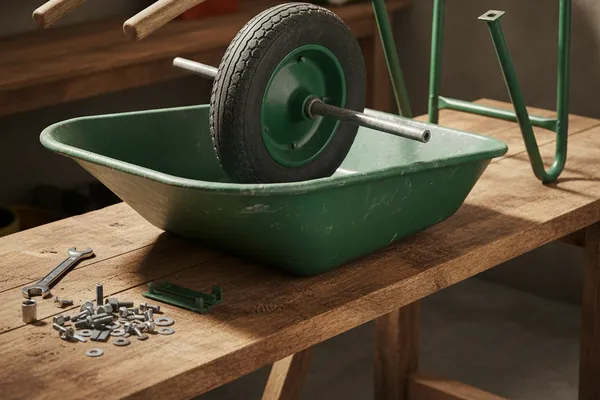
Understanding the main components of a wheelbarrow helps you choose the right one and appreciate how it works. The basin, or tray, is where you put your load. It comes in various sizes and materials, like tough polyethylene plastic known for resisting rust and dents, or steel for heavy-duty construction work.
Next is the wheel. Most traditional wheelbarrows feature a single wheel, but models with two or more wheels exist for added stability. The tire itself can be pneumatic (air-filled, offering a softer ride), solid (flat-free, requiring no maintenance), or semi-pneumatic. Finally, the handles are your connection to the machine, providing leverage to lift, push, and steer the load.
Single Wheel vs. Two Wheels: Which is Right for Your Task?

The biggest distinguishing feature is often the number of wheels. A single-wheel wheelbarrow is the classic design, offering excellent maneuverability. Because the single wheel can pivot easily, you can navigate tight corners, bumpy terrain, and narrow garden rows with relative grace.
However, a single wheel means the entire load's stability rests on that one point. This can make it more challenging to keep balanced when carrying a very heavy or awkwardly distributed load. For tasks requiring maximum stability or when working on very uneven ground, two-wheel wheelbarrows offer more balance, as the weight is distributed across two points, making them less prone to tipping.
What Can You Actually Haul in a Wheelbarrow? Common Jobs
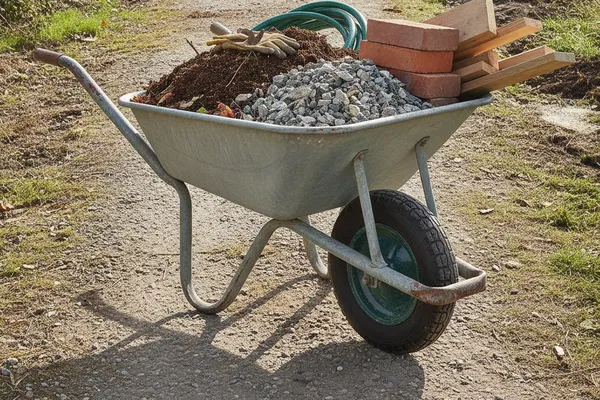
The versatility of a wheelbarrow means it’s useful for a surprising number of tasks around your property. For gardeners, it’s indispensable for moving bags of soil, spreading mulch, transporting compost, or hauling away yard debris like fallen leaves and branches. You can easily use it to move freshly dug earth when planting larger shrubs or trees.
In landscaping projects, a wheelbarrow becomes your workhorse for hauling construction materials such as bricks, paving stones, gravel, sand, and even bags of cement. It significantly speeds up these labor-intensive jobs. Even for home renovations, it's handy for moving renovation debris out of the way or bringing in new materials.
The Benefits: Why Hauling Gets Easier

The primary benefit of using a wheelbarrow is the significant reduction in physical strain. By transferring the load's weight to the wheel and using your body's leverage, you protect your back and joints. This means you can accomplish more work in less time with less fatigue.
It also makes transporting bulky items much more practical. Trying to carry a large bag of potting soil or a pile of gravel by hand is inefficient and often impossible. A wheelbarrow allows you to move these items in one go, saving you multiple trips and conserving your energy.
The Downsides: When a Wheelbarrow Isn't Enough
Despite their usefulness, wheelbarrows aren't perfect for every situation. They can be tricky to navigate on extremely soft or uneven ground, where the single wheel might sink or cause the barrow to tip. Pushing a heavily loaded wheelbarrow uphill can also be quite strenuous, even with the leverage it provides.
For very large quantities of material, or for moving items that are difficult to contain in a basin (like loose liquids or very fine dust without a liner), a dedicated cart or trailer might be a better option. Also, some models can be quite heavy themselves, making them cumbersome to maneuver when empty if you're not particularly strong.