
The question of who invented the wheelbarrow, who brought this simple yet invaluable tool into existence, is surprisingly complex, lacking a single, definitive inventor like Thomas Edison with the lightbulb. While its design seems elementary now, its origins are lost in the mists of early history, with evidence pointing to multiple potential eras and regions. Pinpointing an exact date or person for the wheelbarrow’s genesis is a historical puzzle that scholars have been piecing together for centuries, often relying on fragmented clues rather than clear records.
Interestingly, while we often associate ancient innovations with figures like the Romans, strong indicators suggest the wheelbarrow's earliest form might have emerged in ancient Greece, predating its widespread adoption elsewhere. Detailed research into classical texts and archaeological findings indicates a gradual development rather than a sudden invention. As of 2026, our understanding continues to evolve through ongoing scholarly work.
The Wheelbarrow: Who Actually Invented It?
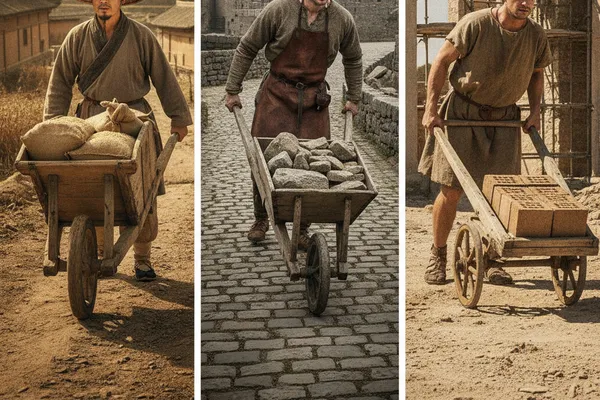
The quest to discover who invented the wheelbarrow doesn't yield a single name etched in history books. Instead, our research suggests its invention wasn't a singular event but rather a gradual evolution of sorts. Think of it less like a lightbulb moment and more like a series of logical steps taken over time by different people in different places.
Tracing the Roots of a Simple Machine
When we talk about the wheelbarrow, we're looking at a tool that has been fundamental to manual labor for centuries, drastically improving efficiency and reducing strain. Its development is a story woven through ancient civilizations, hinting at a functional necessity that spurred innovation. The exact moment it appeared remains debated among historians.
Beyond a Single "Aha!" Moment
The idea that a single person woke up one day and created the wheelbarrow isn't supported by evidence. Instead, scholars believe its design likely emerged organically as people sought better ways to move materials like soil, stone, or produce. This wasn't about fame for an inventor; it was about practical problem-solving for everyday tasks across various industries like construction and agriculture.
What the Ancient Texts Hint At: Greece vs. Rome?
Historical texts offer clues, but often they are debated or open to interpretation. This leaves us with competing theories. Some scholars point to ancient Greece, while others lean towards ancient Rome, as the birthplace of this ingenious device. The challenge lies in differentiating between mentions of similar tools and the true progenitor of the wheelbarrow as we know it.
Evidence from the Ancient World: What We Know (and Don't Know)
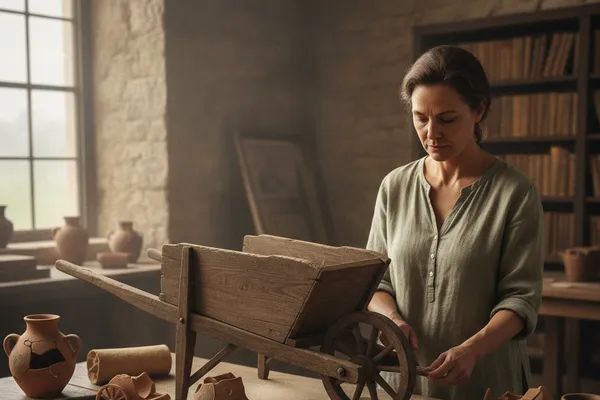
Our current understanding of the wheelbarrow's origins stems from piecing together fragmented historical records and archaeological hints. It's a detective story where the witnesses are ancient inscriptions, pottery shards, and the very development of construction and farming techniques. The lack of a definitive patent or inventor's diary means we must infer from available data.
The Case for Ancient Greece
Evidence suggests that early forms of the wheelbarrow, or at least a single-wheeled cart operated by one person, may have originated in ancient Greece. Some interpretations of writings from classical antiquity, dating back to the 4th century BCE, point to a device used for moving heavy loads efficiently. This potential Greek origin is significant because it predates many other key inventions attributed to the Romans.
The Roman Connection and Subsequent Developments
While the Greek theory is strong, the Roman Empire also played a crucial role in the wheelbarrow's history, especially concerning its wider adoption and refinement. Roman engineers and builders were renowned for their practical innovations. It's possible the wheelbarrow either originated in Rome or was significantly improved and popularized there, spreading through its vast territories. However, definitive proof linking a specific Roman individual to its invention remains elusive.
What Makes a Wheelbarrow a Wheelbarrow? Key Features
At its core, a wheelbarrow is defined by a few simple, yet effective, design elements that work together. These features are what allow it to leverage mechanical advantage for moving heavy loads. Each component plays a vital role in its functionality and ease of use.
- Single Wheel: Positioned at the front, this is the defining feature, allowing the user to pivot and maneuver the load.
- Handles: Located at the rear, these provide leverage and control for steering and lifting.
- Container/Tray: A basin or pan designed to hold and carry materials like soil, gravel, or debris.
- Frame: The structural support that connects the wheel, handles, and tray, ensuring stability during transport.
Why the Wheelbarrow Mattered: Its Impact on Labor
The introduction of anything that makes hard work easier is a significant advancement for any society. The wheelbarrow was no different. It represented a leap forward in efficiency, drastically altering how construction, agriculture, and general material handling were done, and it continues to be indispensable today.
The ability to move larger quantities of materials with less physical effort meant people could accomplish more in less time. This saved energy and reduced the risk of injury associated with manual carrying. For early civilizations, this efficiency boost was incredibly valuable, allowing for more ambitious building projects and more productive farming.
Not Just One Inventor: The Evolution of the Wheelbarrow
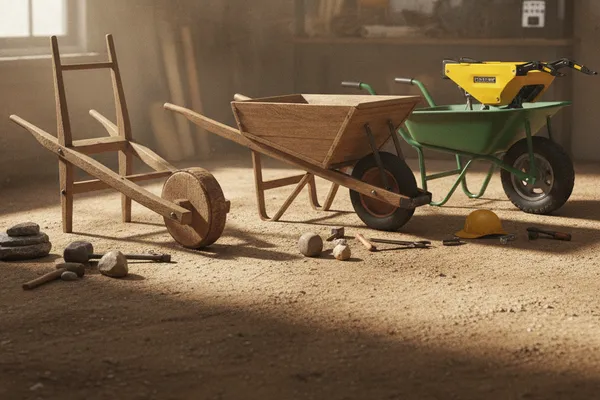
Given the lack of a specific inventor’s name, it's more accurate to view the wheelbarrow as a tool that evolved over time. Many historians and researchers believe that rather than a single flash of genius, the wheelbarrow developed incrementally. People likely experimented with various designs, perhaps starting with simple sleds or two-wheeled carts before arriving at the single-wheeled configuration.
This evolutionary process means that different individuals and cultures likely contributed to its refinement. What we recognize as a wheelbarrow today is the result of generations of practical problem-solving. This gradual development helps explain why tracing it back to one originator is so challenging.
When Did the Wheelbarrow Really Take Off?
While potential origins in ancient Greece and Rome are discussed, the widespread use and clear depictions of the wheelbarrow don't appear until much later. Many historians point to the 12th or 13th century CE in China, and slightly later in medieval Europe, as periods when the tool started becoming more common and consistently documented. It’s around this time that illustrations and written accounts begin to more clearly show the design as we understand it.
Were There Early "Competitors" or Alternatives?
Before the wheelbarrow became a staple, people relied on simpler, albeit less efficient, methods to move goods. Carrying heavy items by hand or using baskets was the norm. For larger loads, animal-drawn carts or sledges were utilized, but these required more setup and were not as maneuverable for tight spaces. The wheelbarrow offered a unique blend of portability, capacity, and user control that set it apart.
What Are the Primary Uses of a Wheelbarrow Today?

Even though we're talking about its invention, the wheelbarrow is far from obsolete. Its simple design still makes it incredibly useful for countless tasks. Think about any job where you need to move material across a yard, garden, or construction site. That's where the wheelbarrow shines.
From moving piles of dirt and mulch in a garden to hauling bricks and cement on a construction site, its versatility is unmatched. Homeowners rely on them for small landscaping projects, while professionals use them for their durability and efficiency. It's a true workhorse tool that has stood the test of time.
- Gardening: Transporting soil, compost, weeds, or harvested produce.
- Construction: Moving sand, gravel, cement, debris, and building materials.
- Landscaping: Hauling mulch, rocks, plants, and landscaping supplies.
- General Yard Work: Clearing leaves, snow, or moving heavy outdoor items.
Common Questions About the Wheelbarrow's Origin
People often have specific questions when looking into the history of common tools. The wheelbarrow is no exception, and several points frequently come up when discussing its origins and development. Addressing these directly helps clarify the historical record.
Is there a definitive inventor for the wheelbarrow?
No, there isn't one single, universally accepted inventor for the wheelbarrow. Historical evidence points to a gradual evolution of the concept rather than a singular creation event. Multiple cultures likely contributed to its development over centuries.
Did the Romans invent the wheelbarrow?
While the Romans were masters of engineering, the current consensus among many historians is that the wheelbarrow likely predates them, possibly originating in ancient Greece. However, the Romans certainly may have adopted and further utilized or refined the design within their empire.
When did wheelbarrows become common?
Clear illustrations and widespread use of the wheelbarrow in Europe and China generally date to around the 12th and 13th centuries CE. This period marks when the tool became more distinct and consistently documented in historical records, moving beyond speculative origins.
The Lasting Legacy of the Wheelbarrow
The wheelbarrow might seem like a humble tool, but its impact is undeniable. Its invention, or rather its evolutionary development, revolutionized material handling in ways that still benefit us today. It stands as a testament to human ingenuity in creating simple solutions for complex physical challenges.
From ancient construction sites to modern backyards, the wheelbarrow's function has remained largely the same: making hard work easier and more efficient. Its continued presence in hardware stores and on job sites worldwide speaks volumes about its enduring utility and practical brilliance. It's a device that has truly earned its place in the history of human tools.
What Are the Primary Uses of a Wheelbarrow Today?

Even though we're talking about its invention, the wheelbarrow is far from obsolete. Its simple design still makes it incredibly useful for countless tasks. Think about any job where you need to move material across a yard, garden, or construction site. That's where the wheelbarrow shines.
From moving piles of dirt and mulch in a garden to hauling bricks and cement on a construction site, its versatility is unmatched. Homeowners rely on them for small landscaping projects, while professionals use them for their durability and efficiency. It's a true workhorse tool that has stood the test of time.
- Gardening: Transporting soil, compost, weeds, or harvested produce.
- Construction: Moving sand, gravel, cement, debris, and building materials.
- Landscaping: Hauling mulch, rocks, plants, and landscaping supplies.
- General Yard Work: Clearing leaves, snow, or moving heavy outdoor items.
Common Questions About the Wheelbarrow's Origin
People often have specific questions when looking into the history of common tools. The wheelbarrow is no exception, and several points frequently come up when discussing its origins and development. Addressing these directly helps clarify the historical record.
Is there a definitive inventor for the wheelbarrow?
No, there isn't one single, universally accepted inventor for the wheelbarrow. Historical evidence points to a gradual evolution of the concept rather than a singular creation event. Multiple cultures likely contributed to its development over centuries.
Did the Romans invent the wheelbarrow?
While the Romans were masters of engineering, the current consensus among many historians is that the wheelbarrow likely predates them, possibly originating in ancient Greece. However, the Romans certainly may have adopted and further utilized or refined the design within their empire.
When did wheelbarrows become common?
Clear illustrations and widespread use of the wheelbarrow in Europe and China generally date to around the 12th and 13th centuries CE. This period marks when the tool became more distinct and consistently documented in historical records, moving beyond speculative origins.
The Lasting Legacy of the Wheelbarrow
The wheelbarrow might seem like a humble tool, but its impact is undeniable. Its invention, or rather its evolutionary development, revolutionized material handling in ways that still benefit us today. It stands as a testament to human ingenuity in creating simple solutions for complex physical challenges.
From ancient construction sites to modern backyards, the wheelbarrow's function has remained largely the same: making hard work easier and more efficient. Its continued presence in hardware stores and on job sites worldwide speaks volumes about its enduring utility and practical brilliance. It's a device that has truly earned its place in the history of human tools.