
If you're dealing with a stubborn mulberry tree sending shoots all over your yard, you've probably wondered whether gasoline will kill it. The short answer is yes, gasoline will kill mulberry trees, but it's one of the worst ways to do it. What sounds like a quick fix actually creates serious safety and environmental problems that can haunt your property for years.
The Environmental Protection Agency (EPA) does not register gasoline as a pesticide under the Federal Insecticide, Fungicide, and Rodenticide Act (FIFRA). Pouring fuel into the ground contaminates soil with benzene and other volatile organic compounds (VOCs) that persist for years. Before you reach for that gas can, here's what you need to know about why this approach fails, what risks it carries, and what actually works as of 2026.
Quick Answer

Yes, gasoline will kill a mulberry tree. But it's dangerous, illegal as a herbicide, and often ineffective long-term. Gasoline damages roots and soil, but mulberries resprout vigorously from surviving root tissue.
The fire risk, groundwater contamination, and harm to nearby plants outweigh any benefit. Safe alternatives like cut-stump treatment with triclopyr work better without the hazards.
Why People Consider Gasoline for Killing Mulberry Trees
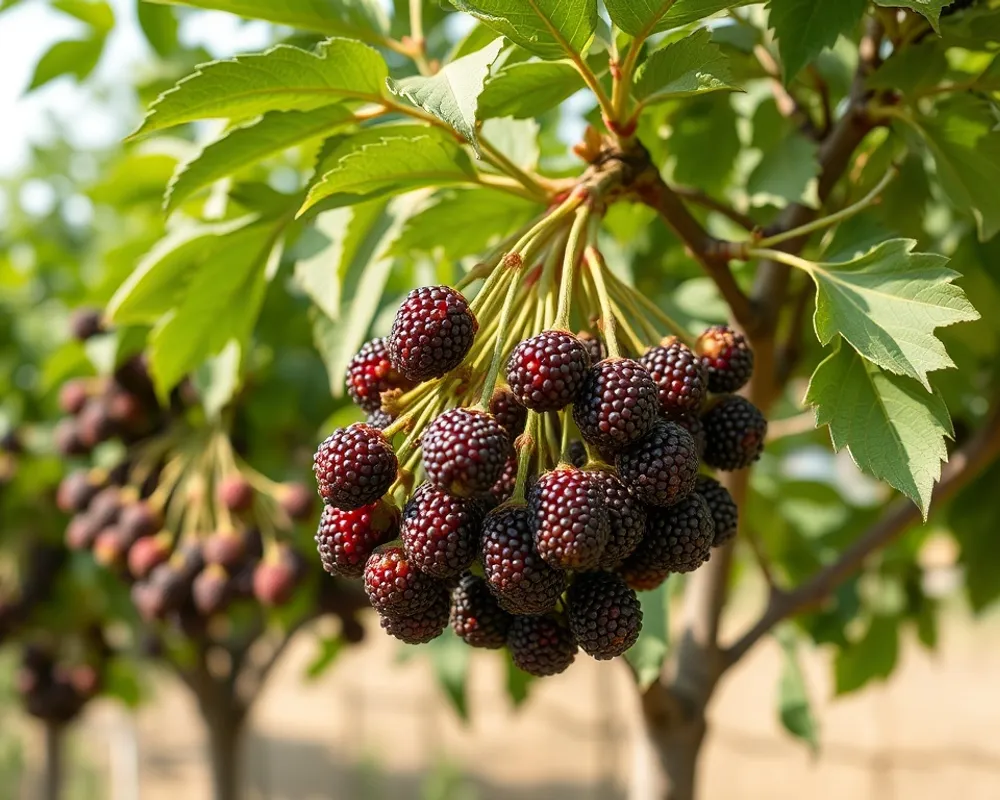
Mulberry trees are aggressive growers. White mulberry (Morus alba) is classified as an invasive species in many parts of North America. These trees spread quickly through bird-dispersed seeds and a root system that sends up suckers dozens of feet from the main trunk.
Gardeners and homeowners dealing with a mulberry takeover often get frustrated. The tree keeps coming back after cutting. Saplings appear everywhere.
The idea of pouring something that kills everything on contact sounds appealing. Gasoline is cheap, readily available in most garages, and seems like a sure thing. But getting rid of garden weeds doesn't have to involve such extreme measures.
Why Mulberry Trees Are So Hard to Kill
Mulberries have a biological advantage that makes them persistent survivors. Their root systems store substantial energy reserves. When you cut the top, the roots send up new shoots from dormant buds.
This is called resprouting, and mulberries are exceptionally good at it.
The root system can extend well beyond the tree's canopy. Even if you damage part of the root network, sections further away can remain alive and generate new growth. This is why simply pouring gasoline around the base rarely achieves a complete kill.
The "Drill-and-Fill" Myth That Won't Die
A popular method you'll hear about involves drilling holes into the trunk and pouring gasoline into them. The idea is that the gasoline spreads through the vascular system and kills the roots from the inside.
In theory, this approach delivers the gasoline directly into the tree's transport tissues. In practice, it's unreliable. Gasoline evaporates quickly.
It doesn't translocate through the tree the way systemic herbicides do. Much of it just pools in the drilled holes and evaporates or spills onto the ground. You end up with a fire hazard and contaminated soil, but the roots often survive.
The Real Dangers of Using Gasoline as a Herbicide
The risks here aren't theoretical. People have been injured, fined, and left with long-term property damage from using gasoline on trees. These dangers need to be taken seriously.
Fire and Explosion Risk — It's Higher Than You Think
Gasoline has a flash point of -45°F (-43°C). At any temperature above that, its vapors can ignite. A spark from a metal tool striking a rock, a pilot light from a nearby water heater, or even static electricity from synthetic clothing can set off a fire.
Mulberry trees often grow near houses, fences, and outbuildings. Applying gasoline near these structures creates an unnecessary fire risk. The vapors are heavier than air and can travel along the ground to ignition sources dozens of feet away.
This isn't scaremongering. Fire departments respond to gasoline-related vegetation fires every year.
Soil Contamination That Lasts for Years
One gallon of gasoline can contaminate over a million gallons of groundwater according to EPA estimates. The benzene, toluene, ethylbenzene, and xylene (BTEX compounds) in gasoline are classified as hazardous substances.
Once gasoline soaks into the soil, it doesn't just go away. Microbes that break down hydrocarbons work slowly, especially in clay-heavy or compacted soils. The contaminated zone can remain toxic to plants for two to five years or longer.
Restoring soil health after such a spill requires active remediation and patience.
Harm to Nearby Plants, Pets, and Wildlife
Gasoline doesn't discriminate. It kills any plant roots it contacts, not just the mulberry. Your lawn, ornamental shrubs, and nearby trees can all be damaged or killed by gasoline that spreads through the soil.
Pets that walk through treated areas can absorb gasoline through their paw pads. Licking contaminated paws or fur can cause digestive tract irritation and more serious health issues. Birds and small mammals that contact the soil are also at risk.
The odor can attract curious animals, leading to accidental poisoning.
Legal Trouble — Gasoline Isn't a Registered Pesticide
The EPA regulates all pesticides in the United States under FIFRA. Using a product in a way that isn't listed on its label is a federal violation. Gasoline labels don't include directions for killing trees or weeds.
Pouring it on the ground as a herbicide is technically a misuse.
Penalties can include fines. If the contamination spreads to a neighbor's property or a water source, you could face liability for cleanup costs. Some states have additional environmental regulations that specifically address the release of petroleum products into the environment.
Why Gasoline Often Fails to Kill Mulberry Trees

Beyond the safety and legal issues, gasoline just isn't reliable for this job. Many people who try it end up with a dead top and a living root system that sends up more shoots than before.
Root Suckers and Resprouting
The mulberry's survival strategy centers on its ability to send up new shoots from roots that weren't directly exposed to the gasoline. Even if the main trunk dies, lateral roots extending outward can remain alive and produce suckers.
These suckers often emerge several feet from the original tree location. You might think the problem is solved, only to find new mulberry stems popping up in unexpected places months later. Each sucker is connected to the same root system, and cutting them only triggers more growth.
Limited Soil Penetration
Gasoline doesn't move through soil the way water does. Its viscosity and chemical properties cause it to spread unevenly. It tends to pool near the surface rather than penetrating deeply to reach the entire root system.
A mature mulberry tree can have roots reaching three to five feet deep. The gasoline you pour on the surface might only penetrate the top few inches before it evaporates or binds to soil particles. Deep roots remain untouched and fully capable of supporting new growth.
Better Alternatives That Actually Work (And Are Legal)
The good news is you have several safe, effective options for killing a mulberry tree. These methods are registered with the EPA, backed by research from university extension services, and proven to work on stubborn species like mulberry. Each approach targets the tree differently, so choose based on your situation.
Cut-Stump Treatment with Triclopyr
This is the most reliable method for killing established mulberry trees. You cut the trunk down and apply herbicide to the fresh stump within minutes. The chemical moves into the root system through the open vascular tissue.
Triclopyr is the active ingredient found in products like Garlon and Ortho Brush-B-Gon. Research from the Journal of Arboriculture shows cut-stump treatment with triclopyr achieves 85 to 95 percent kill rates on hardwood species when applied correctly. The key is timing.
You must paint the stump within five minutes of cutting before the wound seals over.
Mix the triclopyr concentrate with a basal oil or diesel fuel at the ratio listed on the label. Brush the solution onto the outer ring of the stump. This is the cambium layer, the living tissue that transports the chemical to the roots.
Choosing between spray and brush application depends on the stump size and your preference for precision.
Basal Bark Application
For trees you want to leave standing as dead snags, basal bark treatment is a good option. You spray herbicide mixed with oil onto the lower 12 to 18 inches of the trunk around the entire circumference.
This method works best on trees with smooth bark and trunks under six inches in diameter. The oil carries the herbicide through the bark into the cambium layer. From there it travels to the root system.
Apply during the growing season when the tree is actively transporting nutrients.
Hack-and-Squirt Method with Glyphosate
Also called frilling or injection, this approach requires a hatchet or drill. You make downward cuts into the bark around the tree's circumference, spacing them about an inch apart. Immediately squirt concentrated glyphosate into each cut.
Glyphosate is the active ingredient in products like Roundup. It moves through the tree's vascular system and kills the roots. This method uses less chemical than cut-stump treatment and works well on larger trees.
Make sure the cuts penetrate through the bark into the sapwood.
Mechanical Removal — Digging and Grinding
If you want to avoid chemicals entirely, mechanical removal is an option. For small saplings, pull them when the soil is moist and try to get as much of the root as possible.
For established trees, stump grinding removes the above-ground portion. But the lateral roots remain. You'll need to monitor the area for suckers for at least one to two growing seasons after grinding.
Each sucker must be cut or treated with herbicide as it appears.
| Method | Best For | Effectiveness | Chemical Needed |
|---|---|---|---|
| Cut-stump | Medium to large trees | 85-95% | Triclopyr |
| Basal bark | Trees under 6" diameter | 70-85% | Triclopyr in oil |
| Hack-and-squirt | Large trees, standing dead | 75-90% | Glyphosate |
| Mechanical | Small saplings | Variable | None |
Step-by-Step Guide: The Safest Way to Kill a Mulberry Tree
I'll walk you through the cut-stump method. It's the most effective approach according to multiple Cooperative Extension Service publications. You'll need a few tools and about an hour of work.
What You'll Need
Gather these items before you start. Having everything ready means you can work fast after cutting.
- Chainsaw or handsaw for cutting the trunk
- Triclopyr herbicide concentrate
- Basal oil or diesel fuel for mixing
- Small paintbrush or handheld spray bottle
- Nitrile gloves and safety glasses
- Long sleeves and pants
Step 1: Cut the Tree at the Right Height
Make your cut as close to the ground as possible. A stump height of two to four inches is ideal. Lower stumps are easier to treat and decay faster.
Cut the trunk straight across. Avoid angled cuts that leave more surface area exposed. If the tree is on a slope, make the cut level with the higher side so herbicide doesn't run off.
Step 2: Apply Herbicide Immediately
This step is time sensitive. Within five minutes of cutting, paint the herbicide mixture onto the outer edge of the stump. Cover the cambium layer completely, the ring of living tissue just inside the bark.
The center of the stump is dead heartwood. It won't absorb the chemical. Focus all your application on the outer inch or two around the circumference.
Use enough solution to soak the bark edge but not so much that it drips off.
Step 3: Monitor for Resprouts
Check the area every few weeks during the growing season. If suckers appear, you have two options. Cut them and treat the cut end with herbicide, or spray the foliage with a glyphosate solution.
Continue monitoring for at least one full growing season. The root system may take months to die completely. Persistent resprouts indicate the initial treatment didn't reach all the roots.
Repeat the cut-stump process if necessary.
Common Mistakes People Make When Killing Mulberry Trees
Even with the right method, small errors can cause failure. Here are the most common problems based on reports from extension agents and arborists.
Waiting too long to apply herbicide. The stump begins sealing over within minutes. By 15 minutes, absorption drops significantly. Have your herbicide mixed and ready before you make the cut.
Using too little herbicide. A light coating won't penetrate enough tissue. The cambium needs to be visibly wet. Use enough solution to soak in without pooling.
Treating in the wrong season. Dormant trees don't transport chemicals to the roots. Apply during active growth, ideally late summer or early fall when the tree is sending energy downward for winter storage. Understanding the seasonal timing for lawn care can help you align your tree treatment with the same principles.
Ignoring large roots exposed by cutting. If you cut near ground level and see large lateral roots, paint the cut ends of those roots too. They can remain alive and produce suckers even after the main stump is treated.
Not using proper mixing ratios. Triclopyr concentrate needs to be mixed with oil or water depending on the product. Read the label and follow the specified ratio. Too dilute and it won't work.
Too concentrated and it wastes product without improving results.
Before applying any herbicide, check the weather forecast. Rain within six hours can wash the chemical off before it absorbs. Wind over 10 miles per hour can cause drift onto desirable plants.
Frequently Asked Questions
Does vinegar or salt work better than gasoline?
Neither is reliably effective on established mulberry trees. Household vinegar (5 percent acetic acid) only kills top growth on small seedlings. Salt sterilizes soil but takes years to kill a mature tree and prevents anything else from growing there afterward.
Stick with registered herbicides or mechanical removal for reliable results.
How long does it take for a mulberry tree to die after treatment?
With cut-stump treatment, the top dies within one to two weeks. The roots take longer. You'll see the most dieback in four to eight weeks.
Monitor for suckers through the next growing season. Complete root death can take six months to a year depending on tree size and treatment timing.
What if I already poured gasoline on the soil?
Stop using gasoline immediately. The contaminated soil needs time to break down naturally. Aerobic bacteria will slowly degrade the hydrocarbons over two to five years.
Avoid planting anything edible in that area. If the spill was large, contact your local environmental protection office for cleanup guidance. When you're ready to plant again, preparing soil for new planting will require careful attention to residual contamination.
Can I use bleach instead of gasoline?
Bleach is not an effective herbicide for mulberry trees. It damages foliage on contact but doesn't translocate to the root system. The tree will likely resprout within weeks.
Bleach also contaminates soil and kills beneficial microorganisms. It's not a safe or effective alternative.
Will cutting the tree down alone eventually kill it?
No. Mulberries are aggressive resprouters. Cutting the trunk without treating the stump guarantees regrowth.
The tree will send up multiple shoots from the root system, often producing a denser thicket than the original single trunk. Always treat the stump or plan for ongoing sucker management.
What is the best time of year to kill a mulberry tree?
Late summer to early fall is optimal. The tree is actively moving carbohydrates from leaves down to the roots for winter storage. Herbicides applied during this window are pulled into the root system effectively.
Spring treatment works too, but fall application gives the highest success rate.
The Bottom Line — Don't Use Gasoline
Gasoline can kill a mulberry tree, but the risks make it a terrible choice. You're trading a temporary solution for fire danger, soil contamination that lasts years, and potential legal liability. The tree might even survive and send up more suckers than before.
The good news is you have better options. Cut-stump treatment with triclopyr is safe, legal, and backed by decades of research from university extension programs. It costs about the same as a gallon of gas and works far more reliably.
Take the time to do it right. Your soil stays healthy. Your pets and family stay safe.
And that mulberry tree stays dead for good.