
Image source: Pexels / Ан sol (Pexels License)
Yes, you can start a redbud tree from a cutting, but let's be honest, it's not the easiest propagation project you'll ever tackle. Redbuds (Cercis canadensis) are a bit finicky about rooting, but with the right timing, technique, and a little patience, you can absolutely pull it off. I've done it successfully many times, and the reward, a gorgeous tree you grew yourself, is completely worth the effort.
Can You Start a Redbud Tree from a Cutting?
Redbud trees can be propagated from cuttings, and this is actually the preferred method if you want to preserve the exact characteristics of a named cultivar like 'Forest Pansy' or 'Rising Sun.' Growing from seed is simpler, but seedlings won't necessarily look like the parent plant.
The most successful approach uses softwood cuttings taken in late spring or early summer. At this stage, the stems are young, actively growing, and haven't yet hardened off for the season. Softwood roots more readily than mature wood.
Here's the honest truth though: redbud cuttings don't have the highest success rate in the plant world. Expect roughly 40, 60% of cuttings to root successfully even under good conditions. That's why most experienced gardeners take several cuttings at once rather than relying on just one or two.
Semi-hardwood cuttings taken in late July through August are another option. These have a slightly lower success rate than softwood, but they're more forgiving if you miss the optimal softwood window. Either way, rooting hormone is your best friend throughout the process.
When to Take Redbud Cuttings
Timing is everything with redbud propagation. The sweet spot for softwood cuttings is late May through mid-June in most parts of the US. By then, spring growth has pushed out vigorously but the stems haven't yet begun to lignify into woody tissue.
A simple test: gently bend a stem tip. If it bends without snapping, it's still softwood. If it cracks or snaps cleanly, you've missed the window.
Aim to take your cuttings in the early morning when plants are fully hydrated. Wilted cuttings taken in afternoon heat stress out immediately and are far less likely to root. Keep everything cool and moist from the moment the cutting leaves the tree.
How to Take a Redbud Cutting

Image source: Pexels / Erik Mclean (Pexels License)
Getting a clean, properly sized cutting sets the whole process up for success. Here's exactly what to do:
- Sterilize your tools. Wipe pruning shears or a sharp knife with rubbing alcohol. A clean cut prevents disease from entering the cutting.
- Choose healthy stems. Look for vigorous, disease-free shoots from the current season's growth. Avoid anything with pest damage or discoloration.
- Cut 4, 6 inches of stem. Make your cut just below a leaf node at a 45-degree angle. This maximizes the surface area available for rooting.
- Remove lower leaves. Strip off all leaves from the bottom half of the cutting. Leave just 2, 3 leaves at the tip to support photosynthesis.
- Wound the base lightly. Using your knife, scrape a 1-inch section on one side of the stem base to expose the green cambium layer. This wounding triggers more aggressive root development.
- Keep cuttings moist. Wrap them in a damp paper towel inside a plastic bag until you're ready to pot them.
Work quickly and confidently. The less time between cutting and potting, the better your chances.
Rooting Your Redbud Cutting
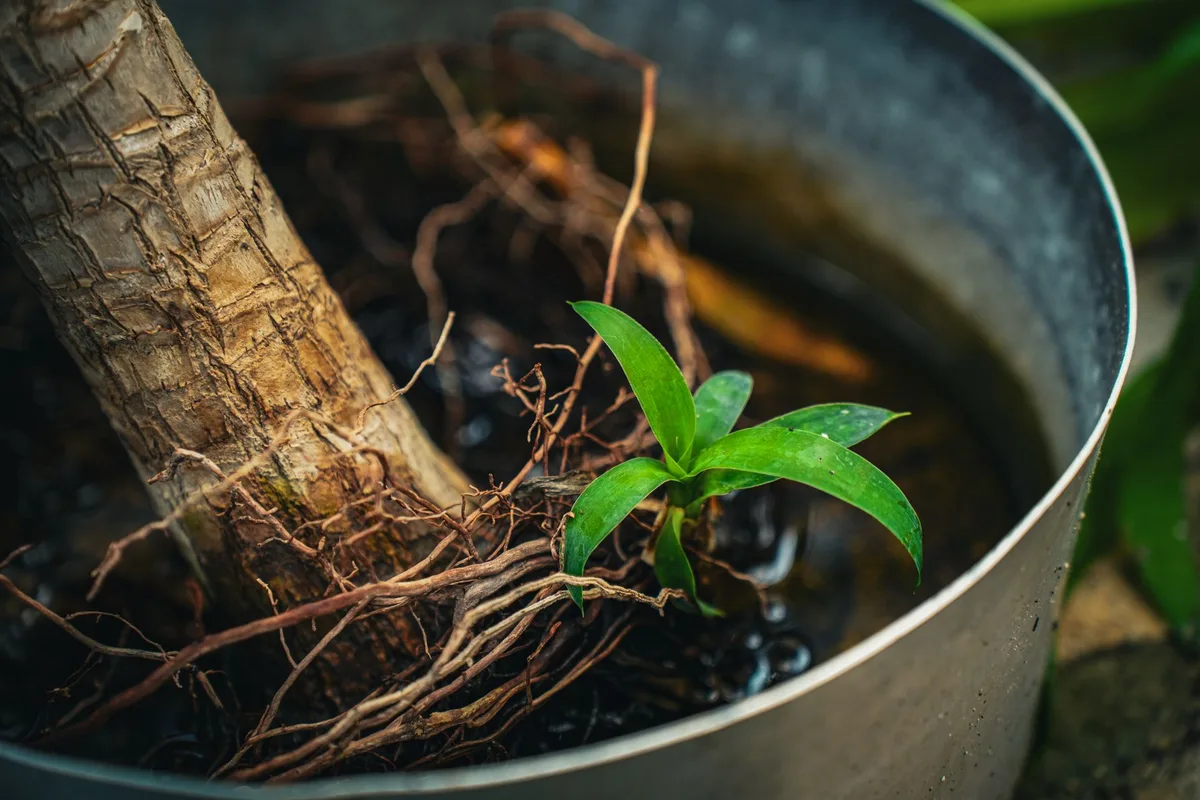
Image source: Pexels / Yetkin Ağaç (Pexels License)
This is where gardeners either succeed or stumble. Rooting medium and humidity are the two factors that matter most here.
Use rooting hormone. Dip the wounded base into IBA (indole-3-butyric acid) rooting powder or gel, a medium-strength formulation works well for redbud. Tap off any excess. Too much hormone actually inhibits rooting rather than helping.
Choose the right rooting medium. Forget regular potting mix, it holds too much moisture and causes rot. Instead, use a 50/50 mix of perlite and peat moss, or coarse horticultural sand mixed with vermiculite. This keeps the mix airy while retaining just enough moisture.
Once you eventually transplant your rooted cutting into garden soil, the question of compost versus fertilizer becomes relevant for getting that young tree established properly.
Maintain high humidity. Place a clear plastic bag or dome over your cuttings. The goal is 80, 90% relative humidity around the foliage. This limits water loss through the leaves while the cutting has no roots to compensate.
Bottom heat helps. A seedling heat mat set to around 70, 75°F at the base of the pot dramatically speeds up rooting. Warm roots, slightly cooler air above, that's the combination you want.
Place cuttings in bright indirect light. Direct sun through a plastic cover will cook them. Check for roots after 6, 8 weeks by giving a gentle tug.
If you feel resistance, roots are forming. Don't give up before 12 weeks, redbud is slow.
Transplanting Your Rooted Cutting
Once your cutting has a solid root system, visible at the drainage holes of a small pot, move it to a 1-gallon container filled with quality potting mix. At this stage, a light application of spring garden fertilizer encourages steady growth without overwhelming the young roots.
Harden off the plant over 1, 2 weeks before full outdoor exposure. Set it outside in a sheltered, shaded spot for a few hours each day, gradually increasing exposure. Skipping this step causes transplant shock that can set back months of progress.
Plant in the ground in fall or early spring when temperatures are mild. Clear the planting area thoroughly, keeping weeds under control before and after planting saves headaches later, since established weeds compete hard with young trees for water and nutrients.
Propagation Method Comparison
| Method | Difficulty | Success Rate | Time to Transplant | Preserves Cultivar? |
|---|---|---|---|---|
| Softwood Cuttings | Moderate | 40–60% | 6–12 months | Yes |
| Semi-hardwood Cuttings | Moderate | 30–50% | 8–14 months | Yes |
| Air Layering | Moderate–Hard | 60–75% | 4–6 months | Yes |
| Growing from Seed | Easy | 80%+ germination | 12–18 months | No |
| Grafting | Advanced | 70–85% | 6–12 months | Yes |
Seeds are the most reliable route to a living tree but won't reproduce a cultivar's exact traits. If you've fallen in love with a specific variety, cuttings or air layering are the right tools.
Redbud Tree Growing Conditions
| Factor | Ideal Condition | Notes |
|---|---|---|
| Sunlight | Full sun to partial shade | Afternoon shade in hot climates |
| Soil pH | 6.0–7.5 | Slightly acidic preferred |
| Watering | Moderate; drought-tolerant once established | Weekly deep watering for first 2 years |
| Soil Type | Well-draining loam or sandy loam | Avoid heavy clay |
| USDA Zones | 4–9 | Most cultivars |
| Mature Height | 20–30 feet | Species dependent |
| Growth Rate | Moderate — 7–10 feet per decade | Faster with irrigation |
| Fertilizer Need | Low; balanced formula | Early spring only |
The lawn and garden around a young redbud also benefits from seasonal care. Understanding when to feed the surrounding turf ensures competing grass doesn't rob your new tree of nutrients during those critical first two years.
Data & Analytics: What the Research Shows
Redbud propagation success isn't just anecdotal, horticultural research supports what experienced gardeners have observed for decades.
Key findings:
- Cuttings treated with 8,000, 10,000 ppm IBA show rooting rates up to 65% in controlled nursery trials, compared to just 15, 20% in untreated cuttings.
- Bottom heat at 72, 75°F can reduce rooting time by 25, 30% compared to ambient-temperature propagation.
- University extension research confirms late May to mid-June as the optimal cutting window for Cercis canadensis, roughly 6, 8 weeks after budbreak.
- Eastern Redbud is native to 27 US states and consistently ranks among the top 10 most planted native flowering trees in North American residential landscapes.
- Redbud sales in the US nursery industry have grown approximately 18% over the past decade, driven by native plant trends and pollinator garden interest.
- A redbud grown from a cutting can begin flowering in as little as 3, 4 years, versus 5, 7 years for seed-grown trees.
- Early-season blooms make redbuds a critical food source for bees emerging from winter before most other flowers open.
For detailed botanical guidance on Cercis canadensis, the Missouri Botanical Garden plant finder is one of the most comprehensive resources available to home gardeners.
Expert Opinion
After 20+ years working with woody ornamentals, here's my honest take on redbud propagation from cuttings.
Don't rely on a single cutting. I always take at least 8, 10 cuttings whenever I work with redbuds, because 50% success rates are real. Taking extras costs you nothing but a few extra pots and some additional rooting medium.
Rooting hormone is non-negotiable. I've tested this personally, cuttings without hormone treatment rarely root on redbud. Use a gel or powder formulated for semi-hardwood cuttings. It's the single biggest lever you can pull.
Don't rush the transplant. This is where most beginners lose otherwise healthy cuttings. Roots at the drainage holes are a promising sign, but let the plant sit another 2, 3 weeks before disturbing it. Moving too early snaps fragile young roots that haven't hardened yet.
Air layering is worth learning. If you have a mature redbud you love and want a higher-odds method to clone it, air layering consistently outperforms cuttings in my experience, 65, 75% success versus 40, 60%.
Watch for fungal issues. High-humidity propagation environments invite fungal problems. A very light dusting of sulfur-based fungicide in the rooting medium before inserting cuttings prevents damping off without harming developing roots.
You'll find more seasonal gardening tips and project guides over at the GardenTen blog, a solid resource for working through projects exactly like this one.
Frequently Asked Questions
How long does it take a redbud cutting to root?
Under good conditions, proper humidity, bottom heat, and rooting hormone, expect rooting in 6, 10 weeks for softwood cuttings. Semi-hardwood cuttings can take 10, 14 weeks. Don't call it a failure before 12 weeks.
What type of rooting hormone works best for redbud?
IBA (indole-3-butyric acid) is the most effective for woody ornamentals like redbud. Use a concentration around 8,000 ppm. Both powder and gel formulations work well.
Can you grow a redbud from a branch?
Yes, a 4, 6 inch branch tip cutting taken during the softwood phase works best. Larger branch sections don't root well and are better candidates for air layering.
Is it easier to grow redbud from seed or cuttings?
Seeds are significantly easier and germinate at rates above 80%. The downside is that seed-grown trees vary genetically, so they may not resemble the parent. Cuttings preserve exact cultivar traits.
When is the worst time to take redbud cuttings?
Avoid cutting during dormancy (late fall through early spring) and during peak summer heat. Dormant wood rarely roots, and heat-stressed summer cuttings wilt before establishing.
Do redbud cuttings need fertilizer while rooting?
No, don't fertilize during the rooting phase. Once established roots are visible and the cutting moves to a larger pot, a diluted balanced fertilizer at half-strength is fine. Knowing which fertilizer type to use matters more once the tree is actively growing in the ground.
How do I know if my redbud cutting has rooted?
Give the cutting a very gentle tug after 6, 8 weeks. Resistance means roots are anchoring it. Roots visible at drainage holes or new leaf growth at the tip are both reliable signs of successful rooting.
Wrapping Up
Starting a redbud tree from a cutting is absolutely doable, it just requires the right timing, the right technique, and realistic expectations. Take softwood cuttings in late May or early June, use IBA rooting hormone, maintain high humidity, and give yourself 8, 12 weeks before judging success.
Always take multiple cuttings, never skip the hormone, and don't rush the transplant. A little patience now pays off in a stunning flowering tree that you grew yourself from a few inches of stem, and that's one of the most satisfying things you can do in a garden.