
Wondering how many cubic yards in a wheelbarrow to figure out just how much soil, mulch, or gravel you’ll need for your project? You’re not alone. This is a common sticking point for anyone tackling landscaping, gardening, or DIY construction, where miscalculating material can lead to extra trips to the store or, worse, running short mid-job.
Aggregate buyer feedback across major home improvement retailers shows that most standard wheelbarrows are rated between 4 and 10 cubic feet in capacity. Knowing the conversion factor, 27 cubic feet equals one cubic yard, helps translate that into useful, project-planning numbers. Let's get this figured out so you can get back to work.
Why Knowing Your Wheelbarrow's Cubic Yardage Matters

Properly understanding your wheelbarrow's volume is key to efficiency and accuracy in any outdoor project. If you’re buying bulk materials like topsoil or decorative gravel, knowing how many cubic yards each load represents prevents you from ordering too much or too little. Too much means wasted money and the hassle of storing excess, while too little means frustrating delays and extra trips.
For instance, a landscaper planning to move 10 cubic yards of mulch needs to know if their wheelbarrow holds 0.1 cubic yards per trip or 0.2 cubic yards. That difference doubles the number of trips required, impacting project timelines and labor costs. This knowledge also helps when estimating the total time a task might take.
What Size Wheelbarrow Are We Talking About?
Wheelbarrows aren't one-size-fits-all, and their capacity is their most defining feature, especially when you're dealing with bulk materials. Most common models you'll find at hardware stores or garden centers fall into a few general categories based on their bin size, which is typically measured in cubic feet. Understanding these typical capacities helps you estimate your project’s material needs more closely.
You'll commonly see wheelbarrows rated for 4, 6, 8, or even 10 cubic feet. Some heavy-duty contractor models might boast even larger capacities. The bin's depth and width play a role, but the cubic feet rating is the standardized way manufacturers communicate how much volume the barrow can hold.
The Math: Converting Wheelbarrow Volume to Cubic Yards
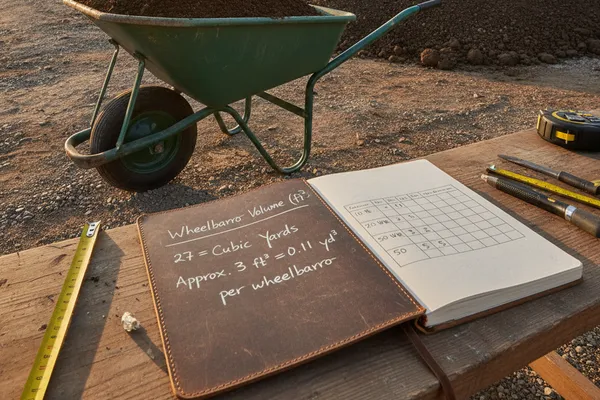
Translating how much your wheelbarrow holds from cubic feet to cubic yards is straightforward once you grasp the core conversion. Project planners, especially those ordering bulk materials for landscaping or construction, rely on this calculation to get their orders right. It’s the practical math behind making sure you have enough, but not too much, of what you need.
Understanding Cubic Feet vs. Cubic Yards
A cubic foot is a unit of volume representing a cube that is one foot on each side. A cubic yard, on the other hand, is a much larger unit, representing a cube that is three feet on each side. This means one cubic yard contains significantly more material than one cubic foot.
Measuring Your Wheelbarrow's Dimensions
To get the most accurate estimate, if your wheelbarrow's capacity isn't clearly marked, you can measure its internal dimensions. You'll need the length, width, and depth of the loading bin. Measure these in feet to get your volume in cubic feet. Remember to measure the inside dimensions, not the outside, and try to average the width and length if the bin isn't perfectly rectangular.
Standard Wheelbarrow Capacities: What to Expect
Most people will encounter wheelbarrows with capacities clearly stated by their manufacturers. These ratings are typically in cubic feet and give you a solid starting point for estimations. Knowing these common figures can save you from pulling out a tape measure for every barrow you encounter, especially if you're buying materials based on industry standards rather than exact tool measurements.
Small Wheelbarrows (e.g., 3-4 Cubic Feet)
Smaller wheelbarrows, often around 3 to 4 cubic feet, are generally best suited for lighter gardening tasks and moving smaller loads of soil, mulch, or debris. While convenient for tight spaces or less demanding jobs, they require more trips to move substantial quantities. If you're just topping off a few flower beds or hauling away light yard waste, a barrow this size works well.
Medium Wheelbarrows (e.g., 6 Cubic Feet)
The 6-cubic-foot wheelbarrow is a popular all-around choice for home use, balancing maneuverability with capacity. This size is ideal for many landscaping projects, such as spreading a few yards of mulch or moving gravel for a small pathway. It’s a workhorse for homeowners tackling moderate yard improvements and makes bulk material estimates more manageable.
Large Wheelbarrows (e.g., 8-10+ Cubic Feet)
For serious DIYers, professional landscapers, or construction crews, larger wheelbarrows ranging from 8 to 10 cubic feet or more are common. These barrows can handle substantial loads of concrete mix, heavy gravel, or large volumes of soil. They significantly reduce the number of trips needed for big projects, making tasks like grading a yard or mixing a large concrete pour much more efficient.
Real-World Loads: How Much Can You Actually Haul?
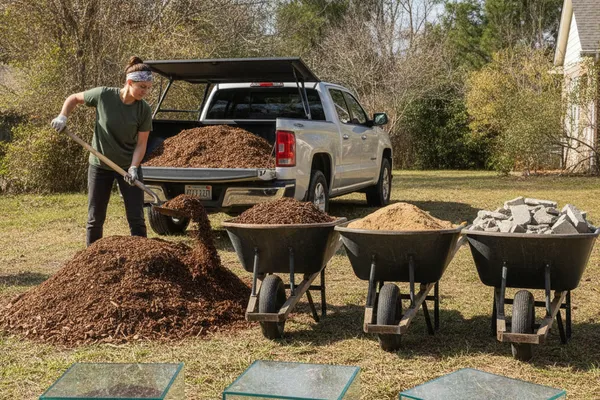
While manufacturer ratings are essential, the real-world amount you can safely and effectively haul in a wheelbarrow often depends on what you're moving. Different materials have varying densities and compaction levels, meaning a wheelbarrow filled to the brim with light mulch won't weigh the same as one filled with dense gravel or wet soil. It’s wise to consider these factors to avoid overloading your equipment or yourself.
For example, a common 6-cubic-foot wheelbarrow might hold about 0.22 cubic yards of material when filled to its rated capacity. However, if you’re hauling wet topsoil, which is significantly heavier and denser than dry mulch, you'll likely need to fill the barrow less to stay within its weight limit. This means fewer cubic yards per trip for denser materials, even if the volume appears the same.
Common Mistakes When Estimating Wheelbarrow Loads
Even with the conversion factor in hand, people often make a few recurring errors when figuring out how many cubic yards fit into their wheelbarrow. One of the biggest is treating all materials the same. Think about it: a wheelbarrow packed with dry, fluffy compost will be much lighter and less dense than one filled with wet sand or pea gravel.
Another frequent mistake is simply filling the barrow to the absolute brim. While this maximizes volume, it can make the wheelbarrow unstable and incredibly difficult to push and maneuver. For safety and practicality, it's often better to fill it about three-quarters full, especially with heavier materials. This practice also prevents spills and protects your back.
Projects That Rely on Accurate Wheelbarrow Volume Calculations

Accurate calculations of how many cubic yards your wheelbarrow can haul are critical for a surprising number of tasks. If you're undertaking a large landscaping project, like building a new garden bed or a retaining wall, you'll likely be ordering materials in bulk. Knowing your wheelbarrow's capacity helps you estimate delivery requirements precisely, avoiding costly over-ordering or frustrating under-ordering.
Consider DIY projects like laying a new patio or creating a driveway with gravel. These jobs often involve moving many yards of material. For instance, spreading 4 inches of gravel over a 100-square-foot area requires about 1.25 cubic yards of gravel. If your wheelbarrow holds 0.1 cubic yards, you'll need roughly 13 trips (1.25 / 0.1 = 12.5, rounded up).
Getting that number right upfront saves time and effort. You can find more detailed landscaping guides on topics like what kind of fertilizer for grass to use on our blog.
Common Mistakes When Estimating Wheelbarrow Loads
Even with the conversion factor in hand, people often make a few recurring errors when figuring out how many cubic yards fit into their wheelbarrow. One of the biggest is treating all materials the same. Think about it: a wheelbarrow packed with dry, fluffy compost will be much lighter and less dense than one filled with wet sand or pea gravel.
Another frequent mistake is simply filling the barrow to the absolute brim. While this maximizes volume, it can make the wheelbarrow unstable and incredibly difficult to push and maneuver. For safety and practicality, it's often better to fill it about three-quarters full, especially with heavier materials. This practice also prevents spills and protects your back.
Projects That Rely on Accurate Wheelbarrow Volume Calculations

Accurate calculations of how many cubic yards your wheelbarrow can haul are critical for a surprising number of tasks. If you're undertaking a large landscaping project, like building a new garden bed or a retaining wall, you'll likely be ordering materials in bulk. Knowing your wheelbarrow's capacity helps you estimate delivery requirements precisely, avoiding costly over-ordering or frustrating under-ordering.
Consider DIY projects like laying a new patio or creating a driveway with gravel. These jobs often involve moving many yards of material. For instance, spreading 4 inches of gravel over a 100-square-foot area requires about 1.25 cubic yards of gravel. If your wheelbarrow holds 0.1 cubic yards, you'll need roughly 13 trips (1.25 / 0.1 = 12.5, rounded up).
Getting that number right upfront saves time and effort. You can find more detailed landscaping guides on topics like what kind of fertilizer for grass to use on our blog.
Common Mistakes When Estimating Wheelbarrow Loads
Even with the conversion factor in hand, people often make a few recurring errors when figuring out how many cubic yards fit into their wheelbarrow. One of the biggest is treating all materials the same. Think about it: a wheelbarrow packed with dry, fluffy compost will be much lighter and less dense than one filled with wet sand or pea gravel.
Another frequent mistake is simply filling the barrow to the absolute brim. While this maximizes volume, it can make the wheelbarrow unstable and incredibly difficult to push and maneuver. For safety and practicality, it's often better to fill it about three-quarters full, especially with heavier materials. This practice also prevents spills and protects your back.
Projects That Rely on Accurate Wheelbarrow Volume Calculations
Accurate calculations of how many cubic yards your wheelbarrow can haul are critical for a surprising number of tasks. If you're undertaking a large landscaping project, like building a new garden bed or a retaining wall, you'll likely be ordering materials in bulk. Knowing your wheelbarrow's capacity helps you estimate delivery requirements precisely, avoiding costly over-ordering or frustrating under-ordering.
Consider DIY projects like laying a new patio or creating a driveway with gravel. These jobs often involve moving many yards of material. For instance, spreading 4 inches of gravel over a 100-square-foot area requires about 1.25 cubic yards of gravel. If your wheelbarrow holds 0.1 cubic yards, you'll need roughly 13 trips (1.25 / 0.1 = 12.5, rounded up).
Getting that number right upfront saves time and effort. You can find more detailed landscaping guides on topics like what kind of fertilizer for grass to use on our blog.