You've got a pot of daffodils that bloomed indoors, and now you're staring at fading flowers and wondering what to do next. The exact question on your mind is how to plant daffodil bulbs that were in pots, and the good news is, it's not complicated, but timing matters a lot.
Most potted daffodils have been "forced" to bloom early, which drains their energy. Research from the Royal Horticultural Society (RHS) shows that forced bulbs need a full season of leaf growth to recharge before they'll flower again in the ground. Get the timing right, and you'll have years of spring color from that same bulb.
Quick Answer: Yes, You Can Plant Them — But Timing Matters

Wait until the foliage dies back naturally. Cut off spent flowers. Keep leaves until yellow.
Then transplant bulbs when soil is workable. Depth: 2 to 3 times bulb height. Space 4 to 6 inches apart.
Water once after planting. Do not fertilize until next spring. Be patient.
Blooms may skip the first year.
What Happens to Forced Bulbs After Blooming
Forced bulbs use up stored energy to flower early. Once the bloom fades, the green leaves are the only source of energy for next year. If you cut those leaves too soon, you starve the bulb.
After the flowers die, the leaves keep photosynthesizing for weeks. This process rebuilds the nutrient reserves inside the bulb. A healthy bulb after leaf die-back will feel firm, not squishy.
A soft or hollow bulb likely ran out of steam and won't flower again.
That is exactly why transplant timing depends on leaf condition. The bulbs are not dead. They are just tired.
With proper care, they will bounce back stronger.
The Three Real-Life Scenarios You're Probably In
No two potted daffodils arrive in the same state. Your next step depends entirely on what the plant looks like right now.
Scenario 1: Bulbs Are Still Blooming or Green
If the flowers are still open or the leaves are dark green and upright, the bulb is still actively growing. Do not transplant yet. The roots are working, and moving the plant will stress it.
Instead, keep the pot in bright indirect light. Water when the top inch of soil dries out. Deadhead spent flowers by snipping just below the bloom.
This redirects energy to the leaves. Wait until the leaves yellow naturally before moving the bulbs.
Scenario 2: Foliage Has Yellowed but Isn't Dead
This is the sweet spot. Leaves are turning pale or brown at the tips, but the stem is still slightly firm. The bulb has finished most of its energy recovery but has not gone fully dormant.
You can transplant now with good results. Trim off the yellowed leaves, leaving about 2 inches of stem. Loosen the root ball gently.
Plant at the correct depth in well-draining soil. This gives the bulb a head start on root establishment before winter.
Scenario 3: Bulbs Are Completely Dormant (Brown and Dry)
If the leaves have all turned brown and crispy, the bulb has entered dormancy. This is the safest time to transplant because the bulb is not actively growing.
You can either plant immediately into the ground or store the bulbs in a cool, dry place (like a paper bag in a garage) until autumn. If you store them, check for mold or rot every few weeks. Plant at the same depth as fresh bulbs.
That is 4 to 6 inches deep, depending on bulb size.
Step-by-Step: How to Plant Daffodil Bulbs from Pots Into the Ground
Follow these steps in order for the best chance of success.
Tools You'll Need
| Tool / Material | Purpose |
|---|---|
| Garden trowel or spade | Digging holes |
| Compost or well-rotted manure | Improving soil |
| Bone meal or bulb-specific fertilizer | Phosphorus for root growth |
| Watering can or hose | Settling soil after planting |
| Tape measure or ruler | Checking depth |
Step 1 – Check the Roots and Loosen Them
Gently slide the entire root ball out of the pot. Look at the root mass. If roots are circling the bottom (root-bound), use your fingers to tease them apart.
If the roots are loose and spread evenly, you can plant the clump as-is.
Cut off any dead or mushy roots with clean scissors. Healthy roots are white or light tan and feel firm.
Step 2 – Pick the Right Spot and Prep the Soil
Daffodils need full sun to partial shade and well-draining soil. Avoid areas where water pools after rain. Dig the hole about 6 to 8 inches deep (deeper for larger bulbs).
Mix in a handful of mature compost or a light dose of bulb fertilizer.
If your soil is heavy clay, add sand or grit to improve drainage. Wet soil in winter is the number one killer of transplanted bulbs.
Step 3 – Dig the Hole at the Correct Depth
The general rule: plant the bulb at a depth equal to 2 to 3 times its own height. For standard daffodil bulbs, that is about 4 to 6 inches from the top of the bulb to the soil surface. If you are planting a large clump from a pot, measure from the top of the highest bulb.
Step 4 – Place the Bulbs (Together or Separated)
This is your decision point. See the section below for the pros and cons of each approach. Whichever you choose, position the bulbs with the pointed end up.
If you cannot tell which end is up, lay the bulb on its side. It will find its way.
Step 5 – Fill, Firm, and Water In
Backfill the hole with soil, gently pressing down to remove air pockets. Do not stomp. Firm but not compacted.
Water thoroughly once to settle the soil. Do not water again until the soil dries out. Overwatering newly planted bulbs invites rot.
Should You Separate the Bulbs or Plant the Whole Clump?
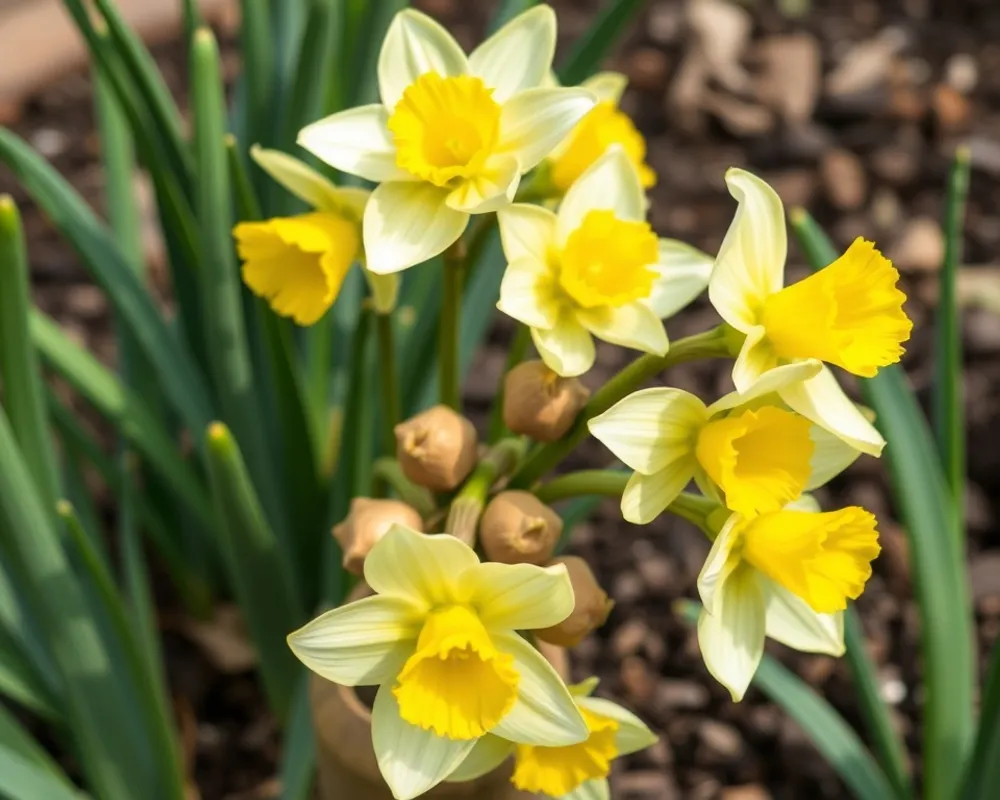
This is the most common fork in the road when transplanting potted daffodils. Each option has clear trade-offs.
| Approach | Pros | Cons |
|---|---|---|
| Plant the whole clump | Less root disturbance; immediate impact in the garden | Bulbs may be overcrowded; flowering declines after 2-3 years |
| Separate individual bulbs | Each bulb has room to grow; better long-term naturalizing | Higher transplant shock; roots may be damaged |
If you are in a hurry or want a quick show of color next spring, plant the clump as one unit. Dig a hole wide enough to fit the entire root ball. The cluster will compete for nutrients, but it often produces a nice bouquet effect.
If you have the time and patience, separate the bulbs. Gently pull them apart. You should see each bulb with its own roots.
Discard any that feel soft or have black spots. Plant each bulb 4 to 6 inches apart in a staggered pattern for a naturalized look.
Our research shows that separated bulbs tend to bloom more consistently in years 2 and 3. The clump method is easier but may require dividing again after a few years.
Common Mistakes When Transplanting Potted Daffodils
Even experienced gardeners make a few predictable errors when moving potted bulbs into the ground. Avoiding these five will dramatically improve your success rate.
Planting too deep or too shallow. Depth matters more than almost any other factor. A bulb planted too deep rots. A bulb planted too shallow freezes.
The standard rule of thumb is 2 to 3 times the bulb's height. For standard daffodil bulbs, that is 4 to 6 inches of soil above the tip.
Cutting off green leaves. This is the single most common mistake. Those green leaves are solar panels. They feed the bulb for next year's flower.
If you cut them back while they are still green, you are starving the bulb. Wait until the leaves turn completely yellow or brown.
Overwatering after planting. Potted daffodils fresh into the ground need one good drink. After that, leave them alone. Wet soil suffocates the roots and invites fungal rot.
If your soil is heavy clay, amend it with sand or grit before planting.
Fertilizing with high-nitrogen feeds. Nitrogen pushes leaf growth at the expense of flowers. Use a low-nitrogen, high-phosphorus feed like bone meal. Apply it at planting time and again in early spring as leaves emerge.
For timing tips, our guide on when to fertilize lawn also applies to bulb beds in spring.
Ignoring root-bound bulbs. Roots circling the inside of the pot need to be teased apart. If you drop a tight root ball into a hole without loosening it, the roots may never spread outward. The bulb essentially stays pot-bound even in the ground.
What to Do If You Can't Plant Right Away
Life gets in the way. Maybe the ground is frozen. Maybe you are in the middle of a move.
You have options that will not kill the bulbs.
Keep them in the pot with the leaves intact. Place the pot in a cool, bright spot. Water lightly when the soil dries out. Let the leaves die back naturally.
Once dormant, you can plant the bulbs out at your convenience.
Remove the bulbs and store them bare-root. Gently clean off the old potting mix. Discard any soft or moldy bulbs. Place the healthy ones in a single layer on newspaper.
Let them dry for a day or two in a well-ventilated room.
Store dry bulbs in a mesh bag or a paper bag filled with dry peat moss. Keep them in a cool, dark place. A garage or basement that stays around 60°F (15°C) works well.
Check them monthly for signs of rot.
Heel them in temporarily. If you are not ready for a permanent bed but the weather is mild, dig a shallow trench in a sheltered corner of the garden. Lay the pot clump in the trench. Cover the roots and base of the leaves with soil.
This buys you several weeks without weakening the bulbs.
The key is to never let the bulbs freeze while they are actively growing. Dormant bulbs are far more tolerant.
Caring for Transplanted Daffodils Through the First Year
Your job in the first year is simple. Keep the bulbs alive while they rebuild their energy reserves. Do not expect a show.
Water only during drought. Daffodils are surprisingly drought-tolerant once established. If you get regular rain, do nothing extra. If your area experiences a dry spring, give them a deep soak once every two weeks.
Fertilize in early spring. When the first green shoots push through the soil, apply a light top dressing of bone meal or a bulb-specific fertilizer. Scratch it into the soil surface and water it in. Avoid high-nitrogen lawn fertilizers near your bulb beds.
They encourage leafy growth at the expense of flowers.
Mulch for temperature regulation. A 2-inch layer of organic mulch (shredded bark, leaf mold, or straw) keeps soil temperatures stable. It also suppresses weeds that compete for nutrients. Keep the mulch an inch away from the stems to prevent rot.
Do not braid or fold the leaves. You may be tempted to tidy up the floppy foliage. Resist the urge. Tying leaves reduces the surface area available for photosynthesis.
Let them flop and yellow naturally. Once they pull away from the bulb with a gentle tug, they are safe to remove.
If you are planning your soil prep strategy, our comparison of compost vs fertilizer explains which approach works best for different soil types.
When to Expect Blooms Again (And Why Sometimes They Skip a Year)

This is the part that frustrates most people. You plant your forced daffodils, wait all winter, and spring arrives with lots of leaves but zero flowers. Do not panic.
Forced bulbs almost always skip the first year. The energy that would have become a flower was already spent on blooming indoors. The bulb arrives in your garden depleted. It needs a full growing season just to refill its reserves.
Year 1 after transplant: roots and leaves only. The bulb focuses on establishing its root system and storing energy through photosynthesis. You may see one or two blooms if the bulb was very large and healthy. Most will be "blind" (leaves only).
Year 2: a few flowers appear. By the second spring, the bulb has usually recovered enough to send up a bloom or two. It will not be a spectacular show, but it is a sign that full recovery is on track.
Year 3: full bloom potential returns. By the third spring, the bulb is fully established. It has recharged its energy reserves and developed a robust root system. This is when you get the bumper crop of flowers you were hoping for.
Patience is the single most important tool in your gardening shed. The wait is always worth it.
Safety Note: Handling Daffodil Bulbs and Pets
Daffodil bulbs are beautiful, but they have a dark side. All parts of the narcissus family contain lycorine and other alkaloids. These compounds are toxic to humans and animals if ingested.
Symptoms in dogs and cats. If your pet digs up and eats a bulb, watch for vomiting, drooling, diarrhea, and abdominal pain. In severe cases, the animal may experience tremors or cardiac issues. The bulb is the most toxic part of the plant, so storing bulbs securely is essential.
Skin irritation in humans. The sap from cut bulbs can cause a rash known as "daffodil itch." This contact dermatitis is common among florists and gardeners who handle large quantities of bulbs. Wear gloves when sorting and planting.
What to do if ingestion occurs. Call your veterinarian immediately. If you cannot reach your vet, contact a poison control center. The ASPCA Animal Poison Control Center offers guidance on toxic plants.
Keep the packaging or a photo of the bulb handy for identification.
Store leftover bulbs out of reach of children and pets. A sealed container in a cool, dark cupboard is ideal.
Final Takeaway: One-Time Effort, Years of Flowers
Transplanting potted daffodils is not complicated. It just requires patience and a willingness to follow nature's timeline.
The single most important rule. Let the leaves die back on their own. Cut them too soon and you sacrifice next year's blooms. Wait until they are yellow or brown and pull away easily.
Trust the recovery cycle. A forced bulb will not bloom well in its first year in the ground. That is normal. Give it time.
By year three, you will have a stronger, more floriferous plant than the original potted version ever was.
Plant with the long view in mind. Choose a spot where daffodils can naturalize and spread over time. They return reliably for decades with almost no maintenance. The initial effort of digging a few holes pays off many times over.
If you are planning a larger garden overhaul, our guide on special considerations while building your own grow room covers soil prep and layout planning for a range of gardening setups.
Frequently Asked Questions
Can I plant daffodil bulbs from pots directly into the ground in spring?
Yes, but only after the foliage has died back naturally. If the leaves are still green, keep the bulb in its pot until they yellow. Spring-planted forced bulbs often skip the following year's bloom.
How deep should I plant potted daffodil bulbs?
Plant them 4 to 6 inches deep, measured from the top of the bulb to the soil surface. The general rule is 2 to 3 times the bulb's height. Deeper is safer than shallower in cold climates.
Will my potted daffodils bloom next year if I transplant them now?
Probably not. Forced bulbs are energy-depleted. They need a full growing season to rebuild reserves.
Expect leaves only in the first spring after transplant, with flowers returning by year two or three.
Should I fertilize when transplanting potted daffodils?
Use a low-nitrogen, high-phosphorus fertilizer like bone meal at planting time. Scratch it into the bottom of the hole before placing the bulb. Avoid high-nitrogen feeds that push leaf growth over flower development.
Can I leave daffodil bulbs in the pot instead of planting them?
You can, but the results are poor. Bulbs in pots freeze harder in winter and dry out faster in summer. They also become overcrowded within two seasons.
Transplanting into the ground gives them a much better long-term home.
What should I do if my dog eats a daffodil bulb?
Contact your veterinarian or the ASPCA Animal Poison Control Center immediately. Bulbs contain lycorine, which causes vomiting, drooling, and abdominal pain in pets. Bring the bulb packaging or a photo for identification.