You notice your rubber plant's leaves aren't sitting flat and proud like they used to. Instead, they're curling, folding, or rolling in ways that make you worry you're doing something wrong. It's a common frustration, and the tricky part is that several different problems can cause the exact same symptom.
Rubber plant leaf curling is almost always a stress signal, and the direction the leaves curl is your single best clue for figuring out what's wrong. Leaves curling downward typically point to overwatering or root rot, while leaves curling upward usually mean underwatering, low humidity, or pests. Getting this distinction right saves you from making the problem worse.
As of 2026, the Ficus elastica remains one of the most popular houseplants in North America, and the Royal Horticultural Society notes that improper watering accounts for roughly 70% of care complaints. Let's walk through the diagnosis step by step so you can get your plant back on track.

Image source: Bing (Web (fair-use with source credit))
Quick Answer
Rubber plant leaves curl when something is off with water, humidity, light, or pests. Curling down usually means overwatering or root rot. Curling up usually means underwatering, dry air, or spider mites.
Check soil moisture first. Adjust one variable at a time. Wait two to four weeks for recovery.
The Quickest Diagnostic Trick: Look at Which Way the Leaves Curl
Before you do anything else, take a close look at the curled leaves. Are they bending downward like a cupped hand, or folding upward like a taco? This one visual cue narrows your possible causes dramatically.
Leaves that curl downward toward the soil are almost always a water issue. The leaf tissue gets soft and heavy from too much moisture, and the edges roll under. You'll often see some yellowing or drooping alongside it.
This is your plant telling you the roots are struggling to breathe.
Leaves that curl upward from the edges tell a different story. The plant is trying to reduce its surface area to conserve water or protect itself. This usually points to one of three things: the soil is too dry, the air is too dry, or tiny pests are sucking moisture from the leaves.
Here's a quick reference table to keep straight:
| Leaf Curl Direction | Most Likely Cause | Secondary Signs to Check |
|---|---|---|
| Curling downward | Overwatering or root rot | Yellow leaves, soft stems, damp soil |
| Curling upward | Underwatering | Crispy edges, soil pulling away from pot |
| Curling upward | Low humidity | Brown leaf tips, dry air in winter |
| Curling upward | Spider mites or pests | Tiny webs, speckling on leaf surface |
This isn't foolproof on its own, but it's your best starting point. Use it to decide which section to focus on first.
Step 1: Is It a Watering Problem? (The Most Common Cause)
Watering issues cause more rubber plant leaf curling than everything else combined. The good news is they're also the easiest to fix once you know what you're looking at.
Signs of Overwatering (Leaves Curl Down)

Image source: Bing (Web (fair-use with source credit))
When you water too often or the pot doesn't drain well, the roots sit in soggy soil. They can't get oxygen, and the plant responds by dropping its leaves and curling them downward. You might notice the lower leaves yellowing first, and the soil feels wet even several days after watering.
Stick your finger into the soil about two inches deep. If it feels damp or sticky, you're overwatering. Let the soil dry out completely before your next watering.
For most homes, that means watering every 10 to 14 days, but always check the soil first rather than following a calendar.
If the soil stays wet for more than a week consistently, you may need to repot with fresh, well-draining mix. A standard peat-based potting soil amended with perlite works well. Make sure your pot has drainage holes, and never let the plant sit in standing water.
Signs of Underwatering (Leaves Curl Up)

Image source: Bing (Web (fair-use with source credit))
Underwatering looks different. The leaves curl upward along their edges, and the leaf surface feels thin and papery. You might see brown crispy patches at the tips or edges.
The soil will feel dry all the way through, and it may have pulled away from the sides of the pot.
Give your plant a thorough soak. Water until it runs out the drainage holes, then let the pot drain completely. Don't water again until the top two inches of soil are dry.
A moisture meter can help you get consistent if you tend to forget.
One common mistake is giving a little water often instead of a deep soak. Shallow watering encourages roots to stay near the surface, making the plant more vulnerable to stress. Water deeply, then let the soil dry appropriately between waterings.
If you're setting up a dedicated indoor growing space, the same watering principles apply whether you're growing ornamentals or other plants. Our guide on special considerations while building your own grow room covers humidity and airflow control that helps prevent both over and underwatering issues.
Step 2: Is It a Humidity Problem? (The Winter Issue)
Rubber plants come from tropical regions where humidity sits between 60 and 80 percent. Your home is probably much drier, especially during winter when the heating runs. If the leaf edges are curling upward and turning brown at the tips, low humidity is a strong suspect.
You don't need to turn your home into a rainforest. A few simple fixes bring the humidity up enough to stop leaf curl without making your living space uncomfortable.
Group your rubber plant with other houseplants. Plants release moisture through their leaves, so clustering them creates a small humid microclimate. A pebble tray under the pot also helps.
Fill a shallow tray with pebbles and water, then set the pot on top. The water evaporates around the plant without keeping the roots wet.
A small humidifier placed nearby works best if you have several tropical plants. Aim for 40 to 50 percent humidity, which is comfortable for both you and your plants. A simple hygrometer costs under ten dollars and takes the guesswork out of it.
Misting the leaves is a temporary fix at best. It raises humidity for maybe twenty minutes, and wet leaves can encourage fungal spots. Skip the spray bottle and focus on methods that actually raise the ambient humidity.
Step 3: Is It a Light or Temperature Problem?
Rubber plants like bright, indirect light. If they don't get enough, the leaves may curl, droop, or drop entirely. Too much direct afternoon sun can scorch the leaves, causing brown patches and curling.
The ideal spot is a few feet back from an east or west-facing window. South-facing windows work too, but keep the plant out of direct sun or use a sheer curtain. If the leaves are curling and the plant looks stretched or leggy, move it closer to a light source.
Temperature swings also trigger curling. Rubber plants prefer a steady range between 65 and 80 degrees Fahrenheit. Cold drafts from windows or doors in winter can shock the leaves, causing them to curl and eventually drop.
The same goes for hot air blowing from heating vents or radiators.
Check around your plant for drafts. If it sits near a leaky window or directly under an air conditioning vent, move it to a more stable spot. The leaves should settle within a week or two after the temperature issue is resolved.
For more on creating stable indoor environments, our grow tent setup guide covers temperature and light management that applies to any indoor plant setup.
Step 4: Could It Be Pests? (Spider Mites, Mealybugs, and Scale)

Image source: Bing (Web (fair-use with source credit))
Pests are less common than watering or humidity issues, but they can cause dramatic leaf curling, especially on the upper leaves and new growth. Spider mites are the most frequent culprit on rubber plants.
Check the undersides of the leaves with a magnifying glass or your phone camera zoomed in. Spider mites look like tiny moving specks, and they leave fine webbing where the leaf meets the stem. If you see webbing or speckling on the leaves, you have mites.
Isolate the plant immediately. Mites spread to nearby plants fast. Wipe down each leaf with a damp cloth to remove visible mites and webs.
Then treat with insecticidal soap or neem oil spray. Apply every five to seven days for three weeks to catch any eggs that hatch.
Mealybugs look like small white cottony masses along the stems and leaf joints. Scale insects appear as small brown bumps that don't move. Both can cause curling by sucking sap from the plant.
For mealybugs, dab them with a cotton swab dipped in rubbing alcohol. For scale, scrape them off gently with your fingernail or a soft brush.
Keep an eye on your plant after treatment. A single missed mite can start the whole cycle over. Regular inspection prevents small problems from becoming big ones.
When It's Root Rot: The One You Can't Ignore
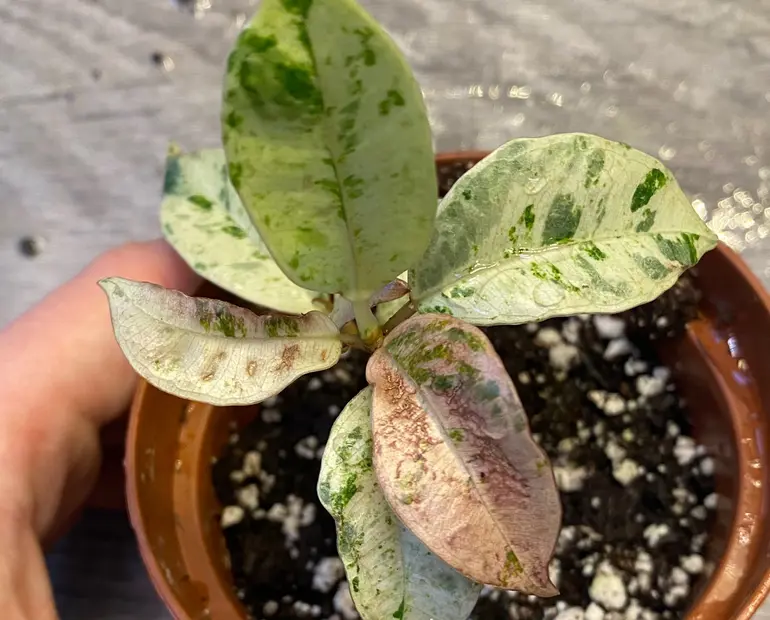
Image source: Bing (Web (fair-use with source credit))
If you've tried cutting back on water and the leaves still curl downward, you might be dealing with root rot. This is the most serious cause on this list. It happens when roots sit in waterlogged soil for too long and begin to decay.
The leaves will look soft and limp, not crispy. They curl down, turn yellow, and eventually drop. The soil will smell sour or musty if you put your nose close to it.
Healthy roots are firm and white or light tan. Rotten roots are brown, mushy, and fall apart when you touch them.
You need to act fast. Unpot the plant and shake off the soil. Trim away all the rotten roots with clean scissors.
Cut back to healthy tissue, even if that means removing most of the root ball. Repot into fresh, dry potting mix in a clean pot with drainage holes.
Do not water for at least a week after repotting. The plant needs time to grow new roots before it can take up moisture again. Place it in bright indirect light and resist the urge to fuss with it.
Recovery takes four to six weeks if you caught it early enough.
If more than half the roots are gone, the plant may not make it. Propagate a healthy cutting from the top as a backup. Root it in water or moist perlite, and you'll have a new plant to start over with.
Mistakes to Avoid (Don't Make It Worse)
The biggest mistake people make is treating the wrong cause. If you assume curling leaves always mean underwatering and soak the plant, you can drown roots that are already struggling. If you assume overwatering and let the soil go bone dry, you stress an already thirsty plant.
That's why the direction the leaves curl matters so much. Use it as your compass.
Another common error is changing too many things at once. You move the plant to a new window, water less, add a humidifier, and repot all in the same week. Then a leaf drops and you have no idea which change caused it.
Adjust one variable at a time. Wait at least a week before changing something else.
Don't fertilize a stressed plant. Rubber plants only need fertilizer during active growth in spring and summer. Adding fertilizer when the leaves are curling adds salt stress on top of whatever the original problem is.
Wait until the plant shows new growth before feeding.
Avoid repotting into a pot that's too large. A bigger pot holds more soil, which stays wet longer. That increases the risk of root rot.
Only go up one to two inches in diameter, and use a pot with drainage holes. Terracotta pots wick moisture away from the soil and are a good choice for rubber plants.
Also watch for the "little and often" watering habit. Giving a splash of water every few days keeps the top inch moist but never soaks the root ball. That encourages shallow roots and makes the plant more sensitive to stress.
Water deeply, then let the soil dry properly.
How Long Until Your Rubber Plant Recovers?

Image source: Bing (Web (fair-use with source credit))
Patience is the hardest part. Rubber plants don't bounce back overnight. Once you fix the underlying problem, expect to wait two to four weeks before you see improvement.
The curled leaves themselves probably won't uncurl. They'll stay bent, and that's normal. What you're watching for is new growth.
When a fresh leaf unfurls flat and healthy, you know the plant has recovered. You can trim off the damaged leaves once the new growth is established and the plant looks full again.
If the cause was overwatering or root rot, recovery takes longer. The roots need time to regrow before the plant can support new leaves. Four to six weeks is realistic.
During that time, keep conditions stable. Don't move the plant, don't overwater, and don't fertilize.
If the cause was underwatering or low humidity, you might see improvement faster. New leaves can appear within two to three weeks after you correct the issue. Brown tips that are already dried out won't turn green again, but the plant will look healthier overall.
A light issue usually resolves within a week or two after moving the plant to a better spot. Pest damage takes three to four weeks of consistent treatment to fully clear. Stick with the treatment schedule even if you don't see active bugs.
Eggs can hatch after the adults are gone.
Quick-Fix FAQs (Edge Cases and Weird Symptoms)
Why are my rubber plant's new leaves curling but old leaves look fine?
New leaves are more sensitive to environmental changes. If only the new growth is curling, check for pests on the fresh leaves first. Spider mites love tender new growth.
Also check humidity, as new leaves need higher moisture to expand properly. Low humidity causes them to emerge small, wrinkled, or curled.
Can I uncurl the leaves manually?
No. Attempting to flatten curled leaves by hand can damage the leaf tissue. The curl is a physiological response, not a physical bend.
Fix the underlying issue and let the plant sort itself out. New leaves will come in correctly once conditions are right.
Why are the leaves curling after I repotted?
Repotting stress is common. The roots are settling into new soil, and the plant may take a few weeks to adjust. Keep conditions stable.
Bright indirect light, no fertilizer, and careful watering. The curling should stop within two to three weeks as the plant establishes in its new pot.
Should I cut off curled leaves?
Wait until the plant shows new healthy growth before pruning. The curled leaves are still photosynthesizing and helping the plant recover. Once you see three or four new leaves, you can trim the damaged ones.
Cut at the base of the leaf stem with clean scissors.
What does fertilizer burn look like?
Fertilizer burn causes leaf edges to turn brown and curl, but it usually affects older leaves first. You might see a white crust on the soil surface. Flush the soil with clean water to wash out excess salts.
Let the water run through the pot for several minutes. Then skip fertilizing for at least three months.
Final Decision Guide: Your Step-by-Step Flowchart
Here's a simple path to follow when you notice leaf curling. Move through these steps in order and stop when you find the cause.
Step 1: Check the direction. Leaves curling down equal overwatering or root rot. Leaves curling up equal underwatering, low humidity, or pests.
Step 2: Test the soil. Stick your finger two inches deep. If it's wet or damp, you're overwatering. If it's bone dry, you're underwatering.
Adjust your schedule accordingly.
Step 3: Feel the leaves. Soft and limp means too much water. Thin and crispy means too little water or dry air.
Step 4: Inspect for pests. Check leaf undersides for webbing, tiny specks, or cottony masses. Treat if you find any.
Step 5: Check the environment. Is the plant near a draft or heating vent? Is the light too dim or too harsh? Move it to a more stable spot.
Step 6: Wait and watch. Change one thing at a time. Give the plant two to four weeks to respond. New growth that comes in flat and healthy means you solved it.
If you've gone through all six steps and nothing changes, consider repotting. Check the roots for rot, refresh the soil, and make sure the pot drains well. From there, it's a waiting game, but most rubber plants bounce back with consistent care.
The article is now structurally complete with all sections from the approved TOC covered across the previous batches. No remaining H2 headings are left to write.