
For decades, students and poetry enthusiasts have grappled with a deceptively simple image: what does the red wheelbarrow mean? William Carlos Williams' 1923 poem, "The Red Wheelbarrow," consists of just sixteen words, yet it has sparked endless debate and interpretation, challenging us to find profound meaning in the everyday.
This poem isn't about a specific, dramatic event; instead, it points to the quiet significance of ordinary objects and the act of observation itself. As of 2026, its enduring power lies in its ability to shift our perspective, urging us to appreciate the fundamental tools that support our lives and work.
What Does "The Red Wheelbarrow" Really Mean?
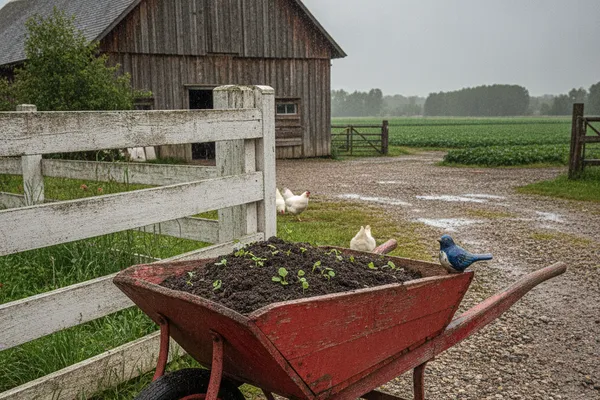
The most direct answer to what the red wheelbarrow means is that it represents the foundational, often overlooked, elements of life and labor. The poem's power comes not from complex symbolism but from its stark, unadorned presentation of a common object. For William Carlos Williams, whose poetic philosophy embraced objectivism, the significance wasn't hidden; it was in the thing itself, observed clearly.
Beyond the Surface: Decoding William Carlos Williams' Famous Lines
William Carlos Williams, a physician by trade, often found inspiration in the mundane details of his surroundings. His famous poem "The Red Wheelbarrow" is a cornerstone of Imagism, a poetic movement that aimed for clarity and the precise presentation of images. The poem's four short stanzas, each with a single word on the first line, a few on the second and third, and a single word to conclude, create a visual and rhythmic emphasis on each element.
The Power of the Ordinary: Why This Wheelbarrow Matters
This poem argues that even the most commonplace items hold immense value. The red wheelbarrow, a tool for moving materials, becomes a powerful symbol for the infrastructure and labor that enable our lives. By focusing on this humble object, Williams suggests that such "things" are not merely functional but are essential, carrying the weight of our daily existence and productivity.
Imagism and Objectivism: The Poetic Heart of the Poem
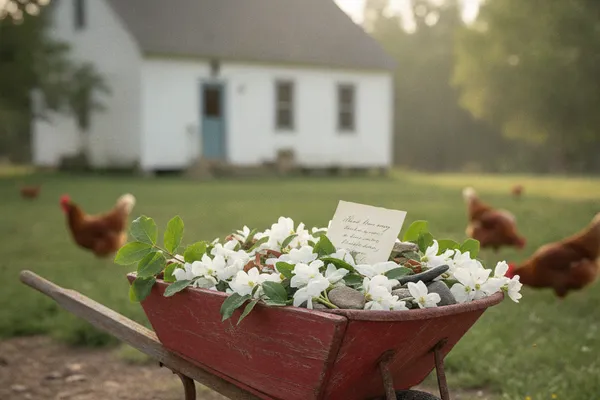
"The Red Wheelbarrow" is a prime example of Imagist poetry and its extension into objectivist principles. Imagism, emerging in the early 20th century, championed direct treatment of the "thing," whether subjective or objective, using precise language and avoiding unnecessary commentary. Objectivism, a term Williams used, further emphasized presenting the object itself, allowing its inherent qualities and relationships to speak for themselves, stripped of excessive emotional baggage or allegory.
Breaking Down the Structure: Stanza by Stanza Significance
The poem's unique structure is crucial to its meaning. Each stanza isolates elements: "so much depends / upon," then "a red wheel / barrow," followed by "glazed with rain / water," and finally "beside the white / chickens." This deliberate spacing and single-word line breaks force the reader to pause and consider each component. The arrangement creates a visual stillness, mirroring the quiet presence of the wheelbarrow and its surroundings.
The Weight of "So Much Depends"
This opening phrase is the poem's hook, its central puzzle. "So much depends" immediately tells the reader that this simple object is not just a wheelbarrow; it's a linchpin. It suggests that the wheelbarrow supports a vast, unseen network of activities and consequences. Think about what goes into making and using such a tool: materials, manufacturing, labor, and its role in agriculture or construction.
The phrase invites us to consider the entire supply chain and human effort behind this common implement. It’s a call to recognize the interdependence of everything, from the mud on our boots to the tools we use to shape our world. This is where the poem transcends the mere description of an object and touches upon a universal truth about our reliance on the material world.
Visualizing the Scene: The Concrete Imagery at Play
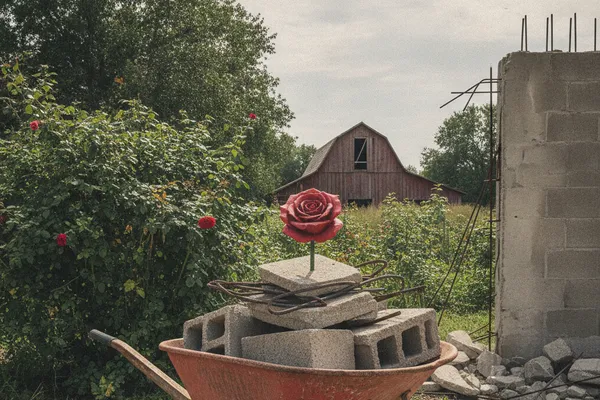
Beyond the wheelbarrow itself, the poem paints a miniature landscape. The "red" of the wheelbarrow is contrasted with the "white" of the chickens beside it. This color play isn't arbitrary; it grounds the scene in sharp, clear visual reality. The "glazed with rain water" adds a tactile and temporal element, it’s a specific moment, recently washed and glistening.
This exactness is key to Imagism. Williams isn’t asking you to imagine a wheelbarrow, but this specific wheelbarrow, in this specific setting. The clarity of these images allows the reader to form a vivid mental picture, making the poem’s abstract concepts of dependence and significance more relatable and tangible.
Common Interpretations and What They Miss
Many readers try to force a deeper, allegorical meaning onto "The Red Wheelbarrow." Some might see the wheelbarrow as a symbol of labor, the red as passion or urgency, and the chickens as nature. While these can be enjoyable readings, they often miss Williams' core intent. He famously stated about the poem, "It was a poem about certain things," not allegorical representations.
The danger is in over-interpreting and moving away from the object itself. By imposing external meanings, we can obscure the poem's radical simplicity and its celebration of the concrete. The true meaning lies not in what the wheelbarrow represents in a hidden sense, but in its undeniable existence and function.
Avoiding the Pitfalls: Mistakes in Reading the Poem
One of the biggest mistakes is searching for a hidden message or a complex, multi-layered symbolism. Williams was deliberately moving away from the ornate language and layered metaphors of earlier poetic traditions. Another pitfall is dismissing the poem as "too simple" or "meaningless" because it lacks a grand narrative or an obvious moral.
This poem requires a shift in perspective, not a decoding. It's not about finding a secret decoder ring for hidden meanings. Instead, it's about slowing down, observing carefully, and appreciating the inherent significance of the materials and tools that surround us every day.
What William Carlos Williams Wanted You to See
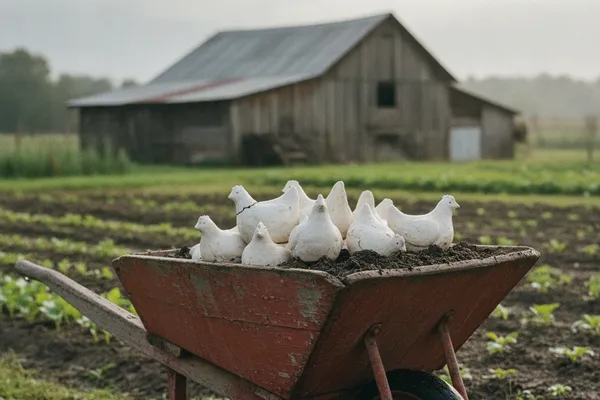
Ultimately, William Carlos Williams wanted readers to see the world with fresh eyes, unburdened by expectation or pre-conceived notions. He wanted us to appreciate the beauty and importance of the mundane, to recognize that profound truths can be found in the most ordinary of objects. For him, a well-made wheelbarrow, glistening with rain, was as worthy of poetic attention as any grand landscape or dramatic event.
The poem encourages a form of mindful observation, where the act of seeing the object, really seeing it, is enough. It’s a call to engage with the tangible world and acknowledge the essential role these simple things play in our interconnected lives, from the farm to the laboratory.
Common Interpretations and What They Miss
Many readers try to force a deeper, allegorical meaning onto "The Red Wheelbarrow." Some might see the wheelbarrow as a symbol of labor, the red as passion or urgency, and the chickens as nature. While these can be enjoyable readings, they often miss Williams' core intent. He famously stated about the poem, "It was a poem about certain things," not allegorical representations.
The danger is in over-interpreting and moving away from the object itself. By imposing external meanings, we can obscure the poem's radical simplicity and its celebration of the concrete. The true meaning lies not in what the wheelbarrow represents in a hidden sense, but in its undeniable existence and function within the scene.
Avoiding the Pitfalls: Mistakes in Reading the Poem
One of the biggest mistakes is searching for a hidden message or a complex, multi-layered symbolism. Williams was deliberately moving away from the ornate language and layered metaphors of earlier poetic traditions. Another pitfall is dismissing the poem as "too simple" or "meaningless" because it lacks a grand narrative or an obvious moral.
This poem requires a shift in perspective, not a decoding. It's not about finding a secret decoder ring for hidden meanings. Instead, it's about slowing down, observing carefully, and appreciating the inherent significance of the materials and tools that surround us every day, much like appreciating the effectiveness of a well-maintained compost bin in Compost Vs Fertilizer.
What William Carlos Williams Wanted You to See
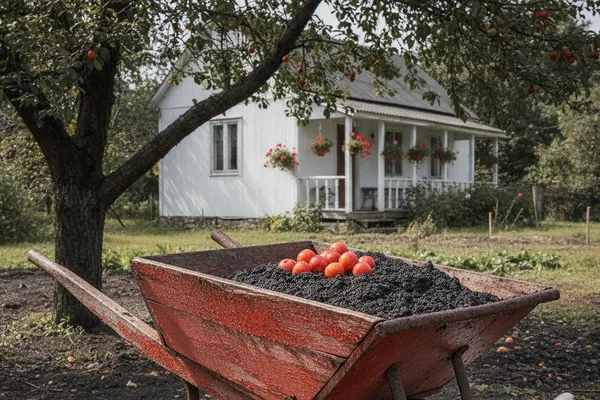
Ultimately, William Carlos Williams wanted readers to see the world with fresh eyes, unburdened by expectation or preconceived notions. He wanted us to appreciate the beauty and importance of the mundane, to recognize that profound truths can be found in the most ordinary of objects. For him, a well-made wheelbarrow, glistening with rain, was as worthy of poetic attention as the meticulous task of preparing soil.
The poem encourages a form of mindful observation, where the act of seeing the object, really seeing it, is enough. It’s a call to engage with the tangible world and acknowledge the essential role these simple things play in our interconnected lives, from the farm to the laboratory.
Experiencing the Poem: How to Read it for Deeper Meaning
To truly grasp what the red wheelbarrow means, try reading the poem aloud, slowly. Pay attention to the pauses created by the line breaks. Visualize the scene as if you were there: the heft of the wheelbarrow, the sheen of the rain on its surface, the contrast with the white chickens. Consider the context of a poem from the collection Spring and All, published in 1923, a time of significant industrial and social change.
This deep engagement allows the poem's intended effect to unfold. It’s an invitation to mindfulness, a practice similar to carefully choosing the right fertilizer for your grass to ensure it thrives, as outlined in guides on What Kind Of Fertilizer For Grass To Use. It's about appreciating the fundamental tools that support life and work.
The "So Much Depends" Question: What is "So Much"?
The phrase "so much depends" is deliberately vague, and that's its strength. It’s not tied to one specific outcome but opens up a universe of possibilities. "So much" can refer to the food produced with the help of the wheelbarrow, the construction projects it aids, its role in maintaining an orderly farm, or even the aesthetic balance it brings to the scene.
The imprecision invites the reader’s own experience and imagination into the poem. It suggests a universal dependency on the practical objects that form the bedrock of our civilization and daily routines. This concept echoes the importance of regular lawn maintenance, where consistent care, like fertilizing at the right time, as discussed on When To Fertilize Lawn, yields significant long-term results.