Seeing those tiny white specks on your basil leaves can feel like a gut punch. You've been watering carefully, giving it good light, and now this. Those white dots on basil leaves are almost always fixable, and in many cases your plant is perfectly fine.
Spider mites are the culprit in most cases we've seen with indoor basil, especially during dry winter months. But the white dots could also be harmless mineral deposits, a fungal issue, or even physical damage from your grow lights. University of California Integrated Pest Management research shows that proper diagnosis changes the outcome completely.
So let's walk through the simple checks that tell you exactly what you're dealing with.
Quick Answer
White dots on basil leaves are usually spider mites, powdery mildew, or harmless mineral deposits. Rub a dot with your finger. If it smears, it's powdery mildew.
If tiny specks move, it's spider mites. If the dot feels crusty, it's likely edema or guttation. Each cause has a different fix, so proper diagnosis matters.
What Those White Dots Actually Mean for Your Basil
Basil is a surprisingly sensitive plant. It reacts fast to stress, pests, and environmental changes. Those white dots are your plant's way of telling you something is off.
Three main categories exist for white spots on basil:
- Pests, Spider mites, thrips, or aphids feeding on leaf cells
- Fungal or disease, Powdery mildew or leaf spot fungi
- Physiological, Edema, guttation, sunscald, or light burn
Two of these three categories are easy to fix. The bad news is that treating for the wrong cause makes things worse. That's why we always start with the quick diagnostic check before grabbing any spray.
Getting the diagnosis right saves you time, money, and frustration. Let's look at the fastest way to figure out what's on your leaves.
The Quick Check: Rub, Flip, and Look
Before you do anything else, run this simple three-step exam on your basil. It takes about 30 seconds and rules out half the possible causes immediately.
Step 1: Rub a white dot gently with your finger.
If the dot smears or comes off like dust, it's powdery mildew. If it stays put and feels hard or crusty, it's likely a mineral deposit from edema or guttation. If nothing happens and the leaf looks damaged underneath, you're probably dealing with a pest.
Step 2: Flip the leaf over and look at the underside.
Spider mites and thrips love hiding on the undersides of leaves. Use a magnifying glass or your phone's zoom camera to check. Tiny moving specks mean pests.
Sticky residue or webbing points directly to spider mites.
Step 3: Check the youngest leaves first.
New growth shows pest damage first. If your white dots are mostly on older lower leaves, it's more likely a physiological issue or powdery mildew. If the fresh top leaves are covered, pests are your main suspect.
This three-step check alone points you in the right direction about 80% of the time.
Stop Right Here Before You Spray Anything
We've seen people panic and hit their basil with neem oil, dish soap, fungicide, and alcohol all in one week. That approach kills the plant faster than the original problem.
Here's what goes wrong when you spray without a diagnosis:
- Spider mites require a miticide or insecticidal soap, regular fungicide does nothing
- Powdery mildew needs a fungicide, insecticidal soap makes it spread
- Edema and guttation need nothing at all, spraying just adds stress
- Sunscald requires moving the light, no spray fixes too much light
Basil leaves are thin and sensitive. They react badly to over-spraying. Leaf burn, wilting, and dropped leaves are common results of treating the wrong thing.
The rule is simple: identify first, treat second. Most basil problems can wait 24 hours while you figure out what's going on. A day of patience beats a week of fixing a mistake.
The Spider Mite Tell: Webbing and Tiny Specks
Spider mites (Tetranychus urticae) are the number one cause of white dots on indoor basil. These tiny arachnids are almost invisible to the naked eye. A full-grown adult is about the size of a period at the end of this sentence.
Spider mite damage has three signature signs:
- Fine webbing between stems and under leaves
- Tiny white or yellow stippling dots on the top of leaves
- Leaves that look dusty or dirty from a distance
The webbing is the giveaway. No other common basil pest creates webbing. If you see fine silk threads connecting stems or coating leaf undersides, you have spider mites.
They thrive in hot, dry conditions. Indoor basil near a heat vent or under a grow light in winter is their favorite setup. Low humidity helps them reproduce faster.
A single female can lay hundreds of eggs in two weeks.
How to confirm spider mites without a microscope:
Take a white piece of paper. Hold it under a leaf with white dots. Tap the leaf sharply.
Tiny dark specks will fall onto the paper and start moving. Those are spider mites.
You can also check recommendations for controlling the environment in indoor growing spaces to see if your setup might be encouraging them.
Powdery Mildew: When the White Dots Feel Dusty
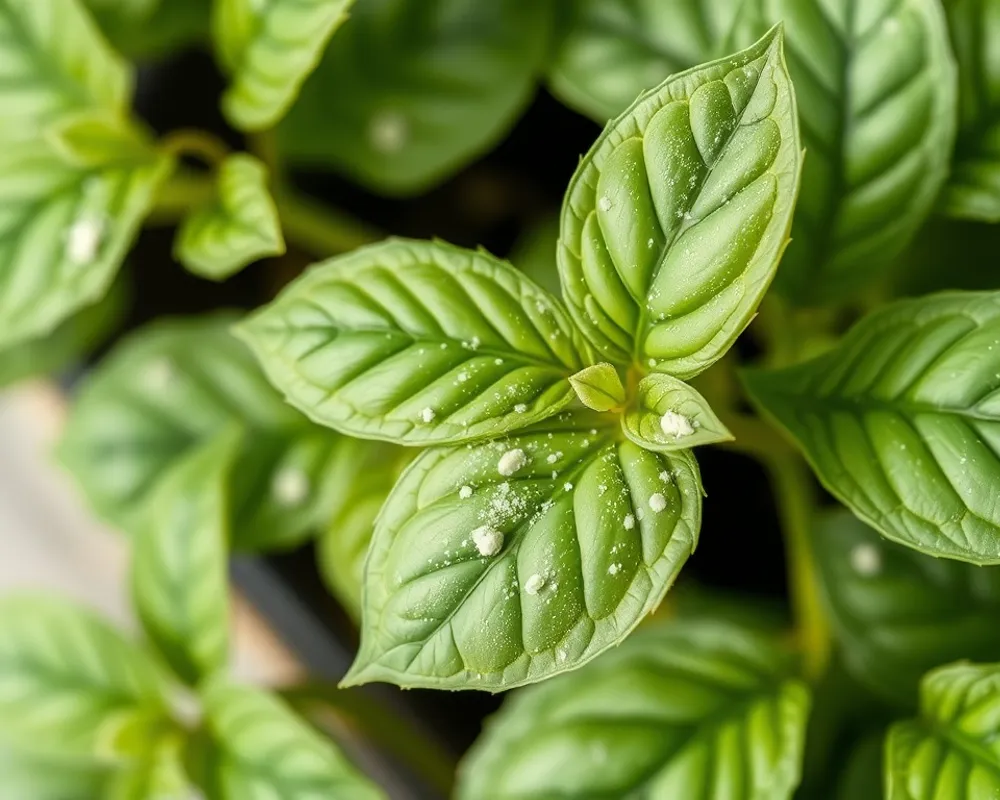
Powdery mildew (Golovinomyces orontii) is a fungal disease that looks like someone dusted your basil with flour. Unlike spider mites, the white coating sits on top of the leaf surface, not inside the tissue.
How to tell it apart from pests:
- Rub a leaf. The white stuff comes off easily.
- It spreads across the leaf surface, not in discrete dots
- You see it on both sides of the leaf
- It prefers cooler temperatures and high humidity
Basil grown in a greenhouse or a humid kitchen window is most at risk. Poor airflow around the plant makes it worse. If your basil is crowded with other plants or sitting in a corner with no breeze, powdery mildew finds it.
The fungus doesn't usually kill the plant. But it weakens it over time. Affected leaves may curl, turn yellow, and eventually drop off.
Treatment is straightforward:
Remove heavily infected leaves. Improve airflow around the plant. A small fan on low speed works wonders.
You can also treat with a potassium bicarbonate spray or a diluted milk solution (one part milk to nine parts water). Both are mild and effective.
Just don't spray neem oil on powdery mildew thinking it's spider mites. Oil-based sprays can trap moisture on the leaf surface and make the fungus worse.
Thrips Damage: White Streaks, Not Round Dots
Thrips (Frankliniella occidentalis) are slender insects that scrape the surface of basil leaves and suck out the liquid. Their damage looks different from spider mites.
Thrips damage vs. spider mites:
| Feature | Spider Mites | Thrips |
|---|---|---|
| Dot shape | Round, scattered | Elongated streaks or silvery patches |
| Location | Upper leaf surface | Random across the leaf |
| Webbing | Yes | No |
| Black specks | No | Small black frass |
| Leaf shape | Stippled, dusty-looking | Distorted, curled, or scarred |
Thrips are harder to see than spider mites. They're fast and drop off the leaf when disturbed. If you suspect thrips, hold a yellow sticky trap near the plant for a day.
Thrips are strongly attracted to yellow and get stuck on the trap.
Why thrips are harder to treat:
They lay eggs inside leaf tissue. Contact sprays only kill the adults on the surface. You need to spray every 5 to 7 days for three weeks to break the life cycle.
A systemic insecticide works better, but it's not ideal for edible basil.
If thrips are confirmed, many growers choose to prune heavily and start fresh rather than fight a prolonged battle. That's not failure. It's smart triage.
Edema and Guttation: The Harmless White Crystals
Not every white dot is a disaster. Edema and guttation are physiological conditions that look alarming but cause no real harm.
Edema happens when basil roots take up water faster than the leaves can release it. Cells burst under pressure and leave small white or tan corky spots. It looks like scarring, not a living organism.
Guttation is the plant pushing out excess water through special leaf pores called hydathodes. The water evaporates and leaves behind a white crust of minerals and salts. It looks like tiny crystals on leaf edges.
How to tell if it's harmless:
- The dots feel hard and crusty, not soft or powdery
- They don't rub off easily
- They're more common on lower, older leaves
- No webbing, no sticky residue, no moving specks
Edema and guttation mean your watering routine has room for improvement. Let the soil dry out more between waterings. Improve air movement around the plant.
Consider switching to a well-draining mix, a proper indoor soil blend without pests provides the right texture and drainage for basil.
These conditions won't spread to other plants. They aren't contagious. They're just cosmetic.
Your basil is perfectly safe to eat.
Sunscald and Light Burn: Flat White Patches on New Leaves
If your white dots look more like bleached patches than distinct spots, you might be dealing with sunscald or light burn. This happens when basil gets too much direct light intensity.
Signs of light damage:
- White or pale patches on the top leaves only
- Leaves closest to the window or LED grow light
- New growth affected first
- No dots on the underside of leaves
Basil needs bright light, but it can't handle the intensity of a 12-inch LED panel or a south-facing window in summer. Move the light source up by 4 to 6 inches. If it's a window, pull the plant back a foot.
Sunscald isn't a pest or disease. It's a simple environmental adjustment. The damaged leaves won't recover, but new growth will come in green and healthy.
Quick test: Move your hand between the light and the top leaf. If your hand feels hot within a few seconds, that's too much heat. Raise the light or move the plant.
This mistake is common in a well-intentioned indoor growing area with lights where new growers place lamps too close. Give your basil some breathing room.
Is It Still Safe to Eat Basil with White Dots?
This is the question everyone asks. The answer depends entirely on the cause.
Safe to eat after washing:
- Edema or guttation mineral deposits. Just rinse well.
- Sunscald or light burn. Cosmetic only, trim the pale parts.
- Minor powdery mildew. Wash thoroughly. The fungus is not toxic.
Skip these leaves:
- Leaves with heavy powdery mildew covering most of the surface
- Leaves with active spider mite infestations and webbing
- Leaves that feel sticky or have visible insect residue
If the white dots are from pests, the leaves might still be technically safe after a good wash. But you don't want to eat insect webbing or mite carcasses. Trim those leaves and treat the plant.
A good rule of thumb: if the leaf looks healthy aside from the dots and the dots wash off, it's fine. If the leaf is yellowing, curling, or covered in webbing, compost it.
Always wash basil leaves under running water and dry them well before use. A quick soak in cool water with a splash of vinegar helps remove lingering residue.
Treating Pests Without Ruining Your Harvest
Once you've identified the cause, treatment should be targeted and gentle. Basil is an edible crop, so harsh chemicals are off the table.
Treatment options by cause:
| Cause | Treatment | Frequency |
|---|---|---|
| Spider mites | Insecticidal soap or neem oil | Every 5 days for 2 weeks |
| Powdery mildew | Potassium bicarbonate spray | Every 7 days for 3 weeks |
| Thrips | Insecticidal soap plus sticky traps | Every 5 days for 3 weeks |
| Edema | Reduce watering, improve drainage | One-time adjustment |
| Sunscald | Move light source farther away | One-time adjustment |
For insecticidal soap: Use a ready-to-formula from a garden center. Don't use dish soap. It strips the leaf's waxy coating.
Spray in the evening to avoid leaf burn. Cover the undersides of every leaf.
For neem oil: Mix 1 teaspoon of cold-pressed neem oil with 1 quart of water and a few drops of mild liquid soap. Shake well and spray thoroughly. Neem oil works by smothering insects and disrupting their life cycle.
Important safety note: Wait at least 24 hours after spraying before harvesting. Wash leaves thoroughly. If you're treating weekly, plan your harvest for the day before the next spray.
Airflow is your best friend during treatment. A small fan pointed at your basil helps prevent fungal issues and makes it harder for pests to settle. Check our tips for moving air in small indoor grow areas for more detail.
How to Prevent White Dots from Coming Back
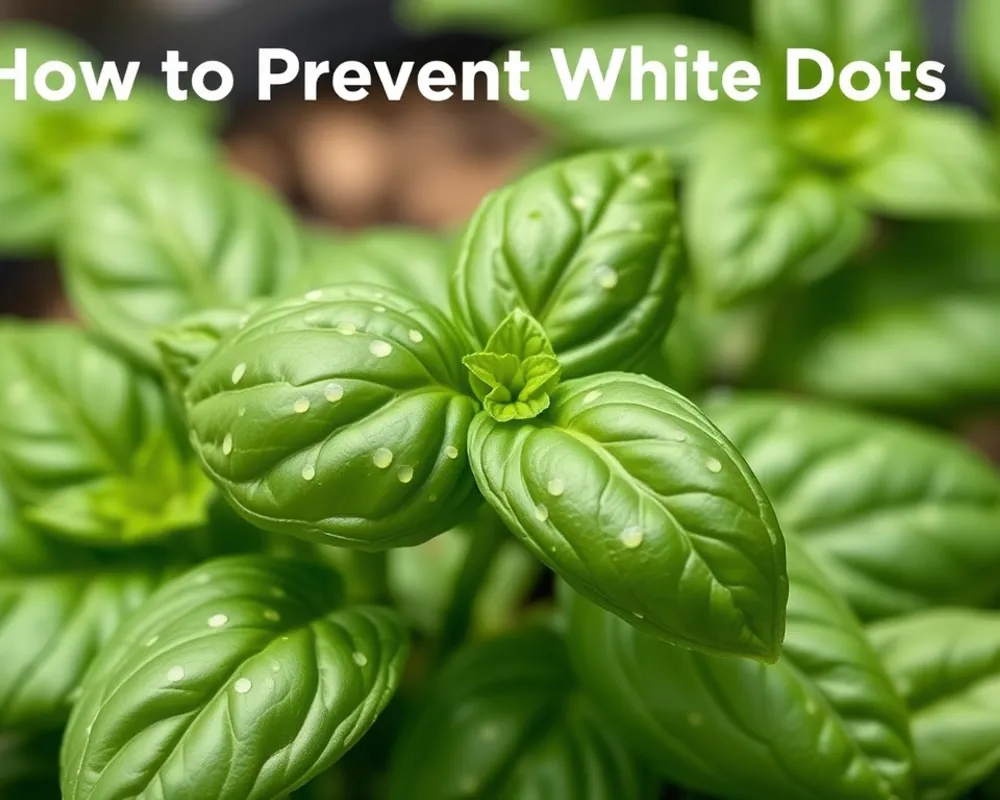
Prevention is easier than treatment. Once you've dealt with the current problem, these habits keep your basil clean.
Five prevention habits that work:
- Water at the soil level, not over the leaves
- Let the top inch of soil dry out between waterings
- Keep a small fan running near your basil plants
- Inspect leaves once a week. Catch problems early.
- Quarantine new plants for two weeks before placing them near basil
Spider mites love dusty leaves. Wipe down basil leaves with a damp cloth every couple of weeks if you notice dust building up. This simple step disrupts mite activity before it becomes an infestation.
Environmental conditions matter:
| Factor | Ideal Range | Watch Out For |
|---|---|---|
| Humidity | 40 to 60% | Above 70% invites mildew |
| Temperature | 65 to 75°F | Above 80°F speeds mite reproduction |
| Airflow | Gentle breeze | Stagnant air encourages both pests and mold |
| Light intensity | Bright indirect | Direct intense light causes sunscald |
If you grow basil indoors during winter, humidity often drops below 30%. A small humidifier or a pebble tray with water helps keep levels in the safe zone. Dry air is the number one trigger for spider mite outbreaks.
The 5-Minute Weekly Basil Check That Saves You Trouble
A quick weekly inspection catches white dots when they're easy to fix. Here's the routine we recommend.
Every Sunday, spend five minutes on this:
- Look at the top leaves first. Fresh growth shows problems earliest.
- Flip 3 to 5 leaves and check the undersides.
- Run your finger across a leaf. Does anything smear?
- Check the soil surface for tiny moving specks.
- Feel the temperature near your grow light with your hand.
This simple habit catches spider mites before they web up your plant. It catches powdery mildew when it's just a few dots instead of a full coating. It stops edema from getting worse by reminding you to adjust watering.
Extra tip for kitchen basil: If your basil sits on a windowsill near the sink, it might be getting splashed with soapy water or food debris. Rinse the leaves occasionally with clean water and dry them off. Soap residue attracts dust and can confuse your diagnosis.
Consistent care is better than any quick fix. The healthiest basil we've seen comes from people who check in with their plants weekly and adjust conditions as seasons change.
When to Cut Your Losses and Start Fresh
Sometimes the right move is to start over. It's not giving up. It's recognizing that a plant is too far gone to save.
Signs it's time to restart:
- Every leaf is covered in white spots or webbing
- The plant is yellowing and dropping leaves rapidly
- Treatment hasn't worked after three weeks
- The basil has thrips that keep coming back
A heavily infested basil plant is a reservoir for pests. While you're trying to save it, mites or thrips are spreading to your other plants. That's a bad trade.
How to restart safely:
Toss the old plant and the soil. Wash the pot with hot soapy water or a 10 percent bleach solution. Start with fresh potting mix from a sealed bag.
Don't place the new basil in the same spot as the old one. Move it to a different window or shelf.
If you're growing in a tent or enclosed space, wipe down the surfaces before bringing in new plants. Pests can hide in cracks and corners. A clean start is the fastest path back to healthy basil.
You can find more on maintaining healthy plants in our garden care journal.
Common Treatment Mistakes That Make Things Worse
We see the same mistakes over and over in online gardening forums. Here are the ones to avoid.
Mistake 1: Using dish soap as insecticide
Dish soap strips the protective waxy layer from basil leaves. The leaves look shiny at first, then they wilt and brown. Use insecticidal soap from a garden center instead.
It's formulated for plants.
Mistake 2: Spraying neem oil in direct light
Neem oil causes leaf burn when applied in bright light or high temperatures. Always spray in the evening or move the plant to shade. Let the leaves dry overnight before returning them to the light.
Mistake 3: Overwatering after treatment
Many people panic and water more when they see leaf damage. That makes edema worse and creates conditions for root rot. Stick to your normal watering schedule unless you've confirmed a watering problem.
Mistake 4: Ignoring the undersides of leaves
Spraying only the visible surfaces is like cleaning half your kitchen. Pests hide underneath. You have to coat every leaf surface, both top and bottom, for treatment to work.
Mistake 5: Treating for one thing when it's another
This is the biggest one. A person treats for spider mites when the white dots are actually edema. The treatment adds stress and damages the plant.
Always do the rub-and-flip test first. It takes 30 seconds and saves you weeks of frustration.
Quick Reference: Which Cause Fits Your Basil?
Here's a fast comparison table for the moment you find white dots and need an answer right now.
| What You See | Likely Cause | What to Do |
|---|---|---|
| Fine webbing plus tiny moving specks | Spider mites | Insecticidal soap, every 5 days |
| Dusty white coating, smears off | Powdery mildew | Improve airflow, apply fungicide |
| Silver streaks, leaf distortion | Thrips | Sticky traps, repeated soap sprays |
| Hard white crust on leaf edges | Edema or guttation | Water less, improve drainage |
| Bleached patches on top leaves | Sunscald or light burn | Move light source farther away |
| Sticky leaves plus small white bugs | Aphids or whiteflies | Neem oil, wash off with water |
Bookmark this page. When you spot white dots, check the table, do the quick test, and treat accordingly.
Frequently Asked Questions
Can I eat basil leaves with white dots?
Yes, in most cases. If the dots are from edema, guttation, or sunscald, just wash the leaves well and use them. If the white dots are from spider mites or powdery mildew, trim off the affected areas.
Skip leaves with heavy webbing or thick mildew coating.
How do I know if white dots are spider mites or powdery mildew?
Rub a white dot with your finger. If it smears like dust, it's powdery mildew. If it stays put and the leaf has tiny speckles or webbing, it's spider mites.
This simple touch test gives you the answer in seconds.
Does neem oil work on all white dot causes?
No. Neem oil works on spider mites, aphids, and some fungal issues. But it can make powdery mildew worse by trapping moisture on the leaf.
It also does nothing for edema, guttation, or sunscald. Always diagnose before treating.
Why do my basil leaves have white dots only on the top?
White dots only on the top of leaves usually point to sunscald or light burn. The light source is too close or too intense. Move the plant back from the window or raise your grow light.
New growth should come in green.
Can white dots on basil spread to my other plants?
Yes, if the cause is spider mites, thrips, or powdery mildew. These pests and fungi spread easily. Quarantine an affected basil plant away from your other herbs and houseplants until you've cleared the problem.
How often should I spray basil for spider mites?
Spray every 5 to 7 days for at least two weeks. Spider mites hatch in cycles. A single spray only kills the adults.
Repeat treatments catch newly hatched mites before they reproduce. Don't skip a round.