You walk out to your seed-starting tray one morning and see them, your onion seedlings, flat on their side like someone tipped them over in the night. If you've ever typed why are my onion seedlings falling over into a search bar, you're not alone. It's the most common panic moment for anyone starting onions from seed indoors.
The good news is there are really only a handful of reasons this happens, and every single one is fixable once you know what to look for.
The trick is that different causes look different. A thin, pinched stem at the soil line means something totally different from a tall, pale seedling that just can't hold itself up. And sometimes, especially if your onions are six to eight weeks old, falling over is perfectly normal.
A 2023 guide from the University of Minnesota Extension notes that onion seedlings are naturally prone to flopping as bulbs begin to swell. So before you scrap your tray, let's walk through the clues together.
The Quick Diagnosis: Is It a Problem or Just Onion Behavior?
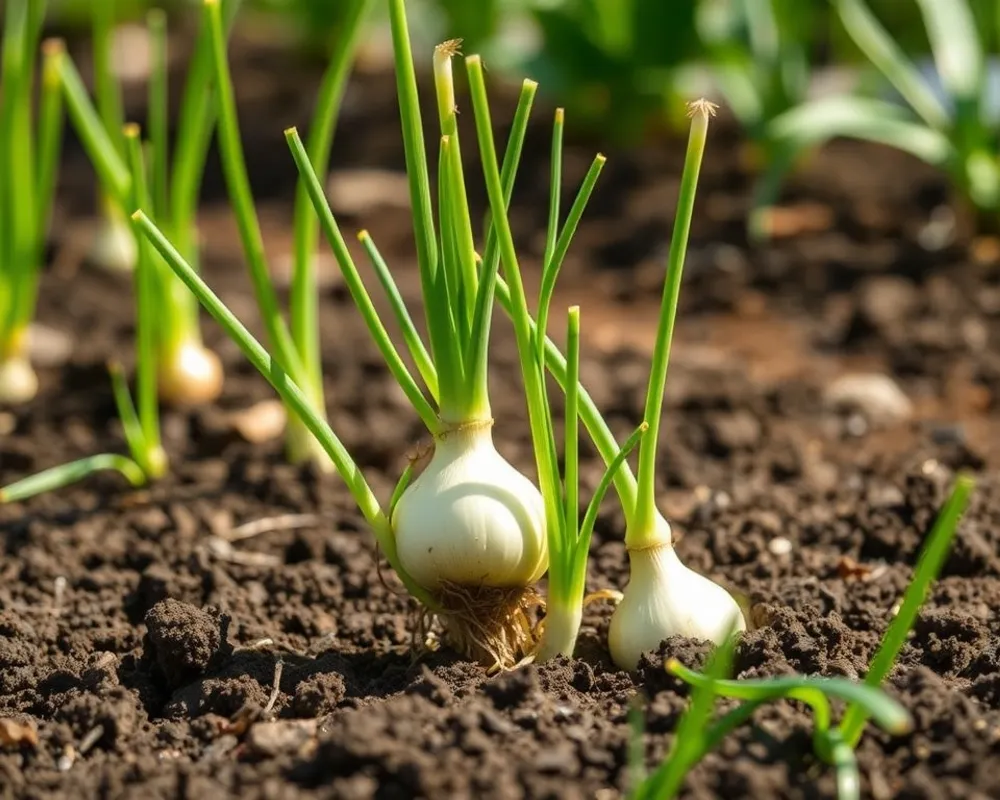
Onion seedlings are not like tomato seedlings. They don't grow thick, woody stems. Instead, onion leaves emerge from a compressed stem at the base, and those leaves are hollow and floppy by nature.
A single leaf that bends over while the rest stand tall is almost always normal.
But if your entire tray looks like a pile of green spaghetti, something is wrong. The quickest way to tell is by age. For seedlings under four weeks old, any widespread falling over is a red flag.
For seedlings six weeks or older, especially if they have four or more true leaves and the stem at soil level is thicker than a pencil lead, drooping is often just the plant shifting energy toward bulb formation.
Also check the base of each stem. Run your finger along the soil line. If the stem feels soft, mushy, or pinched, you've got a problem.
If it feels firm but the leaves are just flopping sideways, the plant is probably fine.
Decision Point #1: Check the Stem at Soil Level
This is your most important diagnostic step. The stem right where it meets the soil tells you everything.
How to Spot Damping Off vs. Physical Weakness
Damping off is a fungal disease complex caused by pathogens like Pythium, Rhizoctonia, and Fusarium. It attacks seedlings at the soil line. The stem develops a water-soaked, thin, pinched section that looks like someone squeezed it with tweezers.
The seedling collapses at that point and often dies within a day or two. According to the American Phytopathological Society, damping off is the leading cause of seedling loss in home-starting setups.
Physical weakness, on the other hand, is the same stem all the way, just too thin or too long to hold the leaves up. The seedling may lean or fall over, but the stem texture is consistent from top to bottom. No pinching, no discoloration.
If you see a pinched, brown, or black section at the base, that's damping off. If the stem looks uniform but weak, it's a growing condition issue, usually light or water.
What to Do If You See a Thin, Pinched Stem (Damping Off)
Damping off is contagious and fast. Remove every affected seedling immediately, along with the soil around its roots. Do not compost them, bag and trash them.
Then improve air circulation immediately. Place a small oscillating fan near the tray, set on low, pointed so it gently ruffles the leaves. This keeps the soil surface dry and reduces fungal spore germination.
Reduce watering. Let the top quarter-inch of soil dry out before adding more water. Switch to bottom watering if you can, fill the tray's reservoir rather than pouring water on top.
The University of Massachusetts Amherst Extension recommends bottom watering for all seedlings to keep the soil surface dry and discourage fungal growth. If the problem persists, you can apply a biological fungicide containing Bacillus subtilis, but cultural fixes are usually enough if caught early.
What to Do If the Stem Looks Normal But Weak
If the stem is pale, thin, and stretching toward a window, you're dealing with insufficient light. Move the tray closer to your light source or invest in a proper grow light. If the stem is normal in thickness but the whole seedling is flopping, check your watering next.
Decision Point #2: Evaluate Your Light Setup
Onions are full-sun plants. As seedlings, they need intense, consistent light to grow short, stocky stems. This is where most indoor growers go wrong.
Why Onion Seedlings Get Leggy and Fall Over
When a seedling doesn't get enough light, it stretches toward whatever source it can find. This process is called etiolation. The cells elongate rapidly, producing thin, pale stems that cannot support the leaves' weight.
The result is a tray of seedlings that look like they're reaching for something just out of reach, and then toppling over.
Onion seedlings are especially sensitive because they grow from a small seed with limited energy reserves. If they don't get enough photons from day one, they stretch before true leaves even emerge.
The Right Light Distance and Duration for Onion Starts
Grow lights need to be close, much closer than most people think. For LED panels, the ideal distance is 2 to 4 inches from the top of the seedlings. For fluorescent tubes, 4 to 6 inches.
If your light is 12 inches away, your onions will stretch.
Run the lights 14 to 16 hours per day. Onions are long-day plants even at the seedling stage, and they need that duration to stay compact. Use a timer so you don't forget.
Also consider the light's spectrum. Full-spectrum or cool-white (5000K to 6500K) lights work best for vegetative growth. Warm-spectrum bulbs can cause stretching.
Fixing Leggy Seedlings Mid-Growth
Once a stem has stretched, it will never shorten. But you can still grow a usable plant. When you transplant, bury the stem deeper, right up to the first set of leaves.
Onions, like tomatoes, will root along the buried stem. This gives them stability and a stronger foundation.
If your seedlings are still in the tray and less than four weeks old, you can also add a small amount of soil or potting mix around the base to support them. Just be careful not to bury the growing point.
For more details on setting up an optimal indoor environment, our full grow tent setup guide covers lighting placement and ventilation in depth.
Decision Point #3: Test Your Watering Routine
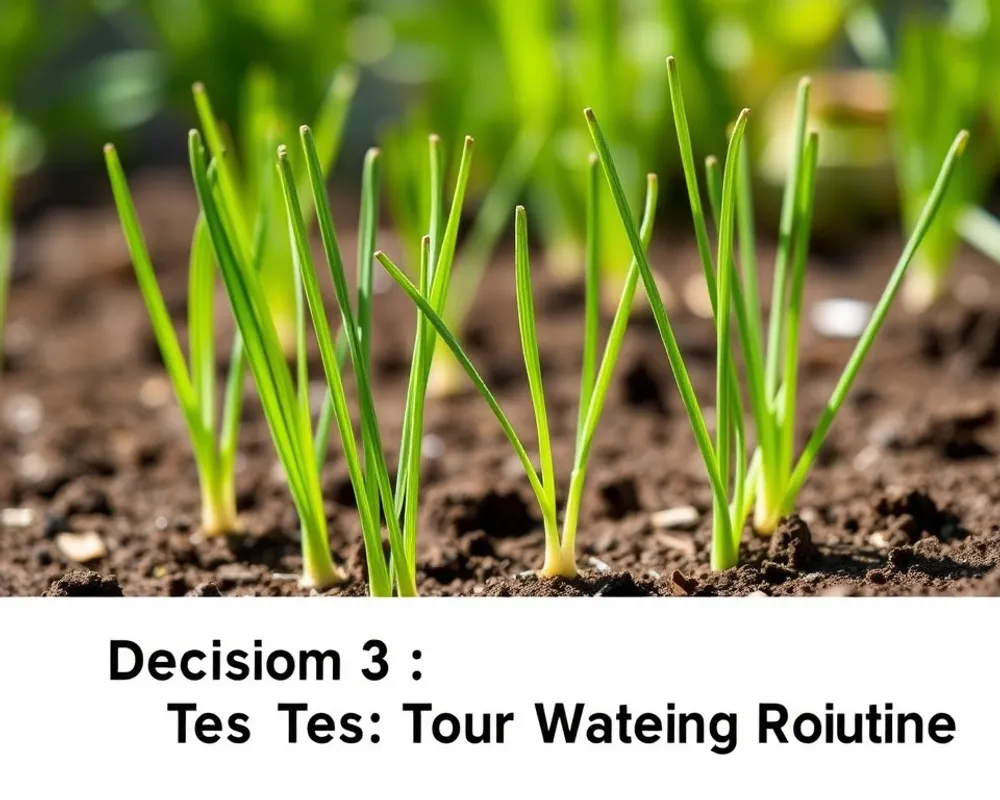
Water is the second most common culprit. Too much, and you invite damping off. Too little, and the leaves wilt and can't stand.
The Difference Between Damp and Waterlogged Soil
Onion seedlings prefer consistently moist soil, not soggy soil. The difference is subtle but critical. Damp soil feels like a wrung-out sponge, it holds moisture but doesn't release water when you squeeze it.
Waterlogged soil feels heavy, and water pools on the surface or drains slowly through the tray.
If you lift the tray and it feels heavy, there's too much water. If the soil surface looks dark and wet more than a few hours after watering, you're keeping it too wet.
Bottom Watering vs. Top Watering for Disease Prevention
Bottom watering is the single best habit you can adopt for onion seedlings. Fill the tray's reservoir with water. The soil wicks it up from below.
The surface stays dry, which means fungal spores cannot germinate there. The roots grow downward, seeking moisture, which makes them stronger.
Top watering, by contrast, splashes soil onto the stem and leaves. That soil can carry fungal spores. And when water sits on the leaves overnight, you increase the risk of disease.
If you must top water, do it in the morning so the surface dries before nightfall. Use a watering can with a fine rose to avoid disturbing the seedlings.
How to Tell If You're Overwatering Your Onion Starts
Overwatering symptoms are similar to damping off, wilting, yellowing, and collapse, but without the pinched stem. The soil surface may develop white or green algae. The roots of an overwatered seedling are brown and mushy instead of white and firm.
Let the soil dry out slightly between waterings. Stick your finger into the mix about half an inch. If it feels dry, water.
If it feels damp, wait a day.
Proper watering is also key when setting up any indoor grow space. Our guide on considerations before buying a cheap indoor grow tent includes tips on ventilation and moisture control that apply to seed starting too.
Decision Point #4: Consider Temperature and Airflow
Temperature affects how fast seedlings grow and how much water they need. Airflow affects stem strength and disease risk.
Why Stuffy Conditions Cause Seedling Collapse
Onion seeds germinate best in soil temperatures between 50°F and 75°F (10°C to 24°C). But once they emerge, they prefer things on the cooler side, around 60°F to 70°F (15°C to 21°C). If the room is too warm (above 75°F), seedlings grow fast but weak.
They elongate and flop over.
Also, still air is a breeding ground for fungi. Without movement, the boundary layer of air around each leaf stays humid, and that humidity encourages damping off and other fungal infections. A sealed grow tent or a windowsill with no air movement is a recipe for falling seedlings.
Using a Fan to Strengthen Onion Stems
A small fan does two things. It strengthens stems by gently swaying the leaves, plants respond by building thicker cell walls. And it keeps the soil surface dry, which blocks fungal growth.
Set an oscillating fan on low, pointed away from the seedlings so they feel a gentle breeze, not a gale. Run it for 4 to 6 hours per day. You'll notice the difference within a week: stems get stockier, and the whole tray stands taller.
If you're using a grow tent, proper ventilation is even more critical. Our grow tent ventilation setup guide explains how to balance intake, exhaust, and internal airflow for healthy seedlings.
When Falling Over Is Actually Normal — The Bulb Stage
Here's a scenario that trips up a lot of new growers. Your onion seedlings are six weeks old, looking great, and then one morning a leaf just flops over. The rest of the plant looks fine.
The stem is thick and healthy. What gives?
That single flopping leaf is often a sign that bulb formation has started. Onions are biennials. In their first year, they store energy in a bulb.
As that bulb swells underground, the older outer leaves lose turgor and bend at the base. It's not a sign of weakness, it's the plant shedding leaves that aren't pulling their weight.
How to Tell If Your Onion Is Just Forming a Bulb
Check the base of the plant right at soil level. Gently brush away a little dirt. If you see a visible swelling, even just the width of your pinky finger, the bulb is forming.
That single droopy leaf is the oldest leaf on the plant. It's done its job.
Compare it to a new seedling that falls over. A bulb-stage flop has a firm stem and a healthy root system. A problem-stage flop has a thin, weak stem or a pinched section at the soil line.
If the rest of the leaves are standing tall and green, you're fine.
Why You Shouldn't Panic Over a Single Droopy Leaf
It's easy to mistake natural senescence for disease. But a healthy onion plant will lose a leaf every week or two as the bulb matures. That leaf will turn yellow at the tip first, then gradually soften and bend.
Eventually it dries up and can be trimmed off.
If your whole tray of seedlings is over six weeks old and only a few leaves are drooping, that's normal growth. The USDA's Agricultural Research Service notes that onion foliage naturally senesces from the outside in during bulb development. Leave those leaves alone.
They still pass energy to the bulb as they yellow.
Transplanting Weak or Fallen Seedlings: Can You Save Them?
Short answer: yes, most of the time. Onions are remarkably resilient. A fallen seedling that still has a firm stem and at least one true leaf can usually be saved with the right transplanting technique.
How Deep to Bury Leggy Onion Transplants
Dig a hole or a trench deep enough that the seedling can be set in place with only the top inch of leaves above the soil line. Bury the rest of that long, leggy stem. Onions are unique among garden vegetables, they root from the buried stem.
New roots will emerge along the entire buried section, creating a much stronger anchor.
Do this when the seedlings are still small enough to handle without damage. If the stem is already pinched from damping off, discard it. But if it's just weak from low light, deep planting works wonders.
Water the transplant in well, then let the soil dry slightly before watering again.
Hardening Off Without Killing Already-Stressed Seedlings
Your weak seedlings have been living in a cushy indoor environment. Taking them straight outside is a shock that can finish them off. Start the hardening off process slowly.
Place the tray in a sheltered, shady spot outdoors for one hour on the first day. Bring them back inside. Add one hour each day.
After five days, they can handle full sun for a few hours. After ten days, they're ready for the garden.
If your seedlings are already stressed from damping off or legginess, keep them out of direct wind and hot sun for the first few days. A cold frame or a shaded porch works well. You can also use a lightweight row cover to reduce stress.
For more details on timing your outdoor transition, our grow tent size guide includes information on staging seedlings before hardening off.
Common Onion Seedling Mistakes That Lead to Collapse
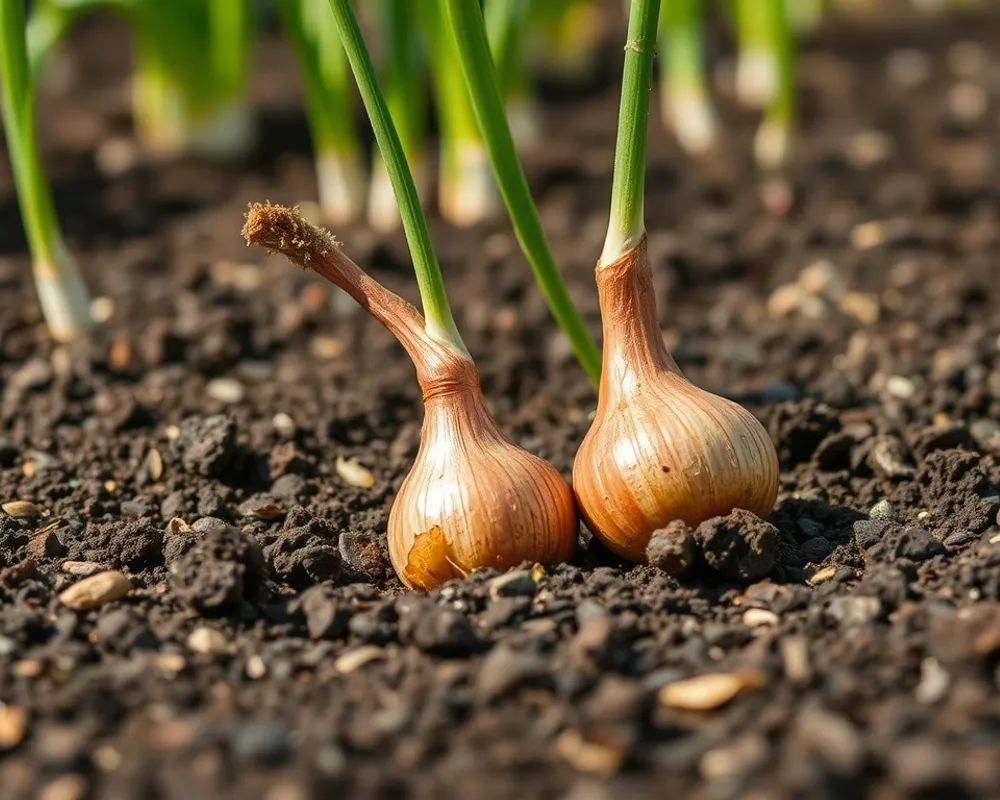
Most falling seedlings trace back to one of three mistakes. If you avoid these, your success rate jumps dramatically.
Potting Mix Mistakes to Avoid
Standard garden soil is too heavy for seed starting. It compacts, holds too much water, and can harbor pathogens. Use a sterile, soilless seed-starting mix instead.
It should be light, fluffy, and drain quickly.
One common mistake is adding extra fertilizer to the mix. Onion seedlings don't need feeding until they have at least two true leaves. Too much nitrogen early on produces soft, sappy growth that flops over easily.
Starting Onions Too Early Indoors
Onions need about eight to ten weeks indoors before transplanting. That's the sweet spot. Start them too early, and they outgrow their containers before the weather cooperates.
Overcrowded seedlings compete for light and water, and they get leggy and weak.
Check your last frost date and count backward. If your last frost is May 1, start onions around March 1. That gives you exactly eight weeks.
Resist the urge to start in January.
Skipping the Fan or Light Adjustment
It's the easiest thing to overlook. You set up a light, you water regularly, but you never add airflow. That still air is a silent enemy.
Onion seedlings need the gentle stress of a moving breeze to build strong cell walls.
Similarly, once the seedlings emerge, the light distance needs adjustment. If the light stays 12 inches away, the seedlings will reach and fall. Move it down to 2 to 4 inches immediately after germination.
When to Start Over vs. When to Push Through
Sometimes you have to call it. Not every tray of seedlings is worth saving. Knowing when to cut your losses saves you time and frustration.
Signs You Should Reseed
If more than half the tray has damped off, start over. The fungal spores are in the soil mix now, and even the surviving seedlings are at risk. Throw out the soil, sanitize the tray with a 10 percent bleach solution, and start fresh with sterile mix.
If the seedlings are less than three weeks old and completely flattened from low light, reseeding is faster than trying to save them. You'll get stronger plants in the same amount of time.
How to Re-Sow Onions for a Successful Second Round
Use a brand new bag of seed-starting mix. Don't reuse the old soil. Soak the seeds for 12 hours before planting to speed germination.
Plant them at the correct depth, one quarter to one half inch deep.
Keep the light 2 inches away from the soil surface from day one. Use a heat mat if your room temperature is below 65°F (18°C). Bottom water only.
Run a fan on low starting the day after germination. Follow these steps, and your second batch will stand tall.
For a complete walkthrough of the indoor setup, our guide on building your own grow room covers lights, ventilation, and temperature control.
Quick Reference: Onion Seedling Problem-Solving Flowchart
Here's a simple decision tree you can run through in 30 seconds when you spot fallen seedlings.
| Observation | Likely Cause | Action |
|---|---|---|
| Pinched, thin stem at soil line | Damping off | Remove affected, increase airflow, reduce watering |
| Pale, thin, stretching stem | Insufficient light | Move light to 2-4 inches, run 14-16 hours |
| Stem firm but leaves flopping, seedling >6 weeks | Normal bulb formation | No action needed |
| Soft, mushy stem with dark roots | Overwatering | Let soil dry, switch to bottom watering |
| Single old leaf yellowing and drooping | Natural senescence | Leave it; will dry and detach |
| Entire tray collapsed overnight, stems brown | Advanced damping off | Discard tray, sanitize, restart with sterile mix |
Simple Decision Tree You Can Follow in 30 Seconds
- Look at the base of the stem. If it's pinched and thin → damping off.
- If stem is uniform but pale and weak → move light closer.
- If stem is firm and thick but leaves bend → check age. Over 6 weeks? Normal.
- If soil is soggy → let it dry out.
That's it. Most seedling problems fall into one of those four buckets. Fix the cause, and your onions will be back on their feet within a week.
Frequently Asked Questions
Can onion seedlings recover after falling over?
Yes, if the stem is firm and not pinched. Fix the underlying cause, then transplant deeper. Most recover within a week.
Should I stake my falling onion seedlings?
No. Staking treats the symptom, not the cause. Onion stems are too soft for staking anyway.
Fix the light, water, or airflow instead.
Is it okay if onion seedlings flop after transplant?
Some flopping is normal for the first two days. The roots are adjusting. If they still flop after five days, check your planting depth and water.
How do I prevent damping off in the next batch?
Use sterile seed-starting mix and bottom water only. Run a low fan from day one. Keep the light 2 to 4 inches away for strong stems.
What's the best grow light for onion seedlings?
A full-spectrum LED panel or cool-white fluorescent tube works well. Aim for 5000K to 6500K color temperature. Keep it 2 to 4 inches above the seedlings for 14 to 16 hours daily.