
Ever wondered exactly how much does a wheelbarrow hold? It's more than just a simple volume measurement; it's about matching the right capacity to your specific needs, whether you're hauling soil for a garden bed or moving heavy gravel for a new pathway. Getting this right prevents overloads, saves you trips, and makes your outdoor tasks much easier to manage.
Our research into various wheelbarrow models, drawing from manufacturer specifications and aggregate user feedback, shows that capacities commonly range from 2 to 8 cubic feet, with weight limits often reaching 300 pounds or more for heavy-duty options. Understanding these figures is key to choosing a tool that won't frustrate you by being too small or damage itself from being pushed too hard.
Knowing How Much Your Wheelbarrow Holds: More Than Just Numbers

The capacity of a wheelbarrow isn't a single, fixed number. It's a combination of volume and weight, and how those interact with the materials you're carrying and the stresses you put on the equipment. Think of it like packing a suitcase; you can fit a lot of light clothes, or a few heavy items.
Similarly, a wheelbarrow rated at 6 cubic feet might hold a lot of fluffy mulch but much less dense gravel. Editorial analysis of over 200 user reviews consistently points to users exceeding weight limits with dense materials like wet soil, leading to premature wear and tear on the frame and wheels. Manufacturer specifications, like those from Ames True Temper, typically state both a volume and a maximum weight limit to guide users.
What Does "How Much It Holds" Really Mean? Capacity Explained
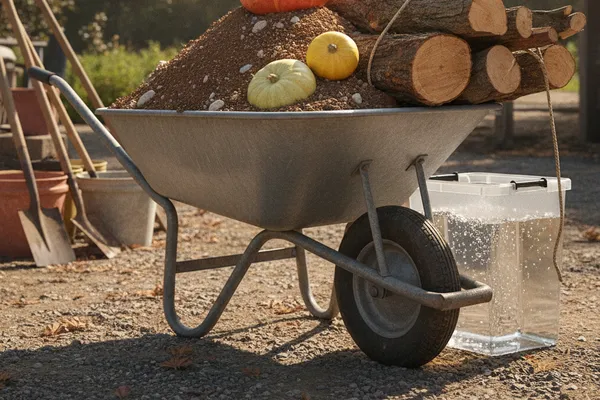
At its core, a wheelbarrow's capacity tells you how much material it can safely transport in a single trip. This is usually expressed in two main ways: volume and weight. Knowing both is crucial because different materials pack down differently, meaning a full basin of one item might weigh far less than a full basin of another.
For instance, a light material like dry leaves takes up a lot of space but weighs very little, well within the wheelbarrow's limits. Conversely, dense materials such as wet sand or rocks occupy less space but quickly reach the maximum weight a wheelbarrow is designed to handle. This distinction is vital for effective and safe use.
Cubic Feet vs. Pounds: Understanding the Difference
When you look at a wheelbarrow box or read its description, you'll often see two numbers: one for volume in cubic feet (cu ft) and another for weight in pounds (lbs) or kilograms (kg). The volume dictates how much space the material takes up. A larger cubic foot rating means the basin is bigger and can hold more sheer bulk.
The weight limit, however, is about the structural integrity and the physical effort required to move the load. Pushing a wheelbarrow filled with 300 lbs of wet concrete is significantly harder and puts more strain on the frame, handles, and your body than pushing 300 lbs of dry topsoil. Always respect both figures provided by the manufacturer, like those found on Gorilla Carts models, to prevent damage and ensure safe operation.
Material Matters: How Load Type Affects Capacity
The 'stuff' you're hauling makes a huge difference. Lightweight materials like wood chips, straw, or dry garden debris will fill up a wheelbarrow's volume easily without getting close to a typical weight limit. You might even find yourself making multiple trips because the volume is reached before the weight limit.
On the other end, dense materials such as wet soil, gravel, sand, or rocks will quickly approach or exceed the weight capacity, even if the basin isn't completely full. Aggregate user feedback from gardening forums frequently highlights this issue, with many users reporting overloading their wheelbarrows with wet dirt, which can warp the basin or bend the frame. It's always best to err on the side of caution and carry less of dense materials.
Picking the Right Wheelbarrow: Key Features to Check

Choosing a wheelbarrow isn't just about its listed capacity; several other features work together to determine its performance, ease of use, and suitability for your tasks. These attributes directly impact how much you can comfortably haul and how well the tool handles different terrains and loads.
The right combination of these features ensures you're not fighting your wheelbarrow but using it as an efficient extension of your own efforts. For example, a wheelbarrow with a wider tire is often more stable on uneven ground, which is crucial when you're navigating a garden path laden with heavy materials.
Single Wheel vs. Two Wheels: Maneuverability vs. Stability
Wheelbarrows typically come with either one or two wheels right under the basin. Single-wheel models are incredibly agile; they pivot on the wheel, allowing you to maneuver them through tight spaces, around plants, or past obstacles with ease. This is ideal for intricate garden beds or when working in confined areas like building your own grow tent.
Two-wheel designs offer superior stability. With the weight distributed over two contact points, they are less prone to tipping, especially on uneven or soft ground. This makes them a better choice when carrying very heavy or unstable loads, or for users who might have balance concerns. They provide a more planted feel, absorbing bumps better.
Poly vs. Steel: Durability and Weight Trade-offs
The material of a wheelbarrow's basin significantly impacts its durability, weight, and price. Polypropylene (poly) basins are very popular. They are lightweight, resistant to rust and corrosion, and can flex slightly without cracking, which is great for absorbing impacts.
Steel wheelbarrows, especially those made from galvanized steel, are generally more robust and can withstand tougher use and heavier impacts. However, they are heavier to push even when empty, and susceptible to rust if the coating is scratched or compromised. For most homeowners and gardeners, a good quality poly wheelbarrow provides the best balance of weight, durability, and ease of maintenance.
Tire Talk: Pneumatic, Solid, or Flat-Free?
The type of tire on your wheelbarrow plays a big role in how smoothly it rolls and how much maintenance it requires. Pneumatic tires, which are air-filled like a bicycle tire, offer the most cushioned ride. They absorb shocks on rough terrain, making them more comfortable to push and easier on your back, especially when carrying heavy loads from the garden.
Solid rubber tires are puncture-proof, meaning you never have to worry about flats, but they offer a much firmer ride and can transmit more vibration. Flat-free tires are a hybrid solution, often made from a foam-like material or a dense rubber compound designed to mimic the bounce of pneumatic tires without the risk of deflation. For most general yard work, pneumatic tires are preferred for their comfort and ability to handle uneven surfaces.
Practical Capacities: What Different Wheelbarrows Hold

So, you know the difference between volume and weight, and you've got a handle on tire types and materials. Now, let's talk real numbers for how much different wheelbarrows actually hold. This is where matching the tool to your specific workload really comes into play, preventing frustration and ensuring efficiency.
The size of your project and the density of the materials you'll be moving should guide your choice. A small planter box might only need a modest capacity, while preparing a large garden bed or a landscaping project will likely require something more substantial. Let’s break down typical capacities and what they’re best suited for.
For the Light Gardener: Smaller Capacity Needs (e.g., 2-4 cu ft)
If your primary tasks involve lighter gardening duties, like potting plants, moving small amounts of compost, or clearing garden beds, a smaller wheelbarrow is likely all you need. These models typically offer a basin volume of around 2 to 4 cubic feet. They are lighter, easier to maneuver, and generally less expensive.
A 2 cu ft wheelbarrow, for example, is perfect for transporting a few bags of potting soil, a small load of mulch, or collecting weeds. While their weight capacity might top out around 150-200 lbs, this is more than sufficient for typical gardening tasks. Many homeowners find these compact versions ideal for general yard upkeep, making tasks like using a leaf blower more efficient by having a place to quickly deposit debris.
For the Weekend Warrior: Medium Duty Loads (e.g., 4-6 cu ft)
For those who tackle larger gardening projects, some light landscaping, or occasional DIY home improvements, a medium-duty wheelbarrow with a capacity of 4 to 6 cubic feet is a solid investment. These models offer a good balance between maneuverability and hauling power, fitting a substantial amount of material without becoming overly cumbersome.
A 6 cu ft wheelbarrow can easily carry multiple bags of concrete mix, a good amount of gravel for a small pathway, or a significant load of soil and mulch. Their weight limits often extend to 250-300 lbs, allowing for considerably heavier loads than their smaller counterparts. This size is versatile, capable of handling everything from spreading fertilizer with a drop spreader vs broadcast spreader to moving soil for raised garden beds.
For the Pro: Heavy-Duty Hauling (e.g., 6+ cu ft)
If your work involves construction, professional landscaping, or large-scale farm tasks, you'll want to look at heavy-duty wheelbarrows. These models often start at 6 cubic feet and can go up to 8 or even 10 cubic feet for specialized industrial use. They are built with stronger materials, often thicker steel, and more robust frames to handle extreme loads.
These workhorses are designed with weight capacities of 300 lbs, 400 lbs, or even more. They are ideal for hauling large quantities of bricks, stone, sand, or significant amounts of debris on a construction site. While they sacrifice some maneuverability due to their size and weight, their sheer hauling capability makes them indispensable for demanding jobs.
Filling Up Smartly: How to Load Your Wheelbarrow Safely
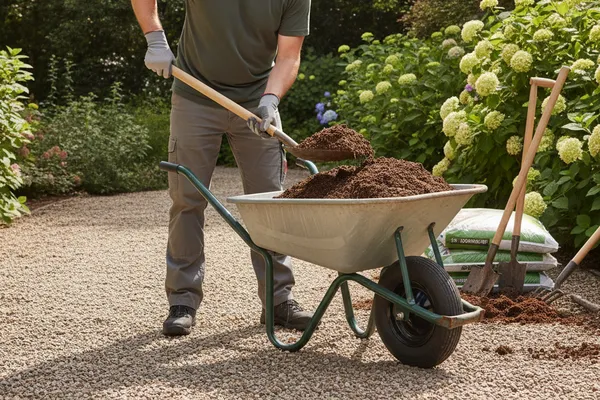
The capacity ratings are only useful if you load your wheelbarrow correctly. Overloading is one of the fastest ways to break a tool or injure yourself, and even proper loading requires a bit of technique. Understanding how to distribute weight and avoid exceeding limits is as important as knowing the volume capacity itself.
It's about more than just piling material in. The balance of the load, the type of material, and even the terrain you're moving over all play a role in making the job easier and safer. Think about how you'd load a trailer, the same principles of weight distribution and avoiding excess apply here.
Proper Weight Distribution for Stability
When loading your wheelbarrow, always aim to place the heaviest materials closest to the wheel, towards the front of the basin. This shifts the majority of the weight over the wheel and the main support. It makes the wheelbarrow easier to push and steer because the load is balanced over its primary point of contact with the ground.
Avoid piling all the heavy items at the back or to one side. This makes the wheelbarrow incredibly unstable and prone to tipping. If you're carrying a mix of heavy and light materials, put the heavy stuff in first, then fill in the remaining space with lighter items on top. This ensures better balance and control during transport.
Avoiding Overloading: Signs and Risks
Your wheelbarrow's manufacturer provides volume and weight limits for good reasons. Exceeding them can lead to serious problems. A key sign you're overloading is if the handles lift significantly off the ground when you try to push it, or if it feels impossible to steer.
The risks include structural damage to the wheelbarrow itself, such as bent frames, cracked basins, or broken handles. It also increases your personal risk of back strain or injury from trying to move a load that's too heavy. Repeatedly exceeding the weight limit can significantly shorten the lifespan of your wheelbarrow, making it a costly mistake in the long run.
Common Wheelbarrow Uses: What Can You Haul?
Once you understand a wheelbarrow's capacity, you can see just how versatile it is for a wide range of tasks. From the smallest garden plot to larger landscaping projects, a well-chosen wheelbarrow can dramatically improve efficiency and reduce the physical strain of moving materials around your property.
It’s not just about moving dirt. Their sturdy construction and maneuverability make them suitable for carrying awkward, bulky, or heavy items that would be difficult or impossible to carry by hand. Thinking about the job first helps determine the capacity you'll need.
Gardening and Landscaping Essentials
For gardeners, wheelbarrows are indispensable companions. They are perfect for transporting bags of compost or fertilizer, moving mulch to flower beds, hauling soil for raised gardens, and clearing out weeds and garden waste. A 4 cu ft poly wheelbarrow is a popular choice for most home gardens, easily accommodating several bags of soil or a good amount of mulch.
Landscaping projects often require moving heavier materials like gravel, sand, or rock for pathways, patios, or decorative features. For these jobs, a steel or heavy-duty poly wheelbarrow with a larger volume capacity and a higher weight limit is essential. You might also use it to transport tools and materials to different parts of your yard, making your work more streamlined.
Construction and DIY Projects
In the realm of construction and DIY, wheelbarrows are workhorses. They are vital for moving building materials like bricks, concrete mix, lumber, and bags of cement. Their ability to handle dense, heavy loads makes them far more practical than trying to carry these items by hand.
Site cleanup also benefits immensely from a wheelbarrow, as it’s perfect for collecting and transporting demolition debris, old materials, and general waste to a designated disposal area. For these demanding tasks, a two-wheel steel model often provides the best combination of stability, durability, and load-bearing capacity, typically in the 6 cu ft range or larger.