
If you're asking yourself will pothos kill your cat, the short answer is almost certainly no. But that doesn't mean you can ignore the risk. Pothos contains needle‑like calcium oxalate crystals that cause intense pain and swelling when chewed.
For a small cat or a determined nibbler, the situation can escalate quickly.
As of 2026, veterinary poison control centers still list pothos as one of the top ten houseplant poisoning calls for cats. The ASPCA categorizes it as toxic. That makes it a serious concern for any cat owner who keeps houseplants.
In this guide, we'll walk through what makes pothos dangerous, what symptoms to watch for, and exactly what to do if your cat takes a bite.
Quick Answer: Will Pothos Actually Kill Your Cat?

Image source: Wikimedia Commons / Filo gèn' (CC BY-SA)
No. A healthy adult cat is very unlikely to die from pothos ingestion. The real danger is extreme pain and swelling in the mouth, throat, and stomach.
In rare cases, severe swelling can block the airway. That is life‑threatening. Most cats recover fully within 24 to 48 hours with basic supportive care from a vet.
But if your cat is very young, old, or has preexisting health issues, the risk goes up. You should always call a vet if you see any symptoms.
If you're planning to grow pothos indoors, it helps to understand how to keep plants and pets apart. A good indoor setup, like the one described in our grow tent setup guide, can help you create a safe zone for your greenery while keeping curious paws away.
Why Pothos Is Dangerous: What the Crystals Do to Your Cat

Image source: YouTube / Doubtnut (YouTube thumbnail (fair-use with source credit))
Pothos contains insoluble calcium oxalate crystals. These are tiny, needle‑shaped structures called raphides. When a cat bites into a leaf or stem, these crystals get driven into the soft tissue of the mouth, tongue, and throat.
The mechanical damage triggers a rapid release of histamine. That causes immediate burning pain and swelling.
The mechanism is purely physical and chemical. It is not a systemic poison like ethylene glycol in antifreeze. The crystals do not enter the bloodstream in significant amounts.
Instead, the damage is local. That's why cats usually recover quickly once the crystals are flushed out and the inflammation subsides.
But the pain can be intense. Cats often paw at their mouths, drool excessively, and refuse to eat or drink. In severe cases, swelling in the larynx can partially close the airway.
That is the true emergency. The ASPCA Animal Poison Control database notes that pothos toxicity is mild to moderate, but airway obstruction makes it a legitimate concern.
All parts of the plant are toxic: leaves, stems, and even the sap. Dried leaves still contain crystals. A single leaf might be enough to cause symptoms in a 10‑pound cat.
The amount eaten determines the severity. A small nibble usually results in minor irritation. Eating multiple leaves raises the risk of significant swelling.
Symptoms of Pothos Poisoning in Cats: What to Watch For
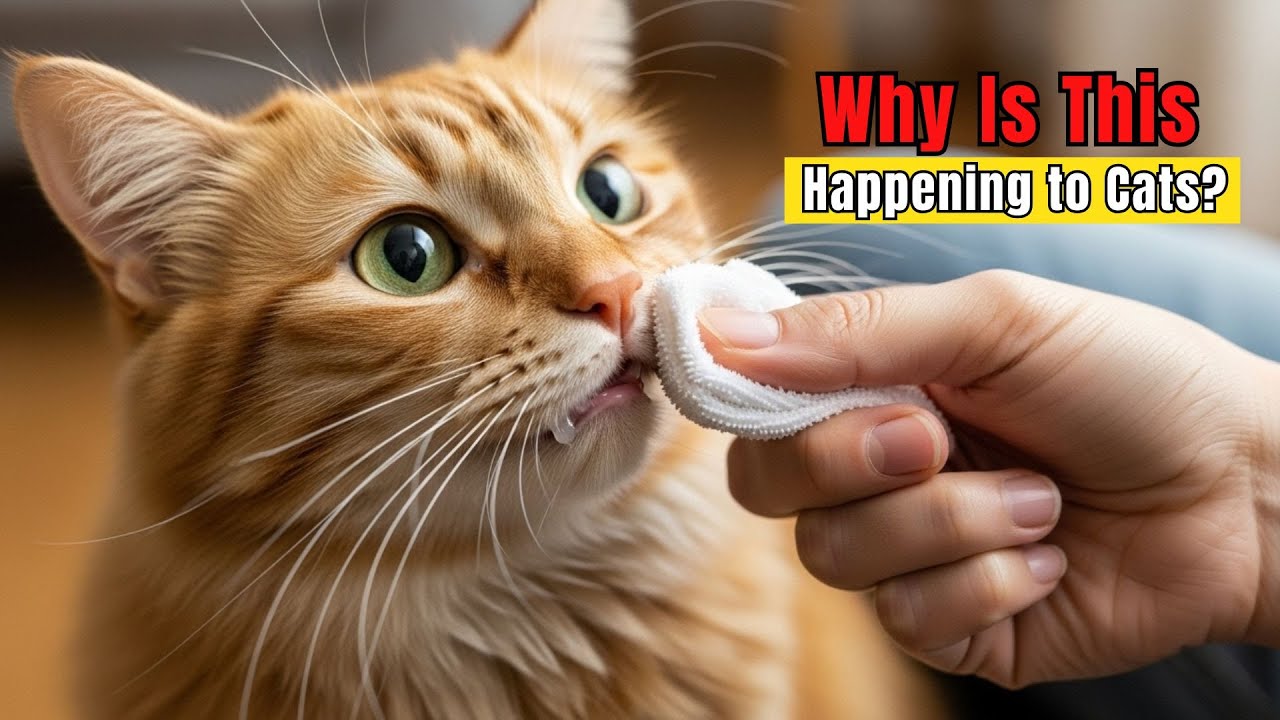
Image source: YouTube / Silent Flares (YouTube thumbnail (fair-use with source credit))
Symptoms usually appear within 15 minutes to 2 hours after ingestion. The faster you notice them, the sooner you can help your cat.
- Excessive drooling or foaming at the mouth, the most common sign
- Pawing at the mouth or face, the cat tries to scrape away the irritation
- Vomiting, often with pieces of plant material
- Difficulty swallowing, the cat may gag or make choking sounds
- Loss of appetite, the mouth hurts too much to eat
- Swelling of the lips, tongue, or throat, visible puffiness
- Vocalizing, meowing or crying in discomfort
- Lethargy, the cat may hide or seem weak
A mild case might show only drooling and pawing. A serious case includes vomiting and visible swelling. If you see any swelling around the face or neck, or if your cat has trouble breathing, that is an emergency.
Monitor your cat closely even if symptoms seem mild. Some cases worsen over several hours. If you have a kitten or a cat with breathing issues, err on the side of caution.
Larger cats with strong constitutions often shake off minor symptoms on their own, but you still need to evaluate. Consider the size of your cat and how much of the plant it ate when deciding how serious the situation is.
What to Do If Your Cat Eats Pothos: Step-by-Step First Aid

Image source: YouTube / Cornell University College of Veterinary Medicine (YouTube thumbnail (fair-use with source credit))
Act quickly but stay calm. Follow these steps in order.
- Remove any remaining plant from the cat's mouth. Gently open the mouth and pick out visible leaf pieces. Be careful, your cat may be in pain and could bite.
- Rinse the mouth with cool water. Use a syringe or a clean spray bottle. Flush gently to wash away crystal debris. You can also give the cat a small amount of milk or water to drink. This dilutes the crystals and soothes the pain.
- Do not induce vomiting. Inducing vomiting can cause the crystals to further irritate the esophagus and throat. It can also lead to aspiration. Only a vet should decide if vomiting is necessary.
- Call your veterinarian or a pet poison helpline immediately. Have the plant name ready (Epipremnum aureum). Tell them how much the cat ate and when. The Pet Poison Helpline charges a consultation fee but offers 24/7 expert advice.
- Bring a sample of the plant to the vet. A photo or a leaf in a bag helps confirm the species.
- Follow the vet's instructions. They may recommend antihistamines, sucralfate to coat the mouth, or fluids if dehydration is a risk. In severe cases, they may give corticosteroids for swelling.
Most cats recover at home with supportive care. The vet may ask you to monitor breathing and appetite for 24 hours. If your cat stops eating or drinking, it may need subcutaneous fluids.
If you keep pothos indoors, it's a good idea to plan your indoor garden carefully. Our grow tent size guide can help you decide on a safe, enclosed space for your plants.
Mistakes That Can Make Things Worse: What NOT to Do
People often panic when they see their cat chewing a houseplant. That panic leads to mistakes. Here are the most common ones to avoid.
Don't induce vomiting at home
We already mentioned it, but it's the single biggest mistake. The crystals hurt on the way out just as much as on the way in. Worse, if the cat inhales vomit, it can cause aspiration pneumonia.
Leave this decision to a vet. The ASPCA Poison Control explicitly advises against home induction for calcium oxalate plants.
Don't wait to see if symptoms get worse
Some owners assume a small bite is harmless. Even if the cat seems fine for the first 20 minutes, swelling can develop gradually. Call your vet anyway.
A quick phone call costs nothing and could save you an emergency room visit later.
Don't give human antihistamines without vet approval
Benadryl (diphenhydramine) is sometimes used to reduce swelling, but the dosage for cats is different from humans. Giving the wrong dose can cause sedation, seizures, or heart problems. Always get a weight‑based recommendation from a vet.
Don't assume the plant is safe just because it's in a hanging basket
Cats can jump. They can also knock over pots. A hanging basket is better than floor level, but it is not foolproof.
A determined cat might still reach the leaves. Consider placing pothos in a room that the cat cannot access, or use a plant cage.
If you're new to growing pothos and want to avoid any risk, check out our considerations before buying a cheap indoor grow tent, it covers how to isolate plants from pets.
Don't forget to clean up fallen leaves
Dry leaves are still toxic. They can blow under furniture or into corners. A curious cat might find them days later.
Sweep or vacuum regularly near your pothos pots.
Don't rely on bitter sprays alone
Bitter apple sprays can discourage chewing, but they wash off and wear out. Some cats develop a taste for them. Use sprays as a temporary deterrent alongside physical barriers.
Next in the article: We'll cover exactly when to rush to the vet versus when to monitor at home, how to prevent your cat from reaching pothos in the first place, and real alternatives that look beautiful without the danger. But you already have the core facts and the emergency steps. Keep this section bookmarked.
It could save you a frantic Google search later.

Image source: Wikimedia Commons / W.carter