
You know that sinking feeling when you walk past your favorite monstera or tomato plant and notice white powder dusted across the leaves. Maybe it's fuzzy patches on the soil or sticky white clusters on the stems. It looks like a science experiment gone wrong, and you're not even sure what you're dealing with.
If you're searching for how to get rid of white fungus on plants, the good news is that most of these problems are fixable, once you know what you're actually looking at. The tricky part is that "white stuff" can be four or five completely different things, and each requires a different approach. Use the wrong remedy and you can waste weeks or even burn your plants.
Research from university extension services shows that misidentification is the single biggest reason home treatments fail. As of 2026, the most common culprits fall into three fungal categories and one insect category. Getting that diagnosis right in under a minute will save you time, money, and a lot of frustrated plant staring.
Let's walk through it step by step.

Image source: Wikimedia Commons / Rude (CC BY-SA)
Quick Answer
White fungus on plants is rarely one single problem. Powdery mildew looks like fine white powder on leaf surfaces. White mold appears as fuzzy growth on soil or stems.
Sooty mold coats leaves in a sticky black film. Mealybugs look like cottony white clumps that move when disturbed. For powdery mildew, try a baking soda or potassium bicarbonate spray.
For white mold on soil, use a hydrogen peroxide drench. For sooty mold, kill the sap-sucking insects first. For mealybugs, dab each one with rubbing alcohol.
Always improve airflow and avoid wetting leaves at night.
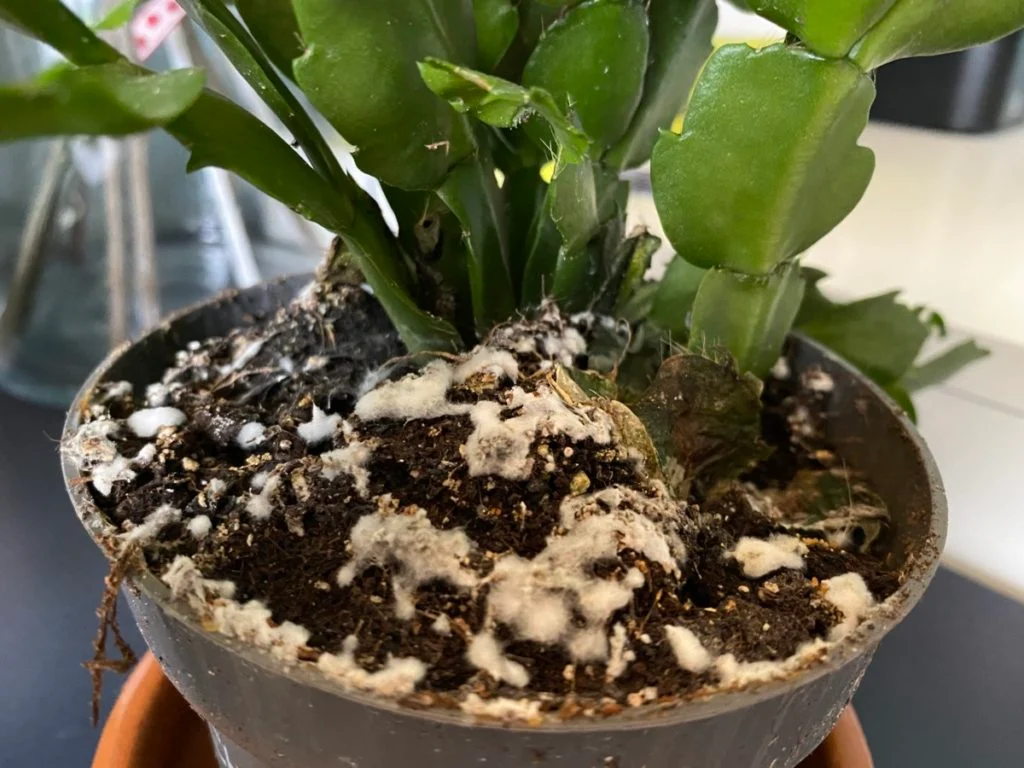
Another photo of white mold on soil shown here
Why Your Plant Has White Stuff and Why It Matters
White growth on plants isn't random. It's almost always a sign that your plant's environment is out of balance, too much moisture, poor air movement, or a pest problem you haven't spotted yet. Fungi are opportunistic; they don't attack healthy plants first.
They move in when conditions favor them.
Humidity above 60 percent combined with stagnant air is the perfect breeding ground for most white fungi. Indoor heaters can dry out the air, but they also create pockets of still air around leaves. Overwatering is another major contributor.
When the soil stays wet for days at a time, mold spores in the potting mix have all the moisture they need to germinate.
Understanding why the fungus appeared is just as important as treating it. If you only kill the current outbreak without fixing the environment, you're setting yourself up for a repeat performance in a few weeks. That's why the first step in any effective white fungus treatment is always looking at the conditions around the plant, not just the plant itself.
The 1-Minute Diagnosis: What Kind of White Growth Are You Dealing With?
You don't need a microscope or a plant pathology degree to figure out what's on your plant. A quick visual check will tell you 90 percent of what you need. Grab a magnifying glass if you have one, but your phone's camera zoom works fine too.
Powdery Mildew vs. White Mold vs. Sooty Mold vs. Mealybugs – Quick Visual Clues
Here's how to tell them apart by sight alone.
| Type | Appearance | Location | Wipes off? |
|---|---|---|---|
| Powdery mildew | Fine white or gray powder, like someone dusted the leaf with flour | Upper and lower leaf surfaces, stems, buds | Yes, but it comes back quickly |
| White mold | Fluffy, cottony white growth, often with black dots (sclerotia) | Soil surface, base of stem, decaying plant matter | Yes, but it's mycelium; more underneath |
| Sooty mold | Black or dark gray sooty coating, sometimes with white residue underneath | Upper leaf surfaces, often where sticky honeydew is present | Yes, but it's just a symptom; real problem is insects |
| Mealybugs | White, waxy, cottony clusters, often in leaf axils or along stems | Leaf joints, undersides, stem crevices | Yes, but they crawl or squish |
The Wipe Test: If It Comes Off on Your Finger, You're Probably Dealing With Mealybugs
Take your finger or a damp paper towel and gently rub the white stuff. Most fungi feel powdery or fuzzy and smear into a thin film. Mealybugs feel different, they're waxy and pasty, and when you wipe them, you'll see small pinkish bodies underneath.
If the white substance wipes off completely and the leaf underneath looks sticky or shiny, you likely have mealybugs.
If the white stuff wipes off but the leaf surface itself looks damaged or has a water-soaked appearance underneath, you're probably dealing with powdery mildew. Mold on soil won't wipe off because it's attached to the top layer of potting mix. Sooty mold is black, not white, so if you see both black and white, check for insects first.
Decision Tree: Follow the Right Branch Based on What You See
Once you've identified the main visual, use this decision tree to zero in on the exact treatment path. Think of it as a choose-your-own-adventure for plant care.
Branch A: Powdery Coating on Leaves (Powdery Mildew)
You see a fine white powder on the upper surfaces of leaves. It may also appear on stems and sometimes on flower buds. Leaves may curl or become distorted.
This is powdery mildew. It thrives in moderate temperatures (60, 80°F) and moderate humidity, not the wet conditions you might expect. The spores spread through air movement.
Treatment path: Use a contact spray such as baking soda solution, potassium bicarbonate, or neem oil. Avoid overhead watering. Increase air movement with a fan.
Branch B: Fuzzy White Growth on Soil or Stem (White Mold / Saprophytic Mold)
You see a white, fluffy, cobweb-like growth on the surface of the potting soil or around the base of the stem. It may have small black or tan dots (resting structures). This is white mold or saprophytic mold.
It usually results from overwatering or poor drainage.
Treatment path: Scrape off the top inch of soil, replace with fresh dry mix, and drench with a hydrogen peroxide solution (1 part 3% peroxide to 4 parts water). Reduce watering frequency.
Branch C: Sticky Black Coating + White Residue (Sooty Mold)
You see a black sooty coating on the leaves. If you look closely, you might also see tiny white specks or a sticky film (honeydew) on the leaves or on surfaces below. The black is sooty mold growing on honeydew excreted by sap-sucking insects like aphids, scale, or whiteflies.
Treatment path: Ignore the sooty mold for now. It won't kill the plant. Instead, identify and eliminate the insects producing the honeydew.
Wash off the sooty mold with a gentle soap spray afterward.
Branch D: Cottony White Clusters That Move (Mealybugs)
You see white, waxy, cottony clumps on stems, leaf joints, or along leaf veins. They aren't fuzzy like mold; they're more compact and waxy. If you poke one with a toothpick, it may move slightly or ooze a pinkish liquid.
These are mealybugs, insects, not fungi.
Treatment path: Dip a cotton swab in rubbing alcohol (70% isopropyl) and dab each mealybug directly. For heavy infestations, spray with insecticidal soap or neem oil.
Step-by-Step Treatment for Each Branch
Now that you know which branch you're on, here's exactly what to do. Follow the instructions for your specific type.
Powdery Mildew: Spray Recipes That Actually Work (Baking Soda, Potassium Bicarbonate, Milk, Neem Oil)
Start by isolating the infected plant. Prune off any severely affected leaves and dispose of them in the trash, not your compost bin. Then choose one of these homemade sprays.
- Baking soda spray: Mix 1 teaspoon of baking soda and 1/2 teaspoon of mild liquid soap (like Castile soap) into 1 quart of water. Shake well and spray every 5, 7 days.
- Potassium bicarbonate spray: Use 1 tablespoon of potassium bicarbonate per gallon of water. This is more effective than baking soda and less likely to burn leaves.
- Milk spray: Mix 1 part milk with 9 parts water. Milk contains natural antifungal proteins. Spray weekly. It has a short shelf life, so make a fresh batch each time.
- Neem oil spray: Mix 2 teaspoons of neem oil and 1/2 teaspoon of soap into 1 quart of water. Apply in the evening to avoid leaf burn.
Spray all leaf surfaces until the solution drips off. Repeat every 5, 7 days until no new white spots appear. Improve airflow immediately, we'll cover that in the prevention section.

Another photo of neem oil spray in use
White Mold on Soil: Hydrogen Peroxide Drench & Removing Contaminated Topsoil
White mold on soil is often less dangerous than it looks, but it can spread to stems and roots if left unchecked. Start by scraping off the top 1, 2 inches of soil, the fluffy white layer and any soil that looks damp or grey. Replace it with fresh, dry, sterile potting mix.
Then drench the remaining soil with a hydrogen peroxide solution. Mix one part 3% hydrogen peroxide with four parts water. Slowly pour the solution over the soil until it drains from the bottom.
Hydrogen peroxide releases oxygen, which kills mold spores without harming the plant's roots.
Reduce watering immediately. If the soil stays wet for more than 3, 4 days, you need better drainage or a smaller pot. Consider using a fan to dry the top layer between waterings.
Sooty Mold: Kill the Sap-Sucking Insect First (Aphids, Scale, or Whiteflies)
Sooty mold is a secondary problem. The real culprit is the insect producing honeydew. Inspect the plant carefully for tiny green, brown, or white insects.
Aphids cluster on new growth. Scale looks like small brown or white bumps on stems. Whiteflies fly up in a cloud when you disturb the leaves.
Treat the insects first. For aphids, a strong blast of water or insecticidal soap works well. For scale, rub each bump with a cotton swab dipped in rubbing alcohol.
For whiteflies, use sticky traps or neem oil.
Once the insect population drops, the sooty mold will stop growing. You can wash it off with a mild soap and water solution or simply let it weather away over the next few weeks.
Mealybugs: Rubbing Alcohol on a Q-Tip Is Your Best Friend
Mealybugs are stubborn. They hide in crevices and reproduce quickly. The most effective method for light infestations is to dip a cotton swab in 70% isopropyl alcohol and dab each bug directly.
The alcohol dissolves the waxy coating and kills them on contact.
For larger infestations, mix a solution of 1 part rubbing alcohol to 3 parts water, add a drop of dish soap, and spray the whole plant. Test on a small area first; some plants are sensitive to alcohol. Repeat every 3, 4 days until no live bugs remain.
Mealybugs can hide in the soil and along the pot rim. Check the drainage holes and the base of the plant. If you see them in the soil, consider replacing the top layer and treating the soil with an insecticidal drench.
Mistakes That Keep You Fighting the Same White Fungus Forever
Most people make the same few errors, which is why they end up posting pictures of the same white spots month after month. Here are the ones to avoid.
Mistake 1: Treating the symptom, not the cause. You spray the leaves with baking soda, the white powder disappears for a week, then it's back. That's because the underlying conditions (high humidity, poor airflow, overwatering) never changed. You have to fix the environment.
Mistake 2: Using the wrong remedy. A hydrogen peroxide drench won't touch powdery mildew on leaves. Rubbing alcohol will damage leaves if used on sooty mold. Match the treatment to the exact problem you identified earlier.
Mistake 3: Overwatering after treatment. It's easy to think that more water will "flush out" the fungus. It does the opposite. Wet soil encourages more fungal growth and can cause root rot.
Let the soil dry between waterings.
Mistake 4: Not isolating the infected plant. Fungal spores travel through air and water. One contaminated plant can spread to your whole collection within days. Quarantine any plant with white fungus for at least two weeks after treatment ends.

Another photo of overcrowded houseplants as a cause of fungus
Mistake 5: Ignoring the calendar. Powdery mildew is seasonal for many outdoor plants. Treating in late summer when spore counts are highest is a losing battle. Plan your prevention for early spring instead, before the weather turns warm and humid.
If you've made any of these mistakes, don't beat yourself up. Almost everyone does. The good news is that correcting them will stop the cycle for good.
Now, let's move on to how to keep that white stuff from ever coming back. But first, here's a quick note from our editorial team: you might also find our guide on indoor grow tent ventilation helpful if you're growing in a confined space with humidity challenges. And if you're dealing with a recurring issue in a new setup, our article on special considerations for building your own grow room covers the airflow and moisture control basics you need.
For more general plant care strategies, check out our blog for seasonal tips. We also have a detailed look at humidity management in enclosed spaces that applies to any indoor gardening situation. And if you're trying to time your treatments with the weather, our post on when to fertilize lawn offers a broader perspective on seasonal timing, because plant care is plant care, whether it's in a pot or in the ground.
For safety information on fungicide use, the National Pesticide Information Center provides clear, research-based guidance on both synthetic and organic treatments.
When to Use a Commercial Fungicide (And Which Ones to Grab)
Not every white fungus needs a store-bought solution. Homemade sprays work well for mild cases caught early. But if the infection covers more than a third of the plant, keeps coming back after two treatment rounds, or you're dealing with a valuable specimen, it's time for the big guns.

Copper fungicide is a solid all-around choice. It works on powdery mildew, downy mildew, and many leaf spot diseases. It coats the leaf surface and prevents spores from germinating.
Reapply every 7, 14 days.
Sulfur fungicide is another option, but it's sensitive. Don't use it when temperatures exceed 85°F. It can burn leaf tissue.
Also never mix sulfur with copper or apply within two weeks of a copper spray.
Biological fungicides like Bacillus subtilis are gentler. They're safe for edible plants up to the day of harvest. They don't kill the fungus directly, they outcompete it.
For heavy infections they're slower, but great for ongoing prevention.
Always follow the label. The pre-harvest interval matters if you're growing vegetables. Most commercial fungicides list that number clearly on the bottle.
How to Fix the Environment So the White Fungus Doesn't Come Back
Treating the fungus is half the job. Fixing the conditions that let it thrive is the other half. You can spray perfectly every week, but if your plant is sitting in still, humid air with wet feet, the white stuff will return.
Airflow is your first lever. A small oscillating fan near your plants makes a massive difference. It disrupts the still air that fungal spores need to settle and germinate.
Humidity is the second. Keep indoor levels below 50% if possible. A dehumidifier works, but simply spacing plants further apart helps too.
Cramped plants trap moisture between leaves.
Watering habits need a hard look. Water the soil directly, not the leaves. Do it in the morning so any splashes dry before night.
Let the top inch of soil dry between waterings. A moisture meter takes the guesswork out.
For outdoor plants, prune for airflow and avoid overhead sprinklers. Drip irrigation or soaker hoses keep foliage dry. These small changes cut recurrence rates dramatically.
Pro Tips for Edible Plants and Organic Gardens
If you're growing food, safety comes first. You don't want fungicide residue on your tomatoes. Stick with options that are safe up to the day of harvest.
Milk spray is a favorite for organic gardens. The proteins in milk act as a natural antifungal. Use whole milk for best results.
Spray weekly. It works well on powdery mildew on squash and cucumbers.
Baking soda is also safe, but it can alter soil pH over time. Use it sparingly. Rinse produce thoroughly before eating.
Neem oil is OMRI listed and breaks down quickly in sunlight. Apply it in the evening. Don't spray it on open flowers; it can harm bees.
Compost tea is another preventive tool. It introduces beneficial microbes that crowd out fungal spores. Use it as a soil drench, not a foliar spray.
If you must use a commercial organic fungicide, choose one with Bacillus subtilis or potassium bicarbonate. Both are OMRI listed and safe for edible use.
A Quick-Reference Table: Which Treatment for Which White Problem
| White Problem | Best First Treatment | Best Commercial Option | Prevention Tip |
|---|---|---|---|
| Powdery mildew | Baking soda or milk spray | Potassium bicarbonate or copper fungicide | Improve airflow, avoid overhead watering |
| White mold on soil | Remove topsoil + hydrogen peroxide drench | Bacillus subtilis drench | Let soil dry between waterings, use sterile mix |
| Sooty mold | Kill sap-sucking insects first | Insecticidal soap for insects | Check for honeydew regularly |
| Mealybugs | Rubbing alcohol on q-tip | Neem oil or insecticidal soap | Inspect new plants before bringing indoors |
Use this table when you spot white growth and can't remember what to do. Keep a copy near your plant care supplies.
Final Decision Guide: Your 5-Step Action Plan in One Minute
When you see white stuff on a plant, run through this checklist. It takes less than a minute and prevents mistakes.
Step 1: Identify. Is it powdery, fuzzy, sooty, or cottony? Do the wipe test.
Step 2: Isolate. Move the plant away from others. Spores travel fast.
Step 3: Treat. Match your remedy to the type. Use the table above.
Step 4: Fix the environment. Improve airflow, reduce humidity, adjust watering.
Step 5: Monitor. Check the plant every 2, 3 days for a week after treatment ends. Repeat if needed.
That's it. You now have a repeatable system for handling white fungus on any plant, indoors or out. Stick with the process.
Your plants will thank you.